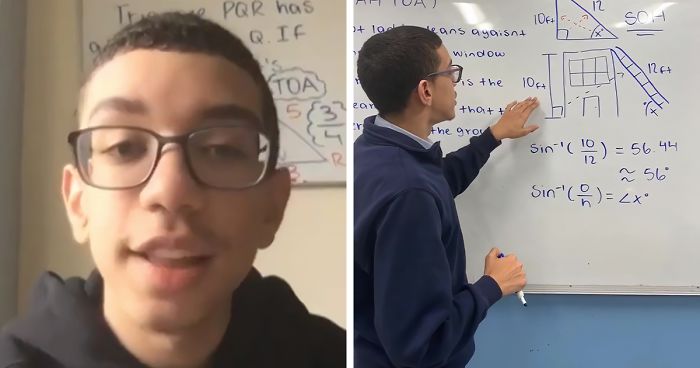
Most people open TikTok expecting dance trends, comedy sketches, cooking hacks, or someone explaining why their cat is definitely the landlord of the house. But in the middle of all that scroll-friendly chaos, a 16-year-old student from the Bronx found a different use for the app: teaching math and science to hundreds of thousands of students who needed help fast.
His name is Alexis Loveraz, and around the early months of the COVID-19 pandemic, he became widely known online as the “TikTok Tutor.” While schools were suddenly shifting to remote learning and students were trying to understand algebra from kitchen tables, bedrooms, and occasionally the family couch, Alexis began posting short, clear lessons on TikTok. His topics ranged from algebra and geometry to chemistry, physics, and SAT math prep. The videos were quick, practical, and easy to followbasically the educational version of someone handing you a flashlight in a dark room.
What made the story so memorable was not simply that a teenager gained more than 600,000 followers. It was that he did it by solving equations, explaining formulas, and helping students feel less lost. In an internet culture where attention is often treated like confetti, Alexis used attention as a teaching tool. His rise showed that learning can happen in unexpected places, even on an app famous for viral sounds and infinite scrolling.
Who Is Alexis Loveraz, the TikTok Tutor?
Alexis Loveraz was a 16-year-old high school student at Harlem Prep High School in New York when his tutoring videos began gaining major attention. Reports at the time described him as a strong student with a 4.0 GPA and a natural gift for explaining difficult subjects in a way that felt simple. Before his online audience exploded, he had already been helping classmates in person. He had experience as a math teaching assistant and had developed the kind of patient, step-by-step style that makes students say, “Wait, why didn’t anyone explain it like that before?”
That question became a theme in the comments under his videos. Students praised his ability to break down concepts that had previously felt impossible. Algebra, geometry, trigonometry, chemistry, and SAT prep are not exactly casual snack content. Nobody usually says, “I’m bored, let me relax with inverse functions.” Yet Alexis made those topics feel less intimidating by treating them as puzzles that could be solved one piece at a time.
His content also arrived at the perfect moment. During the pandemic, many students were separated from teachers, tutors, study groups, and classroom routines. A quick TikTok lesson could not replace a full course, but it could provide something incredibly valuable: a clear explanation at the exact moment a student felt stuck.
How One Teen Turned TikTok Into a Virtual Classroom
Alexis started by posting educational videos that explained math and science concepts in short bursts. Instead of long lectures, he used TikTok’s format to focus on one problem, one formula, or one idea at a time. That structure worked especially well for students who needed a refresher before homework, a quiz, or the SAT.
His lessons covered topics such as the Pythagorean theorem, sine, cosine, tangent, inverse functions, electron configuration, redox reactions, conservation of atoms, and special right triangles. In other words, he was not just posting “math vibes.” He was tackling the exact subjects that make students stare at a worksheet as if it personally betrayed them.
The short-video format forced him to be concise. That may be one reason his explanations connected with viewers. A traditional class has time for context, practice, discussion, and review. A TikTok video has to get to the point before the viewer’s thumb escapes. Alexis used that limitation to his advantage. He focused on clarity, speed, and practical steps.
Why His Videos Worked
Several factors made Alexis’ tutoring style effective. First, he spoke like a peer, not like a distant authority figure. Students often respond well to near-peer teaching because the tutor understands their confusion from the inside. Alexis was not decades removed from high school math; he was living it. That made his tone relatable.
Second, his lessons were specific. Instead of saying, “Today we will understand all of algebra,” he could focus on one SAT math problem or one chemistry concept. That makes learning feel manageable. Students do not need to climb the whole mountain at once. Sometimes they just need to find the next foothold.
Third, he invited interaction. Viewers could comment, request topics, and vote on what he should cover next. That created an audience-centered classroom where students felt heard. A regular textbook does not ask, “What do you want me to explain next?” TikTok comments do.
The Pandemic Made Online Tutoring More Important
When Alexis’ videos gained attention, millions of students were adjusting to remote learning. Teachers were doing their best, but the transition was rough. Internet access, device availability, quiet study spaces, and family schedules all affected how well students could learn from home. Some students missed live instruction. Others needed concepts repeated in a different way.
That is where creators like Alexis filled a gap. His videos offered quick academic support outside the regular school day. Students could replay a lesson, pause it, share it with friends, or use it as a warm-up before tackling homework. The ability to rewind a tutor is a small miracle. In a classroom, asking a teacher to repeat the same explanation six times can feel embarrassing. On a video, the replay button never judges you.
Alexis also expanded beyond TikTok. Reports noted that he used platforms such as YouTube, Discord, and Google Classroom to make lessons more accessible and interactive. He also hosted long live study sessions, giving students a chance to learn in a more community-driven environment. That move mattered because short videos can introduce ideas, but deeper learning often requires practice, questions, and repetition.
Why Students Love Learning From Social Media
Students are already online, and many are already using short-form video platforms daily. That does not mean every TikTok is educational, of course. For every brilliant chemistry explanation, there may be several videos of someone trying to cook pasta in a coffee maker. Still, platforms like TikTok can make learning feel familiar and approachable.
Educational videos work best when they meet students where they are. A student who feels overwhelmed by a 30-page chapter may still watch a 45-second explanation of slope-intercept form. That small entry point can lower resistance. Once the concept feels less scary, the student may be more willing to practice.
Another reason short-form learning is powerful is that it makes knowledge feel social. Students can comment, share, duet, save, and discuss. A math tip becomes part of a larger conversation. That social layer can motivate learners who might otherwise feel isolated, especially during remote learning or exam season.
The Limits of TikTok Tutoring
As inspiring as Alexis’ story is, TikTok should not be treated as a magic homework machine. Short videos are excellent for refreshers, examples, and quick explanations, but they are not a full replacement for structured learning. Math and science require practice. Watching someone solve a problem is helpful; solving one yourself is where the learning really sticks.
There is also the issue of accuracy. Anyone can post educational content, and not every explanation is correct. A confident voice, good lighting, and a catchy caption do not automatically equal reliable information. Students should use TikTok as a supplement, not as their only teacher. The best approach is to compare explanations with class notes, textbooks, teacher feedback, and trusted educational resources.
Alexis’ success stands out because he combined popularity with genuine academic usefulness. His videos were not just entertaining; they were designed to help. That difference matters. Educational creators build trust by being clear, careful, and responsive to learners’ needs.
What Teachers and Parents Can Learn From Alexis Loveraz
Alexis’ rise offers a lesson for adults, too: students do not dislike learning as much as they dislike feeling confused, ignored, or embarrassed. When explanations are clear and accessible, students often become more curious. The popularity of a teenage math tutor on TikTok proves that academic content can compete for attention when it is presented well.
Teachers can borrow several ideas from this style of tutoring. They can create short review clips, encourage students to explain concepts to one another, or use quick videos as warm-ups before deeper lessons. Parents can also use educational videos as conversation starters. Instead of saying, “Go study,” they might ask, “Can you show me one video that explains what you’re working on?” That small shift turns studying from a command into a shared activity.
The real lesson is not that every teacher needs to become an influencer. Nobody wants exhausted educators forced to learn ring lights after grading 90 assignments. The lesson is that clarity, personality, and accessibility matter. A good explanation can travel far when it is easy to understand and easy to share.
Why Peer Tutoring Feels Different
Peer tutoring has a special energy because it feels less formal. When a student teaches another student, the explanation often includes the little shortcuts, memory tricks, and honest admissions that adults sometimes skip. A peer tutor might say, “This part confused me too, but here’s how I remember it.” That sentence can instantly reduce pressure.
Alexis’ age made his teaching style relatable. He was not presenting himself as a professor in a lab coat. He was a student helping other students survive the academic jungle. That identity gave his content warmth. Viewers could see him as someone who understood school stress, homework deadlines, and the panic of looking at a problem and wondering if the numbers were speaking another language.
The Bigger Meaning of the TikTok Tutor Story
Alexis Loveraz became popular because he solved a real problem. Students needed help. He had knowledge. TikTok gave him distribution. The result was a modern tutoring story built on generosity, timing, and digital creativity.
His story also challenges the lazy idea that teenagers only use social media for distraction. Yes, social platforms can waste time. Anyone who has opened an app for “five minutes” and looked up 47 minutes later knows this. But teens also use these platforms to teach, learn, organize, create, and support one another. Alexis’ success is a reminder that young people are not just consumers of online culture. They can be builders of it.
In a world where education often feels expensive, complicated, or unequal, a free math explanation on a phone screen can make a real difference. It may help a student finish homework, understand a quiz question, or feel confident enough to keep trying. That is not a small thing. Sometimes confidence begins with one clear explanation.
Experience Section: What This Story Teaches Students, Creators, and Anyone Who Has Ever Feared Algebra
One of the most relatable parts of Alexis Loveraz’s story is that it begins with a simple experience many students know well: someone nearby is confused, and you realize you can help. Maybe it happens at a lunch table, in a group chat, before a test, or five minutes before homework is due. A friend asks, “How do you do this?” and you explain it in your own words. Suddenly, the problem makes sense. That moment feels small, but it is the heart of tutoring.
For students, the biggest takeaway is that understanding a subject does not always happen the first time. Many people think they are “bad at math” because one explanation did not click. But sometimes the issue is not intelligence; it is the delivery. A teacher may explain a concept one way, a textbook another way, and a peer tutor a third way. The third explanation might be the one that finally turns on the lights. That is why educational content on platforms like TikTok can be useful when it is accurate and well-made. It gives students another door into the same room.
Another experience connected to this story is the confidence boost that comes from teaching. When you explain a math problem to someone else, you quickly discover whether you truly understand it. If you can walk another person through the steps, answer their questions, and fix mistakes along the way, your own knowledge becomes stronger. Alexis was helping others, but he was also reinforcing his own skills. That is one of the hidden benefits of tutoring: the tutor learns, too.
For creators, Alexis’ journey shows that useful content can be powerful even without flashy production. You do not need a movie studio to teach the Pythagorean theorem. You need clarity, consistency, and respect for the audience. A simple video that solves a real problem can outperform a polished video that says nothing. Students can tell when a creator is actually trying to help.
There is also a lesson about responsibility. When a creator teaches math or science to a large audience, accuracy matters. A wrong step in an algebra video can confuse thousands of learners. That does not mean creators must be perfect, but they should be careful. They should check their work, correct mistakes, and encourage viewers to practice beyond the video. Good educational creators do not just chase views; they build trust.
Parents and teachers can learn from this experience as well. Instead of dismissing social media as only a distraction, they can ask how students are using it. A student watching chemistry explainers, SAT math tips, or physics demonstrations is engaging with academic material in a format that feels natural to them. The goal is not to replace school with scrolling. The goal is to guide students toward better scrollingless random noise, more useful learning.
Finally, Alexis’ story is encouraging because it makes education feel less lonely. Many students struggle silently because they are embarrassed to ask questions. Seeing thousands of other people comment on the same math topic can be comforting. It reminds learners that confusion is normal. The real problem is not getting stuck; the real problem is staying stuck when help is available.
A 16-year-old tutoring hundreds of thousands of followers may sound unusual, but the deeper message is simple: knowledge becomes more valuable when shared. Whether it happens in a classroom, on a whiteboard, in a group chat, or through a short video, a good explanation can travel farther than expected. And sometimes, the person holding the marker is not the oldest person in the room. Sometimes it is a teenager with a phone, a formula, and a surprisingly calm way of making algebra behave.
Conclusion
Alexis Loveraz’s rise as the TikTok Tutor is more than a feel-good internet story. It is a case study in how students learn today, how peer teaching can build confidence, and how social media can become useful when creators focus on service instead of attention alone. His videos helped students review math and science during a difficult time, but they also proved something bigger: educational content does not have to be boring to be serious.
Math and science can be intimidating, but they become easier when someone breaks them down with patience and personality. Alexis did that for hundreds of thousands of viewers. In the process, he reminded students that learning is not limited to classrooms, textbooks, or scheduled tutoring sessions. Sometimes it starts with a short video, a clear explanation, and the courage to ask, “What should I teach next?”