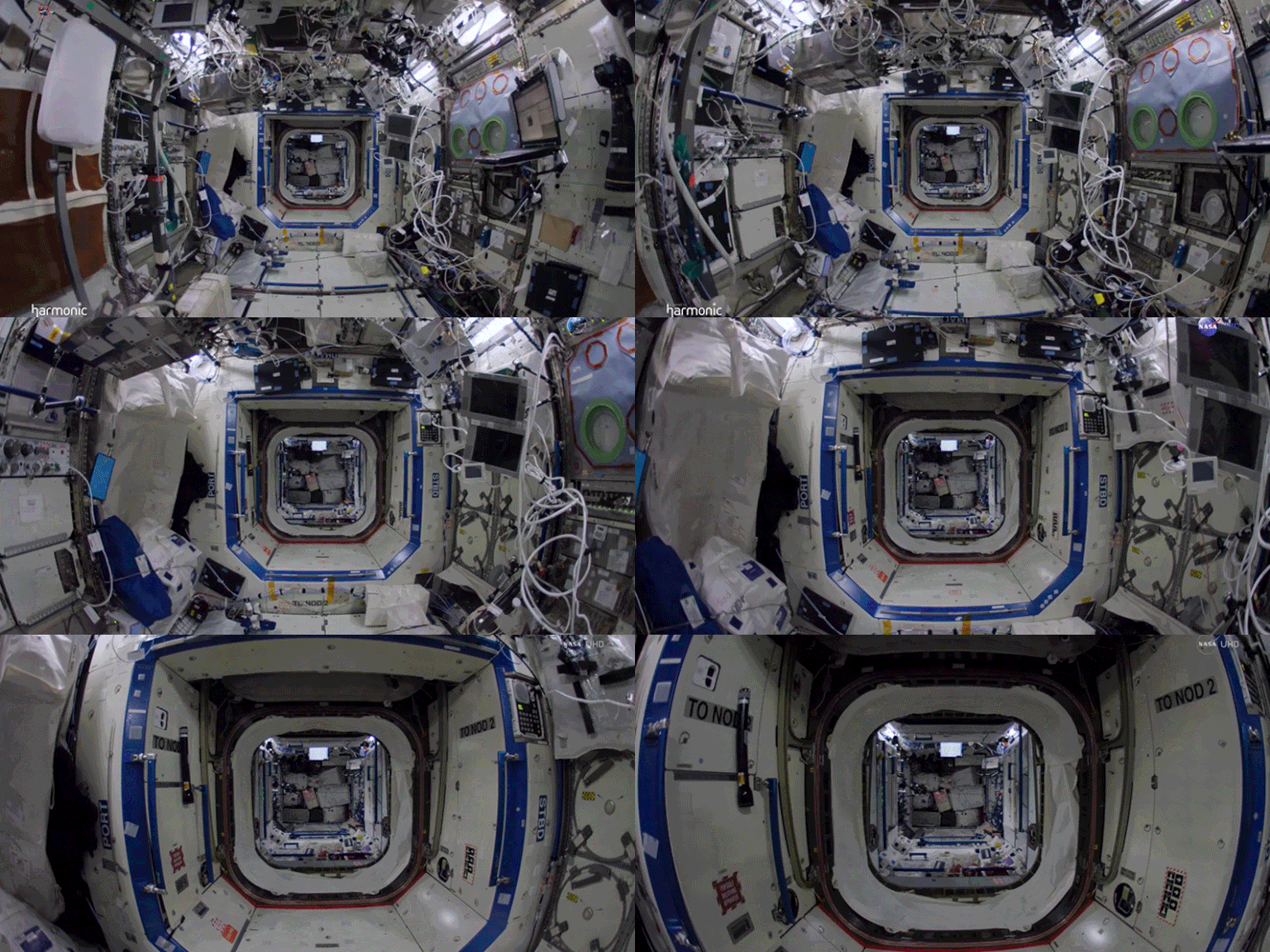
Imagine stepping inside a home where the floor is optional, the windows show sixteen sunrises a day, and every loose crumb behaves like it has a tiny jetpack. Welcome to the International Space Station, better known as the ISS: humanity’s most famous orbiting laboratory, engineering puzzle, and extremely expensive roommate situation in low Earth orbit.
The ISS is not a sleek sci-fi hotel with glowing hallways and dramatic automatic doors. It is more like a brilliant, floating workshop built over decades by multiple nations, packed with cables, laptops, Velcro patches, science racks, exercise machines, cargo bags, cameras, food pouches, and enough labeled equipment to make an organized person weep with joy. It is part laboratory, part spacecraft, part repair shop, part gym, part apartment, and part “please do not lose that tiny screw because it may float into the air vent.”
This hyper-detailed tour of the International Space Station will guide you through the major modules, daily life, science areas, robotic systems, observation spots, and the strange little realities of living in microgravity. Buckle inor rather, strap your feet under a handrailbecause on the ISS, “down the hall” can mean “push off gently and try not to bonk your head on a laptop.”
What Is the International Space Station?
The International Space Station is a continuously crewed spacecraft and research laboratory orbiting Earth. It was assembled piece by piece in space, with the first major components launched in 1998 and continuous human occupation beginning in November 2000. Since then, astronauts and cosmonauts have lived and worked aboard the station while conducting research that cannot be done the same way on Earth.
The ISS travels in low Earth orbit at roughly 17,500 miles per hour, circling the planet about every 90 minutes. That means the crew sees sunrise and sunset again and again while most of us are still deciding whether to make coffee or pretend water counts as breakfast. The station is about the size of a football field when its solar arrays are included, and its pressurized living and working volume is comparable to a large multi-bedroom houseif that house were flying above Earth and required spacecraft to deliver groceries.
A Quick Look at the Outside: Solar Arrays, Trusses, and Docking Ports
Before we float inside, let’s admire the exterior. The ISS looks like a shiny mechanical dragonfly with massive solar wings. Its long truss structure forms the backbone of the station, supporting power systems, radiators, robotic equipment, and external payloads. The huge solar arrays collect sunlight and convert it into electricity for life support, experiments, communications, computers, lighting, and all the other things that make a space station more useful than a very cold metal tube.
Docking ports are the station’s front doors, back doors, and delivery entrances. Crew spacecraft, cargo vehicles, and visiting commercial missions connect to the ISS through these ports. Some vehicles bring people. Others bring food, spare parts, science gear, clothing, water, and the occasional small luxury item that probably becomes the most popular object onboard for a week.
Entering the Station: Unity, the First Big Connector
Unity, also called Node 1, was the first U.S.-built connecting module added to the ISS. Think of it as one of the original hallway hubs. It helped link early station components and made future assembly possible. Inside Unity, astronauts move through a compact passage lined with systems, storage, cables, and equipment. It may not look glamorous, but Unity is one of the reasons the station could grow from a few early pieces into a full orbital complex.
Like many ISS modules, Unity is practical rather than decorative. There are no throw pillows, no accent walls, and absolutely no “open-concept kitchen.” Instead, every surface has a purpose. Handrails help crew members move around, bags are secured to walls, and labels tell astronauts where to find tools, supplies, and hardware. In microgravity, storage is not a matter of tidiness. It is survival for your sanity.
Destiny: The U.S. Laboratory Module
Destiny is the U.S. laboratory module and one of the scientific hearts of the International Space Station. It contains equipment racks that support research in biology, physics, human health, materials science, Earth observation, and technology development. If the ISS is a floating campus, Destiny is one of its busiest classrooms, labs, and computer rooms combined.
Inside Destiny, experiment racks line the walls. In normal Earth language, “walls” would suggest vertical surfaces. On the ISS, every surface can become a wall, floor, or ceiling depending on how your body is oriented. Astronauts may work upside down relative to a camera, sideways relative to a laptop, and perfectly normal relative to themselves. The science does not care which way is up because, delightfully, up is taking the day off.
Research in Destiny helps scientists study how living systems, fluids, combustion, materials, and the human body behave without the constant pull of gravity. This is useful not only for future space missions but also for technologies and medical knowledge on Earth.
Harmony: The Busy Crossroads
Harmony, also known as Node 2, is one of the station’s most important connecting modules. It links several major laboratories, including Destiny, Europe’s Columbus module, and Japan’s Kibo module. Harmony also provides docking locations for visiting spacecraft, making it a high-traffic area in station life.
If Harmony had a personality, it would be the friend who somehow hosts every meeting, stores everyone’s coats, knows where the snacks are, and still answers the door when visitors arrive. Crew members pass through it constantly as they move between science modules, crew quarters, and docking areas.
Columbus: Europe’s Research Room in Orbit
The Columbus laboratory is the European Space Agency’s major pressurized contribution to the ISS. Attached to Harmony, Columbus supports experiments in biology, materials science, fluid physics, human physiology, and technology demonstrations. It also has external research platforms where experiments can be exposed to the space environment.
Inside, Columbus feels like a compact laboratory lined with research racks and equipment. The work done here can involve anything from studying cells in microgravity to testing materials that must survive radiation, temperature swings, and the vacuum of space. It is not a quiet white-coat laboratory with dramatic glassware. It is more like a high-tech closet where the experiments are brilliant, expensive, and strapped down because otherwise they will float away like rebellious balloons.
Kibo: Japan’s “Hope” Module
Kibo, whose name means “hope” in Japanese, is Japan’s laboratory module and one of the largest pressurized sections of the station. It includes an interior laboratory, an airlock for moving experiments outside, and an exposed facility where research hardware can operate directly in space.
Kibo is especially fascinating because it bridges indoor and outdoor science. Astronauts can prepare experiment packages inside the module, move them through the airlock, and transfer them to the exterior platform using robotic systems. That allows researchers to test materials, biological samples, sensors, and technology in the real space environment, where radiation, vacuum, micrometeoroids, and wild temperature changes all join the experiment like extremely unfriendly lab partners.
Quest Airlock: The Door to Spacewalks
The Quest Airlock is where astronauts prepare for spacewalks using U.S. spacesuits. It has two main compartments: an equipment lock for spacesuit maintenance and preparation, and a crew lock where astronauts exit and enter the station. It is one of the most dramatic places on the ISS, because passing through it means leaving the pressurized comfort of the station and entering open space.
Spacewalks are not casual strolls. Astronauts may spend hours preparing tools, checking suits, adjusting oxygen levels, and reviewing procedures. Once outside, they work on repairs, installations, inspections, and upgrades while attached to the station by tethers. The view is spectacular, but the job is serious. Dropping a tool in your garage is annoying. Dropping one in orbit creates a tiny high-speed satellite with attitude.
Tranquility: Life Support, Exercise, and the Famous Cupola
Tranquility, also called Node 3, is a major station module that houses important life-support equipment. It contains systems for air revitalization, oxygen generation, and water recycling. It also includes exercise equipment and the station’s waste and hygiene compartment. In other words, Tranquility handles some of the least glamorous but most essential parts of space living.
The ISS must recycle and manage resources carefully because it cannot simply open a window or call a plumber. Water is recovered from multiple sources, air is continuously monitored and refreshed, and exercise is required to help astronauts maintain muscle and bone strength in microgravity.
The Cupola: The Best Window Seat Humans Have Ever Built
Attached to Tranquility is the Cupola, a dome-shaped observation module with seven windows. It is the station’s legendary window to the world and probably the most emotionally powerful room in orbit. From the Cupola, astronauts can photograph Earth, monitor visiting spacecraft, observe robotic operations, and watch spacewalks.
The Cupola is also where many astronauts experience one of the great psychological gifts of spaceflight: seeing Earth as a whole. Borders disappear, weather systems swirl like living artwork, cities glow at night, and the thin atmosphere looks almost impossibly fragile. It is both beautiful and humbling. It also makes your usual office window look like it owes you an apology.
Leonardo: The Permanent Multipurpose Module
Leonardo began life as a cargo-carrying logistics module and was later converted into the Permanent Multipurpose Module. Today it provides valuable pressurized storage and working space. It holds supplies, equipment, spare parts, and research materials. On a station where every item must be launched from Earth, storage is mission-critical.
Leonardo may not be the celebrity module, but it is the kind of place that keeps the whole operation functioning. Think of it as the ISS garage, pantry, supply room, and backstage closet. Without spaces like Leonardo, astronauts would spend far more time hunting for parts and far less time doing science.
BEAM: The Expandable Habitat Experiment
The Bigelow Expandable Activity Module, or BEAM, is an expandable habitat technology demonstration attached to the station. It was designed to test how inflatable-style structures perform in space. Expandable habitats are attractive because they can launch in a compact form and expand once in orbit, potentially offering more usable volume for future missions.
BEAM is not a luxury guest room, though the phrase “expandable space room” does sound like something a futuristic real estate agent would say with great enthusiasm. Its real value is engineering data: how the structure handles radiation, micrometeoroid protection, temperature changes, and long-term exposure in orbit.
Robotics: Canadarm2, Dextre, and the Mobile Base System
Outside the station, robotics do some of the heavy liftingliterally. Canadarm2, part of the Mobile Servicing System, is a massive robotic arm used to move equipment, support maintenance, capture some cargo vehicles, and assist with station assembly and operations. Dextre, a two-armed robotic “handyman,” can perform delicate tasks outside the station. The Mobile Base System moves along rails on the truss, giving the robotic system access to different worksites.
Robotics are essential because not every outside job should require a spacewalk. Spacewalks are complex and risky, so robotic operations help crews and ground teams handle tasks more safely and efficiently. Also, if you are going to build a giant laboratory in orbit, a robotic arm that can crawl around the outside like a mechanical superhero is not exactly overkill.
Daily Life on the ISS: Floating, Sleeping, Eating, and Staying Human
Life aboard the ISS is highly scheduled. Crew members wake up, check messages from mission control, conduct experiments, repair equipment, exercise, clean, participate in medical checks, and talk with teams on Earth. Their workday is planned in detail, but space always keeps a few surprises in its pocket.
Sleeping in Space
Astronauts sleep in small crew quarters, usually inside sleeping bags attached to the wall. Without gravity, there is no need for a mattress in the traditional sense. You do not lie down; you zip yourself in and float in place. It sounds cozy until you imagine waking up and briefly forgetting which direction your face is pointing.
Eating Without Crumbs Taking Over the Universe
Food on the ISS is packaged carefully. Some meals are thermostabilized, some are dehydrated and rehydrated with water, and some are ready to eat. Tortillas are popular because they produce fewer crumbs than bread. Crumbs may be cute on a picnic blanket, but in microgravity they can drift into equipment, filters, or someone’s eye. Space dining is deliciously practical.
Bathroom Logistics
The space toilet uses airflow rather than gravity. Fans help guide liquid and solid waste where it needs to go. It is not the most glamorous part of orbital life, but it is one of the most impressive examples of engineering humility. Space exploration may be about reaching the stars, but first you must solve the bathroom problem.
Why Exercise Is Non-Negotiable
In microgravity, muscles and bones do not work as hard as they do on Earth. Without countermeasures, astronauts can lose muscle mass and bone density. That is why exercise is a daily requirement, not a hobby. The station includes specialized equipment such as a treadmill, a cycle ergometer, and a resistance exercise device.
Working out in orbit looks unusual. Astronauts strap themselves to machines so they do not float away mid-run. Running on a treadmill while harnessed in place may not sound like fun, but it helps keep the body ready for the return to gravity. Earth has a way of reminding astronauts that legs are not decorative.
Science on the Station: Why Microgravity Matters
The ISS is not just a symbol of exploration; it is an active research platform. Microgravity changes the behavior of fluids, flames, cells, crystals, plants, microbes, and materials. Experiments aboard the station help scientists understand these changes and apply discoveries to medicine, manufacturing, agriculture, technology, and future deep-space missions.
Human research is especially important. Astronauts serve as research participants so scientists can study how the body adapts to long-duration spaceflight. This includes changes in muscles, bones, vision, immune function, sleep, balance, and cardiovascular health. Lessons learned on the ISS help prepare for missions to the Moon, Mars, and beyond.
The ISS also supports Earth observation. From orbit, instruments and crew photography provide data about storms, fires, oceans, cities, glaciers, atmosphere, and environmental change. The station is a laboratory looking inward at Earth and outward toward the future at the same time.
What the ISS Feels Like Inside
Video tours often surprise people because the station interior looks busy, not spacious. There are cables, laptops, cargo bags, experiment racks, cameras, labels, handrails, and equipment everywhere. The design is not messy; it is dense. Every cubic inch matters. On Earth, clutter is annoying. In space, unsecured clutter becomes an airborne scavenger hunt.
The station also has constant sound from fans, pumps, electronics, and life-support systems. Air must be circulated continuously because warm air and exhaled carbon dioxide do not rise in microgravity the way they do on Earth. Fans are not just for comfort; they help keep breathable air moving around the crew.
The Future of the ISS
The International Space Station is in its third decade of human operations. NASA and its partners have planned for the station’s operational life to continue through 2030, while preparing for a transition to commercial low Earth orbit destinations. Eventually, the ISS will be safely deorbited in a controlled manner. That may sound sadand it isbut it is also part of the natural life cycle of spacecraft.
The ISS has already done something extraordinary: it proved that humans from different nations can build, maintain, and live aboard a complex outpost in space for decades. Future commercial stations, lunar habitats, and Mars mission systems will inherit knowledge earned aboard this orbiting laboratory.
500-Word Experience Section: What It Might Feel Like to Take This Tour in Person
If you could take a real tour of the International Space Station, the first surprise would probably be how quickly your body forgets the rules of Earth. You would push gently through a hatch and immediately discover that “walking” is no longer the preferred transportation method. Your hands would become your steering system. Your feet would occasionally help, mostly by hooking under restraints or bouncing off surfaces with embarrassing enthusiasm.
The second surprise would be scale. From the outside, the ISS looks enormous, with solar arrays stretching like wings across orbit. Inside, however, the pressurized modules feel compact and intensely packed. You would float through narrow passages where every wall is covered with storage bags, cables, equipment, laptops, and experiment hardware. It would feel less like entering a spaceship from a movie and more like exploring the world’s most advanced utility closetexcept this closet is moving around Earth faster than a rifle bullet.
As your tour continued, you would notice the station’s strange mix of ordinary life and extraordinary context. A food pouch might float near a science rack. A pair of scissors might be attached with Velcro beside a laptop showing procedure steps. A camera could be secured near a handrail, ready to capture Earth images through a window. Everything would look practical because everything has to be practical. Space does not reward decorative nonsense unless the decoration is also fire-resistant, stowable, trackable, and approved by several teams on the ground.
Then you would reach the Cupola. This would be the moment the tour stops being technical and becomes emotional. You would pull yourself into the small windowed dome, look down, and see Earth curving beneath you. Oceans would roll by in deep blue arcs. Clouds would cast shadows. Desert, forest, coastlines, mountains, and cities would slide past silently. At night, lightning would flicker inside storm systems, and city lights would glow like networks of golden thread. The atmosphere would look thin, delicate, and unbelievably precious.
The experience would probably make you quieter. Even the funniest traveler might pause there. It is difficult to feel casual when the entire planet is beneath your knees.
After the Cupola, the station’s everyday routines would feel even more impressive. You would understand why exercise equipment matters, why airflow matters, why storage labels matter, and why astronauts train for years before living there. The ISS is not comfortable by accident. It is habitable because thousands of engineers, scientists, flight controllers, technicians, and crew members solved one difficult problem after another.
By the end of your tour, you might not describe the ISS as beautiful in the polished, cinematic sense. You might call it hardworking, brilliant, cluttered, loud, fragile, tough, and deeply human. It is a place where people do science beside sleeping bags, repair hardware beside food warmers, and watch Earth through windows while planning humanity’s next steps into space. That is the real magic of the International Space Station: it turns the impossible into a daily workplace.
Conclusion: The ISS Is Humanity’s Orbiting Masterpiece
A hyper-detailed tour of the International Space Station reveals far more than modules and machinery. It shows how humans survive, adapt, collaborate, and experiment in one of the harshest environments imaginable. From Destiny’s research racks to Kibo’s airlock, from Quest’s spacewalk systems to Tranquility’s life support, from Leonardo’s storage space to the Cupola’s breathtaking windows, the ISS is a masterpiece of practical imagination.
It is not sleek. It is not simple. It is not quiet. But it is one of the greatest engineering achievements ever built, and it continues to teach us how to live beyond Earth while better understanding life on Earth. The ISS is proof that exploration is not only about going somewhere new. Sometimes it is about learning how to stay there, work there, and look home with fresh eyes.