Note: This article is written for web publication and is based on real archaeological research, public university statements, heritage records, and reputable science reporting.
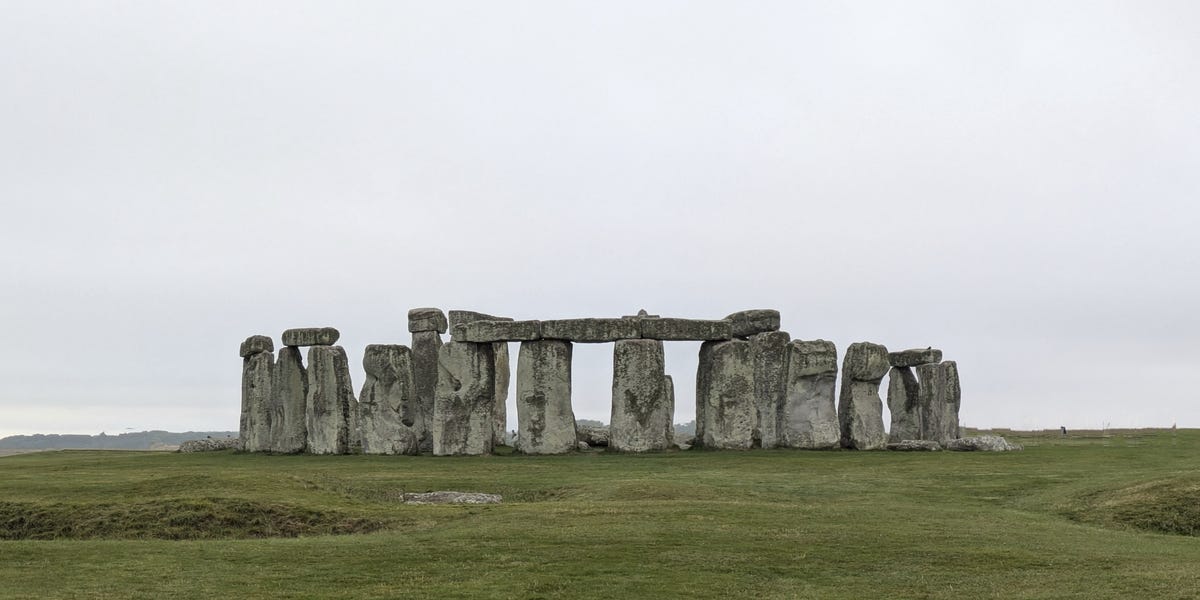
Stonehenge has been photographed, measured, debated, mapped, scanned, mythologized, and generally stared at from every possible angle. You might think that after centuries of attention, this famous stone circle had run out of surprises. Then archaeologists looked just a little farther across the landscape and found something that made even seasoned Stonehenge experts raise an eyebrow: a huge ring of mysterious pits near Durrington Walls, not far from Stonehenge itself.
For years, these pits were a puzzle. Were they natural sinkholes? Were they random geological oddities? Were they accidental holes left by some prehistoric construction project? The newest research points to a much more exciting answer: the 16 massive pits were deliberately created by humans during the Late Neolithic period, roughly 4,500 years ago. In other words, ancient people did not just build Stonehenge and call it a day. They were shaping an entire sacred landscape on a scale that still feels bold today.
The discovery matters because it changes how we think about the people who lived around Stonehenge. They were not simple villagers randomly dragging stones around the countryside. They were planners, builders, surveyors, ritual specialists, and organizers capable of coordinating huge communal projects. The pits near Stonehenge may look like holes in the ground, but archaeologically speaking, they are more like a giant message written into the chalk landscape.
What Exactly Did Scientists Find Near Stonehenge?
The mysterious pits were found around Durrington Walls, a massive Neolithic henge located about two miles northeast of Stonehenge in Wiltshire, England. Durrington Walls is not as famous as Stonehenge, mostly because it does not have a dramatic stone circle posing for postcards. But in archaeological terms, it is a heavyweight. It was one of the largest prehistoric enclosures in Britain and was closely connected with the wider Stonehenge ceremonial landscape.
The pits form two broad arcs around Durrington Walls and nearby Woodhenge. Together, these arcs suggest a huge circular arrangement more than 2 kilometers wide. Many of the pits are estimated to have been around 30 to 33 feet across and about 15 to 16 feet deep. That is not a casual afternoon digging project. That is “somebody please bring snacks, tools, and a very convincing project manager” territory.
Researchers originally identified a larger group of possible features, but later fieldwork confirmed 16 pits or probable pits in the arrangement. The key breakthrough was proving that these were not simply natural hollows. Their size, shape, alignment, fill layers, and dating evidence all point toward deliberate human construction or modification during the Late Neolithic period.
Why the Pits Were So Mysterious
At first glance, a pit is not exactly glamorous. Unlike Stonehenge’s upright stones, a buried pit does not immediately shout, “I am a prehistoric monument!” It whispers from underground, which is much less convenient for archaeologists and terrible for tourism brochures.
The mystery came from three main questions. First, were the pits natural or man-made? Chalk landscapes can produce natural solution hollows and sinkhole-like features, so skepticism was reasonable. Second, if humans dug them, were they part of one planned design or just separate features created at different times? Third, what purpose could such enormous holes possibly serve?
Those questions sparked debate after the pits were first announced in 2020. Some experts questioned whether all the features belonged to one coherent monument. Others wondered if the pattern was being overinterpreted. Archaeology is full of healthy arguments, which is good, because ancient people rarely leave polite instruction manuals.
The newer research campaign tackled those doubts directly. Instead of relying on one type of evidence, scientists used a combination of geophysical survey, coring, sediment analysis, geochemistry, dating methods, and environmental DNA. When multiple techniques point in the same direction, the conclusion becomes harder to dismiss.
How Scientists Proved the Pits Were Man-Made
The truth about the Stonehenge pits did not come from one dramatic shovel moment. It came from a scientific toolkit that sounds like it belongs in an archaeological detective show.
Geophysical Survey
Researchers used methods such as magnetometry, ground-penetrating radar, and electrical resistance techniques to detect underground features without digging up the whole landscape. These tools help archaeologists see differences in soil, buried cuts, fills, and disturbances. In a place as protected and historically sensitive as the Stonehenge World Heritage landscape, non-invasive methods are especially valuable.
Borehole Coring
Coring allowed researchers to extract narrow columns of sediment from the pits. These cores revealed layers of fill, clay, silt, and other materials that helped scientists understand how the pits were created and how they gradually filled over time. The evidence suggested deliberate excavation followed by natural infilling, rather than random geological collapse.
Optically Stimulated Luminescence Dating
Optically stimulated luminescence, often shortened to OSL, helps determine when mineral grains were last exposed to sunlight. That matters because sediment buried inside a pit can preserve clues about when the feature was cut, used, or filled. The dating evidence placed the pits in the Late Neolithic period, around the same broad era as major activity at Durrington Walls and Stonehenge.
Geochemistry and Environmental DNA
Geochemical testing examined the chemical signatures within pit sediments. Environmental DNA analysis looked for biological traces preserved in the soil. Together, these methods helped distinguish the pit fills from surrounding natural deposits and added context about the environment in which the pits were created.
The result: scientists concluded that the pits were part of a deliberate prehistoric structure. These were not random holes. They were planned features in a monumental landscape.
The Big Reveal: A Sacred Boundary, Not a Storage System
So what were the pits for? Archaeologists cannot say with absolute certainty, because the builders did not leave a sign saying, “Welcome to our ceremonial boundary, please respect the sacred chalk.” But the leading interpretation is that the pits may have marked a boundary around Durrington Walls and Woodhenge.
This boundary may have separated ordinary space from sacred or ceremonial space. In many ancient societies, boundaries were not just practical lines. They were symbolic thresholds. Crossing one could mean entering a different social, spiritual, or ritual zone. The pits may have helped define where special activities took place and where movement was controlled or guided.
That interpretation fits the wider Stonehenge landscape. Stonehenge itself was not isolated. It was part of a network of monuments, avenues, burial mounds, timber circles, henges, and settlements. Durrington Walls appears to have been a major place of gathering, feasting, and possibly seasonal ceremony. Woodhenge, nearby, adds another ritual element to the picture. The pits may have wrapped these places in a vast symbolic circle.
If that sounds ambitious, it should. A circle more than a mile wide is not something you accidentally create while looking for a place to dump leftover chalk. The arrangement suggests planning, measurement, and shared purpose.
Why Durrington Walls Matters
To understand the pits, you need to understand Durrington Walls. While Stonehenge is often associated with stone, death, ancestors, and long-term ritual memory, Durrington Walls is associated with timber structures, houses, feasting, and living communities. Archaeologists have found evidence of settlement activity there, including house floors, pottery, animal bones, and signs of large gatherings.
One popular interpretation is that Durrington Walls and Stonehenge were connected parts of a larger ceremonial journey. People may have moved through the landscape along the River Avon, traveling between spaces associated with the living and the dead, timber and stone, temporary life and enduring ancestry.
The pits add another layer to that story. They show that Durrington Walls was not merely a village near Stonehenge. It was a monumental center in its own right, surrounded by features that required extraordinary effort to create.
The Stonehenge Landscape Was More Than Stonehenge
One reason this discovery is so exciting is that it reminds us not to treat Stonehenge like a lonely celebrity standing in a field. Stonehenge was part of a crowded prehistoric neighborhood. The wider World Heritage landscape includes the Stonehenge Avenue, the Cursus monuments, Durrington Walls, Woodhenge, burial mounds, and many other features.
Modern visitors often focus on the stones because, frankly, they are hard to miss. But ancient people likely experienced the landscape as a connected world of routes, boundaries, gathering places, sightlines, watercourses, earthworks, and memory. The 16 pits near Durrington Walls help reveal that hidden complexity.
Think of Stonehenge as the most famous chapter in a much larger book. The pits are not a footnote. They may be an entire section we are only now learning how to read.
What the Discovery Tells Us About Neolithic People
The confirmation that the pits were human-made says a lot about Neolithic society in Britain. Digging one huge pit into chalk is hard. Digging many of them in a planned arrangement across a huge area is a different level of coordination.
The builders needed labor, leadership, shared beliefs, and practical knowledge of the land. They also needed a way to maintain the geometry of the arrangement over long distances. That does not mean they had modern surveying equipment, of course. Nobody was wandering around with a laser level and a reusable coffee cup. But it does mean they had effective systems of measurement, observation, and communication.
The pits also suggest that Neolithic communities could mobilize people for projects that were not strictly practical. These pits were probably not defensive ditches, wells, or food-storage facilities. Their value seems to have been symbolic, ceremonial, or cosmological. That is important because it shows that spiritual and social ideas could drive huge investments of time and energy.
Why the Number 16 Matters
The phrase “16 mysterious pits near Stonehenge” is catchy, but the number should be understood carefully. Research has identified 16 pits or probable pits in the current confirmed series, while earlier surveys discussed a larger set of possible shafts and anomalies. Some features remain uncertain because modern disturbance, incomplete preservation, or natural processes can complicate interpretation.
That is normal in archaeology. Ancient landscapes are not frozen in perfect condition. Farming, erosion, construction, military activity, weathering, and centuries of soil movement can blur the evidence. Scientists often work with probabilities, not Hollywood-style certainty.
Still, the confirmed and probable pits are enough to support the idea of a large planned structure around Durrington Walls. The number 16 is not just trivia. It reflects the state of current evidence after additional fieldwork and testing.
Could the Pits Have Had an Astronomical Purpose?
Whenever Stonehenge is involved, astronomy enters the chat wearing a dramatic cloak. Stonehenge is famously aligned with solstice events, and many prehistoric monuments show relationships with the sun, moon, or horizon. So it is natural to ask whether the Durrington pits also had an astronomical purpose.
The safest answer is: possibly connected to cosmological thinking, but not proven as a simple calendar. Researchers have suggested that the arrangement may reflect symbolic or cosmological ideas, especially because it appears to incorporate older features such as the Larkhill causewayed enclosure into the wider pattern. However, the pits should not be reduced to a prehistoric appointment calendar.
Ancient cosmology often blended landscape, ancestry, movement, ritual, seasons, and sky observation. The pits may have expressed a worldview rather than performed one narrow function. They could have marked a sacred boundary, guided movement, referenced older monuments, and reinforced communal identity all at once.
Why This Discovery Took So Long
It may seem surprising that such enormous pits could hide near one of the most studied archaeological sites in the world. But buried archaeology can be sneaky. The pits were filled in thousands of years ago, and from the surface they are not obvious. Without modern remote-sensing technology, they are easy to miss.
This is one of the great lessons of modern archaeology: discovery is not always about digging deeper. Sometimes it is about seeing differently. Geophysical survey, lidar, satellite imagery, coring, and laboratory analysis are transforming landscapes that scholars thought they already knew.
Stonehenge has not become less mysterious because of science. It has become more interesting. Every new method reveals that the ancient landscape was richer, stranger, and more carefully organized than earlier generations imagined.
What the Pits Were Not
It is also useful to clear away a few tempting but unsupported ideas. The pits were probably not alien landing pads, despite what the internet’s more enthusiastic corners may suggest after two cups of coffee. They were not medieval mining holes. They were not random craters. They were not simply discarded construction pits from Stonehenge.
The scientific evidence points toward Late Neolithic human activity. The pits belong to the same broad cultural world that created monumental earthworks, timber circles, stone settings, and ceremonial routes across southern Britain. That answer is less flashy than aliens, but much more impressive. Human beings with stone, wood, bone, antler tools, social organization, and shared belief created something enormous.
The Human Story Behind the Holes
The most powerful part of the discovery is not the pits themselves. It is the people behind them. Imagine a community gathering in the open chalkland. Some people dig. Others carry tools, food, water, and timber. Elders or ritual leaders may mark locations. Children watch from a safe distance, probably asking the Neolithic equivalent of “Are we done yet?”
The work would have been physically demanding. Chalk is not pudding. Creating deep, wide pits required persistence and coordination. The builders may have returned season after season, or they may have completed the work in a shorter burst of organized labor. Either way, the project would have reinforced community bonds and shared purpose.
That is what makes the pits so meaningful. They were not just holes. They were acts of cooperation. They turned belief into landscape.
Experiences Related to the Discovery: How to Understand the Pits Like a Visitor, Not Just a Reader
One of the best ways to appreciate the 16 mysterious pits near Stonehenge is to imagine visiting the wider landscape rather than only standing in front of the stone circle. Many people arrive at Stonehenge expecting one monument, one view, one photograph, and maybe one windy moment of wondering why they did not bring a warmer jacket. But the real experience becomes much richer when you think of the area as a connected ceremonial landscape.
Start with the scale. A pit circle more than 2 kilometers wide is difficult to picture on a phone screen. On the ground, that scale becomes almost emotional. You begin to realize that Neolithic builders were not thinking small. They were using the land itself as their material. Instead of building only upward, they also built outward, creating boundaries and relationships across fields, slopes, river routes, and older monuments.
A meaningful visitor experience would involve slowing down. Stonehenge rewards attention, but Durrington Walls rewards imagination. Much of what matters there is subtle. Banks are worn down. Ditches are softened. The pits are buried. This is not archaeology that jumps up and waves. It asks you to read clues: a curve in the land, the position of a nearby henge, the relationship between settlement and ceremony, the invisible ring suggested by scientific survey.
That kind of experience can be surprisingly powerful. You begin to understand that ancient monuments were not just objects. They were routes, gatherings, sounds, smells, meals, processions, and memories. At Durrington Walls, archaeologists have found evidence connected with feasting and settlement. That means the people who shaped the pit circle were not abstract “prehistoric humans.” They cooked, argued, laughed, organized labor, cared about seasons, and probably had very strong opinions about where things should go.
For students, travelers, and history lovers, the pits offer a great lesson in how science changes the past without ruining its wonder. Some people worry that explaining ancient mysteries makes them less magical. The opposite is true. Learning that the pits were man-made does not make them boring. It makes them astonishing. Natural sinkholes are interesting. A planned Neolithic boundary more than a mile wide is jaw-dropping.
The discovery also teaches patience. Archaeology often moves slowly because good evidence takes time. Researchers had to test competing explanations, compare natural and human-made features, analyze sediments, and date materials. That careful process is why the conclusion matters. It is not a guess dressed up in a lab coat. It is a layered argument built from multiple lines of evidence.
If you ever explore the Stonehenge landscape, whether in person or through maps and museum resources, the best mindset is curiosity. Do not ask only, “How did they move the stones?” Ask bigger questions. How did people organize themselves? What did boundaries mean? Why did older monuments matter? How did a community remember its ancestors? Why would people spend so much effort creating something that could only be fully understood at landscape scale?
Those questions turn the pits from a headline into a human experience. They remind us that ancient people were intelligent, creative, and deeply invested in meaning. They did not leave us a written explanation, but they left marks in the earth. Thanks to modern science, those marks are finally speaking more clearly.
Conclusion: The Truth Beneath the Stonehenge Landscape
The truth about the 16 mysterious pits near Stonehenge is both simple and profound: they were not random natural features. They were part of a deliberate, large-scale Neolithic monument surrounding Durrington Walls, likely connected with ceremony, boundary-making, and the wider sacred geography of the Stonehenge landscape.
This discovery changes the story from “mysterious holes” to “monumental planning.” It shows that the communities who built and used Stonehenge were capable of shaping enormous spaces with precision and purpose. They did not see the landscape as empty ground. They saw it as a living map of belief, memory, movement, and identity.
Stonehenge will always command attention, and rightly so. But the pits near Durrington Walls remind us that some of the most important archaeological discoveries are not standing tall in plain sight. Sometimes they are buried, waiting for science to ask the right questions.