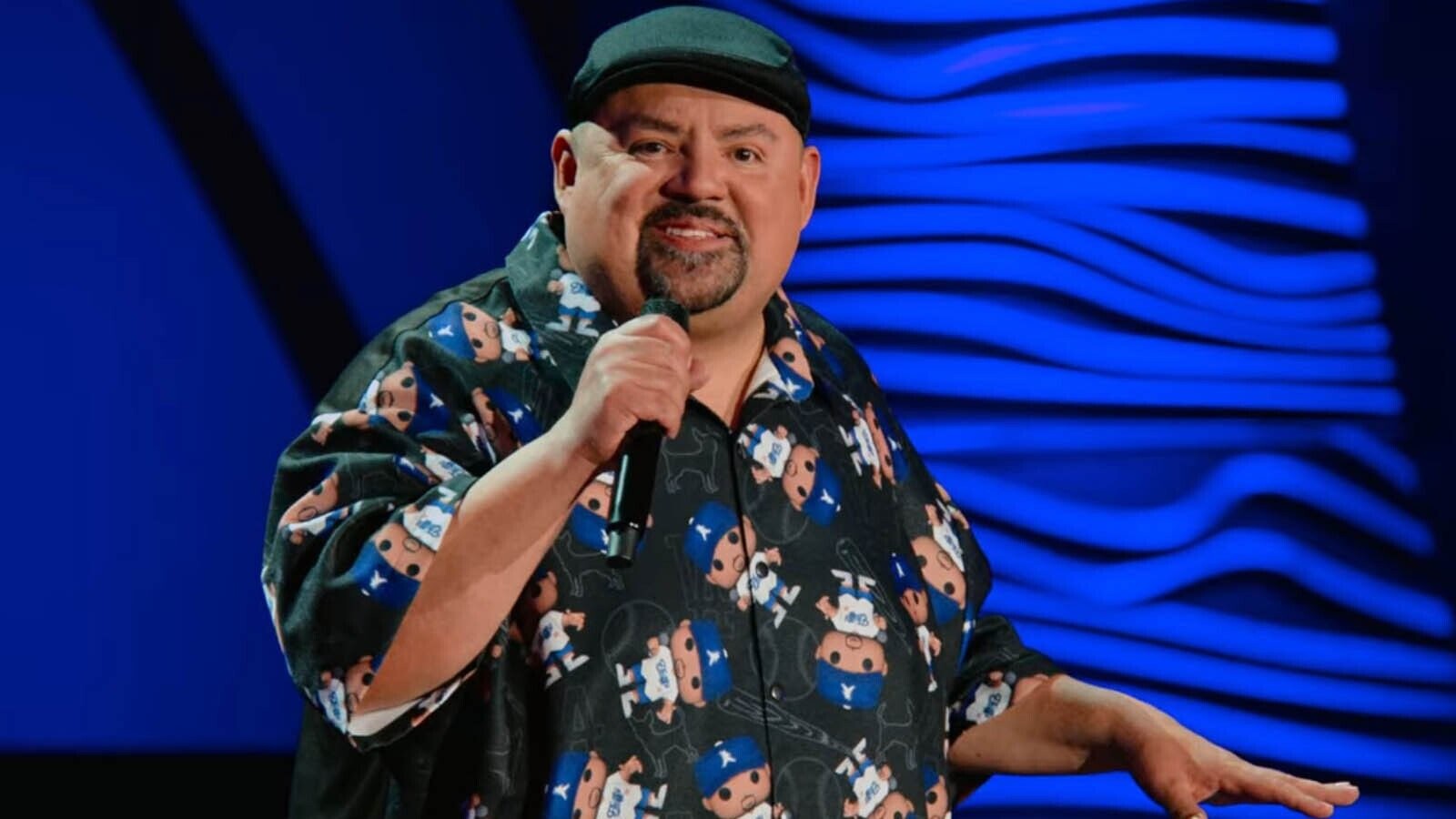
Gabriel Iglesias has built a career on sounding like the guy at the cookout who has the best story, the loudest sound effects, and somehow the most suspiciously detailed memory of every embarrassing thing that ever happened to him. In his Netflix special Gabriel Iglesias: Stadium Fluffy, the comedian turns one of the most serious phrases in modern entertainment“getting canceled”into a long, ridiculous, surprisingly thoughtful comedy ride.
The joke is not simply that Iglesias, better known as “Fluffy,” was almost canceled once. It is that the phrase keeps popping up like a notification you cannot swipe away. A blackmail threat? Almost canceled. A tweet about chicken nuggets? Almost canceled. Old material aging badly? Almost canceled. Voicing Speedy Gonzales? Somehow, also almost canceled. At a certain point, the special starts to feel less like a stand-up set and more like a customer-service hotline for modern outrage: “Thank you for calling Public Opinion. Your estimated wait time is forever.”
But underneath the laughter, Iglesias is doing something smarter than simply complaining about cancel culture. He is testing the difference between accountability and pile-on behavior, between learning and getting yelled at, and between comedy that grows with the times and comedy that exists mainly to poke the bear. In typical Fluffy fashion, he wraps the whole thing in jokes about food, dogs, family, fame, and the weird economy of celebrity freebies.
Why This Netflix Special Matters
Stadium Fluffy is not just another comedy hour filmed in front of a polite crowd. The special was taped at Dodger Stadium during Netflix Is a Joke: The Festival, making it a landmark moment in Iglesias’ career. For a comedian whose brand has always been warmth, storytelling, and big animated voices, the stadium setting gave his material a grander emotional frame. He was no longer just the lovable comic with the Hawaiian shirt and the sound effects. He was a comedian standing inside a massive venue, looking back at decades of work and asking: How did I get here without stepping on every rake in the internet’s backyard?
The answer, according to the special, is: barely. Iglesias presents himself as someone who has tried not to be divisive. He often avoids the topics that split audiences instantlypolitics, religion, and sportsand leans instead into everyday experiences. Food brings people together. Dogs bring people together. Embarrassment brings people together, especially when it happens to someone else and Netflix pays to film it.
That reputation matters because Iglesias is not known as a shock comic. He is not a stage arsonist trying to set the room on fire and then sell tickets to the smoke. His comedy usually feels like hanging out with an old friend who can turn a trip to a restaurant into a full theatrical production. So when he talks about being nearly canceled, the tension comes from the mismatch: if even Fluffy can get dragged into a controversy, what chance does anyone else have?
The “Almost Canceled” List: A Comedy Survival Log
One of the funniest structural choices in the special is how Iglesias treats controversy like a running count. Each story adds another entry to the unofficial Fluffy danger file. He is not presenting himself as a victim in a dramatic way. Instead, he acts more confused than wounded, like a man who opened the wrong group chat and found out everyone was mad at him.
1. The Extortion Story
The first “almost canceled” moment involves an alleged extortion attempt. According to the story, someone claimed there was damaging footage that could end his career unless money was paid. The twist is that the threat sounded serious until the details became absurd. Iglesias turns the situation into a joke about celebrity ranking, noting that the amount demanded from him seemed hilariously small compared with what someone might try to demand from a bigger celebrity.
The humor works because it flips fear into insecurity. Most people would panic at the idea of a scandal. Iglesias finds a way to be offended that the imaginary scandal was not priced higher. That is classic Fluffy: even in a crisis, he manages to make the punchline about self-worth, snacks, or both.
2. The Chick-fil-A Tweet
The most memorable cancel-culture story in the special involves a dog, a craving, and a fast-food tag. Iglesias says he posted about taking one of his dogs to get chicken nuggets and tagged Chick-fil-A. To many viewers, that sounds like a harmless celebrity food post. To others, it touched a larger controversy because of the company’s history of criticism from LGBTQ+ advocates.
Iglesias frames the backlash as a moment of confusion. He did not understand why people were angry at first. His broader point is that online criticism often arrives as an attack before it arrives as an explanation. That is where the bit becomes more than “people are too sensitive.” He acknowledges that people have real causes and real reasons to care. At the same time, he argues that nobody can keep up with every issue unless someone is willing to explain it without instantly treating ignorance as evil.
Then comes the very Fluffy confession: he tags companies because sometimes companies send free stuff. This turns the whole ethical storm into a burrito-card economy. He is not trying to launch a political statement, he suggests; he is trying to see if a brand will reward his enthusiasm with snacks. It is silly, but it also reveals why the joke connects. Most people are not public intellectuals when they post online. Sometimes they are just hungry and hoping a burrito corporation is listening.
3. Old Comedy Specials in a New Rulebook
Iglesias also talks about the fear that old material can be judged by newer standards. This is one of the biggest debates in stand-up comedy. A joke that landed in one cultural moment may feel awkward, careless, or outdated in another. Comedians often ask whether they should apologize for past jokes, defend them as products of their time, or simply stop using them and move forward.
Fluffy’s position is more complicated than a simple refusal to change. He suggests that he would say certain things differently now, but he resists apologizing for material that was accepted in the context in which it was performed. Whether every viewer agrees with that or not, it creates a real conversation about comedy’s shelf life. A stand-up special is not just a performance; it becomes a time capsule. Unfortunately, the internet treats time capsules like fresh evidence.
4. Speedy Gonzales and Representation
Another major almost-canceled moment came from Iglesias voicing Speedy Gonzales in Space Jam: A New Legacy. The character has long been debated because some viewers see Speedy as a beloved Mexican icon while others view parts of the old cartoons as stereotypical. Iglesias leaned into the role proudly, arguing through humor that the character mattered to him and to many Latino fans.
This is where the special touches on representation in a way that is funny but not shallow. For some audiences, Speedy Gonzales is an outdated cartoon. For others, he is one of the rare Mexican-coded characters from classic American animation who was clever, fast, and always winning. Iglesias understands why people may question old stereotypes, but he also understands why communities sometimes protect imperfect symbols when there are not enough better ones on the shelf.
Fluffy’s Comedy Strategy: Make the Audience Feel Invited
One reason Gabriel Iglesias survives tricky subjects is that his stage persona rarely feels cruel. He is animated, self-deprecating, and physically expressive. He builds jokes like little movies. There are characters, voices, pauses, sound effects, and sudden emotional turns. He can make a phone call sound like a chase scene and a restaurant visit feel like a Marvel sequel with extra cheese.
That matters when discussing cancel culture because tone changes everything. A comic who sounds bitter can make the topic feel like a lecture. Iglesias sounds bewildered, hungry, and slightly offended that nobody brought snacks to the debate. The softness of his persona lets him talk about internet outrage without turning the stage into a courtroom.
He also knows when to make himself the joke. In the Chick-fil-A story, he does not present himself as a philosopher of free speech. He presents himself as a man trying to get free food. In the extortion story, he is not a fearless warrior. He is annoyed that his alleged scandal was discounted. That humility gives the audience permission to laugh without feeling like they have enlisted in a culture war.
Cancel Culture, Accountability, and the Comedy Middle Ground
The phrase “cancel culture” has become so overused that it can mean almost anything. Sometimes it refers to legitimate criticism. Sometimes it refers to consequences. Sometimes it refers to an online mob moving faster than facts. And sometimes it refers to a celebrity discovering that Twitter is not a diary, a lawyer, or a therapist.
Iglesias’ special works best when it stays in the messy middle. He does not deny that some people should be held accountable. He also does not pretend that every backlash is thoughtful, fair, or proportional. His strongest point is that correction without communication is not education. If the goal is to make people better, then explanation matters. If the goal is only to punish, then nobody learns much except how to hide better.
That idea gives the special its deeper value. Iglesias is not asking for a world where comedians can say anything without response. He is asking for a world where intent, context, growth, and conversation still count. Whether you agree with every punchline or not, that is a healthier argument than the usual internet menu of “destroy him” or “he did nothing wrong.” Real life is messier. Comedy is messier. And Fluffy, naturally, is going to bring nachos.
How the Special Fits Into Gabriel Iglesias’ Netflix Era
By the time Stadium Fluffy arrived, Iglesias had already built a strong relationship with Netflix. His earlier specials, including I’m Sorry for What I Said When I Was Hungry and One Show Fits All, helped expand his streaming audience. He also starred in the Netflix sitcom Mr. Iglesias, playing a good-hearted public school teacher trying to help underperforming students.
That broader Netflix presence is important because it shows why Stadium Fluffy feels like a career checkpoint. It is partly a victory lap, partly a confession booth, and partly a reminder that mainstream popularity can be its own pressure cooker. The more famous Iglesias becomes, the more every post, joke, and casting choice can be pulled into public debate.
His later special, Gabriel Iglesias: Legend of Fluffy, continued that Netflix chapter by returning to personal storytelling. Filmed at the Seminole Hard Rock Hotel & Casino in Hollywood, Florida, it explored themes like dating, unexpected danger, and life after major career milestones. Together, the specials show a comedian trying to stay accessible while performing on bigger and bigger stages.
Why Audiences Still Root for Fluffy
Gabriel Iglesias has a rare connection with fans because he feels familiar without being ordinary. He is a stadium-level comedian who still tells stories like the guy who got stuck explaining something awkward at a family party. His voice work, touring success, Netflix specials, and huge social media following all prove that his appeal crosses generations.
But his biggest advantage may be trust. Audiences generally believe he is trying to make people laugh rather than hurt them. That trust gives him space to explore sensitive topics with a lighter touch. It does not mean every joke will work for every person. No comedian gets that guarantee, unless the audience has been replaced by extremely polite furniture. But it does mean viewers are more likely to hear him out.
In Stadium Fluffy, the almost-canceled stories become a way to talk about modern communication. We live in a time when people can be corrected instantly, judged permanently, and misunderstood globally before lunch. Iglesias turns that anxiety into comedy by making himself the confused main character. He is not above the chaos. He is inside it, waving a chicken nugget and asking what just happened.
Experience Section: What Watching Fluffy’s “Almost Canceled” Stories Feels Like
Watching Gabriel Iglesias count the times he was almost canceled feels a lot like sitting next to your funniest uncle while he explains why the internet is mad at him. You may not agree with every sentence, but you keep listening because the delivery is warm, fast, and packed with enough personality to power a small food truck. He does not simply tell the audience, “People got mad.” He acts out the confusion, the phone calls, the comments, the panic, the food cravings, and the tiny emotional injuries along the way.
The experience is especially interesting if you have ever posted something online and later realized that strangers can interpret it in ways you never imagined. Most ordinary people do not have millions of followers, but almost everyone understands the feeling of being misunderstood. Maybe you wrote a joke in a group chat that landed with the grace of a dropped taco. Maybe you liked the wrong post. Maybe you used a word that was normal ten years ago and suddenly sounded like it had been stored in a dusty attic with an old fax machine. Iglesias turns that social anxiety into something laughable.
His Chick-fil-A story, for example, works because it starts with a simple everyday action: feeding a dog and tagging a brand. Then the internet enters the room wearing a judge’s robe. The comedy comes from the gap between his intention and the reaction. He thought he was making a cute food post. Some viewers saw a political or social statement. That gap is where modern online life often becomes exhausting. Iglesias does not solve that problem, but he makes it easier to laugh at how quickly things escalate.
The Speedy Gonzales story creates a different viewing experience. It asks the audience to think about who gets to decide what representation means. A character can be controversial and beloved at the same time. A symbol can carry stereotypes and still have emotional value for people who grew up seeing very few characters who looked or sounded connected to them. Iglesias does not turn that into a college lecture. He turns it into a personal defense wrapped in jokes, which is probably the only way a cartoon mouse could survive a public relations crisis.
The most relatable part of the special may be Iglesias’ repeated suggestion that people need to explain more and attack less. That idea lands because so much online criticism feels designed to win points rather than change minds. Viewers who are tired of outrage cycles may find his approach refreshing. Viewers who care deeply about accountability may still appreciate that he is not dismissing every concern. The experience sits somewhere between a comedy show and a group therapy session where the therapist has a Hawaiian shirt and does sound effects.
By the end, the special leaves the audience with a useful feeling: laughter does not erase complicated issues, but it can make them easier to discuss. Gabriel Iglesias counts his almost-cancellations not to prove that he is untouchable, but to show that even a famously friendly comic can stumble into the modern outrage machine. His secret weapon is not anger. It is charm, timing, self-mockery, and the ability to make even a career-threatening story sound like it should come with a side of fries.
Conclusion
Gabriel Iglesias: Stadium Fluffy turns cancel culture into a comedy scrapbook full of near-misses, misunderstandings, and very Fluffy punchlines. The special succeeds because Iglesias does not perform the topic like a bitter lecture. He performs it like a man who wandered into a social debate while trying to get snacks and somehow left with a stadium full of people laughing.
His stories about extortion, old jokes, Chick-fil-A, and Speedy Gonzales reveal a comedian navigating a fast-changing entertainment landscape. He is not asking audiences to ignore harm or stop caring about representation. He is asking for context, patience, and the chance to learn without being instantly flattened by the outrage truck. In a world where every joke can become a screenshot and every screenshot can become a trial, Fluffy’s best defense is still the thing that made him famous: storytelling that feels human.
For longtime fans, the special is a reminder of why Iglesias remains one of the most beloved comedians in American stand-up. For new viewers, it offers a clear introduction to his style: big energy, big heart, big crowd, and jokes that usually find their way back to food. If cancel culture is the storm cloud, Gabriel Iglesias is the guy standing under it with a microphone, a dog story, and a suspiciously strong plan to get free burritos.