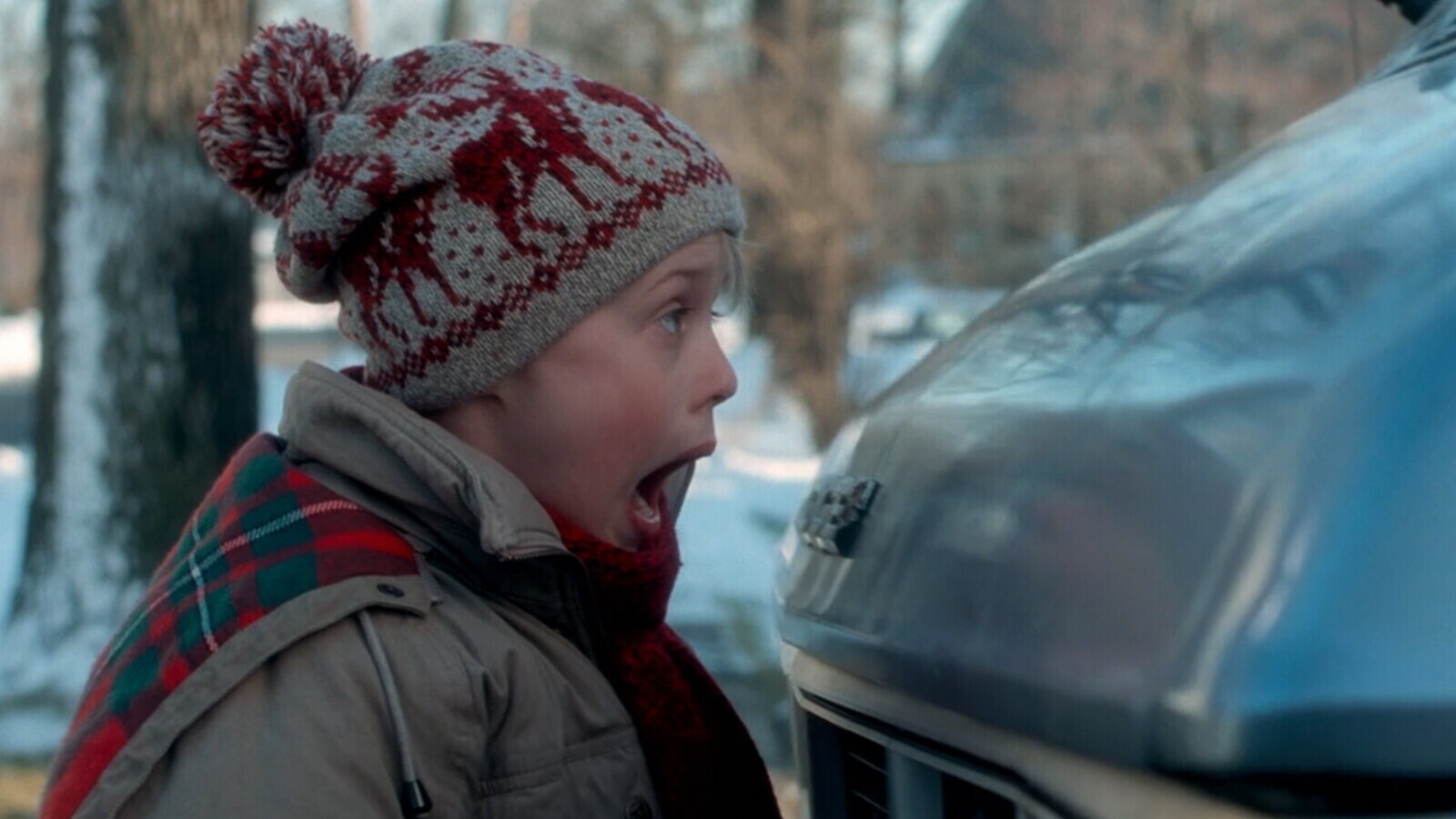
For a movie about Christmas lights, microwaved macaroni, and a child weaponizing household hardware like a tiny suburban war engineer, Home Alone has an impressively strange emotional range. It is sweet. It is silly. It is chaotic. It is also, every so often, just a little unhinged. That tonal cocktail is a big reason the movie still works. It knows how to make a kid feel powerful, a parent feel guilty, and an audience laugh at things that would absolutely send a real emergency room into full panic mode.
But if you ask what the darkest joke in Home Alone really is, the answer is not a falling iron, a scorched scalp, or even a tarantula-assisted scream. The darkest joke is Buzz’s story about Old Man Marley: the whispered neighborhood legend that the old man murdered his family and used salt to hide the evidence. That is the moment when Home Alone quietly dips one toe into campfire-horror territory, then grins and keeps walking like nothing happened.
And honestly? That is what makes it genius. The movie slips a deeply macabre rumor into a family comedy, lets it rattle around in Kevin’s brain, and then transforms that fear into one of the film’s warmest emotional payoffs. In other words, Home Alone tells a murder joke, hands it to a bully of an older brother, and somehow uses it to teach compassion. That is either brilliant screenwriting or the most festive act of tonal smuggling ever committed in a PG movie.
The Joke That Is Much Darker Than the Booby Traps
Most people remember Home Alone for the trap montage, because of course they do. The movie basically becomes a live-action cartoon in its final stretch. Kevin turns ordinary objects into instruments of humiliation, and Harry and Marv become two human crash-test dummies with surprisingly durable skulls. It is loud, exaggerated, and designed to make the audience laugh at impact rather than recoil from it.
The Marley joke is darker because it is not cartoon violence. It is a rumor about a lonely old man who has supposedly butchered his own family. That is a different flavor entirely. Buzz does not describe Marley as weird, grumpy, or spooky in a Halloween-store kind of way. He frames him like an escaped local nightmare. For a movie otherwise built on holiday warmth and kid wish-fulfillment, that is a wild swing.
Even better, the scene is told with exactly the kind of confidence older siblings use when they want to terrify younger kids for sport. Buzz does not merely tell a scary story. He performs it. He sells it. He serves it with the smug energy of a kid who knows that fear is funnier when someone else is doing the trembling. Every family has a Buzz, even if that person is now forty-three and pretending they were “just joking.”
Why This Joke Lands So Hard
It Feels Weirdly Plausible to a Child
That is the first trick. To an adult, Buzz’s story is ridiculous. To a kid, it is exactly the kind of neighborhood rumor that feels one hundred percent possible. Children live in a world where incomplete information turns into mythology at alarming speed. A quiet neighbor becomes a monster. An abandoned house becomes haunted. A man walking alone with a shovel becomes the stuff of suburban folklore by lunch.
Home Alone understands that perfectly. Kevin is not stupid; he is eight. That is different. Children do not need airtight evidence to believe something scary. They just need atmosphere, a convincing storyteller, and one bad encounter in a dimly lit drugstore. The movie uses that child logic beautifully.
The Film Plays the Fear Straight Before It Defuses It
Here is where the movie shows real discipline. It does not reveal the truth about Marley right away. It lets Kevin stew in that fear. The camera lingers. The score leans into the unease. Marley is framed less like a cranky retiree and more like someone who wandered in from a different movie, preferably one involving fog, suspicion, and a sheriff who says, “We’ve seen this before.”
That delayed payoff matters. If the movie winked too early, the joke would die. Instead, it lets Marley become a genuine symbol of dread in Kevin’s mind. That means the reveal later, when Kevin meets him in church and discovers a sad, decent, lonely man, lands with actual emotional force.
It Is Funny Because It Is So Inappropriate
There is also a very specific kind of comedy at work here: the laugh that comes from a movie casually tossing something much darker into a cheerful setting. Christmas decorations are up. The soundtrack is magical. The house is bustling with holiday chaos. And in the middle of all that, a kid announces a serial-killer legend like he is discussing the weather.
That tonal whiplash is funny because it is so unexpected. The joke is not only the content. The joke is that this content exists in this movie at all.
Old Man Marley Is the Movie’s Secret Emotional Engine
What makes the joke unforgettable, though, is that Marley is not there merely to spook Kevin. He is there to complete the film’s emotional argument. Home Alone is not just about a kid defending a house. It is about misreading people, taking family for granted, and learning that fear often fills the space where understanding should be.
Kevin begins the story angry at his family and frightened by Marley. By Christmas Eve, he has changed on both fronts. He misses the people he thought he wanted to escape, and he discovers that the “monster” next door is simply a man who made a painful mistake and does not know how to repair it. That is not a side plot. That is the soul of the movie wearing snow boots.
In lesser hands, Marley would have stayed a punchline. In Home Alone, he becomes the film’s moral center. That is why the darkest joke ends up being the most meaningful one. It starts as cruelty and ends as empathy.
Why the Slapstick Somehow Feels Lighter
This sounds backwards, but the booby traps are not actually the darkest material in the movie, even though they are objectively more violent on screen. Why? Because the film treats them like a cartoon. The rules change when Harry and Marv enter the house. Physics gets goofy. Pain becomes percussion. Every impact is staged for rhythm, surprise, and release.
The Marley rumor is darker because it lives in the movie’s more realistic emotional register. It taps into the kind of fear children really have: fear of strangers, fear of old houses, fear of neighborhood myths, fear that terrible things can hide inside ordinary-looking people. That sticks deeper than a paint can to the face ever could.
It also reveals something sly about John Hughes’s writing and Chris Columbus’s direction. They know the movie cannot run on mayhem alone. The slapstick needs emotional contrast. The scary rumor about Marley helps create that contrast. It gives the movie an edge, then lets the story soften that edge in a deeply satisfying way.
The Movie’s Tonal Balancing Act Is Wildly Skilled
One reason Home Alone has survived for decades is that it never commits to just one mode. It is a family comedy, yes, but it also behaves like a childhood fantasy, a holiday movie, a mini-thriller, and an urban legend passed around in the dark. That should be a mess. Instead, it works because the film understands timing.
The scary bits come in short, memorable jolts. The heartfelt bits are simple and sincere. The comic bits are oversized on purpose. Even the music helps manage the mood swings. John Williams gives the movie wonder, melancholy, suspense, and playfulness without making any of those feelings fight each other for space. It is one of the reasons Kevin’s panic around Marley feels real, but never so heavy that the whole movie tips into nightmare territory.
That tonal control also explains why the movie can hold two apparently ridiculous ideas at once: “A child is in danger” and “This is delightful.” Plenty of films try that trick. Few pull it off with this much confidence. Home Alone practically ice-skates over the gap.
Why the Marley Joke Ages Better Than You Might Expect
Some jokes from older family movies now feel dusty, overplayed, or trapped in the pop culture amber of their own decade. The Marley joke still works because it is built on something timeless: gossip, fear, and the ease with which communities turn isolated people into stories. That dynamic has not gone anywhere. If anything, it has just migrated online and gotten Wi-Fi.
Watch the film now, and the joke lands differently depending on your age. As a kid, you understand Kevin. As an adult, you understand Marley. That is the movie’s little miracle. The same scene that once felt spooky starts to feel sad. Suddenly the darkest joke is not that children think Marley is a murderer. It is that loneliness makes people easy to mythologize and even easier to ignore.
That shift is what elevates the film from beloved holiday hit to something a little richer. Home Alone knows that childhood fear can be ridiculous, but it also knows those fears come from somewhere. Usually from older siblings. Sometimes from a neighborhood. Sometimes from the stories we invent because reality is harder to sit with than fantasy.
The Rewatch Experience: Why This Joke Hits Differently Over Time
One of the strangest pleasures of revisiting Home Alone is realizing that the movie changes depending on when in your life you watch it. As a child, the Marley joke feels enormous. It has the scale of a legend. He is not just a creepy guy on the block; he is proof that the world outside your front door might contain secret horrors. You watch Kevin freeze when he sees Marley, and you think, yes, exactly, that is the correct response when a rumored shovel killer appears near the mint gum.
Then you watch the movie a few years later, and the joke starts to become funny for a different reason. You recognize Buzz as the kind of older brother who would absolutely invent a horrifying story because there is no greater adolescent hobby than emotionally terrorizing a younger sibling while pretending it is character-building. At that age, the scene becomes less about Marley and more about family hierarchy. Buzz is not just mean; he is a one-boy misinformation campaign in a Chicago Bulls bedroom.
Then adulthood arrives, and suddenly the whole thing shifts again. You stop seeing Marley as scary and start seeing him as heartbreaking. He is an older man living under the weight of a rumor, cut off from his son, reduced in neighborhood lore to a punchline with a shovel. That is when the joke turns from darkly funny to quietly sharp. You realize the movie is not simply saying that Kevin was wrong. It is saying that communities casually dehumanize people all the time, especially the lonely, the elderly, and the misunderstood.
That is why the church scene remains one of the movie’s best moments. It does not just solve a plot point. It rewires the audience’s emotional memory. The old man we were invited to fear becomes the adult who gives Kevin the calmest, wisest conversation in the entire film. He is the only person who speaks to Kevin without barking, mocking, dismissing, or panicking. In a movie full of noise, Marley is the stillness.
And that is also why the joke lingers after the traps, the screams, and the one-liners. Plenty of holiday comedies can make you laugh once. Far fewer can make you revisit your own reaction years later. Home Alone does. It asks you to remember how easy it was to believe scary stories as a kid, then gently reminds you that the people inside those stories are often more human than the rumor machine ever allowed. For a movie famous for chaos, that is a surprisingly mature bit of emotional architecture.
So yes, the darkest joke in Home Alone is also one of its smartest. It terrifies children, amuses adults, and eventually teaches both groups the same lesson: fear is loud, gossip is lazy, and the lonely old man next door may just be the kindest person in the movie. Not bad for a film that also asked us to laugh at a man getting hit in the face by an iron.
Conclusion
Home Alone remains a holiday classic because it understands that childhood is never just one thing. It is freedom and fear, mischief and loneliness, fantasy and misunderstanding all bundled together under one oversized winter coat. The Marley rumor is the film’s darkest joke because it reaches beyond slapstick and into something more recognizable: the way kids weaponize rumors, the way neighborhoods invent monsters, and the way loneliness can make an innocent person seem sinister from a distance.
But the movie does not leave that darkness sitting there. It flips it. It reveals the humanity behind the myth, gives Kevin a moment of real growth, and reminds viewers that the scariest stories are often the least true. That is why the joke still lands. It is funny, yes. It is macabre, definitely. But it also carries the emotional charge that makes Home Alone more than a collection of iconic gags. Beneath all the holiday chaos, it is a movie about learning to see people clearly.