Before LEDs took over our ceilings, dashboards, flashlights, desk lamps, refrigerators, holiday decorations, and probably the secret emotional life of your Wi-Fi router, electric lighting was a glorious experimental mess. Inventors were not simply improving the light bulb. They were asking a much stranger question: “What can we make glow without immediately destroying itself?”
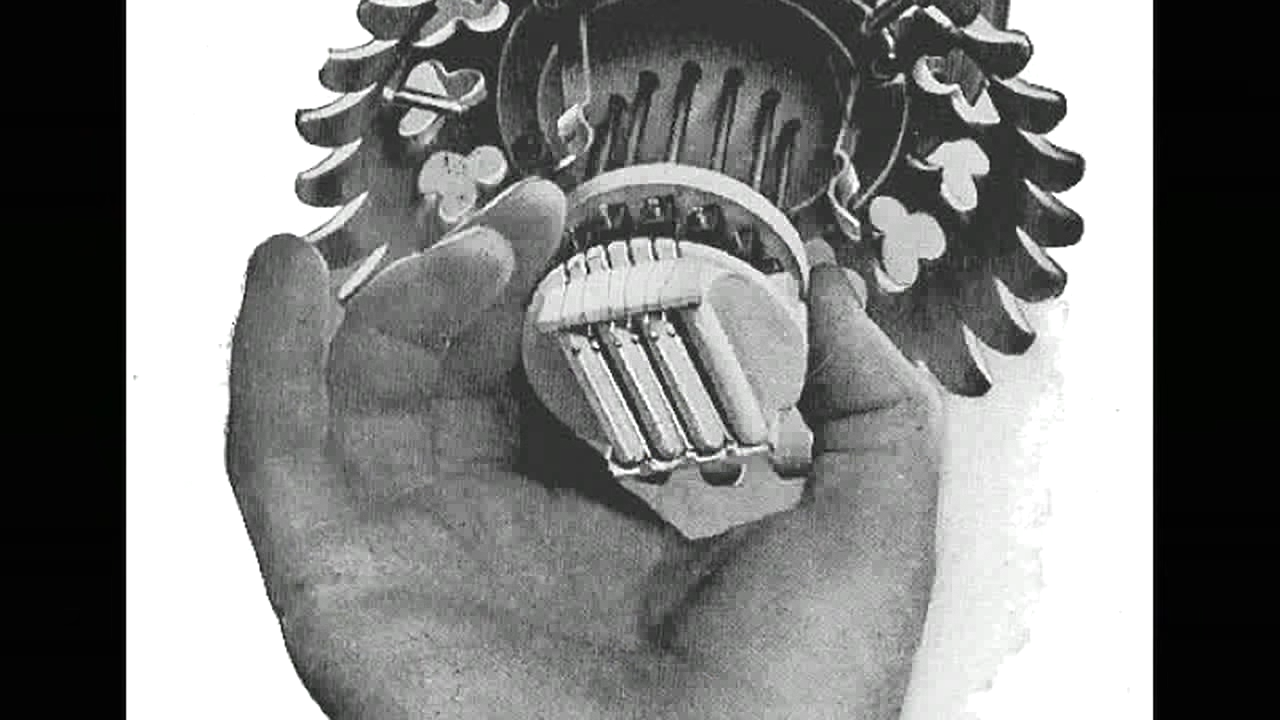
One of the most fascinating answers was the Nernst lamp, an early electric lamp invented by German physicist and chemist Walther Nernst in 1897. It was not quite a carbon-filament bulb, not quite a tungsten lamp, and definitely not something you would casually screw into a modern socket while standing barefoot in the garage. Instead of a delicate carbon filament sealed in vacuum, the Nernst lamp used a ceramic rod, called a glower, made from rare-earth oxide materials such as zirconium oxide and yttrium oxide. Once heated, that little ceramic stick conducted electricity and shone with a bright, white, surprisingly pleasant light.
For a brief but meaningful period, the Nernst lamp looked like the future. It was more efficient than the carbon-filament lamps of its day, produced a whiter light, and could operate in ordinary air because its glowing element was already oxidized. In other words, it was the rare vintage technology that solved a real problem, looked slightly ridiculous doing it, and still has enough charm to make modern electronics fans lean closer and say, “Wait, it did what?”
What Is a Nernst Lamp?
A Nernst lamp is an early form of incandescent electric lamp that uses a heated ceramic element instead of a metal or carbon filament. That ceramic element is known as a Nernst glower. When the glower reaches a high enough temperature, it becomes electrically conductive. Current then passes through it, heating it further until it emits visible light.
The lamp’s basic trick was wonderfully clever. Ordinary incandescent bulbs of the late 19th century needed a vacuum bulb to protect the carbon filament from oxygen. If oxygen reached the hot filament, the filament burned away, which is generally a bad feature in a lighting product unless your business model is “sell disappointment by the box.” The Nernst lamp avoided that problem because its glower was made of oxide ceramics. Since the material was already oxidized, exposure to air did not ruin it in the same way.
Most Nernst lamps still used a glass enclosure, but not because the glower needed vacuum protection. The glass helped shield people and objects from the extremely hot glowing element. The lamp could technically operate in open air, but leaving an incandescent ceramic rod exposed in a room is the kind of design choice that makes fire insurance companies develop a nervous twitch.
Who Was Walther Nernst?
Walther Hermann Nernst was not a lucky tinkerer randomly poking wires into household objects. He was one of the most important physical chemists of his era. Born in 1864, he became known for major work in electrochemistry, thermodynamics, solid-state chemistry, and photochemistry. Many students meet his name through the Nernst equation, which describes how electrode potential changes with ion concentration. Chemistry students often remember it as the equation that arrives right when the semester stops being polite.
Nernst later received the 1920 Nobel Prize in Chemistry for his work in thermochemistry, especially the heat theorem that helped shape the Third Law of Thermodynamics. But he was also mechanically curious and commercially aware. The Nernst lamp shows that side of him beautifully: a scientist taking deep knowledge of materials and conductivity, then turning it into a practical device for the electric age.
That matters because the 1890s were a turning point. Electrical technology was moving from heroic workshop experimentation toward research-driven engineering. The Nernst lamp was not just another bulb; it was a sign that modern industry increasingly needed trained scientists, advanced materials, and corporate laboratories. The glow on the wall was also a glow from the future of research and development.
How the Nernst Lamp Works
The most important thing to know about the Nernst lamp is also the reason it seems so wonderfully fussy: the ceramic glower does not conduct electricity well at room temperature. You cannot simply flip the switch and expect current to flow through a cold glower. First, it must be heated.
The Starting Problem
Early Nernst lamps solved this with a separate heater. When the lamp was switched on, heater coils warmed the ceramic glower. As the glower temperature rose, its electrical resistance dropped. Eventually it became conductive enough for current to pass through the glower itself. At that point, a mechanism in the lamp shifted current away from the heater and into the glower.
In modern terms, the lamp needed a warm-up sequence. Today we complain if a laptop takes twelve seconds to wake from sleep. A Nernst lamp would like to remind us that early electrical convenience sometimes involved coaxing a ceramic rod into cooperating like a tiny opera singer clearing its throat.
The Ceramic Glower
The glower was commonly made from a mixture involving zirconium oxide and yttrium oxide. These materials could withstand high temperatures and, once hot, conduct electricity. When current flowed, the glower heated to incandescence and produced light.
This made the Nernst lamp different from both carbon-filament bulbs and later tungsten-filament bulbs. Carbon and tungsten filaments are conductive from the start and glow because electrical resistance heats them. The Nernst glower needed initial heating before it joined the party. Once operating, however, it could produce a bright, white light that many observers considered closer to daylight than the warmer, yellower glow of carbon-filament lamps.
Why the Nernst Lamp Was a Big Deal
The Nernst lamp arrived at a time when electric lighting was already exciting but still imperfect. Carbon-filament bulbs were practical, but they were not especially efficient by modern standards. They also tended to produce a warm amber light. The Nernst lamp offered several advantages that made it a serious competitor.
It Was More Efficient Than Carbon-Filament Lamps
One of the major selling points of the Nernst lamp was efficiency. Historical sources commonly describe it as roughly twice as efficient as the carbon-filament lamps it challenged. That did not make it efficient by modern LED standards, of course. Compared with today’s lighting, a Nernst lamp is less “energy saver” and more “historical space heater with ambition.” But in its own era, using less electricity for a brighter, whiter light was a meaningful achievement.
It Produced a Whiter, More Natural Light
People noticed the color. Carbon-filament bulbs often produced a yellowish glow. The Nernst lamp’s ceramic glower emitted a whiter light, which made interiors feel brighter and more natural. That was not merely a cosmetic advantage. Better color and brightness mattered in shops, factories, laboratories, offices, and homes where electric light was still competing with gaslight, arc lamps, and old habits.
It Did Not Need a Vacuum Bulb
The ability to operate without vacuum protection was technically elegant. Vacuum technology was a major part of early incandescent lamp manufacturing. By using a glower that would not be destroyed by oxygen in the same way as carbon, the Nernst lamp dodged one of the classic problems of incandescent design.
That advantage did not last forever, but it was impressive. In a world where lamp makers were fighting over patents, materials, manufacturing methods, and power systems, any design that sidestepped a major limitation deserved attention.
Commercial History: From Laboratory Star to Market Contender
Walther Nernst developed the lamp in Göttingen, Germany, and the design soon attracted commercial interest. In Europe, the lamp was associated with AEG, while in the United States, George Westinghouse acquired rights and supported its development through the Nernst Lamp Company. This was not a forgotten bench experiment that glowed once and then retired to a dusty drawer. Nernst lamps were manufactured, marketed, sold, installed, and used.
By the early 1900s, Nernst lamps had entered service in significant numbers. They appeared in indoor lighting applications and larger installations. Some designs used multiple glowers, allowing them to compete not only with household incandescent bulbs but also with other lighting systems used in large spaces.
The lamp’s rise also pushed competitors to respond. General Electric, facing pressure from Nernst lamps and other filament innovations, accelerated research into improved incandescent technology. The eventual result was the dominance of tungsten-filament lamps. Once tungsten manufacturing improved, the Nernst lamp’s advantages began to shrink quickly.
Why the Nernst Lamp Disappeared
Every great vintage technology has its heartbreak. For the Nernst lamp, the problem was not that it failed. The problem was that something simpler and better arrived.
The Warm-Up Requirement Was Annoying
The need for a preheater made the Nernst lamp more complicated than a normal incandescent bulb. More parts meant more manufacturing complexity, more maintenance concerns, and more opportunities for failure. A lamp that needs a starting system is fascinating to engineers, but ordinary customers generally prefer the advanced technical feature known as “turns on when I turn it on.”
Tungsten Filaments Won the Market
The development of practical tungsten-filament lamps changed the game. Tungsten could operate at high temperatures, produce efficient light, and fit into a simpler lamp structure. By the 1910s, improved tungsten lamps became the more practical choice for mass production and everyday use.
The Nernst lamp’s heyday was brief, roughly the first decade of the 20th century. It did not vanish because it was foolish. It vanished because lighting technology was evolving at a brutal pace. Invention is not a polite museum tour. It is more like a crowded train platform where every new design is trying not to be pushed onto the tracks by the next one.
The Nernst Glower’s Second Life in Science
Although the Nernst lamp faded as a household and commercial lighting product, the Nernst glower did not disappear entirely. Its ability to emit strong infrared radiation made it useful in scientific instruments, especially infrared spectroscopy.
Infrared spectroscopy depends on sources that emit radiation across useful infrared wavelengths. A heated ceramic glower can serve that purpose well. Even after the Nernst lamp became obsolete as visible lighting, the principle lived on in laboratories. In this way, the technology moved from parlors and public spaces into scientific instruments, which is a very respectable retirement plan for a gadget.
Later infrared sources, including silicon carbide Globars, competed with and often replaced Nernst glowers. But the Nernst lamp’s scientific afterlife shows that obsolete consumer technology can still leave useful fingerprints in specialized fields.
Why Retrotech Fans Still Love It
The Nernst lamp is irresistible because it sits at the intersection of chemistry, electricity, materials science, and industrial drama. It is not just a bulb. It is a story about how strange the path to modern technology can be.
Modern lighting feels obvious because we live after the winners were chosen. We know about tungsten bulbs, fluorescent tubes, halogen lamps, compact fluorescents, and LEDs. But in 1897, the future was not obvious. A ceramic rod that needed preheating before it could glow was not a quirky detour; it was a plausible contender.
That is the real joy of retrotechnology. It reminds us that progress is not a straight staircase. It is a workshop full of prototypes, half-successes, strange materials, patent battles, brilliant shortcuts, and ideas that worked beautifully until a better idea walked through the door wearing a smug little hat.
Lessons from the Nernst Lamp
Materials Matter
The Nernst lamp was fundamentally a materials breakthrough. Its key innovation was not the idea that hot things glow; people had noticed that shortly after discovering fire and dinner. The innovation was choosing a ceramic oxide material that behaved in a useful way at high temperature. That makes the lamp an early example of how advanced materials can reshape electrical engineering.
Efficiency Is Always Relative
The Nernst lamp was efficient compared with carbon-filament bulbs, but inefficient compared with later technologies. This is a useful reminder for anyone writing off today’s “best” technology as permanent. Efficiency is a moving target. Today’s miracle can become tomorrow’s footnote, and tomorrow’s footnote can still be extremely cool.
Complexity Can Be Fatal
The preheating system was clever, but it added complexity. In consumer technology, cleverness is not enough. A product also has to be reliable, affordable, easy to manufacture, and easy to use. The Nernst lamp scored well on some of those points and poorly on others. Tungsten won partly because it made the experience simpler.
Experiences and Reflections: Meeting the Nernst Lamp as a Modern Tech Enthusiast
Encountering the Nernst lamp today feels a little like finding a brass-and-porcelain laptop from an alternate universe. It is familiar enough to understand, but strange enough to make your brain pause. We know what a lamp is supposed to do: electricity goes in, light comes out, nobody reads a manual. The Nernst lamp complicates that simple expectation in the most delightful way.
Imagine standing beside one during its start-up sequence. First, the heater begins warming the glower. There is anticipation instead of instant brightness. The lamp does not snap awake like an LED. It gathers itself. The ceramic element slowly approaches the point where its electrical personality changes. Then current begins to flow through the glower, the heater drops out, and the lamp settles into its brilliant white output. It is part lighting device, part chemistry demonstration, and part tiny theatrical performance.
That warm-up ritual is easy to mock, but it also gives the device character. Modern technology tries to hide its internal processes. We press a button and expect silent obedience. Vintage technology often lets you witness the process: tubes warm, relays click, motors spin, filaments glow, and mechanisms announce themselves. The Nernst lamp belongs to that older world where machines were not embarrassed to be machines.
For collectors and experimenters, the Nernst lamp also carries a healthy warning label, even when no label is attached. This is high-temperature electrical equipment from a different safety culture. Restoring or demonstrating one requires respect for heat, voltage, brittle materials, insulation, and historical components that may not age gracefully. It is not a weekend toy for casual tinkering. It is a museum-grade reminder that electricity has always rewarded curiosity but punished carelessness.
There is also something poetic about the glower itself. A ceramic rod seems so plain, almost boring, until heat transforms it. That transformation captures the magic of materials science. The same object that sits cold and electrically stubborn can, at the right temperature, become conductive and luminous. It is a physical plot twist. The Nernst lamp turns conductivity into drama.
In a broader sense, the lamp teaches patience with technological dead ends. Calling it a dead end is not entirely fair, because it influenced competition, helped push lamp research forward, and survived in scientific applications. But it did lose the mainstream lighting race. That does not make it a failure. It makes it part of the evolutionary record. Without such contenders, the winning technologies would not have been tested, challenged, or improved as quickly.
The Nernst lamp is worth remembering because it expands the story of electric light beyond the usual Edison-to-LED timeline. It shows a moment when a Nobel-level scientist, rare-earth oxides, Westinghouse-era commercialization, and early 20th-century lighting demand all met inside one complicated device. It glowed, it mattered, and then it stepped aside. That is not a bad legacy for a ceramic stick with stage presence.
Conclusion: A Bright Detour in the History of Electric Light
The Nernst lamp may not hang above our kitchen tables today, but it deserves a place in the story of electric lighting. It was smarter than a novelty, more practical than a laboratory curiosity, and influential enough to push major lighting companies toward better solutions. Its ceramic glower, preheating system, open-air operation, and white light made it one of the most interesting alternatives to the carbon-filament lamp.
In the end, tungsten filaments beat it in the marketplace, and later technologies made both look old-fashioned. Yet the Nernst lamp remains a beautiful example of inventive problem-solving. It reminds us that progress often comes from bold experiments that do not become permanent winners. Sometimes the future arrives, glows brightly for a decade, warms the room a bit too much, and then leaves behind a story that still lights up the imagination.