Note: This article is written for web publication and is based on real product specifications, bathtub material guidance, installation best practices, and bathroom design research. Always confirm current measurements, finish options, drain compatibility, and installation requirements with the seller or a licensed professional before purchasing.
A Classic Tub With Main Character Energy
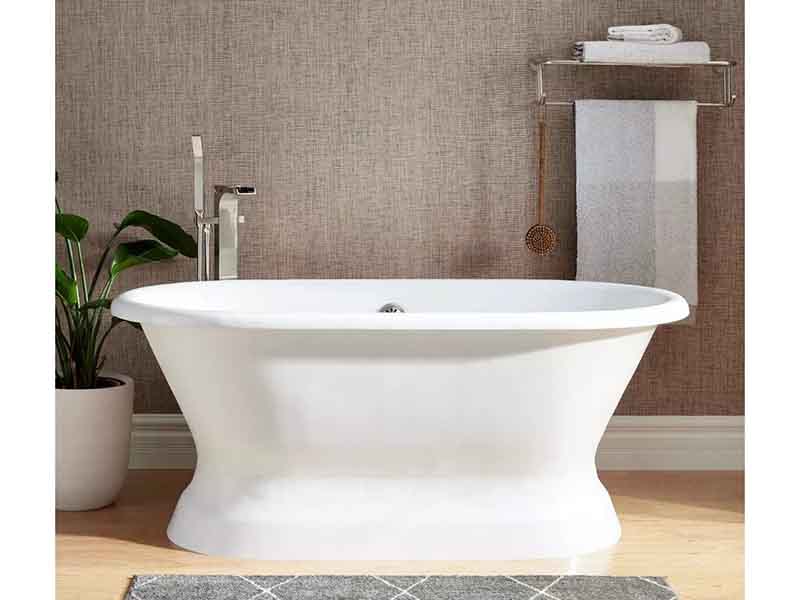
The Henley Cast Iron Double-Ended Pedestal Tub – Rolled Rim is not the kind of bathtub that politely disappears into the background. It walks into the bathroom, clears its porcelain-enamel throat, and says, “Yes, I am the reason this room has a chandelier now.” And honestly? Fair enough.
This tub belongs to the old-soul-meets-modern-luxury category: a freestanding cast iron bathtub with a traditional pedestal base, a smooth rolled rim, a double-ended shape, and the kind of visual presence that makes a bathroom feel less like a utility room and more like a private retreat. It is the tub equivalent of a linen robe, a candle that costs more than lunch, and the decision to ignore your phone for forty minutes.
But beneath the romantic silhouette is a serious fixture with practical details worth understanding. Cast iron is durable, heavy, heat-retentive, and long-lasting. The rolled rim version has no faucet drillings, which affects faucet selection. The double-ended design offers symmetry and comfort from either side. The pedestal base gives it a graceful, grounded profile without the ornate feet of a clawfoot tub. In short, it is beautiful, but it also asks for planning. Like all worthwhile design choices, it arrives with both glamour and a measuring tape.
What Is the Henley Cast Iron Double-Ended Pedestal Tub?
The Henley is a traditional-style cast iron pedestal tub designed for freestanding installation. Its oval basin, rolled rim, white porcelain-enamel interior, and hand-smoothed painted white exterior give it a polished, heritage-inspired look. The pedestal base supports the tub with a sculptural skirt rather than exposed feet, making the silhouette feel cleaner and more architectural.
The product is commonly available in 60-inch and 66-inch versions. The 60-inch model measures approximately 60 inches long, 30 inches wide, and 24 inches high, with a water depth to overflow of about 13 inches and a listed water capacity around 32 gallons. The larger 66-inch model measures about 66 inches long, 31 inches wide, and 24 inches high, with roughly 14 inches of water depth to overflow and a listed capacity around 41 gallons.
Those numbers matter. A 60-inch tub can work well in many standard bathroom layouts, while the 66-inch version offers a roomier soaking experience for taller bathers or anyone who treats bath time as a scheduled wellness appointment. The 66-inch tub, however, is significantly heavier, so it demands more attention to delivery, floor support, and installation logistics.
Why the Double-Ended Design Matters
A double-ended pedestal tub is shaped so both ends are comfortable for reclining. Unlike a single-ended tub, where one end is usually designed for plumbing and the other for lounging, a double-ended design creates a balanced bathing experience. The drain and overflow are typically placed toward the center, allowing the bather to lean back on either end without negotiating with hardware. No one wants a relaxing soak interrupted by a drain cover giving their spine a surprise handshake.
This design is especially useful if more than one person uses the tub and each has a preferred soaking position. It also looks symmetrical in a bathroom layout, which makes it easier to center under a window, between vanities, or as a focal point in a primary bath. Symmetry is one of those design tricks that makes a room feel intentional, even when your towel folding skills are merely “enthusiastic.”
Comfort From Either Side
The interior of the Henley is not oversized like a spa tub, but its double-ended shape makes the available space feel more flexible. The 60-inch model has an interior basin length of about 39 inches, while the 66-inch version increases that interior length to about 46 inches. For many homeowners, that extra interior room can be the difference between “pleasant soak” and “finally, my knees are not hosting a conference near my chin.”
Balanced Visual Appeal
The double-ended silhouette also contributes to the tub’s elegant profile. Because neither end looks like the “back” of the tub, the Henley can be placed more freely in the room. That matters in high-end bathroom design, where freestanding tubs are often treated like furniture rather than fixtures.
The Rolled Rim: Small Detail, Big Personality
The rolled rim bathtub detail gives the Henley its classic look. A rolled rim creates a soft, rounded edge that feels traditional, inviting, and slightly vintage without going full museum exhibit. It also gives the tub a finished, furniture-like quality that pairs well with polished nickel, chrome, brass, bronze, or matte black fixtures.
On the rolled rim version, faucet drillings are not included. That means this model is generally intended for a freestanding floor-mounted tub filler or a wall-mounted faucet, depending on the bathroom layout. This is a key buying point. If you want a faucet mounted directly on the tub deck, this rolled rim version is not the right configuration. The good news is that floor-mounted fillers look fantastic next to a pedestal tub and can make the whole setup feel like a boutique hotel decided to move in permanently.
Cast Iron Construction: Heavy, Durable, and Worth Respecting
The Henley is made of cast iron with a white porcelain-enamel interior. This is one of the most traditional and durable bathtub material combinations available. Cast iron tubs are created from molded iron and finished with enamel, resulting in a hard, glossy surface that resists everyday wear when properly maintained.
The major advantage of cast iron is longevity. A quality cast iron bathtub can last for decades and may even outlive several bathroom trends, including regrettable tile choices and that one era when everyone thought vessel sinks were the answer to everything. Cast iron is also known for excellent heat retention. The material takes time to warm up, but once it does, it helps bathwater stay warm longer than many lighter materials.
The tradeoff is weight. The 60-inch Henley is listed at about 340 pounds uncrated, while the 66-inch version is listed around 472 pounds uncrated. Add water and a bather, and the total load becomes substantial. This does not mean the tub is impractical, but it does mean the installation should be planned carefully, especially in upstairs bathrooms or older homes.
Pedestal Base vs. Clawfoot: Which Look Wins?
The Henley uses a pedestal base rather than claw feet. Both styles belong to the freestanding tub family, but they create different moods. A clawfoot tub feels ornate, antique, and sometimes a little theatrical. A pedestal tub feels traditional but cleaner, with a stronger architectural base.
For homeowners who love vintage character but do not want the visual busyness of claw feet, the pedestal base is a smart middle ground. It also hides more of the underside of the tub, which can make cleaning feel simpler. There are fewer exposed curves, feet, and dust-catching little corners where bathroom lint goes to start a tiny civilization.
Design-wise, the pedestal base pairs beautifully with marble-look tile, classic subway tile, beadboard, warm wood vanities, unlacquered brass hardware, polished chrome, and natural stone flooring. It can lean farmhouse, traditional, transitional, cottage, or even modern-classic depending on the surrounding materials.
Best Bathroom Styles for the Henley Tub
The Henley Cast Iron Double-Ended Pedestal Tub works best in bathrooms that give it room to breathe. This does not always mean a giant bathroom, but it does mean thoughtful spacing. A freestanding tub should not feel wedged into a corner like it lost a game of musical chairs.
Traditional Bathrooms
In a traditional bathroom, the Henley feels right at home. Pair it with polished nickel fixtures, paneled walls, marble tile, a framed mirror, and soft lighting. Add a small wooden bath stool and the room instantly becomes more sophisticated. Bonus points if the stool holds a book, bath salts, and absolutely no evidence of laundry.
Modern Farmhouse Bathrooms
For modern farmhouse interiors, the tub’s white finish and pedestal shape work well with shiplap, black-framed mirrors, warm oak vanities, and matte black or aged brass plumbing. The trick is balance: keep the tub classic, but avoid overloading the room with too many rustic elements.
Transitional Bathrooms
Transitional design may be the Henley’s sweet spot. Its classic shape softens modern tile and sleek cabinetry, while its clean pedestal base prevents the room from feeling overly old-fashioned. Think large-format stone tile, simple sconces, a neutral palette, and one dramatic piece of artwork.
Installation Considerations Before You Buy
A cast iron freestanding tub is not a casual Saturday project unless your hobbies include plumbing, structural engineering, and convincing three friends to help move something heavier than a refrigerator. Before ordering the Henley, consider access, floor strength, plumbing placement, faucet style, and drain compatibility.
Measure the Bathroom and the Route
It is not enough to measure the final tub location. You also need to measure doorways, hallways, staircases, and tight turns. The tub may fit beautifully in the bathroom but still refuse to make it through the hallway like a very elegant cast iron diva.
Check Floor Support
Because cast iron is heavy, especially when filled with water, floor support is critical. First-floor installations over concrete slabs are typically simpler. Upstairs installations may require review by a contractor or structural professional, particularly in older homes. Reinforcement may be needed around joists or beneath the tub footprint.
Plan the Faucet
The rolled rim version has no faucet drillings, so plan for a floor-mounted tub filler or compatible wall-mounted faucet. Floor-mounted fillers look luxurious, but they require accurate rough-in placement. The spout must reach the basin properly, the hand shower should be convenient, and the controls should be easy to access from outside the tub.
Coordinate Drain and Overflow
The Henley includes an overflow, and the drain assembly should be chosen to match the tub configuration and finish of the faucet. Many buyers select finishes such as chrome, brushed nickel, polished nickel, oil-rubbed bronze, or brass to coordinate the whole bathing area.
Maintenance and Cleaning Tips
The Henley’s porcelain-enamel interior is smooth, glossy, and relatively easy to clean, but it should not be abused with harsh abrasives. Use soft cloths, non-scratch sponges, and gentle cleaners appropriate for enamel surfaces. Rinse thoroughly after cleaning and avoid letting strong chemicals sit on the finish.
To keep the tub looking bright, rinse away soap residue after baths and wipe the surface dry when possible. This is especially helpful in areas with hard water. If mineral spots appear, use a cleaner recommended for porcelain enamel rather than attacking the tub with something that sounds like it belongs in a garage.
The painted exterior should also be handled with care. Avoid scraping it with metal tools, dragging furniture against it, or letting aggressive cleaners run down the outside. A freestanding tub is visible from every angle, so the exterior finish matters almost as much as the basin.
Who Should Choose the Henley Cast Iron Pedestal Tub?
The Henley is ideal for homeowners who want a bathtub that feels permanent, classic, and design-forward. It is best for people who value long soaks, traditional materials, and a statement-piece bathroom layout. It is also a strong choice for remodels where the tub is meant to become the focal point rather than just another fixture.
It may not be the best choice for every situation. If you need a lightweight tub, a budget-friendly installation, a compact shower-tub combination, or a fixture that can easily be moved later, acrylic or fiberglass may be more practical. If you want deck-mounted faucet holes, choose a different configuration. If your bathroom floor is questionable, solve that first. A beautiful tub is wonderful; a beautiful tub slowly meeting the kitchen ceiling below it is less wonderful.
Specific Examples: How to Style the Henley
Example 1: The Classic White Bathroom
Place the Henley under a window with white subway tile on the walls, marble mosaic on the floor, polished nickel fixtures, and a small antique side table. Add white towels, a glass jar of bath salts, and a Roman shade in a soft pattern. The result is timeless without feeling stiff.
Example 2: The Warm Modern Retreat
Use the 66-inch Henley in a larger bathroom with limestone-look porcelain tile, a walnut double vanity, brushed brass fixtures, and warm wall sconces. Keep the walls creamy rather than stark white. The tub stays classic, while the room feels current and relaxing.
Example 3: The Moody Vintage Bath
Pair the tub with dark green walls, black-and-white floor tile, unlacquered brass plumbing, and framed botanical prints. This look gives the Henley a dramatic backdrop. It feels historic, cozy, and just mysterious enough to make bubble bath seem like a personality trait.
Buying Checklist Before Ordering
Before purchasing the Henley Cast Iron Double-Ended Pedestal Tub – Rolled Rim, confirm the exact size you need, the delivery weight, the drain finish, faucet compatibility, floor support, and installation timeline. Also confirm whether your selected model includes any accessories or whether the drain, supply lines, and tub filler must be purchased separately.
For the 60-inch model, the size is more manageable for standard layouts, though it is still heavy. For the 66-inch model, the extra bathing room is appealing, but the increased weight and footprint require more planning. In both cases, professional installation is strongly recommended.
Pros and Cons of the Henley Cast Iron Double-Ended Pedestal Tub
Pros
- Timeless traditional design with a graceful pedestal base
- Durable cast iron construction
- White porcelain-enamel interior for a classic, glossy finish
- Double-ended shape allows reclining from either side
- Rolled rim creates an elegant vintage-inspired profile
- Excellent heat retention once the cast iron warms up
- Strong focal point for traditional, transitional, and farmhouse bathrooms
Cons
- Very heavy compared with acrylic or fiberglass tubs
- May require floor reinforcement, especially upstairs
- Rolled rim version has no faucet drillings
- Professional delivery and installation are strongly advised
- Requires careful cleaning to protect the enamel and painted exterior
Real-Life Experience: Living With a Tub Like the Henley
Using a tub like the Henley changes the way a bathroom feels. It is not just a place to wash up; it becomes a place to pause. The first thing people usually notice is the weight of the design, even before anyone talks about the actual physical weight. A cast iron pedestal tub looks solid. It feels anchored. There is no flimsy flex under your hand, no lightweight shell sensation, no “temporary fixture” energy. It gives the room a sense of permanence.
The bathing experience is also different from using a standard alcove tub. The high, open sides make the ritual feel more intentional. You do not just hop in while mentally answering emails. You prepare the water, set a towel nearby, maybe add bath oil, and pretend for a moment that your life has background music. The rolled rim is comfortable to hold when stepping in and out, and visually it softens the tub’s shape. It looks gentle, even though the tub itself is built like it could survive several generations and a minor household revolution.
Heat retention is one of the pleasures people tend to appreciate after using cast iron for a while. The tub may feel cool at first, but once it warms, the bath stays comfortable longer. That matters for anyone who likes deep soaking rather than quick rinsing. With lighter tubs, bathwater can cool quickly, especially in winter or in bathrooms with poor insulation. Cast iron helps stretch the moment. In practical terms, that means fewer hot-water top-offs and fewer negotiations with the faucet while trying not to splash water onto the floor.
The pedestal base also makes the tub feel more refined than a clawfoot style in some homes. Clawfoot tubs are charming, but they can create a more decorative, antique look. The Henley’s base is smoother and calmer. It blends more easily with modern vanities, large-format tile, and updated lighting. In a remodel, that flexibility is valuable because it lets the bathroom feel classic without looking like a period movie set.
There are, however, practical realities. Moving a cast iron tub is memorable in the same way moving a piano is memorable. It requires planning, protective coverings, strong helpers, and ideally professionals who do not panic halfway through the staircase. Installation day is not the time to discover the hallway is too narrow or the floor needs reinforcement. Homeowners who plan ahead generally enjoy the result. Homeowners who wing it may develop a personal relationship with regret.
Cleaning is simple if done consistently. A quick rinse after use and a gentle weekly cleaning can keep the porcelain enamel bright. The biggest mistake is treating the surface like industrial equipment. It is durable, yes, but glossy enamel deserves gentle care. Use soft tools, avoid harsh abrasives, and wipe the exterior when water drips down the side. The tub rewards small habits with long-term beauty.
In daily life, the Henley works best for people who genuinely use a bathtub. If you are a shower-only person buying it purely for resale value, it may become an expensive sculpture. A beautiful sculpture, certainly, but still. If you love soaking, reading, relaxing sore muscles, or turning ordinary evenings into a small spa ritual, the Henley makes sense. It brings comfort, character, and a little drama to the bathroom. And frankly, bathrooms can use a little drama that does not involve plumbing emergencies.
Conclusion
The Henley Cast Iron Double-Ended Pedestal Tub – Rolled Rim is a standout choice for homeowners who want a freestanding tub with traditional charm, durable construction, and a refined silhouette. Its cast iron body offers strength and heat retention, while the porcelain-enamel interior delivers a smooth, classic bathing surface. The double-ended shape improves comfort and symmetry, and the pedestal base gives the tub a graceful presence without the ornate feel of claw feet.
Still, this is a tub that rewards preparation. Measure carefully, plan the faucet, check the drain requirements, confirm floor support, and budget for professional installation. When those details are handled, the Henley can transform a bathroom from merely functional to quietly luxurious. It is not just a place to bathe; it is a design statement, a relaxation zone, and possibly the most elegant excuse you will ever have for staying in the tub five more minutes.