Some floor lamps politely stand in the corner and try not to bother anyone. Verner Panton’s Panthella Floor Lamp is not one of them. It does not shout, sparkle, or wave its power cord like a tiny flag of rebellion, but it does something better: it changes the mood of a room the moment it turns on. With its glowing dome, sculptural base, and soft space-age confidence, the Panthella Floor Lamp proves that lighting can be both practical and wildly charming.
Designed in 1971 by Danish designer Verner Panton for Louis Poulsen, the Panthella has become one of the most recognizable icons of modern lighting. It is often described as a mushroom lamp, but that nickname hardly does it justice. A mushroom waits quietly in the forest. The Panthella looks as if it has just arrived from a stylish future where everyone owns a fabulous lounge chair and never uses harsh overhead lighting.
This article explores the history, design, materials, lighting performance, styling ideas, and long-term appeal of Verner Panton’s Panthella Floor Lamp. Whether you are a design collector, a mid-century modern fan, or simply someone who wants a living room that does not feel like a dentist’s waiting area, this lamp deserves a closer look.
The Story Behind the Panthella Floor Lamp
Verner Panton was never the type of designer who wanted furniture and lighting to behave like background actors. Born in Denmark in 1926, Panton trained as an architect and worked during a period when Scandinavian design was widely associated with restraint, natural materials, and quiet elegance. Panton admired good function, but he also loved color, curves, plastic, fantasy, and visual surprise. In other words, he brought the party snacks to modernism.
By the time the Panthella Floor Lamp appeared in 1971, Panton had already built a reputation for breaking rules. His Panton Chair, Flowerpot lamps, Visiona interiors, and other futuristic designs showed his fascination with new materials and immersive environments. He did not see a room as a container for objects. He saw it as an experience, a kind of emotional landscape shaped by color, light, and form.
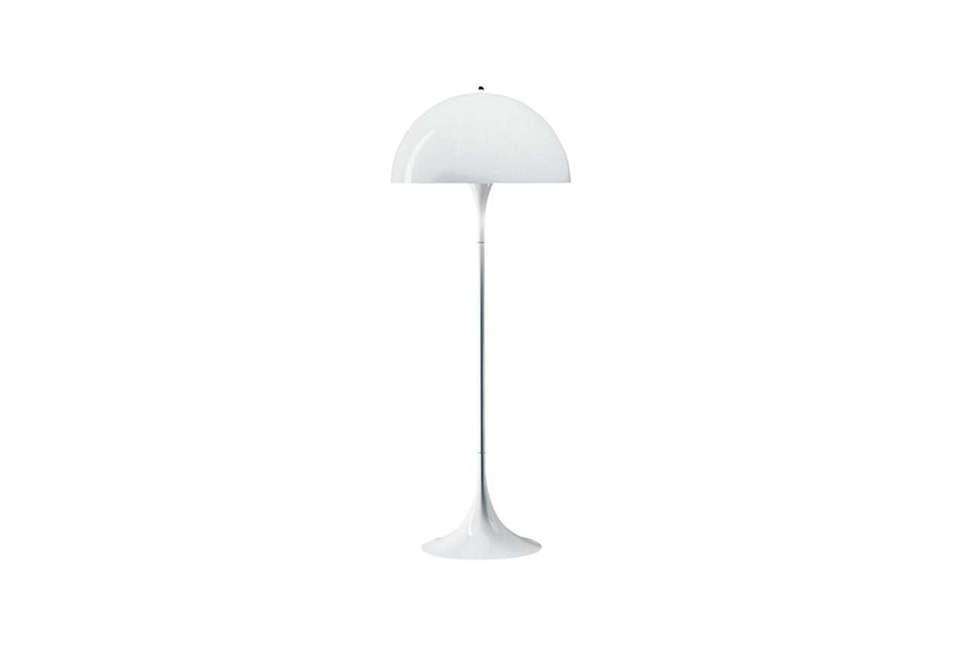
The Panthella fits perfectly within that philosophy. It is not just a lamp with a shade and a stem. It is a complete visual system. The rounded shade, slim vertical support, and flared base work together as one flowing silhouette. The light source is hidden, the glare is softened, and the entire object becomes part sculpture, part atmosphere, part design-history wink.
Why the Panthella Design Still Feels Modern
The most impressive thing about the Panthella Floor Lamp is how little it seems to age. Many objects from the 1970s are charming because they look unmistakably vintage. The Panthella is different. It can sit comfortably in a retro living room, a minimalist apartment, a boutique hotel lobby, or a contemporary reading corner without looking like it wandered in from a costume party.
Organic Shape Without Visual Clutter
The lamp’s hemispherical shade gives it a soft, organic profile. There are no sharp decorative tricks, no fussy trim, and no unnecessary details begging for applause. The form is clean enough for modern interiors but expressive enough to keep the room from feeling cold. It is simple, but not boring. That is a rare design sweet spot.
The dome shade also makes the lamp instantly recognizable. Many floor lamps depend on fabric shades or exposed metal arms; the Panthella relies on pure geometry. Its silhouette is almost childlike in its clarity: dome, stem, base. Yet the proportions are carefully balanced, which is why it looks graceful rather than cartoonish.
Light as Atmosphere, Not Just Illumination
Verner Panton wanted both the shade and the base to help reflect light. This idea is central to the Panthella’s identity. Instead of blasting light in one direction, the lamp spreads a soft glow through the opal acrylic shade while also directing light downward. The result is comfortable ambient lighting that flatters a room rather than interrogating it.
That matters because lighting affects how we feel in a space. A bright ceiling fixture can make a living room look flat. A bare bulb can make a corner feel unfinished. The Panthella creates a warm, diffused presence that invites people to sit down, talk, read, or quietly pretend they are in a beautifully photographed design magazine spread.
Materials and Construction
The classic Panthella Floor Lamp is known for its white opal acrylic shade, molded base, and slender stem. These material choices support both the lamp’s appearance and its performance. The acrylic shade diffuses light evenly, while the base reinforces the rounded visual language. The lamp is not trying to imitate traditional brass, wood, or fabric lighting. It embraces the material optimism of its era.
This is one reason the Panthella feels so closely tied to Panton’s larger body of work. He was fascinated by plastics, synthetic materials, and new production possibilities. While many designers treated plastic as cheap or secondary, Panton saw it as a tool for freedom. It allowed forms to become smoother, bolder, and more sculptural. In the Panthella, that freedom becomes approachable. You do not need a psychedelic room installation to enjoy it; you just need one well-placed floor lamp.
Key Design Features of Verner Panton’s Panthella Floor Lamp
The Hemispherical Shade
The shade is the star of the show. Its half-sphere form gives the lamp its famous mushroom-like profile and helps spread light in a gentle, even way. Because the light source is hidden beneath the shade, the user sees glow rather than glare. That makes the Panthella especially useful in spaces where comfort matters: living rooms, bedrooms, lounges, reading corners, and hospitality interiors.
The Trumpet-Like Base
The base does more than keep the lamp standing upright, which is always a helpful feature unless your design concept is “chaos.” Its flared shape visually echoes the shade, creating a satisfying rhythm from top to bottom. The base also contributes to the lamp’s reflected-light effect, helping the piece feel luminous rather than merely lit.
The Slim Stem
The narrow stem gives the lamp elegance and lift. It creates a pause between the shade and base, preventing the design from feeling too heavy. This is one of the Panthella’s most successful balancing acts: it has a large, sculptural presence, yet it does not look bulky.
The Monochrome White Finish
The classic white version is the most famous because it enhances the lamp’s soft, futuristic character. White allows the form and light quality to take center stage. It also makes the Panthella surprisingly easy to style. It can contrast with dark walls, blend into pale interiors, or soften rooms filled with wood, leather, stone, or colorful art.
How the Panthella Floor Lamp Fits Different Interior Styles
One reason the Panthella remains popular is its flexibility. It has a strong personality, but it is not bossy. Think of it as the stylish guest who arrives with excellent wine and somehow gets along with everyone.
Mid-Century Modern Rooms
The Panthella naturally belongs in mid-century modern spaces. Pair it with a low sofa, a walnut credenza, a wool rug, and a lounge chair, and it will look completely at home. Its 1970s heritage adds authenticity, while its smooth white finish keeps the space from feeling too nostalgic.
Minimalist Interiors
In minimalist rooms, the Panthella can act as a sculptural focal point. The design is clean enough to respect a restrained palette, but expressive enough to prevent the room from slipping into “empty showroom” territory. Place it beside a simple sofa or near a reading chair, and it adds softness without clutter.
Contemporary Apartments
For modern apartments, especially those with limited space, the Panthella Floor Lamp offers visual impact without requiring a complicated installation. No ceiling rewiring, no pendant placement drama, no measuring a chandelier over a dining table while questioning your life choices. It plugs in, stands beautifully, and instantly improves the corner.
Eclectic and Colorful Spaces
Panton loved color and bold interiors, so the Panthella also works well in expressive rooms. Against patterned wallpaper, bright artwork, or saturated upholstery, the white version provides a calm counterpoint. It has enough personality to join the conversation, but it does not compete with every other design element.
Where to Place the Panthella Floor Lamp
The Panthella Floor Lamp is most effective when it has room to show its shape. It does not need a stage, but it does appreciate a little breathing space. Avoid cramming it behind oversized furniture where only the top of the shade peeks out like a shy mushroom.
Beside a Sofa
Placed at one end of a sofa, the Panthella creates a relaxed pool of ambient light. It is ideal for evening conversations, movie nights, or reading sessions where you want enough light to see the page but not so much that the room feels like an airport terminal.
Next to a Lounge Chair
A lounge chair and Panthella Floor Lamp make a natural pair. The lamp provides atmosphere, while the chair provides comfort. Add a small side table and you have a complete reading nook. Add coffee and a blanket, and you may never leave.
In a Bedroom Corner
The Panthella can also work beautifully in a bedroom, particularly in a corner where a standard table lamp would feel too small. Its diffused light is gentle enough for winding down at night, and its sculptural shape adds polish during the day.
In an Entry or Hallway
If your entry area has enough space, the Panthella can create a memorable first impression. It gives guests a visual clue that the home values design, comfort, and possibly very good snacks.
Buying Considerations Before Choosing a Panthella Floor Lamp
The Panthella Floor Lamp is a premium design piece, so it is worth thinking through the practical details before buying. Beautiful lighting should still make sense for your room, lifestyle, and budget.
Scale and Proportion
The floor version has a real presence. It is not a tiny accent lamp. Before purchasing, measure the intended space and consider nearby furniture heights. The shade should feel visually connected to the seating area, not awkwardly floating above it or hiding behind a tall sofa arm.
Light Output
The Panthella is best understood as an ambient lamp rather than a task lamp. It can support reading when placed well and fitted with an appropriate bulb, but its greatest strength is mood. If you need intense focused light for detailed work, pair it with a dedicated task light.
Authenticity
Because the Panthella is an iconic design, it is wise to buy from authorized retailers or reputable vintage dealers. Authentic Louis Poulsen versions carry the quality, proportions, and finish that make the design work. Knockoffs may capture the mushroom outline, but they often miss the subtle balance that gives the original its magic.
Maintenance
The smooth surfaces are relatively easy to clean, but the white finish can show dust. A soft cloth is usually the best friend of a Panthella owner. Avoid abrasive cleaners, because iconic design and scratch marks are not a charming duet.
Why Designers Still Love the Panthella
Interior designers often return to the Panthella because it solves several problems at once. It adds recognizable design pedigree, creates flattering ambient light, and works as a sculptural object even when switched off. That last point is important. A great lamp should not look useful only at night. The Panthella has daytime presence, which makes it valuable in carefully composed interiors.
It also has emotional warmth. Some modern icons are admired more than loved; they look impressive but feel slightly severe. The Panthella is different. Its curves are friendly. Its glow is forgiving. Its personality is playful without being silly. It is the kind of object that makes people say, “I love that lamp,” not just, “I recognize that lamp.”
The Panthella Floor Lamp as a Design Investment
Calling any lamp an investment can sound dramatic, especially if your current lighting strategy involves whatever was on sale at the hardware store. Still, the Panthella has qualities that support long-term value: a famous designer, a respected manufacturer, a proven design history, and ongoing demand among design lovers.
Unlike trend-driven decor, the Panthella has already survived multiple design cycles. Minimalism, maximalism, retro revivals, Scandinavian calm, space-age nostalgia, and contemporary luxury have all made room for it. That staying power is not accidental. The lamp’s form is distinctive but not trapped in one narrow trend.
For collectors, vintage Panthella lamps can be especially appealing, though condition matters. Acrylic can yellow or scratch, wiring may need inspection, and older pieces should be evaluated carefully. For everyday homeowners, a new authorized version offers the pleasure of the original design with modern reliability.
Experience Section: Living With Verner Panton’s Panthella Floor Lamp
The real charm of the Panthella Floor Lamp becomes clearest when imagining it in daily life, not just admiring it in a product photo. A product image can show the curve of the shade, the clean white finish, and the elegant profile, but it cannot fully capture the way the lamp changes the rhythm of a room after sunset. That is where the Panthella earns its reputation.
In a living room, the first noticeable experience is the softness of the light. Many floor lamps create either a bright cone or an obvious hot spot. The Panthella feels more atmospheric. It spreads illumination gently, making surrounding furniture look calmer and more intentional. A sofa looks cozier. A reading chair feels more inviting. Even a slightly messy coffee table appears more artistic, which is helpful if your magazines are arranged in what experts might call “accidental avalanche formation.”
The second experience is how sculptural it feels during the day. Some lamps disappear when they are turned off, but the Panthella remains visually active. Its dome shade catches natural light, and the base gives the room a rounded architectural note. It can make an empty corner feel designed rather than forgotten. This is especially useful in apartments, where every piece needs to justify its square footage.
The lamp also changes how people gather. Harsh overhead lighting can make guests feel exposed, while dim rooms can make everyone wonder whether they should have brought a flashlight. The Panthella sits nicely in the middle. It creates a glow that encourages conversation without demanding attention. It is stylish, but it does not make the room feel like a museum where everyone is afraid to touch the cushions.
There is also a small but real pleasure in owning or styling a piece with design history. The Panthella is not just attractive; it carries the optimism of Verner Panton’s work. It reminds us that interiors do not have to be timid. A lamp can be useful and poetic. It can be simple and memorable. It can make a room feel more human by being just a little bit otherworldly.
For anyone considering the Panthella, the best advice is to think of it as a mood-maker first and a lamp second. Place it where its glow can be enjoyed, not hidden. Give it enough room to show its silhouette. Pair it with textures such as wool, leather, linen, wood, or stone so the glossy shape has something to play against. Most of all, use it in the evening. That is when the Panthella stops being a famous object and becomes what Panton intended: a source of atmosphere, imagination, and everyday delight.
Conclusion
Verner Panton’s Panthella Floor Lamp remains a design classic because it understands something many lamps forget: light is emotional. The Panthella does not merely brighten a room. It softens it, shapes it, and gives it character. Its hemispherical shade, flared base, and diffused glow make it one of the most beloved examples of modern Danish lighting.
More than five decades after its debut, the Panthella still feels fresh. It works in mid-century homes, modern apartments, minimalist interiors, colorful rooms, and polished hospitality spaces. It is playful without being childish, elegant without being stiff, and iconic without feeling overexposed. That is a difficult balance, and Panton managed it with a lamp that looks simple at first glance but reveals its intelligence every time it is switched on.
If you want lighting that behaves like architecture, art, and atmosphere all at once, the Panthella Floor Lamp is hard to beat. It is not just a lamp for people who love design history. It is a lamp for anyone who believes a room should feel better when the lights come on.