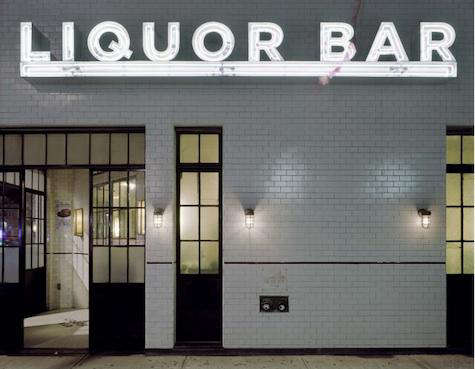
Some restaurants feed you dinner. A few feed you a story. Schiller’s Liquor Bar in New York belonged to the second group: a Lower East Side hangout where steak frites, oysters, sticky toffee pudding, clattering glasses, cloudy mirrors, and downtown attitude all squeezed into one noisy room at 131 Rivington Street. It was never just a place to eat. It was a place to observe New York doing what New York does best: arriving late, talking fast, ordering confidently, and pretending not to notice the celebrity two tables over.
Today, Schiller’s Liquor Bar is no longer open, which makes any “restaurant visit” a little bittersweet. Keith McNally’s beloved brasserie-style spot closed in August 2017 after roughly fourteen years as a neighborhood fixture. But its influence still lingers in conversations about Lower East Side restaurants, New York nightlife, design-driven dining rooms, and the kind of casual glamour that feels easy only because someone worked very hard to make it look that way.
This article revisits Schiller’s as both a restaurant and a New York moment: what it looked like, what people came for, why it mattered, and what a visit there represented during the Lower East Side’s transformation from scruffy after-hours playground to full-blown dining destination.
The First Impression: White Tile, Brass, Noise, and Nerve
Walk into Schiller’s Liquor Bar in its prime, and the room seemed to wink before the host did. The restaurant had that unmistakable Keith McNally visual language: white subway tile, marble tables, old-world mirrors, brass rails, low ceilings, and a feeling that the building had somehow been born with perfect lighting. It looked aged but not dusty, polished but not stiff, familiar but not boring. In other words, it was carefully staged to feel like it had not been staged at all.
That was part of the magic. Schiller’s felt like a European café that had gotten lost, taken the F train, and decided to stay out late on the Lower East Side. It had the bones of a bistro, the rhythm of a bar, and the energy of a room where half the guests seemed to be starting their night while the other half were beautifully failing to end theirs.
The location mattered. Rivington Street was not a neutral backdrop. The Lower East Side carried layers of immigrant history, punk memory, art-scene grit, nightlife mythology, and real-estate tension. Schiller’s arrived during a period when the neighborhood was changing fast. Some saw it as a sign of stylish renewal. Others saw it as proof that the old Lower East Side was being repackaged with better lighting and pricier cocktails. Both readings could be true, which is very New York.
Keith McNally’s Downtown Formula
To understand Schiller’s Liquor Bar, you have to understand Keith McNally’s gift for creating restaurants that feel like sets for lives people want to be living. Before Schiller’s, McNally had already shaped New York dining culture with places such as The Odeon, Balthazar, Pastis, Minetta Tavern, and other restaurants that understood atmosphere as a main course.
Schiller’s was different from some of its more polished siblings. It was looser, louder, and more democratic in spirit. It was designed for walk-ins, late meals, neighbors, actors, editors, artists, couples on questionable second dates, and groups who definitely said they were “just getting one drink” before ordering half the menu. The restaurant had polish, yes, but it also had a deliberately rumpled charm.
The genius was that Schiller’s made people feel included in the scene rather than merely seated near it. You did not need a white tablecloth vocabulary to enjoy it. You could order a burger, a plate of fries, a glass of wine from the wonderfully blunt “cheap, decent, or good” system, and still feel like you were participating in a minor civic ritual.
The Menu: Comfort Food Wearing a French Jacket
The Schiller’s Liquor Bar menu leaned into continental comfort: steak frites, moules frites, fish and chips, oysters, garlic shrimp, salads, brunch plates, and desserts that were less interested in restraint than in happiness. The food was not trying to reinvent dinner with tweezers and foam. It was the kind of menu that understood what people actually crave after work, before a movie, during a date, or at midnight when good judgment has left the group chat.
Steak Frites and the Power of the Obvious
Steak frites was one of the restaurant’s signature anchors. On paper, it is a simple dish: steak, fries, sauce, done. In practice, it is one of those meals that reveals whether a kitchen understands pleasure. At Schiller’s, the appeal was not only the plate itself but the setting around it. Steak frites eaten under cloudy mirrors in a packed room on Rivington Street tastes different from steak frites eaten in silence under fluorescent lighting. Atmosphere is not seasoning, but in New York, it comes very close.
Oysters, Mussels, and Late-Night Appetite
Schiller’s also knew the value of seafood that could feel both casual and celebratory. Oysters gave the room a brasserie sparkle. Mussels and fries made dinner feel generous without becoming fussy. Fish and chips nodded toward pub comfort. Garlic shrimp brought that skillet-sizzling drama that makes neighboring tables look over and quietly revise their order.
This was food built for conversation. It did not demand silence. It did not arrive with a lecture. It showed up, tasted good, and allowed the evening to continue.
Sticky Toffee Pudding: The Dessert With No Chill
Sticky toffee pudding was exactly the kind of dessert Schiller’s needed: warm, sweet, unapologetic, and almost comically persuasive. It is not a dessert that whispers. It leans across the table and says, “You were going to share me, but let’s be honest, that was a cute little fantasy.”
In a dining room filled with urban cool, sticky toffee pudding supplied the necessary softness. It reminded guests that even the most stylish New Yorkers are only one caramel sauce away from emotional honesty.
The Wine List That Understood People
One of the most memorable details about Schiller’s Liquor Bar was its wine list, which famously divided options into “cheap,” “decent,” and “good.” This was funny, useful, and weirdly humane. Many wine lists seem written to expose your ignorance in front of someone you hoped to impress. Schiller’s did the opposite. It made ordering wine feel like choosing a mood rather than taking an exam.
That little structure captured the restaurant’s personality. It had taste, but it did not want to punish you for not knowing the soil composition of a vineyard. It invited participation. It also gave every table a built-in joke, and restaurants that create easy conversation are already halfway to becoming beloved.
The cocktails played their part too. Schiller’s presented itself as a liquor bar, not just a restaurant with a beverage program. Drinks were central to the room’s identity. Whether guests came for a full dinner, a quick bar stop, or the classic “I’ll meet you there and we’ll see what happens,” the bar energy gave the place its pulse.
Service and Scene: Fast, Loud, and Very New York
Service at a restaurant like Schiller’s had to perform a delicate trick. The room was busy, the crowd was mixed, the hours stretched late, and the energy could tilt from charming chaos to full-volume theater. Good service in that environment is not about hovering; it is about timing, memory, and controlled momentum.
At its best, Schiller’s felt efficient without becoming cold. Tables turned, drinks landed, fries appeared, and the room kept moving. A guest could feel noticed without feeling managed. That balance is harder than it looks, especially in a dining room where the noise level could make a simple “Can we get another fork?” feel like a diplomatic mission.
The crowd was part of the attraction. Schiller’s gathered neighborhood regulars, nightlife people, media types, artists, tourists who had done unusually good research, and New Yorkers who simply liked a reliable room. It was a place to eat, yes, but also a place to be seen being casual about being seen.
Why Schiller’s Mattered to the Lower East Side
Schiller’s Liquor Bar opened during a major shift in the Lower East Side’s identity. The neighborhood had long been associated with immigrant communities, affordable apartments, underground art, music venues, old storefronts, and a certain beautiful roughness. By the early 2000s, restaurants, cocktail bars, boutiques, hotels, and nightlife businesses were changing the rhythm of the streets.
Schiller’s became one of the symbols of that transition. It helped make the Lower East Side feel like a dining destination for people who might once have spent their evenings in SoHo, the West Village, or Tribeca. That influence came with complications. A restaurant can bring energy, jobs, and attention, while also becoming part of a larger story about rising rents and cultural displacement.
That tension followed Schiller’s until the end. Its closure was linked to lease and rent pressures, a familiar New York story. A restaurant helps make a neighborhood desirable, then the economics of that desirability become difficult for the restaurant itself. It is the city’s least charming magic trick: now you see a beloved place, now you see a rent increase.
A Historical Restaurant Visit: What It Felt Like
Imagine arriving at Schiller’s on a chilly evening, the kind of New York night when every window looks cinematic and every sidewalk conversation sounds like the middle of a screenplay. The door opens, and the room hits you: warm air, glassware, laughter, the scrape of chairs, servers moving with purpose, fries passing by with unfair confidence.
You might start at the bar because the table is not ready. This is not a problem. At Schiller’s, waiting at the bar was not a delay; it was the opening act. You order a cocktail or a glass of “decent” wine because “cheap” feels too honest and “good” feels like you are trying too hard. Around you, people lean close to hear each other. Someone is explaining a breakup. Someone is pitching a script. Someone is wearing a scarf indoors with the confidence of a minor European aristocrat.
When your table is ready, you squeeze past marble tops and elbows, settling into the glow. The menu does not make you work too hard. Oysters? Yes. Steak frites? Obviously. Mussels? Maybe. Sticky toffee pudding? You pretend to decide later, though destiny has already filed the paperwork.
The food arrives with the comfort of familiar things done in a room that makes them feel special. The fries are hot. The steak is satisfying. The sauce earns its place. The wine is doing exactly what it promised. Nobody at the table is discussing molecular gastronomy, and everyone is better for it.
The Design Legacy: A Room People Still Remember
Many restaurants disappear from memory as soon as the last receipt fades. Schiller’s did not. People remember the look: the tiled walls, the mirrors, the handwritten-style menu personality, the lived-in brasserie mood. It had a visual identity strong enough to outlast the business itself.
This matters because restaurants are remembered through sensory fragments. A corner table. A bar stool. A menu category that made you laugh. The way the room looked in winter. The first bite of fries after a too-long wait. The person you were with. The person you were pretending not to miss. Schiller’s collected those fragments for thousands of guests.
Its design also helped define a style that became widely copied: casual European brasserie meets downtown New York grit. The formula is familiar now, but Schiller’s helped make it feel natural. It showed that a restaurant could be stylish without being precious, nostalgic without being museum-like, and accessible without being dull.
What Replaced It, and What Could Not Be Replaced
After Schiller’s closed, the physical address continued into another chapter, as New York addresses always do. The city rarely leaves a good corner alone for long. But while a new tenant can occupy a space, it cannot automatically inherit the emotional architecture of the old room.
For longtime guests, Schiller’s represented a specific slice of New York: the early-2000s Lower East Side, the rise of downtown dining as nightlife, the Keith McNally school of democratic glamour, and the pleasure of eating unfussy food in a room with cinematic confidence. That combination cannot be recreated simply by installing tile and serving fries.
Restaurants become landmarks not only through age but through repetition. People returned to Schiller’s after first dates, bad workdays, birthdays, late shows, apartment moves, and nights that began as “quick drinks” and became folklore by brunch. The restaurant’s real legacy lives in that repetition.
Restaurant Visit Experience: Lessons From Schiller’s Liquor Bar
A visit to Schiller’s Liquor Bar, even as a memory, offers useful lessons for anyone who loves restaurants, writes about hospitality, or wants to understand why some dining rooms become cultural touchstones. The first lesson is that food matters, but context matters too. A good plate in a forgettable room may satisfy hunger. A good plate in a room with rhythm can become a memory.
The second lesson is that accessibility has style. Schiller’s did not need to make guests feel small to make the restaurant feel important. Its “cheap, decent, good” wine system was more than a clever gag. It showed confidence. It said, “We know what we are doing, and we are not going to make you suffer through a vocabulary test before dinner.” That kind of hospitality feels rare because it respects both taste and time.
The third lesson is that neighborhoods shape restaurants as much as restaurants shape neighborhoods. Schiller’s could not have existed in the same way on a quiet suburban road or inside a mall. It needed Rivington Street. It needed the Lower East Side’s contradictions: old and new, polished and messy, local and performative, intimate and restless. The restaurant absorbed that energy and reflected it back in a more theatrical form.
The fourth lesson is that restaurants are fragile. Even beloved places can close. Reputation, press, loyal customers, and iconic design do not always protect a business from rent, lease terms, labor costs, neighborhood shifts, and changing dining habits. Schiller’s closure was not just the end of a restaurant; it was a reminder that New York’s charm often depends on places fighting economic battles diners never see.
Extra Experience Section: A Longer Reflection on Visiting Schiller’s in Spirit
If you are writing a modern restaurant visit inspired by Schiller’s Liquor Bar, the best approach is not to pretend the restaurant is still open. The stronger angle is to treat it as a flavorful time capsule. Start with the walk. A proper Schiller’s-style visit begins before the first drink: crossing the Lower East Side, passing old tenements, new storefronts, late-night bars, fashionably underdressed pedestrians, and the particular New York feeling that something interesting is happening just around the corner, even if it is only a man arguing with a parking meter.
The imagined visit continues at the door, where the restaurant’s design does half the talking. A Schiller’s-like experience is not about hushed luxury. It is about democratic theater. You want a room that feels busy but not hostile, stylish but not sterile, loud enough to feel alive but not so loud that ordering mussels requires semaphore flags. The ideal seat is not necessarily the most comfortable one. It is the seat that lets you watch the room.
Ordering should follow the same spirit. Begin with something briny or crisp: oysters, a sharp salad, fries stolen too early from the plate, or a drink that arrives cold and unpretentious. Then move to a dish with brasserie confidence. Steak frites is the obvious choice because obvious choices are sometimes obvious for excellent reasons. Mussels work too, especially if the broth is good enough to make bread feel like a tool rather than a side. If dessert is available, order it. A restaurant visit without dessert is technically legal, but so are many other joyless decisions.
The emotional experience matters as much as the food. Schiller’s was a place where ordinary meals could feel like scenes from a larger story. You might remember the person across from you more clearly than the sauce. You might remember the noise, the lighting, the half-finished drink, or the way the room made you feel temporarily sharper and more interesting. Great restaurant visits often work that way. They improve the lighting on your own life for two hours.
For travelers, Schiller’s also offers a valuable lesson about visiting New York restaurants: do not chase only the newest reservation. New York dining history is full of closed rooms that still explain the city. Learning about places like Schiller’s helps you understand why certain neighborhoods feel the way they do, why some design trends repeat, and why locals speak about vanished restaurants with the emotion other people reserve for childhood pets and discontinued snacks.
For restaurant owners and designers, the Schiller’s experience is a case study in atmosphere. The room had a coherent point of view. The menu had personality. The wine list had humor. The location had tension. The brand did not feel assembled by committee. It felt authored. That authorship is what guests remember. You can copy tile, mirrors, and marble, but you cannot fake a point of view for long. Diners may not always analyze design consciously, but they can feel when a restaurant knows what it wants to be.
For writers, Schiller’s is a reminder that a restaurant review should capture more than whether the fries were crisp. Crisp fries are important, of course; civilization depends on them. But the deeper question is what the restaurant meant in its place and time. Schiller’s meant late-night Lower East Side energy, casual brasserie pleasure, McNally-style staging, and the fragile beauty of a room that made people want to return. That is why, years after closing, it still earns conversation.
Conclusion: Why Schiller’s Still Deserves a Toast
Schiller’s Liquor Bar in New York was more than a Lower East Side restaurant. It was a mood, a meeting point, a design reference, a date-night gamble, a late-night safety net, and a small but vivid chapter in the story of downtown dining. It served classic comfort dishes with brasserie flair, offered wine with disarming honesty, and gave guests the pleasure of feeling plugged into the city’s current.
Its closure in 2017 made the restaurant impossible to visit in the ordinary sense, but not impossible to appreciate. Schiller’s remains important because it captured something New York does brilliantly and brutally: create beloved places, fill them with life, and then change around them until they become memory. That memory is still worth visiting.
So here is the toast: to white tile, late dinners, steak frites, cheap-decent-good wine, sticky toffee pudding, and the kind of restaurant that made a regular Tuesday feel like the opening scene of a very good movie.