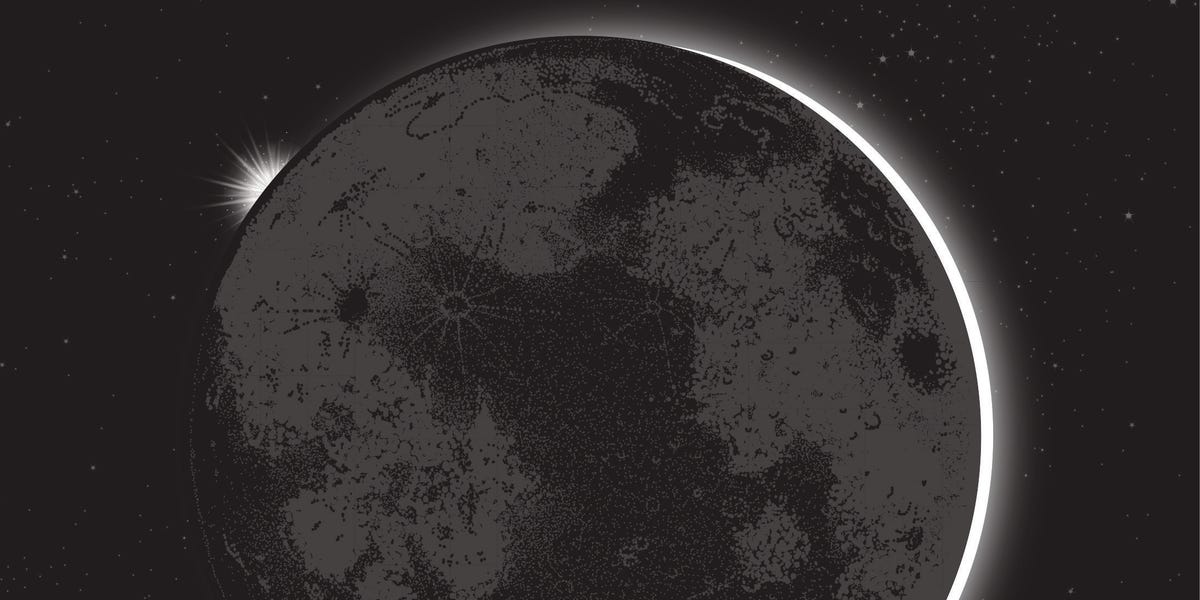
Building a city on the Moon sounds like the kind of idea that belongs on a movie poster with dramatic music, silver jumpsuits, and someone saying, “We have a problem,” before lunch. But the strange thing is this: the basic ingredients are no longer pure science fiction. NASA, commercial space companies, universities, engineers, architects, and materials scientists are already working on the pieces needed for long-term human life beyond Earth.
A true lunar city would not begin as a glowing skyline under a black sky. It would start much more humbly: a landing zone, a power unit, a habitat, a rover, a dust-covered robot, a few stubborn astronauts, and a lot of checklists. Over time, that small Moon base could grow into a permanent lunar settlement with homes, laboratories, workshops, greenhouses, medical stations, transportation routes, and maybe one day a café where the coffee floats only slightly less than the customers.
So how do you build a city on the Moon? You do it carefully, in phases, with a deep respect for physics, logistics, and the fact that the Moon is not trying to be friendly. It has no breathable air, no liquid water on the surface, no weather, no trees, no grocery stores, and absolutely no patience for sloppy engineering. Still, with the right strategy, a lunar city is possible.
Step 1: Choose the Right Location
The first rule of lunar real estate is simple: location matters even more when moving trucks cost millions of dollars per kilogram. Most serious Moon city concepts focus on the lunar south pole because it offers several advantages. Certain high areas receive long periods of sunlight, which helps solar power systems. Nearby permanently shadowed regions may contain water ice, an extremely valuable resource for drinking water, oxygen, agriculture, and rocket fuel.
A good lunar city site would need several things at once: access to sunlight, potential water ice, relatively safe terrain, stable communication links with Earth, scientific value, and enough room for expansion. Flat areas would be useful for landing pads and roads, while nearby craters could offer access to ancient materials and cold traps where volatiles may be preserved.
Why the South Pole Gets So Much Attention
The Moon’s poles are unusual. Because the Moon has only a small axial tilt, sunlight hits polar regions at low angles. Some peaks and ridges can receive sunlight for long stretches, while crater floors may remain in darkness for billions of years. That creates a dramatic neighborhood: bright ridges for power, dark craters for ice, and temperatures that can make your freezer look like a hot tub.
Before building anything permanent, robotic scouts would map the area in detail. They would test soil strength, identify hazards, search for accessible ice, measure radiation, monitor dust behavior, and create high-resolution maps. A Moon city should not be built where the brochure looks nice. It should be built where the data says people can survive.
Step 2: Start With a Base, Not a City
No one builds Manhattan on day one. A lunar city would begin as a base camp. The first phase would include temporary habitats, power systems, communication antennas, cargo storage, mobility vehicles, and landing infrastructure. This early settlement would be more like an Antarctic research station than a futuristic capital.
The first crews would stay for days or weeks, then eventually for months. Their job would be to prove that humans can live and work on the Moon repeatedly without depending on constant emergency resupply from Earth. Each mission would leave behind more infrastructure: spare parts, tools, power cables, navigation beacons, science instruments, surface roads, and upgraded habitats.
Build the Skeleton First
The skeleton of a Moon city includes power, shelter, transportation, communication, and life support. Without those, a lunar settlement is just expensive camping in a vacuum. The city should grow like a modular system, where every new piece connects to what already exists. A habitat plugs into the power grid. A greenhouse connects to the water recovery system. A rover docks at a charging station. A construction robot uses local regolith to build a berm around a landing pad.
Growth must be boring in the best possible way: predictable, repeatable, and safe. On Earth, a construction delay means traffic cones and grumpy commuters. On the Moon, a construction delay can mean no shelter from radiation, no backup oxygen, or a rover stuck too far from home. Boring engineering saves lives.
Step 3: Solve Power Before Everything Else
Electricity is the heartbeat of a lunar city. It runs life support, lighting, heaters, computers, communication systems, scientific equipment, excavation robots, water processors, medical devices, and habitat pressure systems. Without reliable power, even the most beautifully designed Moon city becomes a very expensive refrigerator.
Solar power will likely play a major role, especially near polar regions with long-duration sunlight. Solar arrays could be placed on ridges and connected to the city by cables or wireless power systems. But solar energy has limits. The Moon has long nights in many locations, deep shadows near craters, abrasive dust, and extreme temperature swings. A city needs power that does not disappear when the Sun angle changes.
Why Nuclear Power Matters
Small fission surface power systems could provide steady electricity regardless of sunlight, shadow, or dust on solar panels. For a permanent lunar settlement, this is a game changer. A city needs continuous power for life support and industrial work, not just a nice sunny-day boost.
The most realistic approach is a hybrid power grid: solar arrays for abundant daytime energy, batteries or regenerative fuel cells for storage, and compact nuclear systems for dependable baseline power. Power cables would need protection from micrometeorites, temperature stress, and dust abrasion. Important systems would have backups, and the backups would have backups, because the Moon is not a place where “oops” should be part of the operating manual.
Step 4: Build Safe Habitats
Humans need pressure, oxygen, water, food, comfortable temperatures, sanitation, privacy, and enough space to avoid slowly turning into grumpy raccoons. A lunar habitat must provide all of that while resisting radiation, micrometeorites, dust intrusion, thermal extremes, and mechanical wear.
The first habitats may be prefabricated modules delivered from Earth. They would be tested, sealed, connected, and covered with protective materials. Over time, lunar construction systems could build larger shells, tunnels, garages, storage vaults, and radiation-shielded living areas using local regolith.
Radiation Shielding Is Non-Negotiable
Earth protects us with a thick atmosphere and magnetic field. The Moon does not. Astronauts on the lunar surface face cosmic rays and solar particle events. A lunar city would need shielding built into its design from the beginning. Habitats could be covered with several feet of compacted regolith, placed partially underground, built inside lava tubes if suitable sites are confirmed, or surrounded by 3D-printed protective walls.
Radiation shelters would be essential. During a solar storm, residents would need a heavily shielded safe room stocked with oxygen, water, communication systems, medical kits, and emergency power. It might not be glamorous, but neither is hiding from the Sun in a lunar storm closet. Survival has its own fashion sense.
Step 5: Use Local Resources
A Moon city cannot import everything forever. Launching supplies from Earth is expensive and slow. The long-term answer is in-situ resource utilization, often called ISRU, which means using local materials to make useful things. On the Moon, that could include extracting oxygen from regolith, harvesting water ice, producing fuel, making construction materials, and using lunar soil for shielding.
Water is especially important. If accessible ice can be mined and purified, it can support drinking, hygiene, agriculture, oxygen production, and hydrogen-oxygen rocket propellant. That would reduce dependence on Earth and make the Moon a refueling and logistics hub for deeper space missions.
Regolith: Annoying Dust, Useful Building Material
Lunar regolith is both a villain and a resource. It is sharp, abrasive, clingy, and potentially hazardous if it enters habitats or machinery. Apollo astronauts learned quickly that Moon dust gets everywhere, like glitter with an engineering degree. It can damage seals, scratch surfaces, clog joints, and reduce equipment performance.
But regolith can also be used. Robotic construction systems may melt, sinter, compress, or 3D-print it into landing pads, roads, berms, walls, and protective structures. Building with local material is critical because hauling concrete from Earth is not exactly a budget-friendly plan.
Step 6: Create a Transportation Network
A city needs roads, vehicles, traffic rules, and maintenance. A lunar transportation system would begin with rovers and cargo haulers. Pressurized rovers could allow astronauts to travel farther from the base without wearing spacesuits the entire time. Unpressurized rovers would handle shorter trips and construction support. Autonomous cargo vehicles would move supplies, tools, excavated soil, ice, spare parts, and science equipment.
Landing pads are also essential. Rocket exhaust can blast high-speed regolith across the surface, damaging equipment and coating everything in dust. A proper landing zone would need hardened surfaces, blast walls, navigation beacons, lighting, and safe distance from habitats. Over time, roads between the landing zone, habitat cluster, power station, mining area, and science sites would reduce dust problems and improve safety.
Think Like an Airport, a Mine, and a Village
A lunar city’s transportation system would combine several Earth models. It needs the reliability of an airport, the ruggedness of a mining site, and the practicality of a small town. Vehicles must be easy to repair, resistant to dust, efficient in low gravity, and capable of operating in extreme temperatures. The first lunar traffic jam will probably involve two robots politely waiting for each other to move while mission control sighs deeply.
Step 7: Build Closed-Loop Life Support
Life support is not just a machine in the corner humming politely. It is the city’s lungs, kidneys, plumbing, and recycling center. A lunar city must recover water, remove carbon dioxide, generate oxygen, control humidity, filter air, process waste, and maintain pressure. The more efficiently it recycles, the less it needs from Earth.
Space stations have already taught engineers a great deal about recycling water and air. A Moon city would take those lessons further. Urine, humidity, wastewater, and carbon dioxide would become resources. Oxygen could be generated from water. Carbon dioxide could support plant growth or be processed into useful chemicals. Waste could be sterilized, broken down, reused, or stored safely.
Food Will Be Part Farming, Part Logistics
Early lunar residents will eat packaged food from Earth, but a city needs local food production. Greenhouses could grow leafy greens, herbs, potatoes, tomatoes, and other high-value crops under controlled lighting. Plants would help with nutrition, mental health, and air management. Still, farming on the Moon is not as simple as tossing seeds into gray dust and hoping for salad.
Lunar agriculture would require controlled soil or hydroponic systems, careful nutrient management, radiation protection, water recycling, pollination strategies, and disease control. The first Moon tomatoes may be the most scientifically monitored tomatoes in history.
Step 8: Design for Human Psychology
A lunar city is not just a technical system. It is a human home. People need light, quiet, privacy, exercise, social connection, meaningful work, and beauty. Without those, even a perfectly engineered habitat can feel like a tin can with homework.
Architects and mission planners should design interiors with warm lighting, flexible rooms, sound control, exercise areas, private sleeping spaces, shared dining areas, windows or high-resolution Earth-view displays, and places for recreation. The city should have rituals: shared meals, movie nights, birthdays, science briefings, and maybe a low-gravity sports league where everyone is terrible at first.
Gravity Changes Everything
The Moon has about one-sixth of Earth’s gravity. That affects movement, muscle use, bone health, construction, fluids, dust behavior, and daily routines. Residents would need exercise programs and medical monitoring. Tools, chairs, beds, kitchens, showers, and toilets would all need lunar-specific design. Yes, even the toilet. Especially the toilet.
Step 9: Establish Rules, Governance, and Safety Culture
A city needs laws, not just airlocks. Lunar governance would have to follow international space law, national regulations, agreements among partner nations, and local operating rules. Questions about resource use, scientific preservation, emergency responsibilities, commercial rights, environmental protection, and conflict resolution must be handled before problems become crises.
Safety culture would be the foundation of daily life. Every resident would train for fire, depressurization, medical emergencies, power loss, rover failure, dust contamination, communication outages, and solar radiation events. A Moon city cannot rely on emergency services arriving from the next town. The residents are the emergency services.
Step 10: Grow an Economy That Makes Sense
A permanent lunar city needs a reason to exist beyond planting a flag and taking excellent selfies. Possible economic drivers include science, technology testing, resource processing, fuel production, astronomy, tourism, manufacturing, communication services, and support for Mars missions.
The Moon is valuable as a testbed. Technologies proven there could support deep-space exploration, asteroid missions, and Mars settlements. The city could host laboratories for geology, biology, radiation research, robotics, materials science, and closed-loop ecosystems. It could also serve as a staging point for missions that use lunar resources to reduce costs.
Do Not Build Too Fast
The biggest mistake would be pretending that a Moon city can be built like a suburban development. Lunar growth must be incremental. First, prove survival. Then prove reuse. Then prove local resource production. Then prove long-duration habitation. Then expand industry. Only after that should anyone start arguing about downtown zoning.
A Practical Timeline for Building a Moon City
Phase one would rely on robotic scouts and cargo missions. Robots map the site, test the soil, deliver power units, set up communication systems, and prepare landing zones.
Phase two brings short human stays. Astronauts assemble habitats, validate life support, test rovers, service robots, and learn how the local environment behaves in real operations.
Phase three creates a semi-permanent base. Crews stay longer, greenhouses are tested, regolith shielding is added, and early ISRU systems begin producing small amounts of oxygen or water.
Phase four expands into an industrial outpost. Power grows, mining improves, construction robots build roads and protective structures, and reusable landers or refueling systems reduce transportation costs.
Phase five becomes a real lunar city. Families may not arrive immediately, but the settlement supports rotating crews, researchers, engineers, doctors, pilots, technicians, and commercial workers. It has neighborhoods of connected habitats, larger farms, workshops, medical facilities, cultural spaces, and a civic identity. At that point, people stop saying “the base” and start saying “home.”
Experience Notes: What Building a Moon City Would Actually Feel Like
Imagine arriving at the first construction site of a future Moon city. The view is breathtaking and slightly rude. Earth hangs in the black sky like a blue-white lantern, gorgeous enough to make everyone quiet for a moment. Then the checklist starts yelling. Your suit pressure is stable. Your oxygen is good. Your boots are touching dust older than human civilization. The romance lasts about twelve seconds before someone reminds you not to trip over a cable worth more than a mansion.
The daily experience of building a city on the Moon would be a strange mix of wonder and maintenance. Every task would take longer than it does on Earth. Tightening a bolt outside means wearing a pressurized suit, managing gloves that reduce finger movement, checking dust seals, watching oxygen levels, and making sure the tool does not bounce away in low gravity. Even simple work becomes choreography.
Inside the habitat, life would feel both advanced and ordinary. Residents would monitor air quality, recycle water, repair filters, check plant growth, hold video calls with Earth, exercise to protect bones and muscles, and argue over who used the last packet of hot sauce. The city’s success would depend less on heroic speeches and more on disciplined routines. Clean the dust lock. Inspect the rover. Log the water recovery numbers. Test the emergency shelter. Label the spare parts. Repeat.
Construction crews would quickly develop lunar instincts. They would learn which surfaces collect dust, which rover routes are safest, which tools fail first, and which habitat corner is quiet enough for a private call home. Engineers would celebrate small victories: a landing pad that survives its first rocket plume, a greenhouse harvest that tastes like fresh life, a power system that runs through a long cold shadow, a robot that finally stops getting stuck in the same annoying patch of regolith.
The emotional experience would be intense. The Moon is silent, exposed, and magnificent. There are no birds, no wind, no rain, no smell of soil after a storm. Every human comfort must be brought, built, grown, or recycled. That reality would make community essential. A lunar city would not be built by lone geniuses. It would be built by teams who trust each other, share tools, solve problems, forgive mistakes, and understand that survival is a group project.
Over time, the settlement would gain personality. Someone would name the first greenhouse. Someone would paint a small mural inside an airlock. Someone would invent a ridiculous low-gravity game. The first road between the landing pad and the habitat would become historic. The first locally made brick would sit in a display case like a trophy. The first child to visit, if that day comes, would probably ask the most important question: “Where is the playground?”
That is when a Moon base becomes something more. A city is not only infrastructure. It is memory. It is routine, culture, humor, frustration, ambition, and belonging. Building a city on the Moon means engineering a place where human life can continue in an environment that offers no freebies. It means turning gray dust, sunlight, ice, metal, code, courage, and patience into a home.
Conclusion: The Moon City Will Be Built One System at a Time
Building a city on the Moon will not happen with one giant launch, one magical technology, or one billionaire holding a shiny shovel. It will require decades of careful engineering, international cooperation, commercial innovation, scientific patience, and a willingness to learn from every failure. The first lunar city will begin as a small base camp and grow through practical milestones: power, shelter, water, air, mobility, construction, food, governance, and community.
The Moon is harsh, but it is also close enough to teach humanity how to live beyond Earth. If we can build safely there, we can develop the skills needed for Mars and deeper space. The dream is enormous, but the method is practical: scout first, land carefully, build modularly, use local resources, protect the crew, recycle everything, and never underestimate the dust.
In the end, a city on the Moon would be one of the greatest construction projects in human history. Not because it would be easy, but because it would prove that humans can turn the most unlikely places into homes. And if we can do that on the Moon, the word “impossible” may need to start looking for a new job.