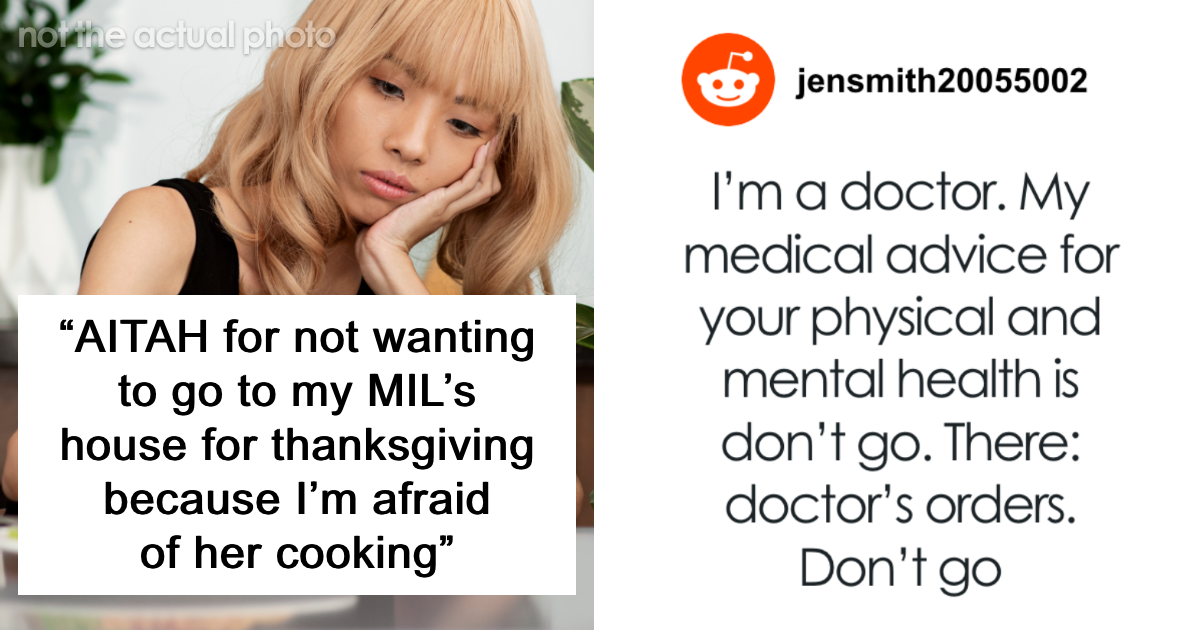
Thanksgiving is supposed to be a cozy little parade of turkey, pie, stretchy pants, and polite lies like, “No really, I love canned cranberry sauce.” But every so often, the holiday table becomes a battlefield, and one viral story proved it. In this case, the tension wasn’t about politics, football, or who forgot the rolls. It was about a pregnant woman, her mother-in-law’s wildly unpredictable cooking, and the very reasonable desire to avoid turning dinner into a gastrointestinal gamble.
The internet lit up after a woman shared that she dreaded spending Thanksgiving with her in-laws because her MIL had a long history of making questionable food choices. We are not talking about using too much sage or committing crimes against green bean casserole. We are talking about the kind of kitchen confidence that makes other adults quietly scan the room for antacids and an exit. According to the story, the mother-in-law had a habit of combining old leftovers with new dishes, relying on ancient canned goods, and serving meals that inspired more fear than gratitude.
Now add pregnancy to the mix. Suddenly this was not a picky-eater debate or a family snub. It was a story about food aversions, smell sensitivity, food safety, and the messy emotional politics of saying, “No thanks, I’m not eating that,” to someone who takes great pride in hosting. Unsurprisingly, sparks flew.
What Happened in the Viral Thanksgiving Drama?
The woman at the center of the story explained that pregnancy had made her extra sensitive to smells and textures. That alone can turn a normal family meal into an Olympic event. A whiff of onions, reheated meat, or mystery casserole can send a pregnant person from “I’m fine” to “Please move that plate before I cry” in record time. But the bigger issue was trust. She did not trust her MIL’s food handling, ingredient choices, or general approach to meal prep.
And honestly, that detail matters. There is a big difference between refusing a dish because you prefer your stuffing with less celery and refusing a dish because you suspect the cook treats expiration dates like creative suggestions. The woman reportedly worried that she would either go hungry for the weekend or risk eating something that could make her sick. Neither option exactly screams holiday magic.
Her hesitation also revealed a classic family dilemma: when one person’s “tradition” collides with another person’s health, who bends? The pregnant woman felt guilty because she liked her in-laws and did not want to hurt feelings. Her husband reportedly understood her concerns, but he was also caught in the awkward middle zone occupied by many adult children during the holidays: loyalty to a spouse on one side, guilt about disappointing a parent on the other, and mashed potatoes in the center.
Why So Many People Took Her Side
Pregnancy can radically change what feels edible
One reason this story resonated is that pregnancy often changes the body’s relationship with food in strange, dramatic, sometimes deeply inconvenient ways. A smell that once seemed harmless can suddenly feel like a personal attack. Foods that were once favorites can become instant enemies. Many pregnant people deal with nausea, stronger smell sensitivity, metallic taste changes, and sudden aversions that seem to make no logical sense. The body basically becomes a food critic with no chill.
That means a heavily scented kitchen, rich holiday dishes, or unfamiliar recipes can already be difficult even when the cook is careful. When the meal is being prepared by someone known for “experimental” food habits, the anxiety only multiplies. The woman’s reaction, then, was not just emotional. It was also physical. A dish does not need to be dangerous for it to be impossible to stomach during pregnancy. Sometimes the smell alone is enough to end the conversation.
Food safety matters more during pregnancy
Then there is the issue that gave this drama real weight: food safety. During pregnancy, the stakes are higher. Undercooked meat, unsafe leftovers, unheated deli products, unpasteurized items, and mishandled foods can carry greater risk. Suddenly the family line of “just try a little” starts sounding less like hospitality and more like an unlicensed dare.
That is why so many readers backed the pregnant woman. She was not making a performance out of refusing the food. She was responding to a legitimate concern. Pregnancy is one of those seasons in life when being “nice” should never outrank being safe. If a dish feels questionable, skipping it is not rude. It is common sense wearing maternity pants.
The Real Story Was Bigger Than the Turkey
This viral moment was never just about one Thanksgiving plate. It was really about boundaries, respect, and the strange way family tension likes to put on a pilgrim hat and reappear every November.
Holiday meals are loaded with symbolism. Food is love. Food is memory. Food is tradition. Food is also, occasionally, a control issue with gravy on top. When a host insists that everyone eat what is served, even when a guest has medical, sensory, or safety concerns, the meal stops being about generosity and starts being about power.
That is why this story felt so familiar to so many readers. Plenty of people have dealt with a relative who interprets any food refusal as personal rejection. You skip one suspicious casserole and suddenly you are accused of ruining the holiday, disrespecting the family, insulting Grandma’s memory, and possibly destabilizing democracy. It escalates fast.
Experts who talk about holiday family stress often make the same point: boundaries work best when they are communicated clearly and supported consistently. In other words, if a pregnant guest says she is bringing her own meal, eating beforehand, or sticking to a few foods she trusts, the respectful response is not outrage. It is, “Got it. Let me know what you need.”
The spouse’s role matters more than people admit
Stories like this also reveal how much depends on the partner in the middle. When someone is pregnant, exhausted, nauseated, and trying not to offend the in-laws, the last thing they need is to become the family’s full-time diplomatic corps. That is where the spouse should step in.
A good partner does not say, “Do whatever makes you comfortable,” and then disappear behind the deviled eggs. A good partner helps set expectations in advance, backs up the boundary in real time, and refuses to let the pregnant person become the villain of a story that should have ended with, “She brought her own food and everyone moved on.”
This Is Not the First Thanksgiving Food Fight the Internet Has Seen
Part of what made the story explode is that it fits into a very modern holiday genre: family food drama with a side of Reddit judgment. There have been plenty of similar viral stories.
In one widely discussed Thanksgiving conflict, a woman brought sweet potato casserole to her future in-laws’ dinner, only to discover that her MIL expected her to follow a very specific family recipe. She made her own version instead, and the result was a private lecture, bruised feelings, and a dramatic family group text. The lesson? Sometimes the danger is not bacterial. Sometimes it is emotional marshmallow fallout.
In another case, a woman avoided a Thanksgiving dish because she suspected it might have been made the year before and frozen. That sparked another debate online: was she being rude, or simply cautious? The split reaction said a lot. People are generally willing to forgive dry turkey. They are less forgiving when they feel pressured to eat something that seems questionable.
And then there are the stories where the food itself is fine, but the family dynamics are not. One Thanksgiving tale involved a couple leaving early with the turkey after the groom’s future mother-in-law criticized the fiancée’s worth as a future wife and mother. Different details, same theme: holiday meals often become the stage where deeper control struggles finally stop pretending to be about stuffing.
How To Handle a Similar Situation Without Turning the Table Into a Reality Show
1. Say something before the event
If you are pregnant and worried about what will be served, say so early. Keep it simple and boring. “My stomach has been really sensitive, so I may bring a few things I know I can eat.” That kind of message gives the host notice without opening a courtroom trial over your appetite.
2. Make safety the issue, not taste
It is usually smarter to avoid saying, “Your food freaks me out.” Try, “Pregnancy has made me really limited with what I can tolerate,” or “I have to be extra careful with leftovers and certain foods right now.” The truth can be delivered without using a flamethrower.
3. Bring backup food without apology
There is nothing rude about making sure you can eat. Bring snacks. Bring a side. Bring a full meal if needed. The goal of Thanksgiving is not to win Most Obedient Guest. The goal is to get through the day fed, calm, and not secretly Googling urgent care hours.
4. Let your partner do some of the talking
If the pushback is coming from your spouse’s family, your spouse should help handle it. This is especially true during pregnancy, when “I just can’t eat that right now” should not require a 12-slide presentation and a rebuttal period.
5. Remember that declining food is not the same as rejecting a person
This is the part many families miss. A boundary around food is not automatically an insult. If someone interprets every refusal as disrespect, that is their emotional homework, not yours. You can appreciate the effort, thank the host, and still pass on the mystery casserole.
Why This Story Hit a Nerve
The reason people kept clicking, sharing, and arguing about this story is simple: it captured a painfully relatable truth. Family drama rarely begins with what it claims to be about. It says it is about food, but it is really about respect. It says it is about tradition, but it is really about control. It says it is about one missed bite, but it is really about whether a person gets to make decisions for their own body without being punished for it.
For pregnant women especially, that tension can feel intense. Everyone suddenly has opinions: what you should eat, what you should avoid, how you should rest, how you should celebrate, how much discomfort you should tolerate in the name of family harmony. It is enough to make anyone want to skip dinner and run away with a pie.
So no, the pregnant woman who refused her MIL’s “experimental” Thanksgiving food did not spark drama by being difficult. The drama was already simmering. She just declined to eat it.
Experiences Related to This Topic: Why So Many Women See Themselves in This Story
What makes this kind of story spread so fast is not just the headline. It is the recognition. A lot of pregnant women have lived some version of this, even if the details were different. Maybe it was not Thanksgiving. Maybe it was a baby shower, Christmas brunch, a backyard barbecue, or a regular Sunday dinner. But the emotional script is familiar: someone serves food, a pregnant woman hesitates, and suddenly a private bodily decision becomes public family theater.
One common experience is smell sensitivity sneaking up like an uninvited guest. A dish can be perfectly safe and still completely impossible to handle. The turkey smells too strong. The gravy looks suspiciously glossy. The onions are everywhere. A room that would normally feel warm and festive suddenly feels like a fragrance assault with pie. Then comes the guilt. People are smiling, the host worked hard, and the pregnant woman is trying to calculate whether one bite is worth an hour of nausea. That internal debate alone is exhausting.
Another experience many women talk about is being treated as though their pregnancy needs are negotiable. They say they cannot eat deli meat unless it is heated. Someone says, “Oh, one bite won’t matter.” They skip a soft cheese dip. Someone jokes that women today are too cautious. They bring their own snack. Someone calls it dramatic. Over time, it stops being about the actual food and starts feeling like a test: will she keep the peace, or will she listen to her own body?
Then there is the emotional pressure of not wanting to offend older relatives. A lot of mothers-in-law and grandmothers express love through cooking, and that can make refusal feel loaded. Pregnant women often know this. They understand the history, the effort, the pride, the recipe cards stained with butter and nostalgia. That is exactly why these moments are hard. They are not rejecting love. They are trying to avoid discomfort, illness, or panic, while still being seen as kind.
Many women also recognize the loneliness of being the only one in the room tracking risk. Everyone else sees dinner. She sees whether the food sat out too long, whether the meat looks undercooked, whether the serving spoon touched raw ingredients, whether the leftovers have been hanging around since a suspiciously vague “a few days ago.” Pregnancy can make ordinary decisions feel higher stakes, and when nobody else takes those concerns seriously, it can be isolating.
And finally, there is the experience of relief when a partner actually steps up. Women remember the spouse who quietly brought crackers, made a plate of safe foods, backed them up when the comments started, or said, “She’s not eating that, and that’s the end of it.” Those small acts matter. They turn a stressful gathering into a manageable one. In that sense, stories like this are not really about refusing one meal. They are about whether a pregnant woman is allowed to trust herself, protect herself, and be supported while doing it.
Conclusion
“Pregnant Woman Refuses To Eat MIL’s ‘Experimental’ Thanksgiving Food, Sparks Drama” sounds like a juicy internet headline because it is one. But beneath the click-worthy chaos is a very real lesson. During pregnancy, food is not just food. It can be comfort, nausea, anxiety, caution, biology, and boundaries all on the same plate. When family members understand that, the holiday gets easier for everyone. When they do not, well, that is how you end up with a viral story and a side dish of resentment.
The smartest takeaway is refreshingly simple: nobody should be pressured to eat food they do not trust, especially during pregnancy. Respecting that boundary is not anti-family. It is the most civilized thing at the table.