Note: This article is based on synthesized product specifications, gardening tool guidance, and practical pruning best practices. It is written in original language for web publication and does not copy or reproduce source text.
A Small Garden Knife With a Very Big “I Know What I’m Doing” Energy
The Opinel Beechwood Handle Pruning Knife is one of those tools that looks almost too simple at first glance. A folding blade. A wooden handle. A metal safety ring. No battery, no Bluetooth, no app that asks for permission to access your shrubbery. And yet, for gardeners, orchard keepers, florists, homesteaders, and anyone who has ever wrestled a stubborn tomato tie like it owed them money, this little knife makes a convincing case for old-school design.
Opinel’s classic folding knives have been around for generations, and the pruning version follows the same philosophy: keep the tool light, sharp, reliable, and pleasant to hold. Instead of trying to be a do-everything survival blade, the Opinel pruning knife specializes in clean, controlled cuts on green stems, flowers, small shoots, grafting material, garden twine, and harvesting tasks. It is the difference between using the right tool and attacking your basil plant with kitchen scissors like a raccoon in a chef’s hat.
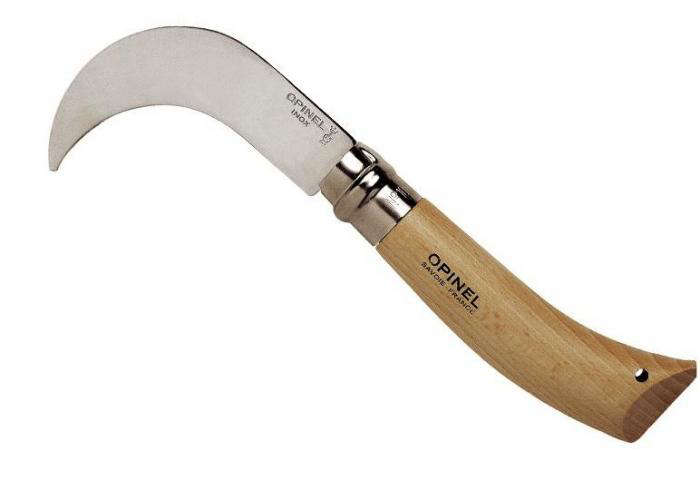
At the center of its appeal are three things: the curved pruning blade, the warm beechwood handle, and Opinel’s familiar Virobloc safety ring. Together, they create a compact garden knife that feels traditional without being fussy. It is affordable, pocketable, and surprisingly elegant for something that may spend half its life covered in sap.
What Is the Opinel Beechwood Handle Pruning Knife?
The Opinel Beechwood Handle Pruning Knife is a folding garden knife designed for light pruning, grafting, harvesting, and general horticultural cutting. The common No. 8 pruning or grafting model typically uses a curved blade around 7.5 to 8 centimeters long, paired with a varnished beechwood handle and a rotating safety collar. Many current listings describe the blade as stainless steel, while some older or marketplace listings mention carbon steel, so buyers should always check the exact version before ordering.
The shape matters. A standard straight pocket knife can cut stems, but a pruning blade has a gentle curve that helps pull plant material into the cutting edge. This makes it easier to slice cleanly through small stems, flower stalks, fruit clusters, plant ties, and soft growth. It is not meant to replace bypass pruners for thick woody branches, but for delicate or close work, it offers more control than a bulky hand pruner.
Key Features at a Glance
- Handle: Beechwood, usually varnished for a smooth hand feel and basic moisture resistance.
- Blade: Curved pruning-style blade, commonly stainless steel in current No. 8 pruning models.
- Lock: Virobloc rotating safety ring to secure the blade open and closed.
- Best uses: Light pruning, grafting cuts, harvesting herbs and flowers, cutting twine, and garden detail work.
- Not ideal for: Heavy branches, chopping, digging, prying, or any task that makes the knife whisper, “Please stop.”
Why the Beechwood Handle Still Works
In a world full of rubberized grips, tactical textures, and handles that look like they were designed for a moon rover, beechwood can seem almost too humble. But that is exactly why it works. The Opinel beechwood handle is lightweight, rounded, and comfortable in the palm. It gives the knife a natural warmth that plastic rarely manages, and it keeps the tool from feeling cold or slippery during ordinary garden use.
Beech is also part of the classic Opinel identity. It gives the knife that familiar pale wooden look: practical, rustic, and just polished enough to avoid looking like it was carved behind a barn during a thunderstorm. The handle’s simple barrel-like shape allows different grips, whether you are slicing downward through a flower stem, trimming a sucker from a tomato plant, or carefully shaving grafting wood.
Wood does require a little common sense. Do not soak the knife in water. Do not leave it outside overnight in the rain. Do not toss it into a bucket of wet compost and call that “patina.” Wipe it clean, dry it well, and occasionally treat the handle with a small amount of suitable oil if it begins looking dry. With basic care, the beechwood handle ages gracefully and gives the knife much of its charm.
The Curved Blade: Small, Sharp, and Purposeful
The blade is where this pruning knife earns its keep. Its curve is not decorative; it changes the way the edge meets the plant. When cutting a small stem, the curve helps draw the material into the cutting path, creating a smoother slicing action. That is useful for harvesting herbs, deadheading flowers, trimming soft shoots, and making careful cuts where a full-size pruner would feel clumsy.
A sharp pruning knife is especially valuable when you want to avoid crushing delicate plant tissue. Clean cuts are not just prettier; they help plants recover more efficiently. Ragged, torn, or crushed cuts can create unnecessary stress and may invite disease or pests. This is why experienced gardeners treat sharpness like a personality trait: if the tool is dull, nobody is having a good afternoon.
For grafting work, the knife’s control is the main attraction. Grafting often requires smooth, intentional slices rather than snips. The Opinel pruning knife can handle light grafting preparation, budwood trimming, and similar detail tasks, provided the user has the skill and patience. It will not magically turn a beginner into a fruit-tree wizard, but it does provide the kind of responsive edge that makes learning more enjoyable.
The Virobloc Safety Ring: Simple but Smart
One of Opinel’s most recognizable features is the Virobloc safety ring. This rotating collar sits near the pivot of the blade. When aligned, the blade can open or close. When rotated, it locks the blade in place. On modern versions, it can secure the blade both open during use and closed during transport.
That matters because a folding pruning knife lives in pockets, garden bags, apron loops, tool rolls, and occasionally the mysterious black hole under the potting bench. A blade that locks closed is safer to carry. A blade that locks open is safer to use. The mechanism is refreshingly simple, which is a polite way of saying it does not require an engineering degree, a tiny screwdriver, or a prayer to the warranty department.
Still, a lock is not a substitute for safe habits. Always cut away from your body. Keep your supporting hand out of the blade path. Close and lock the knife when moving between tasks. If you are pruning from a ladder, reconsider your life choices and use the correct long-handled tool instead.
What the Opinel Pruning Knife Does Best
1. Harvesting Herbs, Flowers, and Small Produce
For gardeners who harvest often, this knife is a quiet little luxury. It slices basil, rosemary, parsley, chives, lettuce heads, flower stems, and soft vegetable stalks cleanly. Compared with yanking or twisting, cutting reduces damage to the plant and keeps your harvest looking less like it survived a bar fight.
2. Deadheading and Light Pruning
Deadheading spent flowers is one of those garden chores that sounds peaceful until you are twenty minutes in and questioning every petunia you have ever purchased. The Opinel pruning knife makes the job cleaner and faster when stems are small enough for knife work. Roses, annuals, perennials, and container plants can all benefit from quick, neat cuts.
3. Cutting Garden Twine and Plant Ties
Garden twine has a special talent for becoming impossible at the exact moment your hands are muddy. A sharp folding pruning knife handles twine, jute, soft ties, grafting tape, and packaging with ease. This makes it a useful companion even when you are not actively pruning.
4. Grafting and Budwood Preparation
The knife’s curved, controlled blade can help with light grafting tasks and preparing small scion wood. For serious grafting, some gardeners prefer specialized single-bevel grafting knives, but the Opinel pruning knife remains a practical, approachable tool for hobby use and general garden work.
5. Pocket-Friendly Garden Detail Work
Its folding design makes it easy to keep nearby. You are more likely to use the right tool when the right tool is actually in your pocket, rather than sitting in the garage under a bag of mulch and three broken promises.
What It Should Not Be Used For
The Opinel Beechwood Handle Pruning Knife is not a substitute for every cutting tool in the shed. Thick branches should be handled with bypass pruners, loppers, or a pruning saw. Hard deadwood can stress a small blade. Prying, digging, scraping concrete, opening paint cans, and using the tip as a mini crowbar are all excellent ways to turn a charming French knife into a cautionary tale.
As a rule, use the Opinel pruning knife for slicing tasks, not force tasks. If you find yourself squeezing your jaw and pushing hard, stop. The plant is too large, the wood is too tough, or the tool is too dull. Gardening is supposed to build patience, not create emergency-room anecdotes.
How to Use It for Cleaner Pruning Cuts
For soft stems and small shoots, open the knife fully, rotate the Virobloc ring to lock the blade, and position the stem against the inner part of the curved edge. Use a controlled slicing motion instead of a hacking motion. The goal is a smooth cut, not a dramatic reenactment of medieval shrub combat.
When pruning woody plants, cut just above an outward-facing bud when shaping growth. For branches attached to larger stems, avoid flush cuts that remove the branch collar. For anything larger than the knife can slice easily, switch to pruners or a saw. The cleanest cut is usually made with the tool that matches the size and structure of the plant material.
If you are working with diseased plant material, clean and disinfect the blade before moving to healthy plants. Remove sap and debris first, then use an appropriate disinfectant method. Dry the blade afterward, especially before folding it back into the wooden handle.
Care and Maintenance: Keep It Sharp, Clean, and Dry
A pruning knife lives a harder life than a picnic knife. Sap, soil, moisture, and plant acids can collect on the blade and around the pivot. That does not mean maintenance is complicated; it just means maintenance should actually happen.
After Each Use
- Wipe the blade clean with a dry or lightly damp cloth.
- Remove sticky sap before it hardens.
- Dry the blade completely before closing it.
- Brush debris away from the safety ring and pivot area.
- Store it indoors, not in a damp shed corner where tools go to develop regrets.
Occasional Maintenance
Sharpen the blade when it begins dragging through stems instead of slicing. A small sharpening stone or fine abrasive can restore the edge, but keep the original bevel in mind and avoid over-grinding. Add a tiny amount of food-safe or tool-safe oil to the pivot if the blade becomes stiff. For the handle, a light treatment with suitable wood oil can help prevent dryness over time.
If the Virobloc ring becomes sticky, clean away grit and sap. If it becomes loose or overly tight, it may need adjustment. The beauty of the Opinel design is that most basic care is straightforward. It is the mechanical equivalent of a good handwritten recipe: simple, proven, and hard to improve without making it annoying.
Stainless Steel vs. Carbon Steel: Which One Should You Choose?
Because product listings for Opinel pruning knives can vary, shoppers should pay attention to blade steel. Stainless steel is easier to maintain and resists corrosion better, which is useful in wet garden settings. Carbon steel can take a very keen edge and is loved by many knife users, but it requires more careful drying and oiling to prevent rust.
For most casual gardeners, the stainless version is the low-drama choice. It handles ordinary garden moisture better and is easier to live with if you are the kind of person who sometimes leaves tools on the potting bench “just for a minute” and returns three days later. Carbon steel is excellent for users who enjoy maintenance and appreciate the way the blade develops character over time.
Who Should Buy the Opinel Beechwood Handle Pruning Knife?
This knife is a strong fit for gardeners who want a lightweight, elegant tool for everyday detail work. It is especially useful for herb gardeners, flower growers, orchard hobbyists, seed savers, and anyone who likes tools that feel personal rather than disposable. It also makes a thoughtful gift for gardeners because it looks beautiful without becoming shelf-only decoration.
It may not be the best choice for people who need one-handed opening, heavy-duty branch cutting, or a tool that can be abused without complaint. It is a garden knife with manners. Treat it well, and it will reward you with years of clean cuts. Treat it like a pry bar, and it will not write you a thank-you note.
Pros and Cons
Pros
- Lightweight and easy to carry in a pocket or garden apron.
- Curved blade is well suited for harvesting, pruning, and small slicing tasks.
- Beechwood handle feels warm, natural, and comfortable.
- Virobloc ring adds practical open-and-closed blade security.
- Classic design with strong value for gardeners.
Cons
- Not intended for thick branches or heavy cutting.
- Wood handle should not be soaked or left wet.
- Two-handed opening may be less convenient than modern garden knives.
- Blade steel can vary by listing, so buyers should verify before purchasing.
Real-World Experience: A Season With the Opinel Beechwood Handle Pruning Knife
Using the Opinel Beechwood Handle Pruning Knife in a garden feels a bit like switching from a clunky office stapler to a fountain pen. Both technically do work, but one makes you slow down just enough to do the job better. The first thing you notice is the handle. It is not flashy, but it sits comfortably in the hand, and because it is so light, it does not feel like another bulky tool competing for space in your pocket.
During spring cleanup, it shines on small stems and soft growth. It is excellent for tidying herbs that have gone wild, cutting back dead flower stalks, and trimming little shoots that are too awkward for pruners. On a rosemary plant, for example, the curved blade can make quick, neat cuts without crushing the stem. On basil, it slices cleanly enough that the harvested leaves still look ready for a food magazine photo instead of a ransom note.
In a flower garden, the knife becomes especially handy for deadheading. Instead of carrying full-size pruners for every tiny task, you can open the Opinel, lock the blade, and make precise cuts close to the stem. It is satisfying in the way only gardeners understand: tiny improvements repeated until the whole bed suddenly looks like it got eight hours of sleep and a new haircut.
The knife is also surprisingly useful around raised beds. Cutting twine, opening seed packets, trimming plant labels, slicing soft ties, and harvesting lettuce all become easier when the tool is already nearby. That is one of its best features: convenience. A tool does not need to be dramatic to be valuable. Sometimes it just needs to be there when the cucumber vine starts grabbing the tomato cage like it is auditioning for a soap opera.
There are limits, of course. Try to cut a woody branch that belongs to loppers, and the Opinel will politely remind you that charm is not the same as leverage. It is best on thin, green, or moderately soft material. For roses, it works well on light trimming and flower cutting, but thicker canes call for bypass pruners. For fruit trees, it can help with small grafting or trimming tasks, but structural pruning belongs to larger tools.
Maintenance becomes part of the rhythm. After a session, wipe the blade, clear away sap, dry it, and lock it closed. That little ritual keeps the knife ready. The beechwood handle also teaches a useful lesson: tools with natural materials prefer attention. Not constant pampering, just basic respect. Do not leave it in wet grass. Do not wash it like a dinner plate. Do not let it live in the bottom of a muddy bucket unless you want the handle to develop a personality disorder.
After several uses, the biggest impression is that the Opinel pruning knife encourages better gardening habits. It makes you cut rather than tear. It makes you notice where the stem meets the node. It turns harvesting into something more deliberate. And because it is attractive, you are less likely to lose it under a pile of gloves, although gardeners are famously capable of losing anything, including full-size rakes, in areas smaller than a parking space.
Overall, the experience is simple and pleasant: open, lock, cut, clean, close. No drama. No batteries. No heroic claims. Just a sharp little beechwood-handled pruning knife doing exactly what it was made to do.
Final Verdict: A Classic Garden Tool That Earns Its Pocket Space
The Opinel Beechwood Handle Pruning Knife is not trying to impress gadget lovers. It is trying to help gardeners make cleaner cuts, harvest more neatly, and carry a useful blade without adding weight or complexity. That is exactly why it works.
Its curved blade is practical, its beechwood handle is comfortable, and its Virobloc safety ring gives the folding design a reassuring level of control. It is best for light pruning, harvesting, grafting preparation, cutting twine, and small garden chores. It is not a replacement for pruners, loppers, or saws, but it is a wonderful companion to them.
For gardeners who appreciate traditional tools, the Opinel pruning knife offers excellent value and everyday charm. It feels like the kind of object that belongs in a garden apron, on a potting bench, or in the pocket of someone who knows the difference between pruning and randomly removing plant parts while muttering, “This seems fine.”
If you want a compact, elegant, and genuinely useful garden knife, the Opinel Beechwood Handle Pruning Knife deserves a close look. Just keep it sharp, keep it dry, and remember: the knife cuts the stem, not your enthusiasm.