At some point, almost everyone has typed a variation of this into a search bar: “How many kilograms is 50 newtons?” It sounds like the kind of question that should have a tidy one-line answer, right up there with “How many cups are in a quart?” But physics loves a plot twist. Newtons measure force, while kilograms measure mass. So converting newtons to kilograms is possible only when you are really asking for the mass equivalent under gravity.
That is the whole game. Once you know that, the math gets surprisingly friendly. No dramatic soundtrack required. In this guide, you’ll learn the difference between newtons and kilograms, the exact formula, a quick shortcut for everyday use, and several easy methods to get the right answer without accidentally angering your old science teacher.
Whether you are working on a school assignment, checking engineering specs, reading gym equipment labels, or just trying to decode a product description written by someone who clearly enjoyed units a little too much, this article will walk you through it step by step.
Why Converting Newtons to Kilograms Can Be Confusing
Before jumping into the math, it helps to clear up the biggest source of confusion: newtons and kilograms are not the same kind of unit.
- Newton (N): a unit of force
- Kilogram (kg): a unit of mass
That means asking to convert newtons directly to kilograms is a little like asking to convert “miles per hour” into “apples.” They belong to different categories unless you add more context. In this case, the missing context is gravity.
On Earth, weight is the force created when gravity pulls on mass. That relationship is written as:
W = m × g
Where:
- W = weight in newtons
- m = mass in kilograms
- g = gravitational acceleration, about 9.80665 m/s² on standard Earth gravity
So when people ask how to convert newtons to kilograms, what they usually mean is this: “What mass would produce this many newtons of weight on Earth?”
The Quick Answer
To convert newtons to kilograms on Earth, use this formula:
kg = N ÷ 9.80665
For fast everyday estimates, you can round it to:
kg ≈ N ÷ 9.8
That is the simplest and most practical method for most situations.
Example
If an object weighs 98 N on Earth:
98 ÷ 9.8 = 10 kg
So the object has a mass of about 10 kilograms.
7 Steps to Convert Newtons to Kilograms
1. Confirm That the Newton Value Refers to Weight or Force
This step matters more than people think. If the number in newtons refers to weight under gravity, then you can convert it into a mass equivalent in kilograms. But if it is some other force, like thrust, tension, drag, or impact force, the conversion is not automatically valid.
For example:
- 49 N of weight can be converted to kilograms on Earth
- 49 N of pushing force is just force and should not be treated as kilograms of mass
In short, make sure you are converting weight force, not just any force with a dramatic personality.
2. Use Standard Gravity Unless Told Otherwise
In most school, lab, product, and engineering examples, standard Earth gravity is assumed. That value is:
g = 9.80665 m/s²
For quick math, most people use 9.8. Unless your assignment asks for a more exact answer, that shortcut is perfectly reasonable.
3. Divide the Newton Value by Gravity
Now do the actual conversion:
Mass in kg = Force in N ÷ 9.80665
If you are estimating:
Mass in kg ≈ Force in N ÷ 9.8
4. Keep the Units Straight
This is where many mistakes sneak in wearing fake glasses. If you divide newtons by meters per second squared, the result is kilograms. That unit logic works because:
1 N = 1 kg·m/s²
So when you divide newtons by gravitational acceleration, the acceleration units cancel, leaving kilograms.
5. Round Only at the End
If you round too early, your final answer can drift a little. Keep a few decimal places during the calculation and round at the end based on what the situation needs.
For example:
75 N ÷ 9.80665 = 7.6456 kg
Rounded to two decimal places, that becomes 7.65 kg.
6. Double-Check by Reversing the Formula
Want to make sure your answer is solid? Multiply your kilogram result by gravity.
Example:
7.65 kg × 9.8 ≈ 74.97 N
That is close enough to 75 N for normal use, which means your conversion checks out.
7. Label the Result Clearly
Do not just write “10” and hope the universe fills in the blanks. Label it 10 kg, and if needed, mention that it is the mass equivalent under Earth gravity.
This is especially helpful in technical writing, product specs, and school work, where one unlabeled number can turn a clean answer into a unit-shaped mess.
Quick & Easy Methods You Can Actually Use
Method 1: The Exact Formula
Use this when accuracy matters:
kg = N ÷ 9.80665
Best for:
- lab reports
- engineering calculations
- technical content
- precise conversions
Method 2: The Fast Mental Shortcut
Use this when you want a good estimate:
kg ≈ N ÷ 10
This is not exact, but it is handy for quick mental math.
Example:
100 N ÷ 10 = about 10 kg
The exact answer using 9.80665 is about 10.20 kg, so the shortcut gets you close.
Method 3: Use 9.8 for the Sweet Spot
If you want a balance between speed and accuracy, divide by 9.8.
Example:
196 N ÷ 9.8 = 20 kg
This method works beautifully for many classroom problems and real-world estimates.
Newtons to Kilograms Conversion Examples
Let’s put the formula to work with several common values.
| Force (N) | Formula | Mass (kg) |
|---|---|---|
| 9.8 N | 9.8 ÷ 9.8 | 1 kg |
| 19.6 N | 19.6 ÷ 9.8 | 2 kg |
| 49 N | 49 ÷ 9.8 | 5 kg |
| 98 N | 98 ÷ 9.8 | 10 kg |
| 250 N | 250 ÷ 9.80665 | 25.49 kg |
| 500 N | 500 ÷ 9.80665 | 50.99 kg |
| 1000 N | 1000 ÷ 9.80665 | 101.97 kg |
Notice the pattern: every 9.8 N of weight on Earth corresponds to about 1 kg of mass.
Common Mistakes to Avoid
Mistake 1: Treating Newtons and Kilograms as the Same Thing
They are related, but they are not interchangeable. Kilograms measure how much matter something has. Newtons measure the force acting on it.
Mistake 2: Forgetting Gravity
Without gravity, there is no clean newtons-to-kilograms conversion for weight. Gravity is the bridge between the two units.
Mistake 3: Using the Wrong Gravity Value
If a problem takes place on the Moon, Mars, or another environment, Earth’s gravity is not the right number to use.
For example, a mass does not change from Earth to the Moon, but its weight in newtons does.
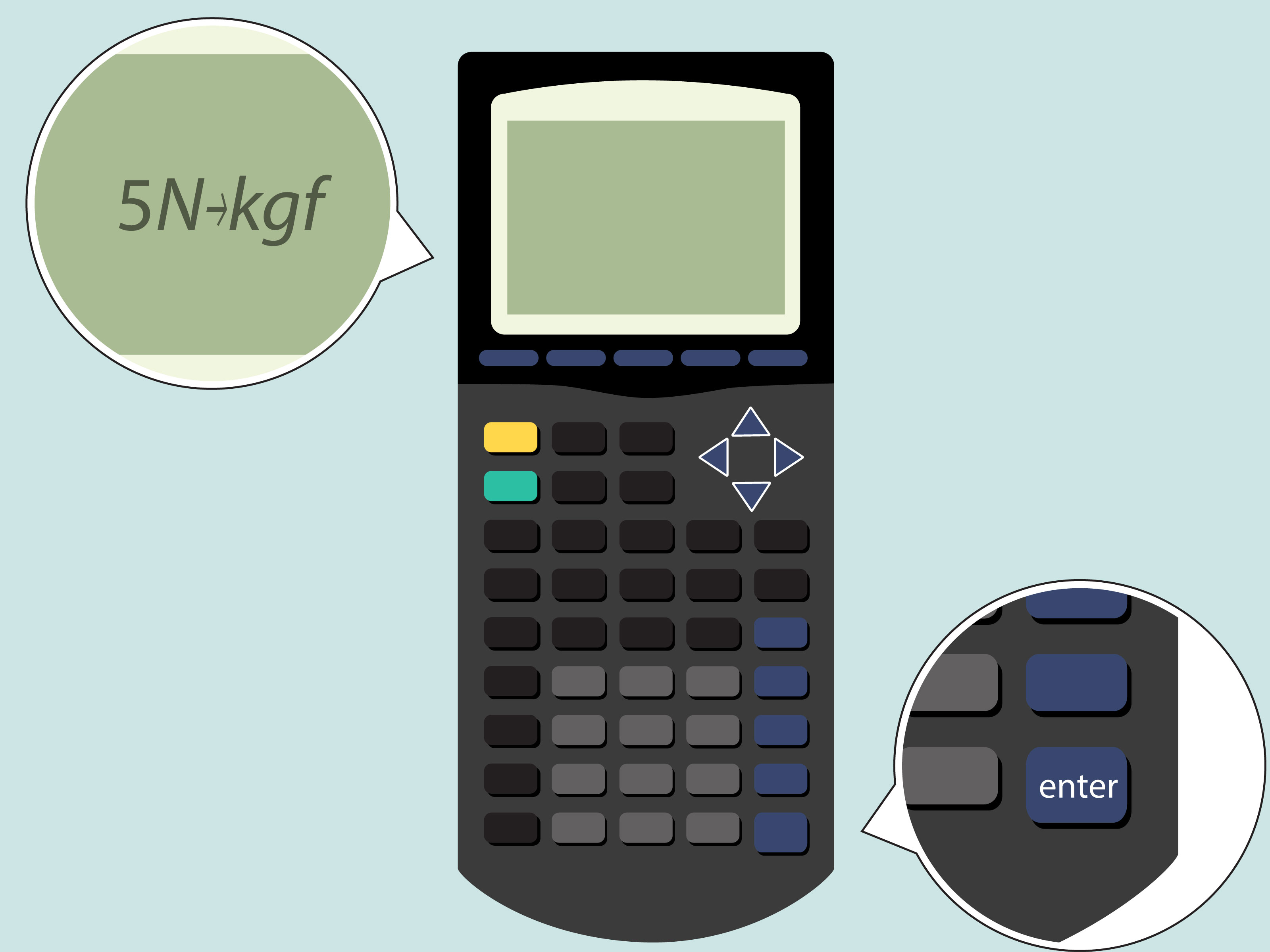
Mistake 4: Confusing Kilograms with Kilogram-Force
This one is sneaky. Sometimes people see “kg” used casually where “kgf” is really meant. A kilogram-force is a force unit, not a mass unit. Under standard gravity:
1 kgf = 9.80665 N
That does not mean 1 kg = 9.80665 N in every context. It means a mass of 1 kilogram has a weight of 9.80665 newtons under standard Earth gravity.
When This Conversion Is Useful
The conversion from newtons to kilograms comes up more often than people expect. Here are a few common situations:
Product Specifications
Some tools, springs, exercise equipment, and industrial parts list force ratings in newtons. If you want the mass equivalent on Earth, dividing by 9.8 gives you a practical estimate.
Science Class and Homework
Physics problems love unit conversions because they separate the careful readers from the heroic guessers. Knowing the formula lets you move quickly and avoid silly errors.
Engineering and Mechanics
Load, tension, compression, and support forces are often given in newtons. While engineers work with force directly, sometimes it helps to think in mass equivalents for comparison.
Fitness and Resistance Equipment
Cables, elastic bands, and resistance systems may be rated in newtons. Converting that force into an approximate kilogram equivalent can make the number easier to picture.
What About Other Planets?
Here is where physics gets spicy. The conversion changes with gravity.
The general formula is still:
m = W ÷ g
But if g changes, the result changes too. On the Moon, gravity is much lower than on Earth, so the same mass weighs less in newtons. That means a force value in newtons does not always point to the same kilogram equivalent unless the gravitational setting is known.
So if you are converting newtons to kilograms and the problem does not mention the Moon, Mars, or a space station, assume standard Earth gravity. If it does mention another location, use that location’s gravitational acceleration instead.
Handy Reference Chart
- 1 N ≈ 0.102 kg of mass equivalent on Earth
- 10 N ≈ 1.02 kg
- 50 N ≈ 5.10 kg
- 100 N ≈ 10.20 kg
- 250 N ≈ 25.49 kg
- 500 N ≈ 50.99 kg
If you only remember one thing, make it this:
Divide newtons by 9.8 to get kilograms on Earth.
Final Thoughts
Converting newtons to kilograms is quick once you know what is really happening. You are not switching one identical unit into another; you are translating a force into a mass equivalent by accounting for gravity. That is why the formula works:
kg = N ÷ 9.80665
For everyday use, dividing by 9.8 is usually enough. For rough mental math, dividing by 10 gets you in the neighborhood. The key is to remember that the conversion assumes Earth gravity and that kilograms describe mass, not force.
Once that clicks, the whole topic becomes much less intimidating. In fact, it becomes one of those rare science problems that is both useful and mercifully short. A true unicorn.
Practical Experiences and Real-Life Lessons with Newtons to Kilograms
One of the easiest ways to understand this topic is to stop treating it like a cold formula and start noticing where it shows up in real life. For example, people often run into newtons-to-kilograms questions when buying gas struts, springs, or office chair parts online. A product may say “force: 800 N,” and the average shopper immediately wonders whether that means the part can lift 800 kilograms. It cannot. That 800 N rating translates to roughly 81.6 kilograms of force equivalent under Earth gravity, and even then, the practical lifting performance depends on angle, mounting position, and how the mechanism is used. In other words, the raw number matters, but context matters more.
Students have a similar experience in physics class. At first, they tend to think the conversion is annoying because the units do not “match nicely.” Then a teacher writes W = mg on the board, and suddenly the mystery shrinks. Once students calculate that a 5 kg object weighs about 49 N on Earth, they start seeing a pattern. Then they check the reverse calculation, 49 N ÷ 9.8 = 5 kg, and the concept finally stops feeling random. That moment is important because it teaches more than just a formula. It teaches that units carry meaning, and if you listen to the units, they will usually tell you what to do.
People working with fitness equipment also run into this often. Resistance systems, cable machines, and elastic bands may list tension or load in newtons. Someone reading the spec sheet may want to know whether a 300 N setting feels more like 20 kg or 50 kg. The quick conversion makes the number easier to picture. Still, experience teaches that “equivalent kilograms” are only a comparison tool, not a perfect substitute for how the resistance actually feels in motion. Friction, pulley design, body position, and movement speed can all change the user experience.
Writers, editors, and product reviewers often have another kind of experience with this topic: translating technical language into plain English. A spec written for engineers may be perfectly correct but not very reader-friendly. Saying “the latch holds 150 N” is accurate, but many readers grasp the number faster when it is explained as “about 15.3 kg of force equivalent on Earth.” That small clarification makes technical content more useful without dumbing it down.
The biggest practical lesson is simple: formulas are helpful, but interpretation is everything. Whenever you see newtons and want kilograms, pause and ask what the number represents. Is it weight? Is it thrust? Is it spring force? Is Earth gravity assumed? That tiny habit prevents most mistakes before they happen. And honestly, that is the real superpower here. Not memorizing a fancy equation, but knowing when the conversion makes sense and when it does not. Once you build that instinct, unit conversions stop feeling like traps and start feeling like tools.