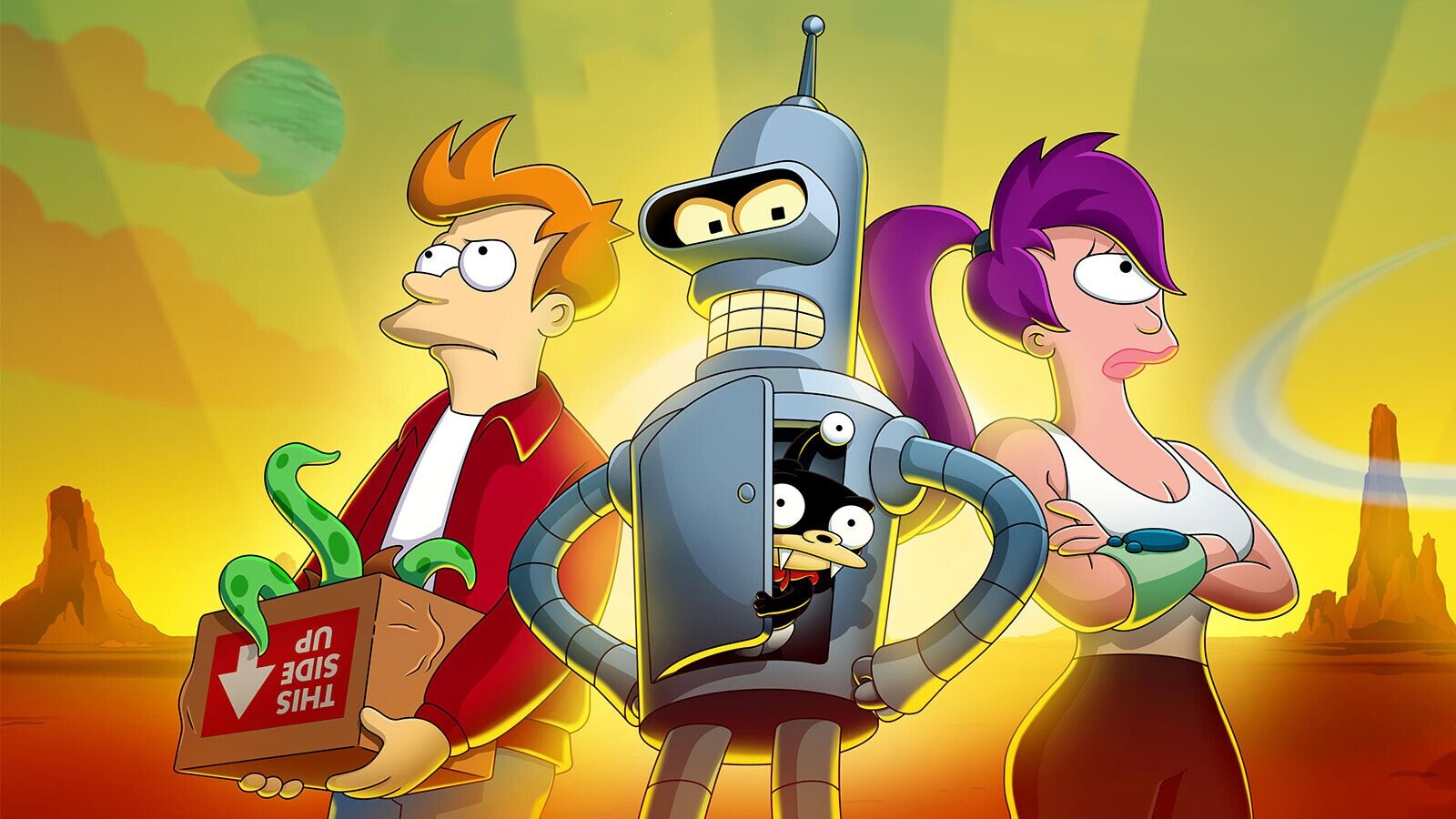
If you only glance at Futurama, the future looks pretty sweet. There are flying cars, robot friends, interplanetary travel, and enough neon to make Times Square look like a polite candle. But spend more than five minutes in New New York and the shine wears off fast. The vending machines are rude, the delivery jobs are lethal, the political system is a circus with better lasers, and even the holidays come with a high probability of violent robot attack. In other words, Futurama gives us a future that is dazzling to look at and deeply questionable to live in.
That is exactly why the show works. Matt Groening and David X. Cohen did not build a glossy sci-fi postcard where humanity finally gets its act together. They built a comedy universe where all our bad habits survive the next thousand years and pick up a few upgrades along the way. The result is one of the smartest pieces of science fiction comedy ever made: a world that feels futuristic on the surface, but painfully familiar underneath. Sure, the streets are filled with mutants, robots, clones, and talking heads in jars. The real joke, though, is that progress has changed the gadgets more than it has changed the people using them.
Why Futurama’s Tomorrow Feels So Wrong
The premise is famously simple. Fry, an underachieving pizza delivery guy from the year 1999, gets accidentally frozen and wakes up a thousand years later. That setup gives the show its favorite trick: it lets a modern audience look at the future through the eyes of a guy who is both clueless and weirdly qualified to judge it. Fry is not a scientist, philosopher, or chosen one. He is basically a confused guy in a red jacket trying to survive a world where the rules are always ridiculous. Because of that, the audience sees the future the way a tourist sees a city after the airport shuttle breaks down: with excitement, confusion, and a growing suspicion that maybe this was not the best travel idea.
And that future keeps offering reasons to leave a one-star review. Futurama is not bleak in the grimdark, no-jokes-allowed sense. It is cheerful chaos. But it is still chaos. The show turns everyday anxieties about work, technology, consumerism, politics, and loneliness into space-age punch lines. Beneath the comedy, the larger message is hard to miss: if humanity carries its same instincts into tomorrow, tomorrow is going to be a noisy mess.
The Future Is Still Run by the Same Old Human Nonsense
Bureaucracy survives everything
You might think a thousand years of innovation would kill off pointless paperwork, dead-end office culture, and soul-sucking administration. Futurama says absolutely not. In fact, the future doubles down. The Central Bureaucracy is one of the funniest recurring ideas in the series because it suggests that no matter how many planets we colonize, someone will still invent a form that takes three months to file and another six months to lose.
Hermes Conrad, the Planet Express bureaucrat, is the perfect symbol of this joke. He lives in a future with starships and alien civilizations, yet he still spends his time obsessing over regulations and filing systems. That is the show in miniature. The technology evolves. The pettiness remains. It is a workplace comedy wrapped in a sci-fi shell, which is why the world feels so amusingly miserable. The office has changed its wallpaper, but it is still the office.
Technology Gets Smarter, People Don’t
One of the sharpest things about Futurama is that it never worships technology. The show loves science, sure, but it does not automatically trust invention. In this universe, progress often means creating something faster, louder, and more dangerous than the thing it replaced. Suicide booths sit on the sidewalk like convenience kiosks. Robots drink, gamble, lie, and commit petty crimes with the energy of overcaffeinated uncles. The internet becomes a literal place where users can get physically sucked into digital nonsense. Even newer revival-era jokes about AI, virtual hype, and trend-chasing work best when they show the same core truth: flashy tools do not erase dumb behavior. They just give it better branding.
That is why Futurama feels more biting than many futurist fantasies. The show does not ask, “What can technology do?” It asks, “What terrible decision will a person make five minutes after the technology launches?” That question has aged disturbingly well. Whether it is celebrity obsession, algorithmic weirdness, or the human tendency to monetize every living thing in sight, the series keeps landing its jokes because it understands that innovation and wisdom are not twins. They are barely cousins.
Consumerism Goes Intergalactic
If Futurama has a religion, it is probably shopping. The series is packed with fake brands, junk food nightmares, manipulative advertising, and corporations that seem one bad board meeting away from owning the planet. MomCorp is the ultimate punch line here. It looks friendly and grandmotherly on the surface, but underneath it is ruthless, monopolistic, and entirely comfortable treating the public like a walking wallet. In other words, the future’s biggest villain does not arrive in a warship. She arrives as a smiling corporate brand.
Episodes built around Slurm, Popplers, and random futuristic fads keep returning to the same idea: people in the future are still easy to sell to. Maybe even easier. Futurama understands that appetite scales beautifully with technology. Give consumers a thousand years and they will not become more enlightened. They will just demand their junk food with better packaging, faster delivery, and probably some sort of blockchain nonsense attached. The show mocks the marketplace without ever turning into a lecture, which is a neat trick. It lets the audience laugh at the absurdity while quietly noticing that the absurdity looks suspiciously familiar.
The Environment Is One Bad Joke Away From Collapse
For a comedy filled with killer robots and horny aliens, Futurama is surprisingly good at environmental satire. One of its most memorable ideas is painfully simple: humanity creates so much trash that the planet eventually has to deal with a giant garbage crisis of its own making. It is a perfect Futurama premise because it is cartoonishly silly and depressingly believable at the same time. The show takes a modern problem, launches it into outer space, and then points out that outer space will not save us from ourselves.
That pattern shows up again and again. Pollution, overconsumption, ecological carelessness, and throwaway culture are all woven into the show’s background. The future does not arrive as a clean break from past mistakes. It arrives as an accumulation of them. That is part of what makes New New York such a bad vacation destination. The skyline is marvelous, but the civic planning often feels like it was done by raccoons with a startup budget.
Politics Is Still a Traveling Circus
If you were hoping democracy gets calmer in the year 3000, Futurama would like a word. Actually, several words, many of them shouted by preserved heads in jars. The show’s political satire is deliciously unserious on the surface and extremely sharp underneath. Leaders are vain, institutions are flimsy, public debate is often stupid, and symbolism constantly trumps substance. A future full of advanced science still cannot cure spectacle.
That joke lands because Futurama knows politics is not just about policy. It is also about performance. The future may come with transport tubes and space embassies, but it still rewards ego, manipulation, and panic. The show keeps reminding us that civilization can look advanced while behaving like a comment section. New New York is not a utopia with a few funny flaws. It is a social satire where the flaws are the operating system.
Even Leisure Activities Feel Lightly Fatal
Here is another reason Futurama’s future does not seem like a fun place to go: absolutely everything is trying to kill you. Work missions go sideways. Theme-park-level attractions become death traps. Outer space is full of monsters, scams, parasites, and bureaucratic inconvenience. Holidays are weaponized. Even delivery runs can turn into existential nightmares with bonus paperwork.
The genius of this running gag is that the show rarely plays danger as horror. It plays it as background inconvenience. In New New York, disaster is not always a dramatic event. Sometimes it is just Tuesday. That creates a world where risk is normalized, which is funny on-screen and horrifying if you picture yourself actually living there. Imagine booking a long weekend only to discover that the local Santa is an armed robot judge of morality. Hard pass.
The Heart Makes the Dystopia Hurt More
Here is the twist that elevates Futurama from clever sci-fi cartoon to beloved classic: underneath all the sarcasm, the show has a real heart. That emotional core matters because it prevents the future from feeling like empty parody. The series is not just mocking society from a safe distance. It is investing in people who are trying, failing, loving, grieving, and stumbling through the mess.
That is why episodes like Jurassic Bark, The Luck of the Fryrish, Godfellas, and The Late Philip J. Fry hit so hard. The world of Futurama is absurd, but the feelings are not. Fry’s loneliness is real. Leela’s longing is real. Bender’s selfishness is funny until the show decides to tilt it sideways and show something unexpectedly vulnerable beneath the metal. Even the famously brainy side of the series, like the body-switching puzzle in The Prisoner of Benda, works because the ideas are not just there to show off. They are tied to character, chaos, and consequence.
That emotional sincerity is also why the future feels so unpleasant in a meaningful way. If the characters were cardboard, the dystopian bits would float by as disposable jokes. But because we care about them, every ridiculous policy, corporate scam, or cosmic disaster carries more weight. A joke about tomorrow lands harder when it affects people you actually like.
Why the Satire Still Works
Futurama has stayed relevant because it never relied only on predicting gadgets. Plenty of sci-fi gets distracted trying to guess the exact shape of tomorrow’s screens. Futurama cares more about habits than hardware. It understands that humans bring themselves into the future. Their greed comes too. Their loneliness comes too. Their need for connection, status, distraction, convenience, and meaning all hop into the cryogenic tube right alongside them.
That is why the show can parody everything from internet addiction to corporate branding to political vanity and still feel coherent. It is not chasing headlines so much as translating familiar patterns into a retro-futuristic comic language. When the balance is right, the satire sings. When it leans too hard into ripped-from-the-news references, it can feel a little strained. But even then, the core idea remains sturdy: the future is not automatically better. It is often just the present wearing chrome pants and pretending that solved everything.
Would You Actually Want to Visit New New York?
As a viewer, absolutely. As a traveler, maybe only with a helmet, legal waiver, and return policy. Futurama’s world is funny because it takes the fantasy of tomorrow and fills it with annoyingly recognizable flaws. You could visit a city with hovercars and still get crushed by rent, advertising, corruption, bad bosses, and random public chaos. You could ride in a spaceship and still feel emotionally stuck. You could meet a robot and discover he has worse impulses than your human ex.
That is the show’s whole magic trick. It makes the future feel enormous without making it feel distant. The skyline changes. The species change. The century changes. But the deeper problems remain weirdly durable. New New York is not a dream destination. It is a cosmic extension of the same old mess, and that is precisely what makes it one of television’s funniest worlds.
A 500-Word Experience Section: My Imaginary Vacation in the Least Relaxing Future Ever
Let’s say, against all judgment, I actually book the trip. I land in New New York full of hope, caffeine, and the kind of blind optimism people usually reserve for discounted airfare. The skyline is incredible. The streets hum. The robots strut around like they own the place, which, to be fair, they kind of do. For six glorious seconds, I think, “Wow, this is amazing.” Then a machine tries to upsell me on a morally questionable service plan, a billboard starts shouting at me, and I realize the future has the same customer experience strategy as the present, only louder.
I decide to do the sensible tourist thing and take public transportation. Naturally, it is not relaxing. Everyone seems to know where they are going except me, which means I immediately radiate Fry energy. Somewhere between the tube station and whatever counts as downtown, I become convinced that the city has been designed specifically to embarrass visitors. The maps are confusing, the traffic seems theoretical, and at least one robot looks like he is considering pickpocketing me just for sport. I am not even offended. I am impressed by the efficiency.
Lunch does not improve matters. In a normal city, a food recommendation is helpful. In Futurama, a food recommendation sounds like a trap with seasoning. Every menu item comes with the nagging feeling that it was either cloned, weaponized, discovered in a lab, or all three. I order anyway, because this is still vacation logic, and vacation logic has killed many people before me. The meal is weirdly delicious, which somehow makes it more suspicious. I leave the restaurant with a full stomach and the distinct sense that I may have accidentally participated in a moral crisis.
By afternoon, I am trying to enjoy the cultural side of the city. Museums are promising until one exhibit becomes interactive in a way I did not consent to. Shopping is worse. Every store feels like an argument between capitalism and cartoon physics. The products are flashy, unnecessary, and weirdly persuasive. I understand, at last, how civilizations collapse. Not with a bang, but with novelty merchandise and a limited-time offer.
Nightlife should be the redemption arc. Instead, it feels like the universe is testing my deductible. Somewhere, Bender is probably having the time of his life. I am not. A casual evening out in New New York requires survival instincts, emotional flexibility, and a willingness to accept that basic safety is more of a suggestion than a policy. By the time I get back to the hotel, I have aged spiritually by at least seven years.
And yet, here is the annoying part: I would still tell people the trip was unforgettable. That is the genius of Futurama’s world. It is hazardous, noisy, and absurdly stressful, but it is never dull. You would not want to live there. You might not even want to spend a weekend there. But you would absolutely come home with stories. Possibly trauma, definitely stories.
Final Thoughts
Futurama’s future does not seem like a fun place to go because it is not designed as a paradise. It is designed as a mirror with lasers attached. The show takes humanity’s favorite delusions about progress and pokes them until they squeak. It reminds us that bigger technology does not automatically create better people, that convenience can still be absurd, and that tomorrow can inherit all the baggage of today with interest.
That sounds cynical, but the series never feels empty. Its satire is sharp because its affection is real. Futurama laughs at the future, but it also cares about the lonely weirdos trying to survive it. That mix of intelligence, heart, and comic chaos is why the show endures. So no, it does not look like a fun place to go. It looks dangerous, dysfunctional, overcommercialized, and one bureaucratic stamp away from collapse. Which is exactly why it remains such a fantastic place to visit from the couch.