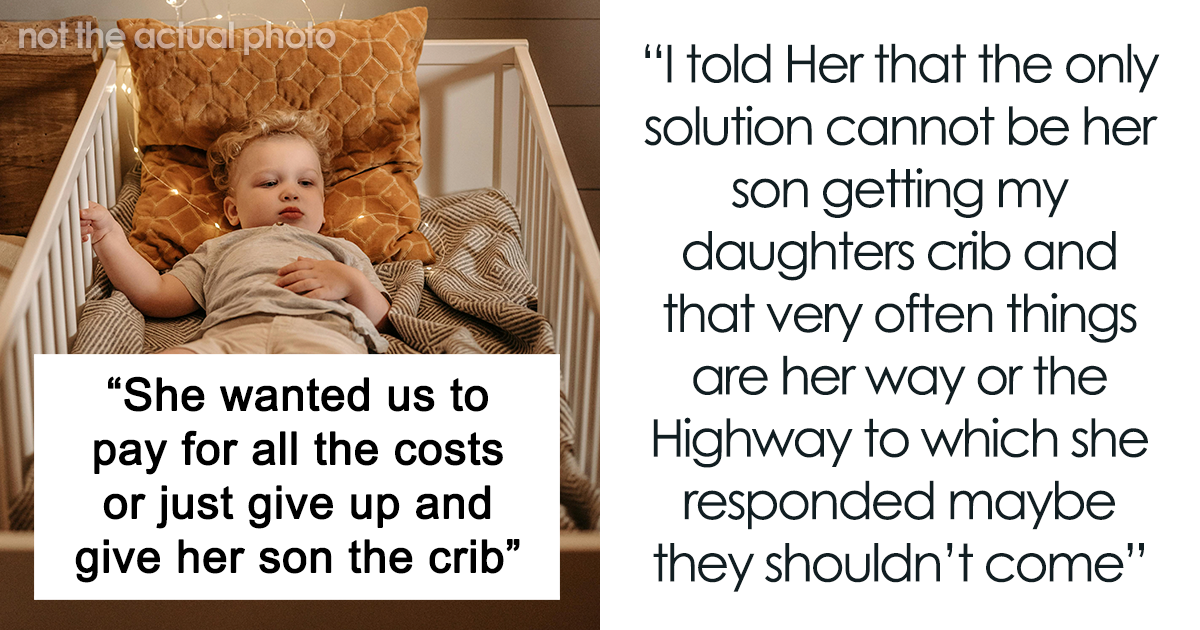
Family visits are supposed to be warm, cozy, and full of “look how big the baby got!” moments. Ideally, someone brings snacks, someone else does the dishes, and everyone leaves before the baby’s bedtime routine turns into a tiny opera of yawns and rage. But sometimes, one simple request can turn a peaceful visit into a full-blown family debate.
That is exactly the kind of drama behind the story of a mom who refused to give up her 5-month-old baby’s crib after her sister-in-law demanded it for her own son. On the surface, it sounds like a classic “sharing is caring” argument. But when a baby’s safe sleep space is involved, the issue becomes much bigger than manners, hospitality, or who gets the most comfortable room.
This story hits a nerve because it sits at the messy intersection of parenting boundaries, family entitlement, guest etiquette, infant safety, and that strange family logic where “I need it” somehow becomes “you must give it to me.” The mom’s refusal was not selfish. It was a parenting decision rooted in safety, routine, and common sense.
Why This Family Visit Turned Into a Bigger Problem
The conflict began with a family visit where multiple children needed places to sleep. The mom had a 5-month-old baby, and the baby already had a crib set up. Then the sister-in-law reportedly demanded that the crib be handed over for her own son.
That demand may sound simple to someone who sees a crib as just another piece of furniture. But to parents of infants, a crib is not “extra sleeping space.” It is the baby’s designated safe sleep area. It is part of the routine, part of the safety plan, and sometimes the only thing standing between a calm bedtime and a household that suddenly resembles a raccoon convention in a laundry room.
For a 5-month-old, sleep is not just about convenience. Babies at that age often rely on familiar sleep environments. A crib with a firm mattress and fitted sheet is one of the safest places for an infant to sleep. Asking a parent to move a baby out of that space without an equally safe alternative is not a tiny favor. It is a major request.
The Crib Was Not Just “Available Furniture”
One of the biggest misunderstandings in family disputes like this is the assumption that anything in a host’s house is up for negotiation. A guest might think, “It is just one night,” or “My child needs it too.” But a baby’s crib is not the same as an extra pillow, a spare blanket, or the good towels hiding in the linen closet.
Infant safe-sleep guidance consistently emphasizes that babies should sleep on their backs, on a firm and flat surface, in a crib, bassinet, or play yard designed for sleep. The sleep space should be free of pillows, blankets, bumpers, stuffed animals, and loose bedding. That means parents cannot simply move a 5-month-old to a couch, adult bed, recliner, or improvised nest and call it good enough.
For older kids, a temporary sleep setup may be easier. A toddler or older child might use a travel mattress, floor bed, sleeping bag, or portable toddler cot, depending on age and safety needs. But for an infant, the rules are stricter because babies cannot reliably reposition themselves if their airway is blocked or if they roll into an unsafe surface.
Why the Mom’s Refusal Makes Sense
The mom’s answer was simple: no. And despite the family pressure that may have followed, that answer was reasonable.
Parents are responsible for making decisions that protect their children. Sometimes those decisions disappoint other adults. That does not automatically make the parent rude. In fact, healthy parenting often requires saying no to requests that sound polite on the surface but create unnecessary risk or stress.
In this case, the mom had a 5-month-old baby who needed a safe, familiar sleep space. Giving away the crib would mean disrupting the baby’s routine and possibly creating an unsafe sleep arrangement. The sister-in-law’s son also needed somewhere to sleep, but that did not mean the infant should lose the safest option in the house.
Hospitality matters, but it has limits. A host can offer blankets, help set up a portable bed, rearrange a room, or suggest a store run for a travel crib. What a host should not be expected to do is downgrade their baby’s safety because another adult failed to plan ahead.
Family Entitlement Often Shows Up During Visits
Family visits can bring out the best in people. They can also bring out the strange belief that being related gives someone automatic access to your belongings, schedule, space, food, emotional energy, and apparently your baby’s crib.
Entitlement during family visits usually starts with small assumptions. Someone assumes they can arrive whenever they want. Someone assumes the host will cook every meal. Someone assumes the quietest bedroom is theirs. Someone assumes the baby’s routine can be changed because “everyone is family.”
But family closeness does not erase boundaries. In fact, clear boundaries are often what keep family relationships from falling apart. When expectations are discussed early, resentment has less room to grow. When expectations are ignored, one person usually ends up feeling used, disrespected, or treated like the unpaid manager of a chaotic bed-and-breakfast.
Safe Sleep Should Not Be Treated Like a Preference
One of the most important parts of this story is that infant sleep safety is not a parenting style debate. It is not the same as choosing organic baby food, debating screen time, or deciding whether socks should match the outfit. Safe sleep is a serious health and safety issue.
U.S. pediatric guidance generally recommends placing babies on their backs for every sleep, using a firm and flat surface, and keeping the sleep area clear. Room-sharing without bed-sharing is also commonly recommended for young infants, especially during the first six months. These recommendations exist because unsafe sleep environments can increase the risk of suffocation and sleep-related infant death.
So when someone asks, “Can’t the baby just sleep somewhere else?” the answer may honestly be, “No, not safely.” A parent does not need to turn the evening into a medical seminar, but they also do not need to defend safe sleep like it is a quirky hobby.
The Sister-in-Law’s Problem Was Planning, Not the Crib
Traveling with children requires planning. That does not mean parents need to pack the entire house, although anyone who has traveled with kids knows it can feel like moving a small circus across state lines. But sleep arrangements should be discussed before arriving, especially when babies, toddlers, and limited rooms are involved.
If the sister-in-law knew her son needed a crib, play yard, toddler bed, or specific sleep setup, the best time to ask was before the visit. A simple message could have prevented the conflict: “What sleeping arrangements are available for the kids? Should we bring a travel crib?”
That question gives the host a chance to answer honestly. Maybe there is an extra play yard. Maybe there is not. Maybe the guest needs to bring one, borrow one, rent one, or choose different accommodations. What is not fair is arriving and expecting the host’s infant to give up an essential sleep space on demand.
Why Parents Feel Guilty for Saying No
Many parents struggle with guilt when setting boundaries, especially with relatives. Nobody wants to be labeled difficult, dramatic, selfish, or “that mom.” But the fear of being judged can push parents into decisions they know are not right for their child.
Guilt is especially powerful in families where peacekeeping is treated as more important than honesty. A mom may think, “Maybe I should just say yes so nobody gets upset.” But that kind of peace is expensive. It usually costs the person who already has the most responsibility.
In this situation, saying no was not an act of hostility. It was an act of clarity. The mom did not refuse because she wanted to punish her sister-in-law. She refused because her baby needed the crib. That is a complete reason.
What the Family Should Have Done Instead
A better response from the sister-in-law would have been cooperation, not pressure. She could have asked what alternatives were available. She could have brought a portable sleep space. She could have offered to buy or borrow a travel crib. She could have adjusted her own child’s sleep plan based on age and safety.
The rest of the family also had a role to play. Instead of pressuring the mom to give up the crib, they could have helped solve the actual problem: one child needed a safe place to sleep. Families work best when everyone asks, “How can we solve this fairly?” not “Who can we pressure until they give in?”
A reasonable solution may have included setting up a separate sleeping area, using an age-appropriate portable bed, making a quick trip to purchase a play yard, or changing room assignments. None of those options require removing a 5-month-old from the baby’s own crib.
How to Set Boundaries Without Starting World War Family Dinner
Boundaries work best when they are calm, clear, and boring. The goal is not to win a dramatic courtroom speech in the living room. The goal is to communicate a decision without leaving room for endless debate.
A parent in this situation could say, “The baby needs the crib tonight. We can help you figure out another option, but the crib is not available.” That sentence is polite, firm, and complete. It does not insult anyone. It does not over-explain. It also does not invite a committee vote.
Another helpful phrase is, “That does not work for us.” This is a beautifully boring sentence, which is exactly why it works. It does not accuse. It does not apologize for existing. It simply states the boundary.
Examples of Better Boundary Phrases
Parents can use simple language such as: “The baby’s sleep setup is not changing,” “We need to keep the crib for the baby,” or “Please bring a travel crib next time so everyone has what they need.” The key is to stay respectful without becoming flexible on a non-negotiable issue.
If a relative keeps pushing, the parent can repeat the same line. This is sometimes called the broken-record technique, and it is surprisingly useful. No extra emotion. No long debate. Just the same calm answer until the message lands.
What This Story Says About Modern Parenting
This story became relatable because modern parents are often expected to be both endlessly accommodating and perfectly responsible. They are told to protect their children, but also not to offend relatives. They are told to follow safety guidance, but also not to be “too strict.” They are expected to host, smile, organize, feed everyone, manage sleep schedules, and somehow remain cheerful while someone critiques the placement of the diaper wipes.
The truth is simpler: parents are allowed to prioritize their baby. That does not make them rude. It makes them parents.
A 5-month-old cannot advocate for a safe sleep space. The baby cannot say, “Excuse me, Auntie, but my pediatrician would prefer I remain on a firm, flat surface.” That job belongs to the parent. When the mom refused to give up the crib, she was speaking for someone too small to speak for themselves.
Guest Etiquette: What Visiting Families Should Remember
Guests with children should always ask about sleeping arrangements before visiting. This is especially true when more than one child is involved. A host may have limited beds, limited rooms, limited baby gear, or limited patience after the third round of “Where do you keep the extra towels?”
Good guest etiquette means preparing for your own child’s needs. If your child requires a crib, bring a portable crib or confirm that one is available. If your child needs a quiet room, ask early. If your child has a strict bedtime, communicate that instead of expecting everyone else to rearrange the house at 7:01 p.m.
Hosts can be generous, but guests should not confuse generosity with obligation. The best visits happen when everyone plans ahead and no one treats the host’s home like a hotel with free emotional labor.
Why the Mom Was Not Wrong
The mom was not wrong for refusing. She protected her baby’s sleep space, maintained a reasonable boundary, and declined an unfair demand. The sister-in-law’s frustration may have been real, but frustration does not automatically make someone else responsible for fixing the problem.
A crib for a 5-month-old is not a luxury item in this context. It is the appropriate sleep space for a baby. Taking it away without a safe replacement would create unnecessary risk and stress. The mom had every right to say no, even if other family members disliked the answer.
This is a useful reminder for anyone navigating family conflict: a boundary does not become cruel simply because someone dislikes it. Sometimes the most loving thing a parent can do is calmly disappoint an adult in order to protect a child.
Real-Life Experiences and Lessons From Similar Family Visit Disasters
Many parents have lived through some version of this story. Maybe it was not a crib. Maybe it was a car seat, a bedroom, a stroller, a high chair, or the last clean bottle in the house. Family visits have a special talent for turning ordinary baby gear into emotionally loaded objects.
One common experience is the “we thought you had one” problem. A visiting relative assumes the host has extra baby equipment because there is already a baby in the home. But baby gear is usually chosen for a specific child, age, weight, and routine. A 5-month-old’s crib may not be suitable for another child. A bassinet may have weight limits. A play yard may already be in use. Even a car seat cannot simply be shared casually because fit, installation, and safety requirements matter.
Another familiar experience is the “just for one night” argument. Many relatives use that phrase to make a request sound harmless. But parents know that one night can still matter. One night of unsafe sleep is not worth the convenience. One night of a disrupted routine can lead to hours of crying, overtiredness, and a next day that feels like it was designed by a committee of angry owls.
Parents also often describe feeling outnumbered during family conflicts. One person makes the demand, another says, “Oh, just let her have it,” and suddenly the parent is treated as if they are being unreasonable for holding the line. That group pressure can be intense, especially for new moms who may already be exhausted, touched-out, and running on coffee, crumbs, and the mysterious strength that appears when a baby finally naps.
The lesson is to prepare boundaries before visits begin. Parents can send a simple message before guests arrive: “We are excited to see everyone. The baby’s crib and sleep space are not available for other children, so please bring any sleep setup your child needs.” This may feel awkward, but it is much less awkward than negotiating crib rights in the hallway while a baby rubs their eyes and the whole family stares like they are watching a courtroom drama.
Hosts can also create a short list of what is available: one guest room, one air mattress, extra sheets, and no extra crib. Clear information prevents assumptions. It also gives guests the chance to solve their own problems like adults, which is a delightful tradition worth bringing back.
The biggest experience-based takeaway is that boundaries become easier with practice. The first “no” may feel uncomfortable. The second one feels steadier. Eventually, parents learn that they do not need to over-explain every decision. “That does not work for us” becomes enough. “The crib is for the baby” becomes enough. “You will need to bring your own sleep setup next time” becomes enough.
Family relationships do not require unlimited access to everything in your home. Healthy families can hear “no” and adjust. When someone reacts badly to a reasonable boundary, that reaction often reveals why the boundary was needed in the first place.
Conclusion: A Crib Is a Boundary, Not a Bargaining Chip
The story of a family visit going wrong after a sister-in-law demanded a 5-month-old baby’s crib is not just household drama. It is a reminder that parenting boundaries matter, especially when infant safety is involved.
The mom’s refusal was not petty. It was practical, protective, and completely reasonable. A baby’s safe sleep space should not be treated like community property. Relatives can ask for help, but they cannot demand that a parent compromise their child’s routine or safety to make a visit more convenient.
At the end of the day, family harmony should never depend on one parent ignoring what their baby needs. A peaceful visit is wonderful, but a safely sleeping baby is better. And if anyone disagrees, they are welcome to bring their own travel crib next time.