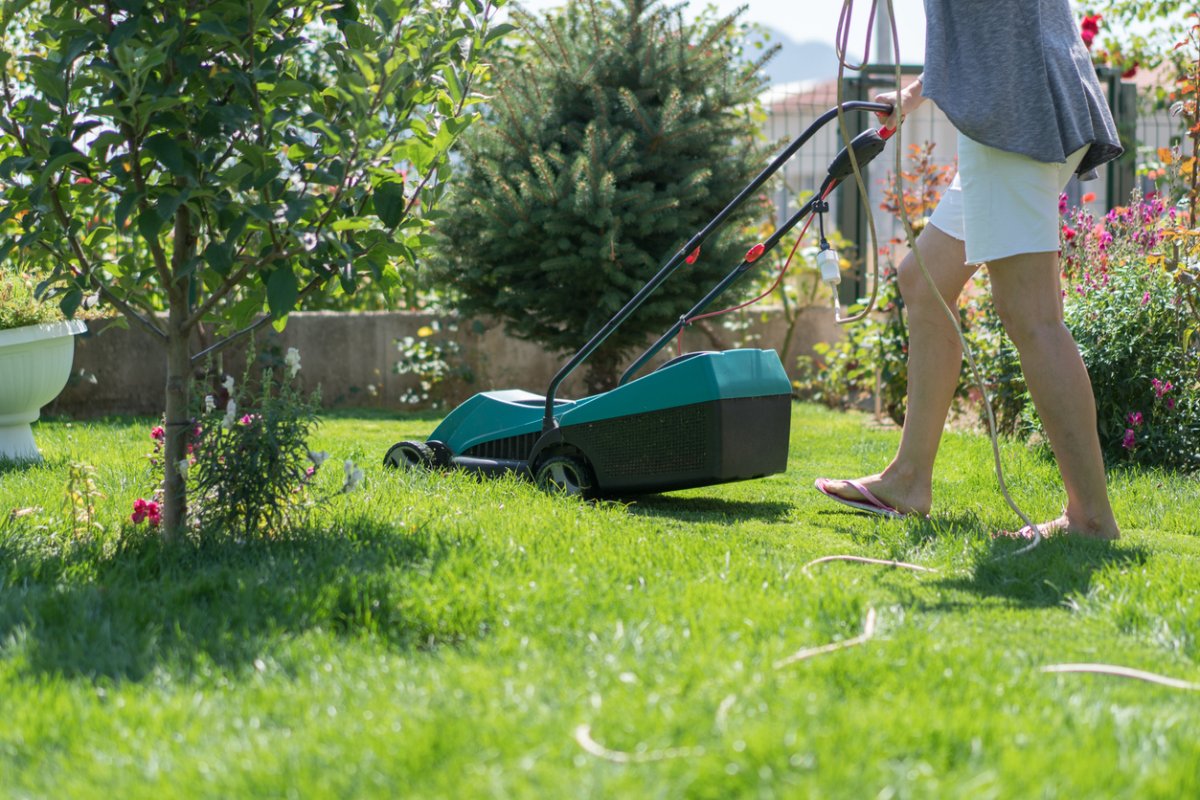
Electric lawn mowers used to be the “maybe someday” option for homeowners who were tired of yanking a starter cord like they were trying to wake a sleeping bear. Today, battery-powered mowers are quieter, lighter, cleaner, and powerful enough for many suburban yards. The catch? A good cordless electric mower can still make your wallet cough politely before handing over the credit card.
The good news is that electric lawn mower discounts and rebates are more common than many shoppers realize. Local air-quality agencies, city sustainability programs, utilities, state tax-credit programs, and retailers all want homeowners to trade gas fumes, oil changes, and weekend engine drama for cleaner lawn care. Some programs offer modest bill credits, while others can knock hundreds of dollars off the price of a new mower.
This guide breaks down four practical ways to save money on electric lawn mowers, including rebate programs, mower exchange events, utility incentives, and smart shopping strategies. Think of it as your lawn’s coupon bookminus the junk drawer chaos.
Why Electric Lawn Mowers Are Getting So Much Attention
Gas lawn equipment may be small, but it is not exactly innocent. Gas-powered mowers, trimmers, and blowers contribute to smog-forming pollution, neighborhood noise, and the familiar eau de garage scent of gasoline and oil. That is why many air districts and cities now encourage electric lawn equipment through rebate and voucher programs.
Electric mowers produce no direct exhaust while operating, require less routine maintenance, and are usually easier to store. There is no gasoline to stabilize, no spark plug to replace, no carburetor to mutter at, and no annual ritual of asking, “Why won’t this thing start?” For homeowners with small to medium lawns, a modern battery mower can be a very sensible upgrade.
1. Look for Local Air District and City Rebate Programs
The first place to check for electric lawn mower rebates is your local air-quality district, city sustainability office, or county environmental department. These programs are often designed to reduce emissions from gas-powered lawn equipment, especially in areas with ozone or air-quality concerns.
For example, some Southern California residents may qualify for rebates through regional air-quality programs when they replace working gas-powered lawn equipment with eligible cordless battery-powered equipment. Rebate amounts can depend on the purchase price and may require scrapping the old gas tool through an approved dismantler. In other words: no, you usually cannot retire the gas mower to the back shed “just in case.” The whole point is to get smoky old equipment out of circulation.
Other cities offer seasonal voucher programs. Some programs provide a larger voucher if you recycle a gas mower and a smaller voucher if you are simply buying electric equipment without a trade-in. This is especially useful for first-time homeowners who do not have an old mower to exchange but still want to start clean.
How to find these programs
Search phrases like “electric lawn mower rebate near me,” “lawn mower exchange program,” “battery mower voucher,” and “air quality lawn equipment rebate” plus your city, county, or state. Check official government or utility pages first because rebate details change quickly and third-party articles may become outdated faster than grass after a thunderstorm.
What to watch before buying
Read the rules before you purchase. Some programs require pre-approval before you buy the mower. Others require receipts dated within a specific window. Many exclude refurbished or used mowers. Some allow online purchases, while others require shopping at participating retailers. The difference between “approved” and “oops” can be $200, so do not freestyle the paperwork.
2. Use State-Level Discounts and Tax-Credit Programs
Some states encourage electric outdoor power equipment through tax-credit programs that work at the retailer level. Colorado is a strong example: qualified retailers can provide customers with an immediate discount on eligible electric-powered lawn equipment, including lawn mowers, leaf blowers, trimmers, and snow blowers. Unlike a mail-in rebate, this type of program can reduce the price at checkout, which is the most satisfying kind of discount because it does not require waiting by the mailbox like it owes you money.
State-level programs are valuable because they can apply broadly across participating stores rather than being limited to one city. They may also stack with retailer sales, depending on the program rules and store policies. However, sales tax, store coupons, eligible product categories, and receipt requirements can vary, so it is still smart to ask the retailer how the discount is applied before you buy.
Best strategy for state discounts
Shop at retailers that clearly advertise participation. Look for phrases like “instant discount,” “qualified retailer,” “state electric lawn equipment credit,” or “battery-powered lawn equipment discount.” If the cashier looks at you like you just asked for a discount on moon cheese, politely ask for a manager or check the retailer’s website before abandoning the deal.
What equipment usually qualifies
Programs often focus on new electric-powered lawn equipment, especially battery-powered or corded tools. Riding mowers, commercial units, refurbished products, manual reel mowers, and tool bundles may or may not qualify depending on the program. Always confirm that the exact model number is eligible before purchase.
3. Check Utility Company Rebates and Bill Credits
Your electric utility may also offer electric lawn mower rebates. These are often smaller than regional air-district programs, but they can still make a meaningful dentespecially if you were already planning to buy a mower. Utility rebates may come as bill credits, mailed checks, or online rebate submissions.
Some utility programs offer different rebate amounts depending on the product. A cordless mower may qualify for a higher rebate than a corded mower, while trimmers, edgers, hedge trimmers, and blowers may receive smaller incentives. In some cases, the program is available only during a seasonal window, such as spring through late summer, because that is when everyone suddenly remembers the lawn is alive and growing with suspicious enthusiasm.
How to qualify for utility rebates
Most utility programs require you to be an active customer, buy a new qualifying product, submit a dated receipt, and provide proof such as a UPC code or account number. Some programs require mailing documents, while others allow online submission. Either way, keep the box until your rebate is approved. The one time you recycle the packaging immediately is, naturally, the one time the rebate form asks for the barcode.
Why utilities care
Utilities and local governments often support cleaner outdoor equipment because it reduces localized pollution and supports broader electrification goals. Electric mowers also shift lawn maintenance away from gasoline and toward electricity, which can become cleaner over time as the grid adds more renewable energy.
4. Stack Retail Sales, Manufacturer Promotions, and Timing
Rebates are wonderful, but timing your purchase can save even more. Electric lawn mowers commonly go on sale during early spring, Memorial Day promotions, Father’s Day deals, July holiday sales, Labor Day clearance, and end-of-season markdowns. Retailers also promote battery platforms heavily, which means you may see bonus battery offers, free charger bundles, or discounts on tool kits.
Battery promotions are especially valuable because replacement batteries can be expensive. A mower that includes two batteries and a fast charger may be a better long-term value than a cheaper mower with one small battery. Runtime matters, and nothing ruins a Saturday like finishing three-quarters of the lawn and then waiting for a battery to charge while the uncut strip mocks you from the side yard.
Buy the battery platform, not just the mower
Before choosing a mower, look at the brand’s full tool ecosystem. If you already own battery tools from EGO, Ryobi, Greenworks, DeWalt, Milwaukee, Toro, Craftsman, or another major platform, buying a compatible mower may save money because batteries and chargers can be shared. That can turn one expensive battery into the household MVP.
Compare final cost, not sticker price
A $599 mower with a $200 rebate, free battery, and no gas maintenance may beat a $399 mower with a weak battery and no support. Compare the final price after discounts, included batteries, warranty length, deck size, runtime, and repair support. The cheapest mower is not always the best deal if it leaves your lawn looking like it was trimmed by a nervous goat.
How to Choose the Right Electric Lawn Mower Before Chasing Rebates
A rebate only helps if the mower actually fits your yard. For small city lots, a lightweight 16- to 18-inch push mower may be plenty. For medium suburban lawns, a 20- or 21-inch mower with a strong battery system is usually more efficient. For sloped yards, self-propelled drive can be worth the extra cost. Your knees may not send a thank-you card, but they will know.
Runtime is another key factor. Many battery mowers can handle small to medium lawns on one charge, but tall, wet, or thick grass drains batteries faster. If your yard is larger than a quarter acre, look for dual-battery systems, higher amp-hour batteries, or a mower that allows quick battery swapping.
Also consider storage. Many electric mowers fold upright, which is excellent for garages where bikes, holiday bins, and mystery paint cans already compete for territory. Cordless models are more flexible than corded electric mowers, but corded mowers can be affordable for small lawns with easy outlet access.
Documents to Keep for Rebates
Rebate programs love paperwork. Keep your purchase receipt, product box, UPC or barcode, model number, serial number, warranty information, proof of residency, and proof that the old gas mower was recycled if required. Take photos of everything before mailing or uploading documents.
If the program requires scrapping your gas mower, ask the recycling facility for a receipt that clearly states what was recycled. A vague receipt that says “metal item” may not be enough. Rebate reviewers are not mind readers, though after reading hundreds of forms they probably deserve hazard pay.
Common Mistakes That Can Cost You the Rebate
The most common mistake is buying before reading the rules. Some programs require approval before purchase. Others require specific purchase dates or retailers. Another mistake is buying refurbished equipment when the program requires new products only. A third mistake is assuming all electric mowers qualify; some programs exclude corded models, riding mowers, bundles, or commercial equipment.
Finally, do not miss the deadline. Many rebates are first-come, first-served and only last while funds are available. A program may be open in March and gone by June. Treat rebate applications like milk in the fridge: useful now, questionable later.
Are Electric Lawn Mowers Worth It Even Without a Rebate?
For many homeowners, yes. Electric mowers can reduce maintenance costs, eliminate gasoline storage, lower noise, and make mowing more convenient. You still need to sharpen blades, clean the deck, charge batteries, and store batteries properly, but the overall maintenance list is shorter than with gas mowers.
The biggest limitation remains runtime. If you have a large rural property, heavy weeds, or a lawn that often gets overgrown, a gas mower or riding mower may still be more practical. But for typical residential lots, modern electric mowers are no longer delicate gadgets. They are real lawn tools, and many are surprisingly capable.
Experience Notes: What It Feels Like to Switch to an Electric Lawn Mower
The first thing most people notice after switching to an electric lawn mower is the quiet. Not silent, exactlythe blade still spins and grass still loses its tiny green battlebut the sound is more like a strong fan than a small motorcycle having an argument. That matters if you mow early in the morning, live close to neighbors, or simply prefer not to announce your yardwork to the entire ZIP code.
The second surprise is how easy electric mowers are to start. Press a button, pull a bar, and go. There is no choke, no pull cord, no priming bulb, and no dramatic shoulder workout before breakfast. For older homeowners, people with limited strength, or anyone who has ever lost a fight with a stubborn gas mower, that convenience alone can feel like a luxury upgrade.
Battery management becomes part of the routine. The best habit is to charge the battery the night before mowing and avoid cutting wet, tall grass if you want maximum runtime. Many homeowners learn to mow more regularly because electric mowers make the job less annoying. Instead of waiting until the lawn becomes a suburban jungle, they cut it while it is manageable. The mower performs better, the battery lasts longer, and the yard looks cleaner.
Another practical experience: blade sharpness matters a lot. A dull blade drains more battery and leaves ragged grass tips. If your electric mower suddenly seems weaker, the problem may not be the motor. It may be the blade asking for attention in the only language it knows: ugly grass.
Storage is also a pleasant change. Many electric mowers fold vertically and do not leak fuel or oil. That makes them easier to store in a garage, shed, or even a tight utility space. Just remember to store batteries in a moderate-temperature area rather than leaving them in extreme heat or cold for long periods.
The main drawback is planning. With gas, you can pour in fuel and keep going. With battery power, you need enough charge or a spare battery. For a small lawn, that is rarely an issue. For a bigger lawn, buying a second battery can be the difference between a smooth Saturday and a two-act mowing drama with an intermission.
Overall, the switch feels less like a sacrifice and more like trading a noisy, oily chore machine for something cleaner and calmer. Add a rebate, voucher, or seasonal sale, and the decision becomes even easier. Your lawn gets trimmed, your garage smells better, and your neighbors may silently approvewhich, in neighborhood language, is basically a standing ovation.
Conclusion
Electric lawn mowers are becoming more affordable thanks to local rebates, state discounts, utility incentives, and retailer promotions. The smartest shoppers do not simply grab the first mower with a shiny “sale” tag. They check local programs, confirm eligibility, compare total value, and save every receipt like it is a golden ticket.
Whether you qualify for a $60 utility credit, a $250 regional rebate, a $500 riding mower incentive, or a 30 percent point-of-sale discount, the lesson is the same: do the rebate homework before buying. A little research can turn a pricey mower purchase into a much cleaner deal.
Note: Rebate amounts, eligibility rules, purchase windows, and participating retailers can change quickly. Always verify current program details with your local air district, city, utility, state agency, or retailer before purchasing.