There are thrillers that make you lock the front door. Then there are thrillers that make you stare suspiciously at your bathroom mirror, your phone camera, your skincare shelf, and that one flattering selfie you have been using since 2021. FX’s The Beauty belongs firmly in the second category.
Created by Ryan Murphy and Matthew Hodgson and inspired by the comic book series by Jeremy Haun and Jason A. Hurley, The Beauty takes a simple, nasty question and turns it into a glossy nightmare: what if perfection were available in one shot? Not emotional maturity, sadly. Not the ability to answer emails on time. Physical perfection. Instant attractiveness. The kind of beauty that makes strangers stare, algorithms purr, and old insecurities quietly pack a suitcase.
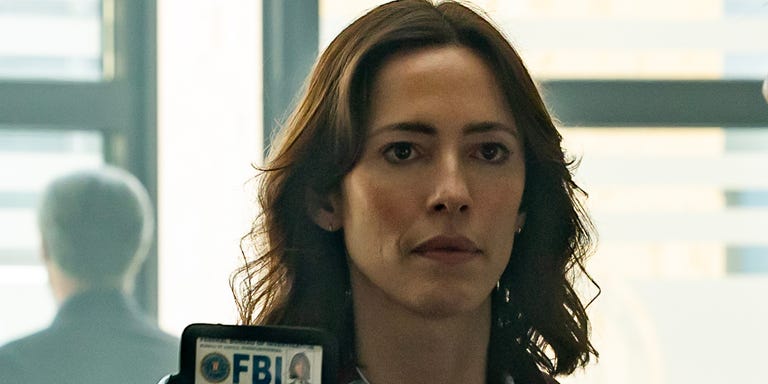
But because this is a mystery thriller with body horror in its bloodstream, the miracle is not exactly FDA-friendly. The show imagines a beauty-enhancing drug or virus that transforms people into idealized versions of themselves while carrying horrifying consequences. FBI agents Cooper Madsen and Jordan Bennett, played by Evan Peters and Rebecca Hall, investigate a series of grotesque deaths among supermodels and stumble into a global conspiracy involving wealth, fashion, technology, sex, vanity, and a ruthless billionaire figure known as The Corporation, played by Ashton Kutcher.
In other words, The Beauty is not subtle. It is not trying to be. It is a red-lipstick scream at a culture that has turned self-improvement into a subscription plan.
What is The Beauty about?
The Beauty is a science-fiction body horror thriller wrapped in designer packaging. It begins with the kind of high-fashion chaos that makes runway week look like a crime scene with better lighting. Beautiful people are dying in strange, violent ways. The deaths are not random. Something is spreading, and the trail leads to a revolutionary treatment that promises physical perfection at a devastating price.
The show’s hook is deliciously wicked: beauty itself becomes contagious, marketable, addictive, and dangerous. Instead of treating attractiveness as a harmless social advantage, The Beauty turns it into an epidemic. People do not merely want to look better; they want to be remade. They want a new face, a new body, a new social ranking, and possibly a new personality to match. Unfortunately, the invoice arrives in blood.
That premise gives the series its unnerving power. The horror is not just that bodies explode, mutate, or betray their owners. The horror is that the temptation makes sense. Who has not wanted to erase a flaw? Who has not looked at a photo and thought, “Absolutely not, delete this evidence immediately”? The show knows that perfection culture does not need a villain in a cape. It already has ring lights, filters, luxury branding, and a comments section.
Why the series feels so creepy right now
The timing of The Beauty is part of its sting. We live in an age when faces can be edited in seconds, bodies can be compared endlessly, and self-image is often filtered through tiny screens before it reaches the brain. Social media has blurred the line between looking good and looking optimized. A normal human face can start to seem unfinished, as if pores, lines, asymmetry, and softness are software bugs waiting for an update.
The Beauty understands that modern perfection is not only about vanity. It is about status. It is about being chosen, seen, desired, employed, liked, followed, and forgiven. Beauty becomes a kind of currency, and the show asks what happens when that currency can be manufactured by the powerful and sold to the desperate.
That is why the series feels less like fantasy than satire wearing fake lashes and carrying a knife. The drug at the center of the story is fictional, but the emotions around it are painfully recognizable. People already chase anti-aging trends, compare themselves to edited celebrities, and treat their bodies like projects that are always behind schedule. The Beauty simply exaggerates the culture until the hidden ugliness becomes impossible to ignore.
A mystery thriller with a body-horror bite
As a mystery thriller, The Beauty gives viewers a familiar engine: agents follow clues, powerful people hide secrets, victims pile up, and the conspiracy keeps widening. But the body-horror elements make the investigation feel more intimate and disturbing. This is not just a case about murder. It is a case about bodies being turned into products and then failing like defective merchandise.
The show’s gruesome imagery works because it attacks the exact fantasy it sells. The promise is smooth skin, perfect symmetry, desirability, and youth. The result is instability, panic, and decay. That contrast is the whole point. The Beauty makes glamour look infected. It takes the polished surfaces of fashion campaigns and celebrity culture and imagines something boiling underneath.
Ryan Murphy has long been drawn to worlds where beauty and horror sit at the same dinner table, occasionally complimenting each other’s outfits. From medical melodrama to campy terror, his work often understands that polished surfaces can hide rot. Here, the surface is the story. The more flawless someone appears, the more suspicious they become.
The cast gives the nightmare its shine
Evan Peters and Rebecca Hall anchor the series as Cooper Madsen and Jordan Bennett, two investigators trying to make sense of a crisis that refuses to stay in one genre. Their partnership gives the show a procedural backbone while allowing the story to explore vulnerability, attraction, fear, and moral compromise.
Ashton Kutcher plays the billionaire force behind the perfection machine, a character whose menace comes from corporate confidence rather than shadowy whispers. He is not merely selling beauty; he is selling inevitability. That is scarier. The most dangerous villains in modern thrillers do not always say, “I will destroy the world.” Sometimes they say, “We are disrupting the wellness space.”
Jeremy Pope brings emotional weight to the story’s exploration of alienation and transformation, while Anthony Ramos adds danger as a lethal enforcer. The guest cast, including Bella Hadid and Isabella Rossellini, deepens the show’s fashion-world texture. The casting itself becomes part of the commentary: a series about beauty, celebrity, and transformation naturally surrounds itself with faces viewers already associate with glamour, fame, and public scrutiny.
How The Beauty attacks perfection culture
The smartest part of The Beauty is that it does not simply say, “Beauty is bad.” That would be too easy, and frankly, rude to good lighting. Instead, the show asks why beauty has become so closely tied to value. Who benefits when people feel unfinished? Who profits from insecurity? Who gets to decide what “perfect” looks like? And why does the definition keep changing just in time for someone to sell us a solution?
The series turns perfection into a horror object because perfection itself can be horrifying. It has no finish line. Today’s ideal becomes tomorrow’s embarrassment. A face that looks trendy now may look overdone later. A body praised this season may be criticized the next. The chase never ends because the target keeps moving.
That is where the show’s satire bites hardest. In The Beauty, people risk everything to become desirable, but desirability does not make them free. It makes them more controlled. Their bodies become evidence, investments, advertisements, and liabilities. The more perfect they appear, the less human they seem allowed to be.
The real-world fear behind the fiction
The show’s fictional nightmare reflects a very real anxiety: the pressure to improve ourselves has become constant. Social media has made comparison feel casual. You can be eating cereal in sweatpants and suddenly compare your morning face to a celebrity on a yacht, a fitness influencer with studio lighting, or a beauty creator who claims their glass skin comes from “just hydration,” genetics, and a suspiciously expensive 12-step routine.
Research and mental health organizations have repeatedly warned that negative body image is linked to emotional distress and disordered eating risks. Studies have also connected appearance-focused social media use with body dissatisfaction, perfectionism, and increased interest in cosmetic enhancement. The Beauty does not lecture about these issues. It dramatizes them. It takes the quiet pain of comparison and turns it into a visible outbreak.
That is why the series may leave viewers feeling uncomfortable in the best way. It does not just ask, “Would you take the shot?” It asks, “What made the shot tempting in the first place?”
Why the thriller format works so well
A straight drama about beauty standards might sound worthy but heavy, like homework with contour powder. A thriller, however, lets the theme move. Secrets are uncovered. Bodies fall. Powerful people lie. Viewers get suspense, gore, glamour, and moral questions without feeling trapped in a lecture hall.
The mystery structure also mirrors the way many people experience insecurity. At first, you notice one small thing: a wrinkle, a scar, a photo angle, a number on a scale, a comment someone made years ago and your brain has apparently kept in a velvet box. Then you follow the clue backward. Where did this feeling come from? Who taught you that this feature was wrong? When did self-care become self-surveillance?
The Beauty turns that emotional detective work into an external investigation. Cooper and Jordan chase the source of the epidemic, while the audience quietly traces the source of its own discomfort. That double movement makes the show stickier than a standard murder mystery.
Specific examples that make the message land
The show’s fashion-world deaths are not random shock tactics. Supermodels are symbols of the beauty economy: people whose bodies and faces are literally used to sell aspiration. When that world becomes the first visible site of horror, the series suggests that the ideal itself is unstable.
The billionaire antagonist adds another sharp layer. He represents the commercial machinery behind transformation: tech, pharmaceuticals, branding, secrecy, and the language of progress. In his world, a dangerous product can be framed as empowerment if the marketing is shiny enough. The series understands how easily “choice” can be manipulated when insecurity is doing the choosing.
Jeremy’s storyline also matters because it widens the conversation beyond traditional beauty standards for women. The Beauty recognizes that men, too, are increasingly targeted by perfection culture. Jawlines, height, hairlines, muscles, youth, sexual status, and online desirability have become sources of pressure. The show may be outrageous, but the loneliness beneath it is not.
Will The Beauty actually stop you chasing perfection?
Maybe not forever. One TV series cannot undo years of advertising, filtered images, childhood comments, celebrity culture, and the terrifying power of a bathroom mirror under fluorescent light. But The Beauty can interrupt the chase. It can make perfection look suspicious. It can remind viewers that every promise to “fix” the body deserves a second question: fixed for whom?
The show is especially effective because it makes perfection seem less aspirational and more claustrophobic. Once everyone can become beautiful, beauty stops being special and starts becoming mandatory. That is the nightmare. Not that some people choose transformation, but that society begins to treat transformation as the cost of admission.
By the time the series leans into its full horror-thriller madness, its message is clear: the pursuit of perfection can become a trap disguised as freedom. The cage just happens to have excellent cheekbones.
Viewer experience: how The Beauty changes the way you look at yourself
The strangest experience of watching The Beauty is not the gore, though there is plenty of that. It is the tiny pause that happens afterward, when you catch your reflection in a dark screen and think about how often you judge yourself automatically. Not dramatically. Not with a violin playing. Just casually, like checking the weather. Skin: not smooth enough. Hair: chaotic. Face: tired. Body: could be better. Confidence: currently buffering.
That is where the series becomes more than a creepy mystery thriller. It turns into a mirror with teeth. You may start watching for the murders, the conspiracy, the fashion, or the Ryan Murphy chaos, but you keep watching because the show pokes at something familiar. It captures the exhausting feeling of living in a world where everyone is expected to be both authentic and camera-ready, vulnerable and marketable, natural and somehow poreless.
One relatable experience is the post-selfie spiral. You take a picture, dislike it, take another, adjust the angle, move toward better light, raise the phone, lower the phone, pretend you are not doing an entire architectural study of your own face, and finally decide the original moment has died of embarrassment. The Beauty exaggerates that impulse into horror, but the root is ordinary. The show understands that chasing perfection often begins with a small wish: “I just want to look a little better.”
Another experience is the comparison trap. You open an app for five minutes and accidentally attend a global convention of people who appear richer, hotter, calmer, fitter, younger, and better moisturized than you. You know the images are edited. You know lighting exists. You know nobody posts the angle where their neck looks like it has entered a legal dispute with gravity. Still, the comparison lands. Logic brings a sandwich to a knife fight.
The Beauty makes that comparison feel dangerous because, in its world, beauty is no longer just admired. It is weaponized. People who transform are treated differently. They gain access, power, desire, and visibility. That fantasy is uncomfortable because it reflects something society already does. The show simply removes the polite language around it.
There is also the wellness experience: the endless promise that one more product, plan, treatment, serum, supplement, or routine will finally unlock the better version of you. The show’s fictional shot feels like the ultimate version of that sales pitch. No patience required. No self-acceptance necessary. Just transformation. The problem, as The Beauty screams in neon horror, is that a self built entirely from external approval is never safe. It depends on applause that can vanish at any moment.
By the end, the most useful feeling the series leaves behind is not fear of beauty itself. Beauty can be joyful, expressive, playful, artistic, and deeply personal. The warning is against surrendering your identity to someone else’s standard of perfection. A face is not a failed advertisement. A body is not a rough draft. Aging is not a plot hole. Imperfection is not evidence that you need to be replaced.
That is why The Beauty works as both entertainment and cultural critique. It gives viewers the thrill of a conspiracy, the discomfort of body horror, and the sneaky emotional aftertaste of recognition. It may not make you throw away every serum or delete every app. Let’s be reasonable; moisturizer has rights. But it may make you pause before treating yourself like a problem to be solved.
Conclusion
The Beauty is creepy because its monster is not hiding in the woods. It is hiding in plain sight, inside the language of improvement, desirability, and personal branding. The series turns the dream of instant perfection into a nightmare of control, reminding viewers that beauty becomes dangerous when it stops being self-expression and starts becoming a requirement for worth.
As a mystery thriller, it delivers glamour, gore, conspiracy, and stylish dread. As social commentary, it lands a sharper blow: the chase for perfection can cost more than we realize. In a culture obsessed with looking flawless, The Beauty dares to suggest that the most radical thing you can do is remain recognizably, stubbornly, gloriously human.