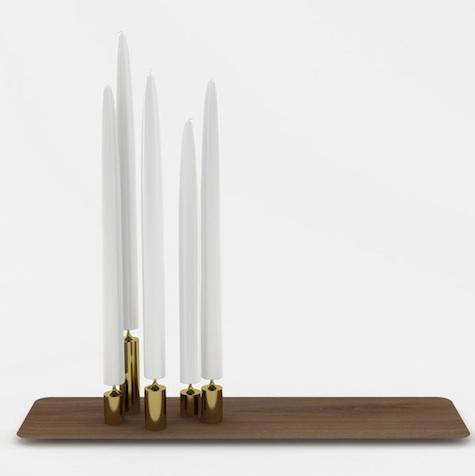
Some home accessories whisper. Others politely clear their throat, adjust the lighting, and become the entire conversation. Nick and the Candlestick by Lindsey Adelman belongs to the second group. It is not merely a candle holder, although yes, it does hold candles rather beautifully. It is a sculptural tabletop object, a mood-maker, a small architectural skyline in brass, and the kind of piece that makes guests pause mid-sentence and say, “Wait, what is that?”
Designed by New York-based artist and lighting designer Lindsey Adelman, Nick and the Candlestick combines brass candlestick holders of varying heights with a walnut tray that is magnetized in a quietly clever way. The design draws from two unexpected inspirations: Sylvia Plath’s poem “Nick and the Candlestick” and antique brass weights and measures. That pairing may sound like something invented during a very well-designed dinner party, but it works. The result feels literary, industrial, elegant, and a little mysteriouslike a poem decided to become furniture for the table.
In the world of modern candle holders, this piece stands out because it does not treat candlelight as decoration only. It treats it as atmosphere, ritual, sculpture, and design performance. Place it on a dining table, console, mantel, or low coffee table, and it instantly creates a focal point. Light the candles, and the brass starts playing with reflection like it has been waiting all day for its big scene.
What Is Nick and the Candlestick?
Nick and the Candlestick is a contemporary candle holder arrangement designed by Lindsey Adelman. It features a group of brass cylinders in different heights arranged on a walnut tray. The tray’s magnetized structure helps hold the candlestick elements in place, creating a functional yet flexible display. Rather than behaving like a traditional candelabra with arms, curves, and symmetry, this piece feels more like a miniature city of glowing brass towers.
That is part of its charm. It does not try to look antique, even though it borrows from antique weights and measures. It does not try to look purely minimal, even though its geometry is clean and restrained. Instead, it lands somewhere more interesting: warm modernism with a poetic backbone.
A Candlestick with a Literary Soul
The title immediately gives the object an unusual emotional charge. Sylvia Plath’s poem “Nick and the Candlestick” is intense, intimate, and full of vivid imagery. Adelman’s design does not illustrate the poem literally. There are no obvious narrative elements, no theatrical figures, no decorative quotation marks. Instead, the connection feels atmospheric. The piece captures a sense of glow emerging from darkness, of small flames carrying more emotional weight than their size suggests.
This is where the design becomes more than a luxury accessory. It invites interpretation. You can enjoy it simply as a beautiful brass candle holder, or you can read it as a quiet object about memory, light, domestic ritual, and the strange magic of ordinary materials.
Why Lindsey Adelman’s Design Language Matters
Lindsey Adelman is best known for sculptural lighting that balances opposites: organic and industrial, delicate and strong, handmade and machined, practical and poetic. Her famous Branching Bubble chandelier helped define her reputation for turning lighting into something more expressive than basic illumination. In Adelman’s work, light is not an afterthought. It is the main character, with excellent cheekbones.
That background matters when looking at Nick and the Candlestick. Although this is a smaller accessory rather than a large ceiling fixture, it carries the same design DNA. The brass has an industrial presence, but the candle flames soften it. The walnut tray adds warmth, grounding the metal with a natural surface. The cylinders are precise, but the final effect feels alive because candlelight is never still.
Industrial Materials, Domestic Warmth
Brass can feel glamorous, but it can also feel mechanical. Walnut can feel traditional, but it can also feel modern when used with clean lines. Adelman’s genius here is in letting these materials keep their personalities while making them collaborate. The brass says, “I have structure.” The walnut says, “Relax, we’re home.” The candlelight says, “Everyone looks better now.”
That combination makes the piece surprisingly versatile. It can work in a loft with concrete floors, a townhouse with classic moldings, a minimalist apartment, or a cozy dining room where the chairs do not match but the wine is excellent.
Design Analysis: Why This Candle Holder Feels So Distinctive
The strongest feature of Nick and the Candlestick by Lindsey Adelman is its rhythm. The varying heights create visual movement without relying on ornament. Instead of scrolling arms or decorative flourishes, the object uses proportion. Each cylinder contributes to a skyline effect, allowing the eye to move from one height to another.
This is why the piece looks good both with and without candles. Empty, it reads as a sculptural brass object. Filled and lit, it becomes a glowing composition. Many candle holders look a little sad when the candles are gone, like a cake after everyone has left the party. This one still has presence.
The Power of Repetition
Repetition is one of the oldest tricks in design, and it works beautifully here. The repeated cylindrical forms create unity, while their different heights prevent boredom. The design feels orderly but not stiff. It is structured enough for a refined interior and playful enough to avoid looking like something that requires white gloves and a security guard.
The Magnetized Walnut Tray
The magnetized tray is not just a clever detail; it is part of the experience. It gives the arrangement a feeling of intention. The candle holders appear placed with care, not scattered. At the same time, the tray makes the object feel like a complete landscape rather than a group of separate parts. This is tabletop design with choreography.
How to Style Nick and the Candlestick at Home
A statement accessory should not need a marching band to announce itself. Nick and the Candlestick already has visual strength, so the best styling approach is to give it room to breathe. Treat it like a centerpiece, not a supporting actor hiding behind a bowl of decorative lemons.
On a Dining Table
For dinner settings, place the piece in the center of the table and keep surrounding decor low. Linen napkins, simple ceramic plates, and clear glassware let the brass glow without competition. If the table is long, balance the candlestick with small bowls, greenery, or low floral arrangements. Avoid tall flowers nearby; nobody wants to make eye contact with a rose stem for two hours.
On a Console or Sideboard
On a console table, the piece works beautifully with a mirror or artwork behind it. The brass reflects light, and a mirror can multiply the candle glow for a richer effect. Pair it with a stack of art books, a ceramic vessel, or a small tray for matches. The goal is not clutter, but conversation between objects.
On a Mantel
A mantel is a natural home for sculptural candle holders. Here, Nick and the Candlestick can sit slightly off-center for a more relaxed look. Add one larger object on the other side, such as a vase or framed artwork, to create balance. The varied heights of the brass cylinders make the arrangement feel layered even before you add anything else.
Best Interior Styles for This Piece
Because the design combines brass, wood, geometry, and candlelight, it can move across several interior styles with surprising ease.
Modern Minimalist
In a minimalist room, the candlestick adds warmth without visual clutter. Its clean shape respects simplicity, while the brass prevents the space from feeling too cold. It is especially effective against white walls, pale oak, stone, or concrete.
Industrial Chic
The antique weights-and-measures inspiration makes the piece feel right at home in an industrial interior. Pair it with blackened steel, exposed brick, leather seating, or open shelving. The brass softens the harder materials while still speaking the same design language.
Warm Contemporary
In a contemporary home with layered textiles, curved furniture, and natural materials, the walnut tray becomes especially important. It connects the candlestick to wood floors, woven rugs, and ceramic accessories, making the brass feel luxurious rather than loud.
Eclectic and Artful
If your home is filled with books, collected objects, vintage finds, and art, this piece fits beautifully. Its literary reference gives it extra charm in an eclectic room. It looks designed, but not sterile. It has personality without shouting, which is more than can be said for some accent chairs.
Why Brass Candle Holders Remain Timeless
Brass has never really left the design conversation. It simply changes costume. Sometimes it is polished and glamorous; sometimes it is aged and quiet; sometimes it is brushed, satin, or darkened. In Nick and the Candlestick, brass provides both shine and substance. It catches flame beautifully, reflecting warm light in a way that feels intimate and luxurious.
Unlike trend-driven finishes, brass can develop character over time. Some owners prefer a polished look, while others enjoy the patina that comes with use. This makes the piece feel less like disposable decor and more like an object that can live with a household, gathering stories along the way.
Care and Practical Tips
Because this is a refined design object, care matters. Use candles that fit securely and avoid forcing oversized tapers into the holders. Keep wax drips under control by choosing quality candles and trimming wicks before lighting. If wax lands on the brass or walnut tray, let it cool before removing it gently. Do not attack it with a knife like you are opening a medieval treasure chest.
For brass, use a soft cloth for routine dusting. If polishing is needed, choose a brass-safe product and test carefully. For walnut, avoid soaking the surface or using harsh cleaners. A dry or slightly damp cloth is usually enough. The point is to preserve both the glow of the metal and the warmth of the wood.
Candle Safety Still Counts
Even the most beautiful candle holder is still dealing with open flame. Place candles on a stable surface, keep them away from curtains, books, greenery, and other flammable items, and never leave burning candles unattended. If children or pets are part of the household, position the piece where curious hands, tails, and heroic cat leaps cannot reach it.
Is Nick and the Candlestick Worth the Attention?
For design lovers, yes. Nick and the Candlestick by Lindsey Adelman is worth attention because it does what great accessories do: it changes the feeling of a room without needing to dominate the whole space. It is functional, but its function is only the beginning. It creates atmosphere. It adds material richness. It brings poetry to the table, quite literally.
It also represents a more thoughtful approach to home accessories. Instead of buying five forgettable objects to fill a surface, one strong piece can create more impact. This candlestick proves that a small object can carry a large design idea.
Experience: Living with a Statement Candlestick
The experience of using a piece like Nick and the Candlestick begins before the candles are even lit. During the day, it behaves like sculpture. The brass catches stray sunlight, the walnut tray adds a grounded note, and the different heights create a quiet sense of movement. It is the kind of object that makes a surface feel finished. A bare console suddenly looks intentional. A dining table suddenly looks ready for people, even if dinner is still just takeout waiting in a paper bag.
At night, the personality changes. Candlelight has a way of making rooms feel slower, and this piece amplifies that effect. Because the candle holders sit at different heights, the flames do not form a flat row. They rise and fall, creating depth. Shadows move across the brass and wood. The room feels less like a room and more like a scene. That may sound dramatic, but good lighting is dramatic. Bad lighting is what happens in fitting rooms and airport bathrooms.
For a dinner party, this candlestick can become a subtle host. It does not interrupt conversation, but it improves the atmosphere around it. Food looks warmer. Glassware sparkles. Faces soften. The table gains a sense of occasion without needing a formal tablescape. You can pair it with linen, stoneware, and simple flatware, and the whole setting will still feel considered.
For quiet evenings, the experience is more personal. Lighting a few candles after work can feel like drawing a line between the busy part of the day and the part that belongs to you. The object encourages small rituals: trimming the wick, placing the candles, striking a match, watching the brass wake up in the glow. In a world full of screens, that kind of analog moment feels almost rebellious.
It also changes how you think about accessories. Many decorative objects are passive. They sit, they look nice, they collect dust with impressive commitment. This one participates. It asks to be used, adjusted, cleaned, and noticed. That interaction gives it emotional value. Over time, it may become associated with birthdays, winter dinners, holiday meals, long talks, or the first evening after moving into a new home when everything is still in boxes except the table, two chairs, and one very ambitious candlestick.
The best experience, however, may be the balance between elegance and imperfection. Candle flames flicker. Wax sometimes drips. Brass changes. Walnut can deepen with age. These small shifts make the piece feel alive. Nick and the Candlestick is not a sterile showroom object when used well; it becomes part of domestic life. It brings design down from the ceiling, out of the gallery, and onto the table, where it can share space with bread, flowers, wine, conversation, and the occasional person asking where you found such a beautiful thing.
Conclusion
Accessories: Nick and the Candlestick by Lindsey Adelman is a masterclass in how a small object can hold a big idea. With brass cylinders of varying heights, a magnetized walnut tray, and inspiration drawn from poetry and antique measuring forms, it turns candlelight into sculpture. It is refined without being boring, artistic without being impractical, and dramatic without needing to wear a cape.
For anyone interested in modern candle holders, sculptural home accessories, brass decor, or collectible design, this piece deserves a place in the conversation. It shows how thoughtful materials and a strong concept can transform a familiar object into something memorable. In short, it is not just a candlestick. It is a tiny theater for light.