Note: This article is based on real entertainment reporting and clearly separates the fictional A24 marketing campaign from the actors’ real lives.
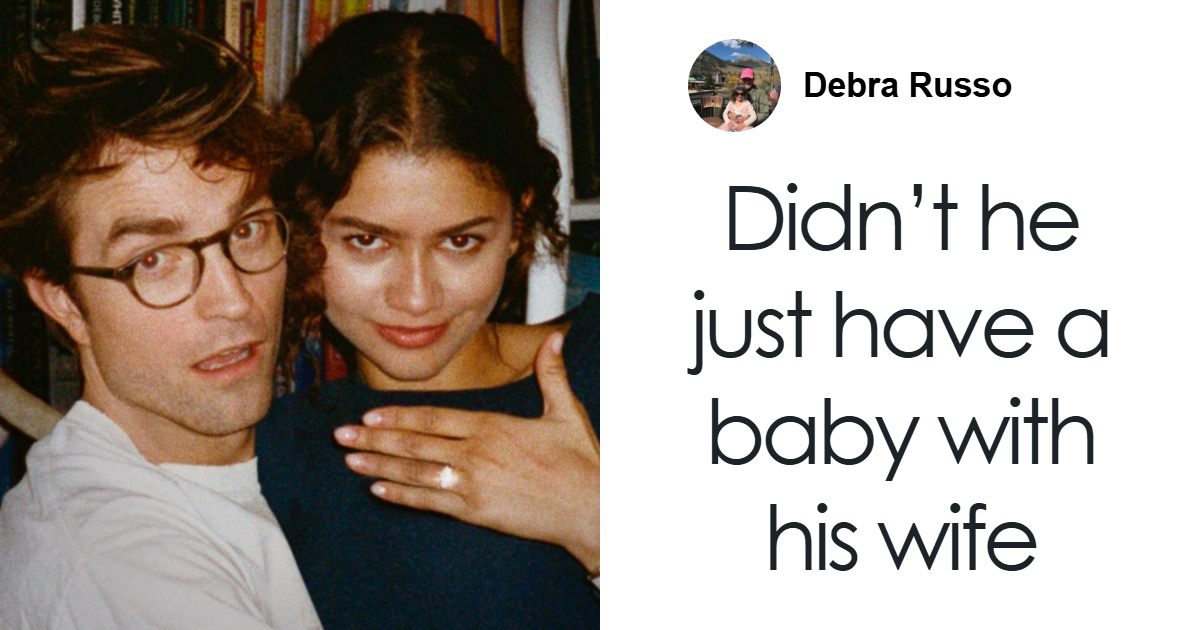
Robert Pattinson and Zendaya did not secretly get engaged, elope in Boston, or make the internet collectively drop its iced coffee for nothing. The viral “engagement” announcement that startled fans was actually a carefully staged advertisement for A24’s film The Drama, in which the two stars play an engaged couple whose wedding week goes spectacularly off-script. Still, for a few glorious minutes online, people saw Pattinson, Zendaya, a sparkly ring, and a newspaper-style announcement and reacted exactly how the marketing team hoped they would: with confusion, screenshots, jokes, and frantic “wait, what?” energy.
The faux engagement ad appeared in The Boston Globe and was designed to look like a traditional society-page announcement. It introduced Zendaya’s character, Emma Harwood, and Pattinson’s character, Charlie Thompson, as a soon-to-be-married couple. The notice included fictional family details, education history, and a wedding date of April 3, 2026, which also matched the movie’s theatrical release date. In other words, it was not gossip; it was advertising wearing a pearl necklace and pretending to be your aunt’s favorite newspaper clipping.
What made the campaign even more irresistible was the timing. Months earlier, Pattinson had gone viral for admitting that a scene with Zendaya in The Drama made him feel like he was going “crazy” for days. According to his own retelling, he overanalyzed the scene, wrote pages of notes, and eventually called Zendaya the night before filming. After a two-hour conversation, she calmly helped him understand that the line meant exactly what it said. No hidden mystery. No secret code. No cinematic treasure map. Just a line.
Why Robert Pattinson And Zendaya’s “Engagement” Ad Went Viral
The reason the ad exploded online is simple: it looked just real enough to cause panic and just fake enough to become funny once people caught on. Celebrity culture thrives in the tiny space between “is this true?” and “please tell me this is a bit.” A newspaper engagement announcement is old-fashioned, formal, and oddly sincere. Pair that format with two of the most famous actors in the world, and the result is a viral moment that feels like it fell out of a rom-com, tripped over a meme, and landed in everyone’s group chat.
A24 has built a reputation for unconventional marketing, and this campaign fit the studio’s personality perfectly. Instead of relying only on glossy posters and standard trailer drops, the studio turned the movie’s premise into a public puzzle. Fans were not just told that Emma and Charlie were engaged; they were invited to encounter the “news” as if it existed in the real world. That makes the campaign more immersive. It gives audiences a story before they even buy a ticket.
The Boston setting also mattered. The Drama filmed in and around Boston, and the faux announcement leaned into that local connection. By placing the ad in a respected regional newspaper, the campaign gained a strange kind of credibility. It was a joke, yes, but a joke wearing sensible shoes and a print-media subscription.
The Real Story Behind The Drama
The Drama is written and directed by Kristoffer Borgli, known for Dream Scenario, and stars Zendaya and Robert Pattinson as Emma Harwood and Charlie Thompson. The official premise centers on a happily engaged couple whose relationship is tested when an unexpected turn sends their wedding week into chaos. That is a wonderfully polite way of saying: this is not the sort of wedding movie where the biggest crisis is a missing boutonniere.
Zendaya plays Emma, a bookstore worker from Louisiana, while Pattinson plays Charlie, a London-born museum director. The fake engagement announcement added color to their fictional lives, describing Emma’s educational background and Charlie’s art-history credentials. These details helped make the ad feel like a genuine milestone notice rather than a typical movie poster. It did what good marketing does: it turned exposition into an event.
The supporting cast includes Mamoudou Athie, Alana Haim, Hailey Gates, and Zoë Winters. The film’s creative team also includes producers connected to Square Peg, the banner associated with Ari Aster, Lars Knudsen, and Tyler Campellone. That combination of A24, Borgli, Zendaya, and Pattinson signaled early that The Drama would not be a standard flowers-and-first-dance romance. It promised discomfort, comedy, emotional unraveling, and probably at least one dinner conversation that makes everyone wish they had stayed home with soup.
Robert Pattinson’s “Crazy” Confession Explained
The viral ad arrived after Pattinson had already given fans a memorable behind-the-scenes anecdote. While discussing The Drama, he said that one scene with Zendaya left him stuck in his own head for three days. He searched for deeper meaning, wrote extensive analysis, and eventually called Zendaya for help. She listened, stayed calm, and helped him realize the dialogue was not hiding some grand symbolic trap.
That story was funny because it matched the public image many viewers already have of Pattinson: intensely thoughtful, slightly chaotic, self-deprecating, and capable of turning a single line of dialogue into a full academic emergency. He is the rare movie star who can make overthinking sound like both a craft technique and a minor weather event.
Zendaya’s role in the anecdote also reinforced her reputation for composure. In the story, she becomes the calm center of the storm, the person who can gently tell a spiraling co-star, “Maybe the sentence is simply a sentence.” That contrast between Pattinson’s nervous excavation and Zendaya’s grounded clarity made the confession easy to share. It also gave fans a preview of their professional chemistry before the official promotional machine fully kicked in.
Why Fans Connected The Confession To The Engagement Ad
When the “engagement” ad appeared, fans immediately connected it to Pattinson’s earlier comments because both moments involved the same central appeal: the unpredictable energy between two highly watched performers. The ad said, “Look, they are getting married.” The confession said, “Behind the scenes, one of them once overthought a scene so hard he needed a two-hour rescue call.” Together, those details created the kind of celebrity-film lore that keeps audiences interested long before the opening credits roll.
That is especially valuable for a movie like The Drama, which depends on tension and curiosity. A straightforward romantic comedy can sell itself with charm, chemistry, and a good soundtrack. A darker relationship comedy needs something sharper. It needs the audience to wonder what is really happening under the surface. The engagement ad created that surface. Pattinson’s confession hinted at the anxiety underneath it.
A Smart Lesson In Modern Movie Marketing
The viral campaign worked because it understood how people consume entertainment news now. Audiences do not simply watch trailers; they investigate them. They pause screenshots, decode captions, compare timelines, and turn small promotional details into social-media events. A fake newspaper announcement gives fans something to discover, debate, and share.
It also created a low-stakes mystery. Nobody needed to understand the whole movie to participate. The question “Are Robert Pattinson and Zendaya engaged?” was instantly clickable, instantly answerable, and instantly funny. Once fans realized it was fictional, the campaign did not collapse. It became even more shareable because the reveal was part of the fun.
That balance is hard to pull off. If a stunt feels too misleading, audiences may resent it. If it feels too obvious, they ignore it. This ad landed in the sweet spot: playful, strange, and connected directly to the film’s story. It did not invent random controversy for attention. It used the movie’s own premise as the engine.
Zendaya And Robert Pattinson: A Pairing Built For Curiosity
Part of the excitement came from the pairing itself. Zendaya and Pattinson belong to different but overlapping corners of modern stardom. Zendaya moves easily between blockbuster franchises, prestige television, fashion dominance, and internet adoration. Pattinson has traveled from teen-franchise phenomenon to indie-film favorite to Batman, collecting eccentric interview moments like rare coins along the way.
Together, they create curiosity because neither performer feels predictable. Zendaya can communicate emotional control with a glance. Pattinson can make uncertainty feel electric. Put them in a story about an engagement under pressure, and suddenly a fake wedding announcement becomes more than a gimmick. It becomes a promise that this relationship will be complicated, stylish, and possibly terrible for everyone’s blood pressure.
Why The Ad Was Not Just Celebrity Clickbait
It would be easy to dismiss the campaign as simple celebrity clickbait, but the ad did more than trick people into looking. It expanded the fictional world of The Drama. The announcement told readers where Emma and Charlie came from, what they studied, where they worked, and when they planned to marry. Those details gave texture to characters before audiences met them on screen.
Good promotional storytelling does not merely say, “Please watch this.” It says, “Here is a doorway.” The Boston Globe ad functioned like a doorway into Emma and Charlie’s life, and because it appeared in a real newspaper, that doorway felt unusually tangible. It blurred the line between advertisement and artifact.
There is also something charmingly retro about using a print engagement notice in an age of algorithmic chaos. While everyone else is chasing trends on TikTok, A24 dropped a faux society announcement like a mischievous grandparent with a media budget. That contrast helped the campaign stand out.
The Internet Reaction: Confusion, Jokes, And Instant Detective Work
Online reaction followed the usual three-act structure of celebrity virality. Act one: shock. Fans saw the image and wondered whether the announcement was real. Act two: investigation. Users checked names, dates, captions, and A24’s involvement. Act three: comedy. Once the truth became clear, the jokes arrived in bulk.
Many reactions focused on the absurdity of seeing two globally famous actors framed as a quiet newspaper couple. Others joked about real-life partners, fictional wedding chaos, and Pattinson’s tendency to sound like he is one confusing sentence away from building a corkboard with red string. The campaign gave people a tiny, harmless cultural puzzle, and the internet loves nothing more than solving a puzzle while pretending it is above solving puzzles.
What This Moment Says About Celebrity Culture
The viral “engagement” ad shows how quickly fictional images can collide with real celebrity narratives. Audiences know actors play roles, but the internet often responds first and verifies second. When a promotional image resembles real-life news, even sophisticated fans can pause for a moment. That pause is where virality lives.
It also reveals how much modern audiences enjoy behind-the-scenes personality. Pattinson’s “crazy” confession did not reveal a major spoiler, but it gave fans a feeling: this movie mattered enough to make him spiral. Zendaya’s response gave another feeling: she had the confidence to steady the scene. Those impressions are powerful. They make the film feel human before it feels commercial.
Experiences And Takeaways From The Viral “Engagement” Moment
For entertainment writers, bloggers, and everyday pop-culture readers, this story is a useful reminder that the best viral campaigns often feel like something people stumble upon rather than something handed to them. The engagement ad did not announce itself with flashing lights. It used the language of ordinary life: family names, education history, wedding plans, and a formal portrait. That ordinary packaging made the extraordinary casting feel even more surprising.
For anyone who has ever worked on content, branding, or social media, the lesson is clear: context is everything. A normal poster tells people a movie exists. A fake engagement announcement makes people ask questions. Questions create comments. Comments create shares. Shares create momentum. Momentum, when handled well, becomes awareness that money cannot always buy through traditional advertising alone.
There is also a reader experience here that feels familiar. Many people have opened a social platform, seen a celebrity headline, and had the same tiny emotional sequence: disbelief, curiosity, embarrassment for being curious, and then curiosity again. The Pattinson-Zendaya ad played directly into that cycle. It did not require deep film knowledge. It required only recognition of two famous faces and the universal understanding that engagement announcements are supposed to be serious.
The humor came from the mismatch. Robert Pattinson and Zendaya are not anonymous newlyweds from a local paper. They are international stars with massive fandoms, high-profile careers, and online communities ready to analyze every image. Seeing them placed into a traditional engagement format was like watching a superhero buy a sensible used sedan. The normality made it funnier.
From a moviegoer’s perspective, the campaign also created emotional expectations. It suggested that The Drama would not treat engagement as a simple romantic finish line. Instead, it positioned marriage as the starting point for panic, secrets, and difficult questions. That is more interesting than a perfect couple smiling beside a cake. Perfect couples are lovely at weddings, but in movies, they often need a little disaster to become memorable.
For celebrity-news publishers, this topic offers several strong SEO angles. The main keyword “Robert Pattinson and Zendaya engagement ad” captures the viral hook. Related phrases such as “The Drama movie,” “Robert Pattinson crazy confession,” “Zendaya A24 film,” and “fake engagement announcement” help search engines understand the broader story. The article can attract readers searching for clarification, fans looking for movie details, and culture watchers interested in A24’s marketing strategy.
The most important publishing choice is clarity. Because the ad was fictional, the headline and opening paragraphs should avoid implying that Pattinson and Zendaya are actually engaged. A playful tone works, but accuracy matters. Readers enjoy being entertained; they do not enjoy feeling tricked after the joke has already been explained.
Ultimately, the viral moment succeeded because it combined star power, old-school presentation, modern internet behavior, and a behind-the-scenes anecdote that made both actors seem more interesting. Pattinson’s confession added personality. Zendaya’s calm response added charm. The engagement ad added spectacle. Together, they turned a movie promotion into a mini cultural event.
Conclusion
Robert Pattinson and Zendaya’s viral “engagement” ad was never real-life wedding news, but it was very real as a marketing win. By placing a fictional announcement in a traditional newspaper format, A24 transformed The Drama from a movie title into a public conversation. The campaign became even more fascinating because it arrived after Pattinson’s hilarious confession that he once went “crazy” over a scene with Zendaya, only for her to calmly explain that the line had no secret hidden meaning.
The result was exactly what smart entertainment marketing hopes for: confusion without harm, humor without emptiness, and curiosity that led people back to the film. In a crowded media landscape, the campaign proved that a clever idea can still cut through the noise. Sometimes all it takes is two major stars, one fake ring, a newspaper ad, and Robert Pattinson overthinking dialogue like it personally owes him money.