Some artists paint giant canvases. Some direct movies. And some, blessedly, grab a tiny yellow sticky note and say, “You know what adulthood really needs? Less pretending.” That is exactly why this sticky-note series lands so well. It does not try to sell adulthood as a polished, color-coded journey full of glowing skin, inbox zero, and homemade grain bowls arranged like museum exhibits. Instead, it tells the truth: being an adult often feels like answering emails, reheating coffee, mentally budgeting three purchases at once, and wondering whether “I’m just tired” is a personality trait now.
The appeal of Artist Makes 30 Honest Sticky Notes That Sum Up Your Life As An Adult is simple. These comics take the grand drama of modern life and shrink it down to the exact size it usually occupies in our brains: one messy thought at a time. The humor is dry, the format is tiny, and the emotional damage is, frankly, impressive. In the best way.
What makes the series so memorable is not just that it is funny. It is that it is recognizable. These sticky notes feel like someone took the internal monologue of adulthoodwork stress, money stress, social awkwardness, overthinking, chores, exhaustion, and that recurring dream where you accidentally RSVP “yes” to somethingand pinned it to the office wall for the entire internet to see.
The Artist Behind the Sticky-Note Truth Bombs
The artist most closely associated with this brutally relatable style is Chaz Hutton, better known online as Insta-Chaz. His work became popular because he turned humble office stationery into a stage for modern anxiety, awkwardness, and low-key existential comedy. That medium matters. A sticky note is temporary, practical, and usually attached to something you are afraid to forget. In other words, it is the perfect symbol for adult life.
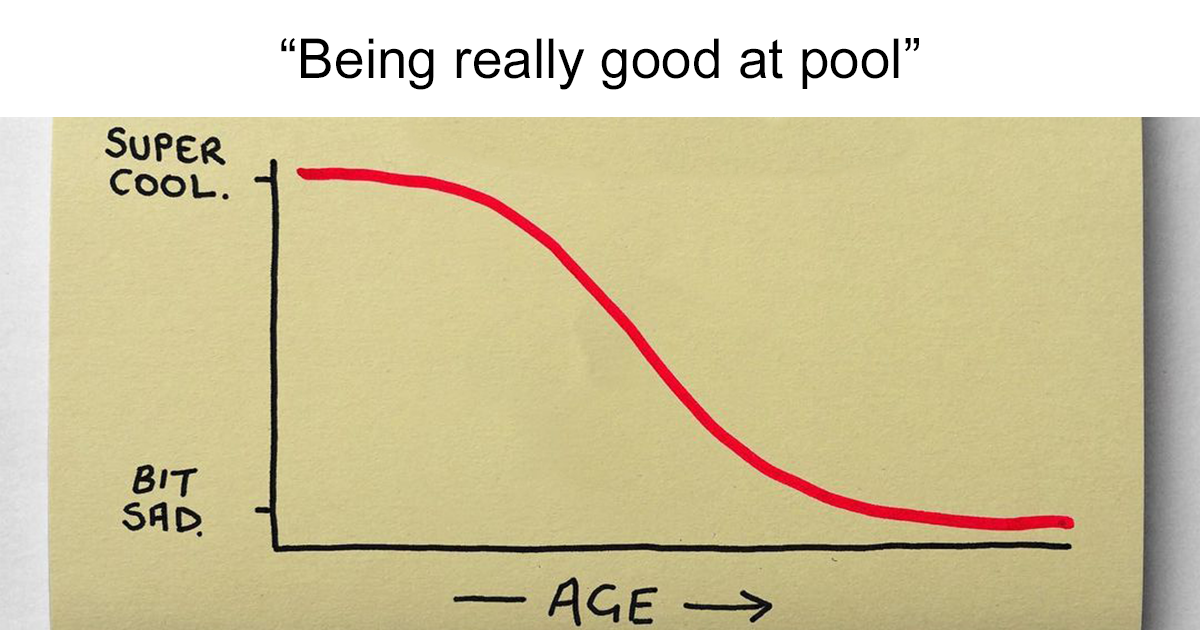
His illustrations are not flashy. They are usually made with simple black lines, stick figures, charts, arrows, and tiny captions that somehow do more emotional work than half the motivational posters in America. One comic can capture the panic of social comparison. Another can nail the absurd process of trying to make dinner without emotional support. Another can sum up the emotional complexity of attending an office party with the energy of a hostage negotiation.
That simplicity is the genius. A complicated life gets condensed into a tiny square, and suddenly the burden feels lighter because it has become a joke you can point at and say, “Yes. Exactly that.”
Why These Sticky Notes Hit So Hard
The best adulting humor works because it does two things at once. First, it makes people laugh. Second, it quietly tells them they are not uniquely failing at life. That second part is huge. Modern adulthood is crowded with invisible pressure: be productive, be financially stable, maintain close relationships, sleep enough, stay healthy, answer messages quickly, save for the future, enjoy the moment, and somehow remember to buy dish soap. It is a ridiculous amount to carry while pretending everything is “good, just busy.”
That is why sticky-note humor feels almost therapeutic. Not therapeutic in the clinical senselet’s not replace licensed professionals with office suppliesbut therapeutic in the old-fashioned human sense. It offers relief through recognition. It turns private frustration into shared comedy.
1. Work Is Still Weird, Even After You “Figure It Out”
One of the strongest themes in these comics is work. Not glamorous career growth. Not the LinkedIn version where every challenge becomes a “learning opportunity.” Real work. The kind where you sit through meetings that should have been emails, respond to messages you barely understand, and discover that being “senior” at your job mostly means being professionally tired.
That is why sticky-note humor about office culture works so well. Adult life is full of strange professional theater. You are expected to be competent, collaborative, upbeat, efficient, and mysteriously passionate about calendar invites. Even when you like your job, the emotional labor of being employable can feel comically exhausting. The artist’s tiny graphs and blunt captions capture that weird gap between how work is presented and how it is actually experienced.
And honestly, adulthood is full of this gap. The job title gets bigger, but so does the number of tabs open in your brain.
2. Money Anxiety Never Fully Leaves the Group Chat
Another reason these sticky notes resonate is that they understand financial stress without turning it into a lecture. Adult money problems are not always dramatic. Often they are small, repetitive, and deeply annoying. Rent. Groceries. Unexpected fees. A car making a noise that sounds expensive. A subscription you forgot to cancel. The silent humiliation of opening your banking app right after being “just a little treat” happy.
The artist’s humor works here because it does not pretend adulthood is only about major milestones. It remembers the mini-crises. The low-grade panic of budgeting. The absurdity of buying healthy groceries and then emotionally needing takeout. The universal pain of feeling responsible and confused at the same time.
That kind of honesty matters. A lot of lifestyle content talks about finances as if all adults are one spreadsheet away from serenity. In reality, many people are doing mental math in the checkout line and hoping their future self is unusually resourceful. The sticky notes know this, and they do not judge. They just nod, hand you a marker, and let you laugh.
3. Sleep, Stress, and Overthinking Travel as a Pack
Adult life is also powered by one of the least reliable energy systems ever designed: tired people pretending they are fine. That is why so many people connect with jokes about insomnia, exhaustion, spiraling thoughts, and lying in bed while the brain suddenly decides it is time to review every awkward thing you have said since middle school.
These sticky notes get the rhythm of modern stress right. Anxiety is not always dramatic. Sometimes it is quiet and administrative. Did I forget that bill? Was that email rude? Do I need to text back now or tomorrow? Am I being productive enough? Is everyone else better at yoga, cooking, socializing, and adulthood in general? The humor lands because the questions are familiar, petty, and weirdly universal.
There is also something wonderfully efficient about using a tiny square to show a giant emotional pattern. Adult stress often comes from accumulation. No single problem destroys the day. It is the pileup. A sticky note, with its cramped little borders, visually mirrors that feeling. There is only so much room, and somehow the chaos still spills over.
4. Friendship in Adulthood Requires Administrative Talent
One of the saddest and funniest truths about growing up is that friendship becomes a scheduling exercise. When you are younger, friendship often just happens. You are in the same place, at the same time, with the same loose understanding that hanging out is the default setting. Then adulthood arrives wearing a blazer and carrying a calendar, and suddenly seeing a close friend requires four texts, two reschedules, one weather check, and a level of logistical planning once reserved for military operations.
The sticky-note style is perfect for this because adult friendship often feels like a small problem that carries a big emotional charge. It is not that people care less. Usually they care a lot. They are just tired, overbooked, under-slept, and trying to keep all the plates spinning without becoming one of the plates.
That emotional truth is why these comics travel so well online. They give adults a socially acceptable way to admit they miss people, feel stretched thin, and occasionally need a week of silence followed by brunch.
5. Humor Is Not Escapism Here. It Is Survival Gear.
The deepest reason this series works is that humor makes adulthood feel manageable. Not fixed. Not cured. Manageable. A good joke does not erase stress, but it changes your relationship to it. It shrinks the monster long enough for you to get your footing back.
That is exactly what these sticky notes do. They take all the grand, shapeless anxiety of being a grown-up and pin it down into something specific and laughable. Suddenly the chaos has edges. Suddenly the feeling has a caption. Suddenly the experience is not “my life is spiraling,” but “wow, this little yellow square really saw me at my worst.”
And that, oddly enough, is comforting.
What These Sticky Notes Understand About Modern Adulthood
The most honest thing about the series is that adulthood is not usually ruined by one giant crisis. It is made strange by a hundred tiny absurdities. The dishes. The unread messages. The awkward networking event. The impossible grocery decision. The sense that life is expensive, time is moving too fast, and everybody else seems suspiciously hydrated.
That is why minimalist comedy works so well here. It cuts through the noise. No motivational fluff. No fake perfection. No glossy influencer energy. Just a sharp observation that says, “You are not imagining it. This is weird.”
In a media landscape full of dramatic hot takes and aggressively cheerful self-improvement, that kind of honesty feels refreshing. The sticky-note format also adds a layer of irony: these are tiny pieces of office paper, yet they manage to explain adulthood better than many books with hard covers and blurbs from productivity experts.
There is also a lesson here for anyone creating content about modern life. People do not only want advice. They want recognition. They want language for feelings they have not fully organized yet. They want to see the ridiculousness of their routines reflected back at them with a little mercy and a decent punchline.
Why the Internet Keeps Coming Back to This Kind of Art
Relatable art spreads because it creates instant community. When someone shares one of these sticky notes, they are not just posting a joke. They are sending out a signal flare. They are saying: this is my mood, this is my week, this is my life in one painfully accurate square.
That is especially powerful in adulthood, when so many struggles are private by design. People do not always announce that they are overwhelmed by bills, burnt out by work, too drained to socialize, or stuck in a loop of overthinking and errands. But they will repost a comic that says it for them. Humor becomes a shortcut to honesty.
This is why the artist’s work feels bigger than its size. The notes may be physically small, but the emotional reach is wide. They speak to office workers, tired parents, anxious overachievers, introverts, extroverts in temporary recovery, and anyone who has ever stared into a refrigerator hoping dinner will reveal itself through faith alone.
500 More Words of Very Real Adult Experience
There is a very specific adult experience that no one warns you about: the moment when a completely normal task suddenly feels like a side quest from a very boring video game. You leave the house to buy toothpaste. While you are out, you remember light bulbs, a birthday card, something for dinner, and the mysterious item you wrote on a list but can no longer decode. By the time you come home, you have spent more money than planned, forgotten the toothpaste, and emotionally need to lie down. A sticky-note comic can capture that entire spiral with one arrow and three words, which is honestly rude but accurate.
Another classic adult moment is discovering that free time is not always relaxing. Sometimes free time just means you are finally alone with the tasks you have been postponing. You sit down on a Saturday morning thinking, “Today I will recharge.” Twenty minutes later, you are comparing insurance rates, descaling the coffee maker, folding laundry that has become more symbolic than practical, and wondering when exactly life turned into a maintenance subscription.
Then there is social adulthood, which is both wonderful and ridiculous. You can love your friends deeply and still need three business days to answer a text. You can be genuinely excited about dinner plans while also hoping, with alarming sincerity, that someone cancels. Not because you dislike people, but because adulthood can drain your batteries in ways that childhood never prepared you for. The sticky-note style gets that contradiction perfectly. Adults are often lonely and overstimulated at the same time, craving connection while fiercely protecting the one evening they have to wear sweatpants in peace.
Even small health habits become funnier once you are older. Drinking water starts to feel like a moral achievement. Stretching earns the emotional energy of winning a medal. Getting eight hours of sleep sounds less like a routine and more like folklore passed down by magical villagers. You buy vegetables with noble intentions, then eat cereal over the sink because the day got away from you. Again. The joke is not that adults are irresponsible. The joke is that responsible living turns out to be a thousand repetitive acts, many of them inconvenient, none accompanied by applause.
And of course, there is the emotional bookkeeping. Adults are constantly managing invisible tabs: remembering who needs a reply, what needs to be paid, which appointment needs to be made, whether the weird noise in the house is serious, and if there is enough emotional energy left to be patient, kind, productive, and vaguely well-adjusted. That mental load is hard to describe in formal language, which is why humorous art often says it best. A tiny sticky note can summarize a giant truth: much of adulthood is simply carrying too much while trying to look normal.
That is why these comics stick. They do not mock adult life from a distance. They stand inside it. They know that grown-up life is part competence, part improvisation, and part pretending the kitchen sponge situation is under control. They remind us that being overwhelmed does not make us broken. Sometimes it just makes us contemporary.
Conclusion
Artist Makes 30 Honest Sticky Notes That Sum Up Your Life As An Adult works because it strips adulthood down to its funniest and most familiar truths. The artist does not need a giant canvas to make a point. A sticky note is enough. On that tiny square lives the full modern experience: work stress, money stress, friendship logistics, exhaustion, overthinking, and the fragile hope that tomorrow you will somehow become the sort of person who meal-preps and answers emails on time.
Maybe that is the real charm of the series. It is not trying to fix adult life. It is just brave enough to describe it honestly. And sometimes that is exactly the kind of art people need.