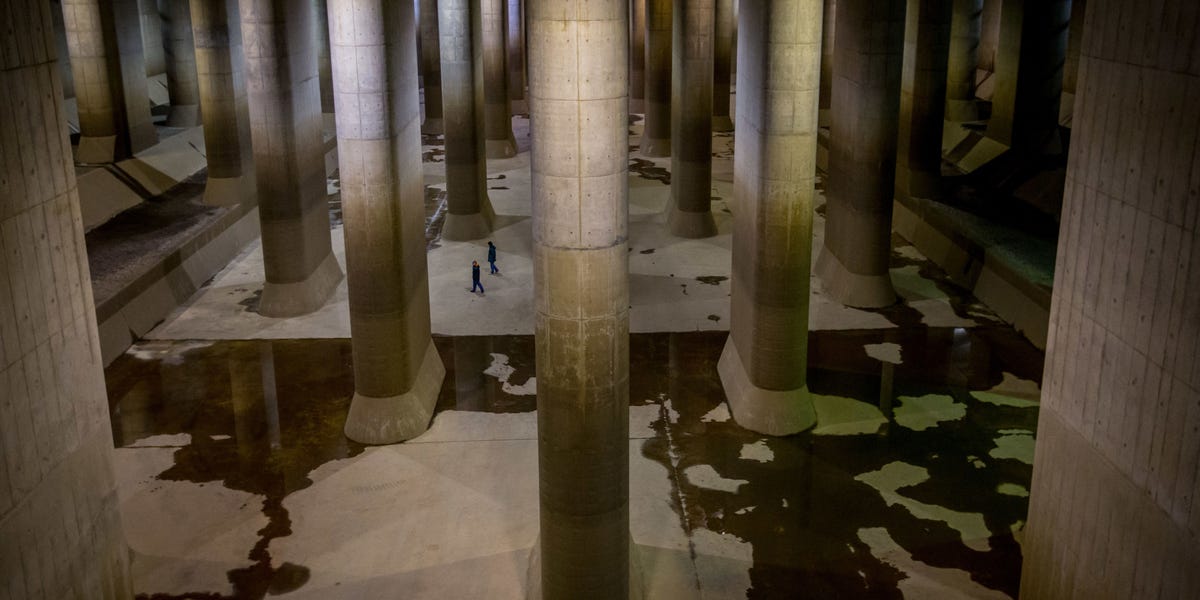
Human beings have a funny habit: when the surface gets crowded, dangerous, hot, cold, expensive, or simply too obvious, we dig. Sometimes we dig for survival. Sometimes for salt. Sometimes for trains, water, seeds, shopping malls, or the kind of dramatic travel story that begins with, “So there I was, several stories underground…” The result is a planet full of astonishing subterranean structures that prove architecture does not always need a skyline. Occasionally, it needs a headlamp.
From ancient underground cities carved into volcanic rock to modern rail tunnels cutting through mountains, the world’s most impressive underground structures reveal how clever humans can be when faced with a stubborn problem and a lot of rock. These hidden places are more than tourist attractions. They are engineering lessons, cultural time capsules, climate shelters, transportation breakthroughs, and, in one case, a freezer for the future of global food.
Below are seven of the world’s most impressive subterranean structures, each chosen for a different kind of brilliance: scale, history, engineering, beauty, resilience, or sheer “how did they even do that?” energy.
1. Derinkuyu Underground City, Turkey
Derinkuyu, located in Turkey’s Cappadocia region, may be the closest real-world equivalent to an underground metropolis from a fantasy novel. Carved into soft volcanic tuff, this multi-level underground city descends roughly 85 meters beneath the surface and was large enough to shelter thousands of people, along with livestock and food supplies. In other words, it was not just a basement. It was a survival system with excellent rock-based commitment.
The brilliance of Derinkuyu lies in its planning. The underground city included living areas, storage rooms, ventilation shafts, wells, stables, religious spaces, and heavy stone doors that could be rolled shut from the inside. These features suggest a structure designed not for a quick hide-and-seek session, but for long periods of protection during conflict or danger.
Cappadocia’s geology made this possible. The region’s volcanic rock is soft enough to carve but stable enough to hold complex chambers and tunnels. That combination allowed ancient builders to create a concealed settlement where people could breathe, store supplies, gather, worship, and move between levels without stepping into the open. Derinkuyu is impressive because it turns fear into architecture. It is a city built from the idea that safety sometimes means going down, not building up.
2. Wieliczka Salt Mine, Poland
The Wieliczka Salt Mine near Kraków, Poland, is what happens when industry, art, faith, and a very large amount of salt decide to collaborate for centuries. Mining at Wieliczka dates back to the 13th century, and the site became one of Europe’s most famous historic salt mines. Today, it is known not only for its tunnels and chambers but also for its underground chapels, salt sculptures, brine lakes, and cathedral-like spaces.
What makes Wieliczka extraordinary is the way miners transformed a workplace into a subterranean cultural landscape. The mine extends through a huge network of corridors and chambers, some reaching deep below the surface. But instead of being merely functional, many spaces became artistic. The famous Chapel of St. Kinga is carved largely from salt, including reliefs, chandeliers, and decorative elements. Yes, even the chandeliers are salty. Somewhere, a regular dining table shaker is feeling deeply underachieving.
Wieliczka shows that underground structures can be more than hidden infrastructure. They can become places of beauty and identity. Salt was once an economic treasure, and this mine preserved the memory of labor, religious devotion, craftsmanship, and technological development across generations. It is not just an old mine; it is an underground monument to human persistence.
3. Basilica Cistern, Istanbul, Turkey
The Basilica Cistern in Istanbul is proof that water storage can be dramatic. Built during the Byzantine era under Emperor Justinian, this vast underground reservoir was designed to help supply water to Constantinople. Instead of looking like a plain utility tank, it feels like a sunken palace supported by hundreds of marble columns.
The cistern’s forest of columns is one of its most unforgettable features. Many of the columns were reused from older structures, creating a mysterious blend of styles and histories. The famous Medusa head column bases add an extra layer of intrigue, because apparently even ancient water infrastructure enjoyed a little mythological flair.
Functionally, the Basilica Cistern solved a critical urban problem: how to store water for a powerful city. Architecturally, it turned that solution into an atmospheric masterpiece. The low lighting, reflections, columns, and echoing space make it feel less like a reservoir and more like the city’s hidden memory. It reminds us that essential infrastructure can also be beautiful, especially when built by people who understood that even water deserves a good room.
4. Svalbard Global Seed Vault, Norway
On the remote Arctic island of Spitsbergen, the Svalbard Global Seed Vault sits deep inside a mountain, quietly guarding duplicates of seeds from around the world. It is often nicknamed the “doomsday vault,” although that sounds a bit like the title of a movie where the villain has excellent refrigeration. In reality, its mission is deeply practical: preserve crop diversity as a backup for global gene banks.
The Seed Vault is designed for long-term protection. Its storage area is located more than 100 meters inside the mountain, under layers of rock, and the seeds are kept at very low temperatures. The facility can store millions of seed samples, making it one of the most important underground structures for food security on Earth.
Unlike ancient underground cities, Svalbard is not about hiding from an immediate enemy. It is about preparing for slow-moving risks: climate change, crop disease, conflict, disasters, and the loss of agricultural diversity. Its architecture is intentionally minimal, but its symbolic power is enormous. It says that the future may depend on what we choose to protect today, even if that protection looks like shelves of carefully sealed seed packets in a frozen mountain.
5. Gotthard Base Tunnel, Switzerland
The Gotthard Base Tunnel is a modern engineering giant running beneath the Swiss Alps. At about 57 kilometers long, it is one of the longest railway tunnels in the world and reaches deep beneath mountainous terrain. If Derinkuyu is ancient survival engineering, Gotthard is precision infrastructure wearing a Swiss watch and politely arriving on time.
The tunnel connects northern and southern Europe more efficiently by allowing passenger and freight trains to pass through the Alps on a flatter, faster route. Its construction required advanced tunnel boring, geological planning, ventilation, safety systems, and years of coordination. Building through a mountain range is not simply a matter of pointing a drill at the rock and hoping the Alps are in a cooperative mood.
What makes the Gotthard Base Tunnel especially impressive is its practical impact. It shortens travel times, supports rail freight, and helps shift transportation from road to rail. That matters for trade, passenger mobility, and environmental planning. Underground structures are often hidden from view, but this tunnel changes how people and goods move across Europe. Its success is a reminder that sometimes the most important architecture is the part most travelers barely notice while sipping coffee on a train.
6. RÉSO Underground City, Montréal, Canada
Montréal’s RÉSO, often called the Underground City, is not a single buried city in the ancient sense. It is a vast network of underground and indoor pedestrian connections linking metro stations, shopping centers, offices, hotels, universities, entertainment venues, and public spaces. In a city famous for serious winters, this is not just convenient. It is urban survival with escalators.
The RÉSO network stretches for more than 33 kilometers, creating one of the world’s most extensive underground pedestrian systems. It allows residents, workers, students, and visitors to move through large parts of downtown without battling snow, rain, wind, or the kind of cold that makes your eyebrows reconsider their career choices.
Its genius is not drama but usability. While ancient underground structures often protected people from armies or weather extremes, Montréal’s system protects everyday life from seasonal inconvenience and urban congestion. It shows how subterranean design can support modern city living, commerce, transportation, and accessibility. RÉSO is impressive because it makes the underground feel ordinary in the best possible way: useful, connected, and part of daily rhythm.
7. Củ Chi Tunnels, Vietnam
The Củ Chi Tunnels near Ho Chi Minh City form one of the most famous underground networks in modern history. Built and expanded over years of conflict, the tunnels served as shelters, communication routes, supply passages, living areas, and strategic spaces during wartime. Today, preserved sections operate as historic sites where visitors can better understand the scale of underground life and resistance.
The tunnels are impressive not because they are grand or comfortable. They are impressive because they were created under extreme pressure with limited resources. Their narrow passages, hidden entrances, ventilation solutions, and layered organization reflected adaptation to difficult conditions. Unlike a monument designed to impress visitors, the Củ Chi Tunnels were designed to help people endure.
As a historical site, Củ Chi asks visitors to think carefully about the human cost of conflict and the ingenuity people use when survival is at stake. It is not a place for casual admiration alone. It is a place for context, reflection, and respect. Underground architecture can be beautiful, efficient, or futuristic; here, it is a reminder of resilience in one of history’s most challenging settings.
Why Subterranean Structures Fascinate Us
Subterranean structures fascinate us because they reverse our usual idea of greatness. Most famous buildings rise into the sky. They compete for height, glassiness, and the ability to appear in skyline postcards. Underground structures do the opposite. They hide. Their greatness is measured in depth, endurance, secrecy, and problem-solving.
These places also feel mysterious because they remove us from normal cues. Underground, there is no horizon, no open sky, and often no natural light. Sound changes. Temperature changes. Distance becomes harder to judge. Even a practical tunnel can feel cinematic because the human brain is used to thinking of “down there” as unknown territory.
Yet the real lesson is not mystery. It is adaptation. Derinkuyu adapted to danger. Wieliczka adapted labor into art. The Basilica Cistern adapted water management into monumental design. Svalbard adapts preservation to global risk. Gotthard adapts transportation to geography. Montréal adapts urban life to climate. Củ Chi adapts survival to conflict. Each one proves that underground construction is not a novelty. It is one of humanity’s oldest and smartest responses to pressure.
Travel Experiences and Practical Reflections: What It Feels Like to Explore Underground Wonders
Visiting impressive subterranean structures is different from visiting castles, towers, bridges, or museums above ground. The experience begins before you even see the main attraction. There is usually a descent: stairs, a ramp, an elevator, a tunnel mouth, or a narrow passage that makes your brain whisper, “We are really doing this?” That transition is part of the magic. You are not simply entering a site; you are leaving the everyday world behind.
The first thing many visitors notice is temperature. Underground spaces often feel cooler, damper, or more stable than the surface. In a salt mine or cistern, the air can feel heavy with mineral history. In a modern tunnel system, it may feel controlled and efficient. In older hand-carved spaces, the atmosphere can feel intimate, as if the walls are holding stories but have signed a strict confidentiality agreement.
Lighting also shapes the experience. Wieliczka’s glowing chambers, the Basilica Cistern’s reflected columns, and the stark entrance of the Svalbard Seed Vault all show how light can turn underground architecture into theater. Good lighting helps visitors understand scale, but it also creates emotion. A single illuminated column underground can feel more dramatic than an entire building in daylight.
Another important experience is movement. Underground routes often force visitors to slow down. Stairways may be steep, corridors may be narrow, and the path may curve unexpectedly. This makes exploration feel physical. You do not just look at these structures; you move through them carefully. That movement builds respect for the people who built and used them. Imagine carrying tools through a salt mine, navigating ancient city levels in Cappadocia, or designing a rail tunnel through the Alps with millimeter-level precision. Suddenly, your complaint about a slow elevator feels less heroic.
For travelers, the best approach is curiosity plus humility. Read a little before visiting, because context transforms stone corridors into human stories. Wear comfortable shoes, because underground attractions are rarely impressed by fashionable footwear. Bring a light jacket when appropriate, follow safety rules, and avoid treating serious historical sites like amusement parks. Places such as the Củ Chi Tunnels deserve thoughtful attention, not just quick photos.
What stays with you after visiting subterranean structures is usually not one single fact. It is the feeling of scale hidden beneath ordinary ground. A plaza, hill, street, or mountain may look simple from above, while below it lies a city, a chapel, a reservoir, a seed vault, or a transportation artery. That realization changes how you see the world. The surface is only the cover page. Sometimes the best chapters are underneath.
Conclusion
The world’s most impressive subterranean structures show that human creativity does not stop at the ground level. Whether carved by ancient communities, shaped by miners, engineered by modern planners, or preserved as cultural memory, these underground wonders prove that depth can be just as inspiring as height.
Derinkuyu, Wieliczka, the Basilica Cistern, Svalbard, Gotthard, Montréal’s RÉSO, and the Củ Chi Tunnels all solve different problems, but they share one idea: when the surface is not enough, humanity finds another layer. Sometimes that layer becomes a refuge. Sometimes it becomes infrastructure. Sometimes it becomes art. And sometimes, wonderfully, it becomes all three.