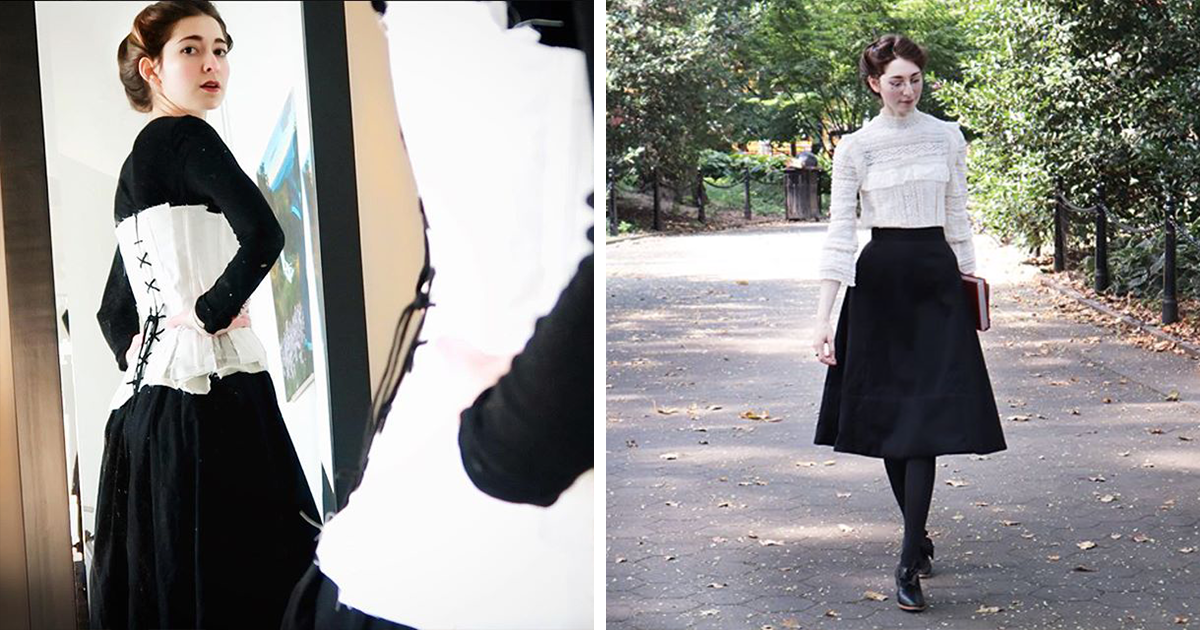
Most people open their closets and see jeans, hoodies, and that one shirt they keep “just in case” it becomes stylish again. Bernadette Banner, better known online as an “extremely outdated fashion blogger,” opens hers and finds something much more dramatic: historical dresses, hand-sewn garments, corset-inspired silhouettes, medieval gowns, Edwardian details, and enough vintage sewing energy to make a modern fast-fashion rack quietly apologize.
The fascination with historical dresses recreated by Bernadette Banner is not just about pretty fabric. It is about watching fashion history become physical again. These are not cheap costume-party outfits with mystery polyester and zipper crimes. They are thoughtful reconstructions inspired by real garments, historical sewing methods, museum research, period silhouettes, and the slow, patient craft of making clothing the way people once didone stitch, one seam, and one dramatic sleeve at a time.
The viral idea behind “30 stunning historical dresses recreated by ‘Extremely Outdated Fashion Blogger’” works because it combines three things the internet loves: beauty, skill, and a tiny bit of chaos. After all, who decides to recreate old-world garments in the age of two-day shipping? Someone who understands that clothing is not just something we wear. It is a record of work, class, gender expectations, technology, art, survival, and personal identity.
Who Is the “Extremely Outdated Fashion Blogger”?
The title refers to Bernadette Banner, a historical fashion creator, YouTuber, author, and sewing educator known for exploring dress history through reconstruction. Her work often focuses on garments from eras before modern electric sewing became standard. That means hand stitching, period-inspired patterning, careful fabric choices, and research-driven construction rather than quick costume shortcuts.
Banner’s charm comes from the contrast between her old-world interests and her very modern platform. She studies garments that belong in archives, then explains them to millions of viewers on YouTube. She can discuss seam finishing with the seriousness of a museum curator and the timing of a dry comedian. In a world where trends expire faster than milk, her content asks a refreshing question: what if we slowed down and actually understood our clothes?
Why Historical Dress Reconstruction Is So Captivating
Historical dress reconstruction is not the same as dressing up. A costume might capture the surface of an era, but reconstruction studies how garments were actually made, worn, altered, repaired, and lived in. A recreated gown can reveal why a skirt stood away from the body, why a sleeve sat at a particular angle, why seams were placed in unexpected locations, and why pockets were sometimes surprisingly practical.
That is part of the magic behind these 30 stunning historical dresses. They do not simply say, “Look at this old dress.” They say, “Look at the hands that could have made this. Look at the body it was built around. Look at the social rules it carried. Look at the technology that shaped it.” Suddenly, a bodice is not just a bodice. It is architecture. A skirt is not just a skirt. It is engineering with flair.
30 Historical Dress Details That Make These Recreations Stunning
The appeal of Bernadette Banner’s historical fashion work comes from the details. Below are 30 features, styles, and construction moments that help explain why these recreated historical dresses continue to fascinate fashion lovers, sewists, history nerds, and anyone who has ever looked at a modern sleeve and thought, “Surely, we can do better.”
1. Medieval-Inspired Gowns
Medieval dress reconstructions often rely on long lines, fitted shapes, and practical layering. A well-made medieval-inspired gown can look simple from a distance, but the beauty is in the cut, fabric behavior, and hand-finished seams.
2. The 15th-Century Silhouette
Fifteenth-century-inspired gowns are especially popular in historical sewing circles because they balance elegance with structure. Their fitted bodies and flowing skirts show how fabric could shape the figure without looking stiff or theatrical.
3. Linen Shifts and Base Layers
Underwear is the unsung hero of historical fashion. Linen shifts protected outer garments from sweat and skin oils, making expensive dresses last longer. Glamorous? Not always. Essential? Absolutely.
4. Hand-Sewn Eyelets
Before metal grommets became common in everyday sewing, eyelets were often stitched by hand. They may be tiny, but they can decide whether a fitted garment sits beautifully or behaves like a rebellious sandwich wrapper.
5. Stays Instead of Modern Bras
Eighteenth-century stays created a smooth, conical torso and supported the body differently from modern undergarments. They were not just fashion devices; they were structural garments designed for posture, support, and silhouette.
6. Robe à la Française Drama
The robe à la française is famous for its flowing back pleats, decorative stomacher, and grand presence. It is the sort of gown that enters a room before the wearer does, probably with its own theme music.
7. Robe à l’Anglaise Precision
Unlike the loose back pleats of the French gown, the robe à l’anglaise featured a closer fit through the back. It highlights the skill of shaping fabric directly to the body.
8. Petticoats With Purpose
Historical petticoats were not merely decorative. They added warmth, volume, modesty, color, and structure. In many outfits, the petticoat was visible and intentionally coordinated with the gown.
9. Pocket Slits
Many historical skirts allowed access to separate tie-on pockets worn underneath. This proves that women’s clothing once understood the assignment better than many modern dresses do.
10. Regency Waistlines
Regency and early 19th-century fashion moved the waistline high under the bust, creating a neoclassical column effect. The result was soft, graceful, and completely different from the heavily structured silhouettes that came before and after.
11. Sheer Cotton and Muslin
Lightweight cottons and muslins became fashionable in the early 1800s. Recreating these looks requires understanding transparency, layering, laundering, and the way delicate fabric moves.
12. Romantic-Era Sleeves
The 1820s and 1830s gave fashion some wonderfully enormous sleeves. They are romantic, dramatic, and only slightly threatening to nearby candles.
13. Corded Petticoats
Before cage crinolines became dominant, corded petticoats helped support skirt volume. They required patience, rows of stitching, and the emotional strength to continue when the fabric seemed endless.
14. 1850s Bell-Shaped Skirts
Mid-19th-century dresses often emphasized wide skirts, sloped shoulders, and fitted bodices. These garments show how silhouette could reshape the entire visual language of the body.
15. Cage Crinolines
The cage crinoline changed dress engineering by allowing skirts to expand dramatically without requiring countless heavy petticoats. It was basically wearable architecture, minus the building permit.
16. Civil War-Era Dress Construction
American dresses from the 1860s often featured fitted bodices, full skirts, piping, and careful interior structure. Recreating them requires attention to both exterior beauty and interior mechanics.
17. Bustle-Era Sculpting
The 1870s and 1880s shifted volume toward the back of the body. Bustle dresses are complex, sculptural, and wonderfully extralike fashion decided to become furniture.
18. Trains and Drapery
Many late 19th-century gowns used draped overskirts, trains, pleats, and trims. Their beauty depends on balance: too little fabric looks flat, while too much can resemble a curtain having an emotional episode.
19. Tailored Bodices
Victorian bodices often required careful fitting, boning, lining, and seam placement. The smooth exterior was only possible because of serious internal construction.
20. Black Mourning-Inspired Fashion
Victorian mourning dress influenced color, texture, accessories, and etiquette. Recreated black dresses can be visually striking because they rely on cut, sheen, and surface detail rather than bright color.
21. 1890s Leg-of-Mutton Sleeves
The 1890s brought back massive sleeves with confidence. These sleeves are bold, sculptural, and impossible to ignorefashion’s version of walking into a room and clearing its throat.
22. Walking Skirts
Historical walking skirts were practical, durable, and often beautifully tailored. They are among the easiest historical garments to imagine in a modern wardrobe.
23. Shirtwaists
The shirtwaist became a major part of late 19th- and early 20th-century women’s dress. It combined practicality, polish, and changing ideas about women’s work and public life.
24. Edwardian S-Curve Styling
Early 1900s fashion is remembered for its forward bust, narrow waist, and sweeping skirt line. Recreating this look means understanding corsetry, posture, and the difference between historical silhouette and modern assumptions.
25. Lace Insertion
Edwardian garments often used lace insertion, pintucks, and delicate whitework. These details look airy and sweet, but they require technical control and a heroic tolerance for repetition.
26. Hand-Felled Seams
Hand-felled seams are tidy, durable, and historically common in many garments. They remind us that the inside of clothing mattered, even when nobody was filming a dramatic reveal.
27. Natural Fibers
Linen, wool, silk, and cotton behave differently from synthetic fabrics. Historical recreation depends on choosing materials that move, press, breathe, and age in period-appropriate ways.
28. Mending as a Design Philosophy
Historical clothing was often altered and repaired because fabric was valuable. Banner’s interest in mending connects dress history with modern sustainable fashion.
29. Research From Surviving Garments
Museum collections, fashion plates, photographs, and extant garments help modern sewists understand the past. Every seam can become evidence.
30. Wearable History
The most stunning part is not that these dresses look beautiful. It is that they can be worn, moved in, studied, and understood as living objects rather than frozen museum ghosts.
The Real Lesson: Historical Fashion Was Not Random
Modern viewers sometimes look at historical clothing and assume people were simply uncomfortable for fun. In reality, historical fashion followed rules shaped by technology, class, labor, climate, etiquette, trade, and available materials. The robe à la française needed pleats and petticoats. The 1860s gown needed support from crinolines. The Edwardian blouse needed laundering-friendly fabric and delicate detail. A working woman’s clothing needed to survive actual work.
That is why recreations matter. They help correct myths. A corset was not always a torture device. A huge skirt was not always impossibly heavy. A hand-sewn garment was not automatically primitive. In many cases, historical clothing was highly intelligent. It solved the problems of its own time.
Why Bernadette Banner’s Work Fits Today’s Slow Fashion Movement
One reason Banner’s historical dress reconstructions resonate today is that they push back against disposable fashion. Fast fashion trains shoppers to treat clothing as temporary, but historical sewing reminds us that garments once represented time, money, skill, and care.
When a dress takes weeks or months to make, you do not throw it away because a button fell off. You mend it. You alter it. You pass it on. You treat it like an object with value. That mindset feels surprisingly modern in an age of overflowing closets and shrinking attention spans.
Historical sewing also invites people to ask better questions about their own wardrobes. Who made this? What is it made of? Can it be repaired? Does it fit the life I actually live? Is this fabric going to survive more than three laundry cycles, or is it already planning its retirement?
What Makes These Dresses So Shareable Online?
The popularity of these 30 stunning historical dresses comes from visual drama, but the staying power comes from education. Viewers arrive for the gowns and stay for the construction. They learn why seams matter, why old fashion plates are useful, why museum garments are full of clues, and why historical accuracy is rarely as simple as copying a pretty picture.
There is also the pleasure of seeing someone take craft seriously. In an online world full of shortcuts, watching a creator patiently hand-sew a garment can feel almost rebellious. It says: yes, the slow way is still worth doing. Yes, skill matters. Yes, a sleeve can have lore.
How Historical Dresses Connect Fashion, Identity, and History
Clothing is personal, but it is never only personal. A historical dress can tell us what fabrics were traded, what bodies were idealized, what work women performed, what events demanded formal wear, and how people balanced beauty with practicality. Even alterations are meaningful. A let-out seam, patched lining, or reused panel may say more about real life than a pristine fashion plate ever could.
This is where reconstruction becomes analysis. Making a garment forces the researcher to face practical questions. How does the arm move? Where does the weight sit? How does the wearer sit down? How long does it take to dress? What happens when the weather changes? The answers transform fashion history from a gallery label into lived experience.
Experience Section: What Trying Historical Dressmaking Teaches You
Spending time with historical dressmaking, even as a beginner, changes how you see clothing. At first, the process seems romantic. You imagine soft candlelight, beautiful linen, a peaceful afternoon, and perhaps a cup of tea placed elegantly beside your sewing basket. Then reality arrives wearing muddy boots. The fabric shifts. The thread tangles. The seam you thought was straight develops a mysterious personality. You discover that “simple running stitch” still requires control, rhythm, and patience.
But that is exactly where the experience becomes valuable. Historical sewing slows you down enough to notice things modern shopping hides. You begin to understand why fabric choice matters. A wool skirt does not behave like a cotton one. A linen shift wrinkles because linen is busy being linen. Silk can look heavenly and still punish careless handling. Every material has opinions, and historical dressmaking makes you listen to them.
The first real surprise is how much engineering exists inside beautiful clothing. A bodice is not just a pretty top. It is a shaped structure. A skirt is not just a tube of fabric. It is balanced weight, controlled fullness, and strategic support. When you stitch by hand, you feel every decision. Seam placement, lining, reinforcement, pressing, hemming, and finishing all become part of the story.
The second surprise is emotional. Making or studying a historical garment creates respect for past makers. Many of them worked without modern lighting, digital tutorials, printed PDF patterns, ergonomic chairs, or the luxury of “rage quitting” into online shopping. Their skill was not aesthetic fluff. It was practical knowledge passed through households, apprenticeships, shops, and communities.
Trying historical techniques also changes your relationship with mistakes. Modern consumers are trained to expect perfection immediately. Historical sewing teaches adjustment. If something does not fit, you alter it. If a seam looks weak, you reinforce it. If a garment wears out, you mend it. The process encourages problem-solving rather than disposal.
That may be the most relevant lesson for today. You do not need a full Victorian wardrobe to learn from historical fashion. You might simply repair a hem, replace plastic buttons with better ones, tailor a thrifted jacket, or choose natural fibers more carefully. The point is not to reject modern life and start dramatically sweeping through the grocery store in a bustlealthough, frankly, that would improve the cereal aisle. The point is to value clothing again.
Bernadette Banner’s recreated historical dresses inspire people because they make the past feel touchable. They remind us that fashion is not just trend-chasing. It is memory, labor, identity, and design. Each recreated dress is a conversation between then and now, stitched in thread instead of typed in comments. And in a time when so much fashion is made to be forgotten, that feels quietly radical.
Conclusion: Why These Historical Dresses Still Matter
The story of 30 stunning historical dresses recreated by ‘Extremely Outdated Fashion Blogger’ is more than a viral fashion-history gallery. It is a reminder that clothing can be intelligent, expressive, durable, and deeply human. Bernadette Banner’s work captures the beauty of old garments while revealing the skill behind them. From medieval-inspired gowns to Edwardian lace, from hand-sewn eyelets to structured petticoats, each reconstruction invites us to look closer.
These dresses are stunning because they are not empty nostalgia. They ask modern viewers to rethink convenience, craftsmanship, sustainability, and the stories sewn into every seam. In the end, the “extremely outdated” approach may be exactly what contemporary fashion needs: less waste, more patience, better construction, and maybe a few more sleeves with personality.
Note: This article is written as original web-publishing content based on real fashion-history context, public information about Bernadette Banner’s work, and reputable museum-based references. No source links are inserted in the article body so the copy remains clean for publication.