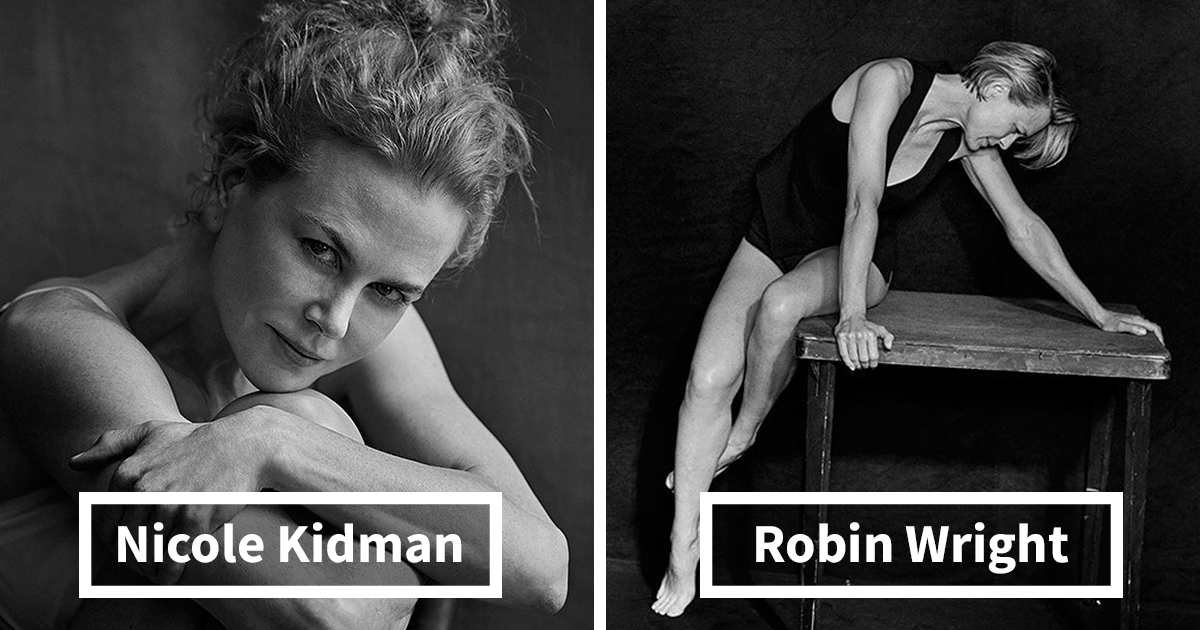
The 2017 Pirelli Calendar did something quietly radical: it asked famous women to show up as themselves. Not as airbrushed icons. Not as digitally polished statues. Not as the impossible fantasy version of beauty that looks like it has never had a bad night’s sleep, a laugh line, or a dramatic relationship with concealer. Photographed by legendary German fashion photographer Peter Lindbergh, the 44th edition of the calendar, titled Emotional, celebrated actresses with black-and-white portraits that leaned into truth, age, expression, and presence.
For a calendar long associated with glamour, exclusivity, and highly stylized images, the 2017 edition marked a meaningful cultural shift. Instead of chasing flawless skin and youthful perfection, it highlighted unretouched beauty, older celebrities, emotional depth, and the kind of confidence that cannot be manufactured in Photoshop. The result was not just a calendar. It was a conversation starter about women, aging, authenticity, and the beauty industry’s long-running obsession with perfection.
What Made the 2017 Pirelli Calendar So Different?
The Pirelli Calendar has always been more than a calendar you hang near a desk and forget by February. Since its early decades, it has been a collector’s item, distributed privately to select Pirelli clients and insiders. Over the years, it became known for featuring famous models, celebrities, and major photographers. But the 2017 Pirelli Calendar by Peter Lindbergh stood apart because it moved away from glossy fantasy and toward emotional realism.
Lindbergh’s concept was simple but powerful: portray women without hiding the signs of life. The calendar featured 14 internationally known actresses, plus one special guest, in portraits that favored emotion over perfection. The images were shot in black and white, a choice that gave the project a timeless, cinematic quality. Instead of screaming for attention, the photographs seemed to whisper, “Look closer.”
That was the point. The 2017 Pirelli Calendar was not about perfect bodies, poreless faces, or the stiff glamour of traditional celebrity photography. It was about personality, maturity, courage, and the quiet power of being seen honestly.
The Stars Featured in the 2017 Pirelli Calendar
The calendar brought together a remarkable cast of women from film and culture. The actresses included Jessica Chastain, Penélope Cruz, Nicole Kidman, Rooney Mara, Helen Mirren, Julianne Moore, Lupita Nyong’o, Charlotte Rampling, Léa Seydoux, Uma Thurman, Alicia Vikander, Kate Winslet, Robin Wright, and Zhang Ziyi. Anastasia Ignatova, a professor of Political Theory at MGIMO in Moscow, appeared as a special guest.
The age range was part of the message. Alicia Vikander was among the youngest participants, while Helen Mirren represented the beauty, wit, and authority of a woman in her seventies. In between were women whose careers had spanned decades, continents, genres, and public scrutiny. Nicole Kidman, Kate Winslet, Julianne Moore, Robin Wright, Uma Thurman, and Charlotte Rampling brought with them not only recognizable faces but histories written through performance, fashion, interviews, awards, criticism, reinvention, and time.
That variety mattered. The calendar did not treat older women as exceptions to beauty. It treated them as proof of it.
Peter Lindbergh’s Vision: Beauty Without Digital Armor
Peter Lindbergh was already famous for rejecting artificial perfection. His fashion photography often emphasized character, movement, atmosphere, and the humanity of his subjects. He helped shape the supermodel era, but he also resisted the idea that women should be flattened into commercial fantasies. With the 2017 Pirelli Calendar, he pushed that belief into one of fashion’s most visible symbolic spaces.
Lindbergh wanted to free women from the idea of eternal youth and perfection. That phrase sounds grand, but in practice it meant something very concrete: no heavy digital smoothing, no aggressive body manipulation, no pretending that faces are supposed to look like marble countertops. The portraits preserved texture, expression, hands, hair, mood, and vulnerability.
In an era when social media filters were becoming everyday tools and beauty standards were growing more algorithmic, the calendar felt almost rebellious. It suggested that a woman’s face is not a problem to solve. It is a story to read.
Why “Unretouched” Became the Big Story
The phrase “without Photoshop” became central to public discussion of the 2017 Pirelli Calendar because it challenged a familiar celebrity-image routine. Most people understand, even if only vaguely, that magazine covers, advertising campaigns, and promotional portraits often involve retouching. Skin is smoothed. Lines are softened. Bodies are adjusted. Shadows disappear. Human beings are turned into luxury packaging.
The 2017 Pirelli Calendar interrupted that process. It did not present aging as damage. It did not treat mature beauty as something requiring apology. The women looked elegant, intense, tired, amused, thoughtful, fierce, and alive. In other words, they looked human. Shocking concept, apparently.
This mattered because celebrity imagery affects how ordinary people see themselves. When every public face appears untouched by time, viewers may begin to believe aging is a personal failure rather than a universal experience. Lindbergh’s calendar pushed back against that pressure. It reminded audiences that beauty can include lines, shadows, asymmetry, softness, gravity, and emotion.
The Power of Older Celebrities in the Calendar
One of the strongest aspects of the 2017 Pirelli Calendar was its celebration of older celebrities. Helen Mirren, Charlotte Rampling, Julianne Moore, Robin Wright, Uma Thurman, Nicole Kidman, and Kate Winslet were not photographed as women trying to look younger. They were photographed as women who had lived, worked, evolved, and earned their presence.
That distinction is important. Many beauty campaigns include older women but still style them as if age must be disguised. Lindbergh’s portraits did the opposite. They allowed maturity to be visible. Helen Mirren’s inclusion, in particular, drew attention because she represented a kind of beauty rarely centered in luxury visual culture: confident, sharp, elegant, and entirely uninterested in asking permission to exist.
Kate Winslet’s participation also resonated because she has often spoken publicly about realistic beauty standards. Julianne Moore brought a natural, intelligent glamour. Charlotte Rampling’s image carried the weight of decades in cinema. Robin Wright, known for her strong screen presence, fit naturally into the calendar’s mood of restraint and power. These women were not presented as nostalgia. They were presented as current, compelling, and visually magnetic.
Black-and-White Photography Made the Message Stronger
The decision to shoot the 2017 Pirelli Calendar in black and white was not just an aesthetic choice. It helped strip away distraction. Without bright color, elaborate fantasy styling, or hyper-polished surfaces, the viewer’s attention moved toward expression, posture, contrast, and mood.
Black-and-white photography also connected the calendar to classic cinema. Since many of the participants were actresses, the images carried a filmic feeling. They looked less like advertisements and more like stills from intimate character studies. A glance became a plot. A hand became a biography. A quiet pose became more interesting than a dramatic costume.
In a culture that often rewards loud visuals, Lindbergh’s restraint felt refreshing. The images did not beg for approval. They trusted the viewer to slow down.
How the Calendar Challenged Beauty Standards
The 2017 Pirelli Calendar challenged beauty standards in three major ways: it rejected excessive retouching, centered women across generations, and treated emotional authenticity as glamorous. Those ideas may sound obvious, but they remain surprisingly rare in mainstream visual culture.
1. It Rejected the Myth of Flawlessness
Flawlessness is one of the most exhausting myths ever sold. It requires constant maintenance, impossible lighting, and probably a small committee of professionals. Lindbergh’s work suggested that so-called flaws are often the very details that make a portrait memorable. A line near the eye can show laughter. A relaxed expression can reveal trust. A visible hand can say more than a perfectly posed face.
2. It Made Age Visible
Age is often edited out of women’s public images. The 2017 Pirelli Calendar did not treat age as something to erase. Instead, it framed aging as part of identity. That is especially meaningful in entertainment, where actresses have historically faced narrower expectations as they grow older, even while male actors are often allowed to become “distinguished,” “rugged,” or “legendary.” Convenient system, isn’t it?
3. It Valued Emotion Over Decoration
The calendar’s title, Emotional, was not decorative branding. It was the heart of the project. Lindbergh wanted viewers to notice sensitivity, individuality, and private feeling. The portraits asked: What if beauty is not the absence of imperfection but the presence of selfhood?
Why This Calendar Still Feels Relevant
Although the 2017 Pirelli Calendar was released years ago, its message remains highly relevant. If anything, the pressure to look digitally perfect has grown. Social platforms now offer filters, face-tuning tools, AI-enhanced portraits, and beauty presets that can alter a person’s appearance in seconds. The technology is faster, smoother, and more available than ever.
That makes Lindbergh’s calendar feel almost prophetic. It arrived at a moment when people were beginning to question what constant digital enhancement does to self-image. Today, conversations about authenticity, aging, body neutrality, and realistic representation are even louder. The calendar fits naturally into those discussions because it offered a visual answer before the debate became unavoidable.
Its lesson is not that makeup, styling, or photography are bad. Fashion is allowed to be theatrical. Beauty can be playful. A great red lipstick has never personally harmed society. The deeper issue is whether women are allowed to be seen without correction. The 2017 Pirelli Calendar said yes.
Specific Examples That Made the Project Memorable
Several details helped the 2017 Pirelli Calendar stand out. Nicole Kidman’s portrait drew attention because she was photographed at a stage in life and career where maturity itself became part of the image. Helen Mirren’s presence gave the calendar a sense of authority and humor; she has long represented a public version of aging that is stylish, self-aware, and refreshingly direct.
Kate Winslet’s images were widely discussed because Lindbergh focused not only on her face but also on her hands, a detail that felt intimate and symbolic. Hands carry age, work, gesture, and personality. In many beauty images, they are hidden or softened. Here, they became part of the truth.
Julianne Moore reportedly appeared with minimal preparation, reinforcing the calendar’s commitment to natural beauty. Uma Thurman described the project as supportive and feminist, emphasizing that it represented women across generations in a non-exploitative way. These responses helped shape the public conversation around the calendar as more than an artistic project. It became a statement about how women want to be seen.
The Shift From Fantasy to Authenticity
The Pirelli Calendar had already begun changing before 2017. The 2016 edition, photographed by Annie Leibovitz, moved away from conventional glamour by featuring women known for achievement, creativity, athletics, comedy, and cultural impact. The 2017 edition continued that shift but took it in a more intimate direction. If 2016 broadened the definition of who could be celebrated, 2017 questioned how they should be photographed.
That evolution reflected wider changes in fashion and media. Audiences were becoming more critical of narrow beauty standards. Brands were realizing that perfection could feel cold, repetitive, and untrustworthy. Realness, or at least the appearance of realness, became more valuable. Lindbergh’s calendar stood out because its authenticity did not feel like a marketing trick. It felt rooted in the photographer’s long-held artistic philosophy.
What Brands and Creators Can Learn From It
The 2017 Pirelli Calendar offers useful lessons for photographers, editors, marketers, and content creators. First, authenticity can be visually powerful. People do not always need more polish; sometimes they need more truth. Second, representation is stronger when it avoids tokenism. The calendar did not include older women as a symbolic checkbox. It centered them as essential subjects.
Third, storytelling matters. The images worked because they were connected to a clear idea: emotional beauty without manipulation. Every creative choice supported that idea, from the casting to the lighting to the black-and-white format. That consistency made the project memorable.
Finally, the calendar showed that elegance does not require erasure. A mature face can be glamorous. A quiet portrait can be bold. A photograph can be honest and still be beautiful enough to stop people mid-scroll.
Experiences and Reflections: Seeing Beauty Without Photoshop
Anyone who has spent time looking at celebrity photos online knows the strange double effect they can create. On one hand, they are entertaining, stylish, and sometimes genuinely inspiring. On the other hand, they can make real life feel badly lit. You look at a polished image of a celebrity and then catch yourself in a phone camera opened at the wrong angle, and suddenly you are questioning every decision since breakfast.
That is why the 2017 Pirelli Calendar feels so refreshing. It gives viewers permission to notice beauty in a less panicked way. Instead of asking, “How does she look so perfect?” the portraits invite a better question: “What is she expressing?” That shift changes everything. A face stops being a checklist of features and becomes a person again.
For many readers, especially those who have watched beloved actresses age on screen, the calendar can feel surprisingly personal. Nicole Kidman, Kate Winslet, Julianne Moore, Helen Mirren, Robin Wright, Uma Thurman, and Charlotte Rampling are not anonymous models. They are women audiences have seen in roles full of grief, comedy, romance, ambition, fear, mystery, and power. Seeing them photographed naturally connects their public careers to the human reality behind them.
The experience of viewing unretouched portraits can also be oddly calming. There is less visual noise. No plastic shine. No suspiciously perfect texture. No face that looks as if it was assembled by a luxury appliance brand. Instead, there are expressions, shadows, and small details. The viewer does not have to compete with the image. The image simply exists.
That matters because beauty culture often trains people to inspect themselves like critics. Is my skin smooth enough? Do I look tired? Is this line new? Why does my neck have the audacity to behave like a neck? The calendar gently pushes against that habit. It suggests that signs of age are not interruptions to beauty. They are part of the composition.
From a publishing and media perspective, this topic is especially valuable because it remains evergreen. Readers continue searching for conversations about unretouched celebrities, natural aging, Photoshop-free beauty, and older women in fashion. The 2017 Pirelli Calendar works as a powerful example because it combines famous names, high fashion, photography history, and a clear cultural message. It is not just “celebrities without makeup.” It is a thoughtful artistic project about visibility.
The most memorable experience connected to the calendar is realizing how rare such images still are. Even today, when brands talk constantly about authenticity, many campaigns remain carefully controlled. Natural beauty is often staged to look natural, which is a funny little contradiction. Lindbergh’s portraits endure because they feel less like a trend and more like an argument: women do not become less interesting when they age. They become more layered, more expressive, and often more powerful.
In that sense, the 2017 Pirelli Calendar is not only about older celebrities without Photoshop. It is about changing the viewer’s eye. It asks us to stop treating youth as the only visual language worth reading. It reminds us that elegance can have history, confidence can have texture, and beauty can look like a person who has lived a full life and has absolutely no interest in being digitally sanded down for public comfort.
Conclusion
The 2017 Pirelli Calendar remains one of the most meaningful modern examples of unretouched celebrity photography. Through Peter Lindbergh’s black-and-white portraits, it challenged commercial beauty standards and celebrated women of different ages with honesty, emotion, and grace. By featuring older celebrities without Photoshop, the calendar reminded audiences that beauty is not a deadline, a filter, or a software effect. It is presence. It is individuality. It is the courage to be seen without hiding every trace of time.
For readers, photographers, brands, and anyone tired of impossible perfection, the calendar still offers a valuable lesson: real beauty does not need to be corrected into silence. Sometimes the most powerful image is the one that lets a person remain fully, visibly, wonderfully human.
Note: This article is written for web publication in standard American English and is based on publicly reported information about the 2017 Pirelli Calendar, Peter Lindbergh’s creative direction, and the featured celebrities.