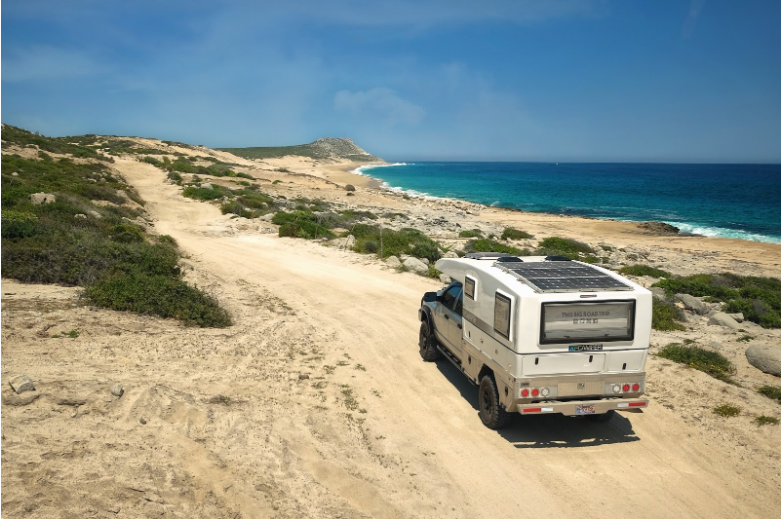
For a lot of doctors, the phrase digital nomad physician sounds like a myth invented by someone selling linen shirts and overpriced carry-ons. Medicine, after all, is usually tied to clinics, hospitals, schedules, credentialing, pager trauma, and at least one printer that only works when nobody needs it. But telemedicine has changed the conversation. It is now possible for some physicians to build a remote clinical life that allows them to travel widely while still practicing high-quality care.
The catch? This is not a “grab a laptop, order a coconut, and diagnose strep throat from a hammock” situation. Practicing telemedicine while traveling can absolutely work, but only if you treat it like medicine first and travel second. The doctors who make it work are not the ones chasing a fantasy. They are the ones building a highly organized, compliant, boringly dependable system underneath the fun part.
That may not be as cinematic as charting from a rooftop in Barcelona, but it is how you avoid turning your dream life into a regulatory slapstick routine. And honestly, that is the real appeal: not chaos, but freedom with structure.
Can You Really Work as a Digital Nomad Telemedicine Doctor?
Yes, in the right model. A physician can create a portable practice built around virtual care, especially when the work focuses on follow-up visits, chronic disease management, behavioral health, medication management where appropriate, patient education, second opinions, and other clinically suitable remote services. Telehealth works best when the care can be delivered safely without pretending the physical exam no longer exists. Spoiler alert: it still exists.
The strongest candidates for this lifestyle are physicians who are realistic about clinical boundaries. If your work depends on palpation, procedures, urgent in-person diagnostics, or physical findings that a webcam cannot reliably capture, the road gets much harder. A good telemedicine practice is not built on wishful thinking. It is built on selecting the kinds of encounters that are actually safe, appropriate, and efficient for remote care.
In other words, the question is not, “Can I travel and still be a doctor?” The better question is, “Which parts of my medical practice are portable without lowering the standard of care?” That shift in mindset separates a sustainable remote medical practice from an expensive adventure in bad judgment.
The Rulebook That Actually Runs Your Life
1. The patient’s location matters more than your location
This is the first big reality check for any physician dreaming of a borderless career. In telemedicine, care is generally regulated based on where the patient is physically located during the visit. So if you are in Portugal and your patient is in Texas, Texas is still the legal star of the show. If that same patient takes the call from Colorado next week, Colorado may suddenly matter too. Medicine loves surprises; licensure loves paperwork.
That is why successful telemedicine physicians usually build their travel lifestyle around a clear state strategy. Many obtain multiple licenses, use interstate licensure pathways where available, or focus their patient panel on a limited number of states. The smartest version of freedom is selective freedom. You do not need to be licensed everywhere. You need to be licensed where your patients actually are.
2. Licensure is your passport, not your passport stamp
The Interstate Medical Licensure Compact has made multistate expansion easier for many qualified physicians, and some states also have telemedicine registrations, special licenses, or limited exceptions. That sounds helpful because it is helpful. It also sounds simple because it is not. State rules still vary, payer rules vary, prescribing rules vary, and exceptions are often narrower than doctors assume after two coffees and one motivational YouTube video.
The practical takeaway is simple: build your business around a licensure map before you build it around an itinerary. Decide which states you will serve, which payers you will accept, and how much credentialing complexity you are actually willing to live with. A smaller, cleaner footprint often beats a giant messy one.
3. Medicare and payer rules can shape your geography
If Medicare is part of your practice, you need to pay close attention to current telehealth coverage, billing, and enrollment rules. Federal policy has kept many telehealth flexibilities alive into the near future, which is a huge help for remote-friendly practice models. But payer policy is not the same thing as eternal truth carved into marble. It changes, and it changes with all the drama of a season finale.
Private insurance and Medicaid are even more variable. One plan may be telehealth-friendly, another may be telehealth-tolerant, and a third may behave like it just discovered the internet last Tuesday. If you want a nomadic physician lifestyle, clean payer design matters. Many doctors keep life simpler by favoring self-pay, employer-based telemedicine platforms, or a smaller set of well-understood insurance relationships.
4. Controlled substances are a separate universe
If your practice includes prescribing controlled medications, do not treat that as a minor detail. Treat it like its own department. Federal telemedicine rules for controlled substances have been extended while permanent rules are still being finalized, and state law still matters too. On top of that, DEA registration rules can become a major operational issue when a physician practices across states or changes the principal location of professional practice.
This is where many “work from anywhere” fantasies collide with the sound of legal compliance hitting the floor. If your model depends heavily on controlled-substance prescribing, you need current legal review, current payer review, and current workflow review. “I thought it would be fine” is a terrible compliance strategy.
How to Build a Portable Practice That Does Not Fall Apart at 2 A.M.
Create a boringly reliable clinical setup
A good nomad physician setup is less about aesthetics and more about redundancy. You need a HIPAA-compliant telehealth platform, secure messaging, dependable documentation, clear patient identity verification, informed consent workflows, and a private environment for visits. “Private” does not mean “the Airbnb balcony after the espresso kicks in.” It means a secure space where protected health information is not floating around like vacation confetti.
Your travel kit should include reliable internet, a backup internet option, noise control, extra power, secure device access, and a plan for what happens when technology fails mid-visit. Telemedicine patients are usually understanding about occasional glitches. They are much less understanding when your screen freezes while discussing chest pain and then you reappear five minutes later looking like you were abducted by Wi-Fi.
Document like a real doctor, not a lifestyle influencer
Telemedicine documentation should be just as thoughtful as in-person documentation, with extra clarity around modality, patient identity, consent, location, clinical limitations, and escalation recommendations when needed. If the visit should convert to in-person care, say so. If the patient declines, document that too. A strong note is not glamorous, but neither is a malpractice claim.
Build a local-care safety net
Every remote practice needs an escalation plan. Patients need to know when to go to urgent care, when to go to the emergency department, when to follow up in person, and how to handle labs, imaging, and referrals. The safest telemedicine physicians are not the ones pretending everything can be managed remotely. They are the ones who know exactly when remote care stops being the right tool.
What Kind of Work Travels Best?
Not every specialty is equally nomad-friendly, but certain patterns tend to work better than others. A telemedicine lifestyle is usually strongest when clinical care includes follow-up-heavy visits, counseling, chronic care check-ins, medication adjustments, treatment plan reviews, preventive discussions, and longitudinal relationships with established patients.
Doctors who thrive in this model often create a practice mix that includes some combination of these elements:
- Ongoing care for established patients
- Behavioral or lifestyle-focused visits
- Chronic disease follow-up and coaching
- Care coordination, second opinions, and education
- Remote monitoring or asynchronous support where appropriate
The less your day depends on surprise acuity and hands-on diagnosis, the easier it is to build a stable travel rhythm. The more your day depends on physical examination, procedures, and real-time in-person escalation, the more telemedicine becomes a supplement rather than a fully mobile practice.
Money, Workflow, and Time Zones: The Unsexy Stuff That Pays the Bills
A glamorous telemedicine fantasy usually breaks down in one of three places: scheduling, billing, or math. Time zones are especially sneaky. Working with U.S. patients while traveling internationally often means your “flexible lifestyle” includes dawn clinic, midnight follow-ups, or the strange experience of eating dinner while your calendar insists it is 9:00 a.m.
The best solution is to choose your geography around your patient market, not the other way around. If your patients are mostly on the U.S. East Coast, Western Europe can be workable. If they are on the West Coast, parts of Latin America may be easier. If you are trying to serve American patients from Southeast Asia long term, congratulations: your practice may also qualify as a sleep deprivation experiment.
Financially, clean systems beat heroic effort. Know your coding, know your contracts, know your enrollment requirements, and know whether your practice is built on insurance reimbursement, employer telehealth shifts, a concierge model, or direct-pay care. The simpler your revenue model, the easier it is to stay mobile. Complexity is the natural predator of freedom.
Many physicians also underestimate how much support work is needed behind the scenes. Refills, prior authorizations, patient messages, lab review, scheduling, chart prep, and billing questions do not disappear just because your Zoom background now includes better architecture. A telemedicine physician who wants to travel sustainably usually needs templates, a disciplined calendar, automation, and often some administrative help.
The Biggest Risks That Can Sink the Dream
The first risk is licensure drift: seeing patients across too many states without a deliberate compliance system. The second is malpractice blind spots: assuming your policy automatically covers telemedicine, multistate care, or care delivered while you are physically abroad. The third is clinical overreach: using virtual visits for situations that really need an in-person exam.
There is also the very human risk of trying to turn travel into a personality test you have to pass daily. If every week involves a new country, new apartment, new chair, new internet, new pharmacy, and new sleep schedule, even a solid telemedicine practice can start to wobble. Stability is not the enemy of adventure. For a physician, it is often what makes adventure possible.
That is why many successful digital nomad doctors do not actually move every few days. They travel slowly. They stay longer. They create temporary routines. They learn which workspace has reliable internet, which building has thin walls, and which “quiet neighborhood” apparently hosts a nightly scooter opera.
What the Experience Actually Feels Like on the Road
Here is the part people rarely explain well: working as a digital nomad physician practicing telemedicine while travelling the world feels less like permanent vacation and more like building a small, invisible clinic that follows you around. On a good day, that is wonderful. You wake up in a city you chose, make coffee in an apartment with a view you could never afford back home, review your charts, and step into clinic without commuting, parking, badge swiping, or fluorescent lighting trying to ruin your spirit before 8:15 a.m.
You may finish a morning block of visits and then spend the afternoon walking a neighborhood in Lisbon, grabbing lunch in Mexico City, or taking a train through northern Italy. That part is real, and it is excellent. It can feel like you finally built a career that leaves room for your actual life. Instead of waiting for “someday” to travel, you are doing meaningful work and living in the world at the same time. For physicians who have spent years feeling trapped by rigid systems, that can be deeply energizing.
But the experience is not all cinematic B-roll. Some mornings begin with a power outage, a hotspot failure, a pharmacy issue in another time zone, and a patient who is somehow calling from a different state than the one on file. Sometimes you are trying to sound calm and competent while the apartment upstairs appears to be moving furniture with the emotional intensity of a divorce. Sometimes your perfect travel day gets eaten by charting, refill requests, and the uncomfortable realization that “location independence” still includes inbox dependence.
There is also a subtle emotional challenge: medicine is grounding, and travel is destabilizing. One anchors you in responsibility; the other constantly changes your environment. Balancing those two forces takes maturity. The physicians who love this life most tend to respect routine almost obsessively. They keep regular clinic blocks. They maintain a familiar pre-visit workflow. They know their backup plans. They do not let every new destination rewrite their workday.
And then there is the loneliness factor, which nobody puts in the glossy brochure. When you work remotely, travel frequently, and practice medicine through a screen, you may miss the casual human structure of a clinic. No breakroom jokes. No hallway consults. No familiar staff who can translate your facial expression into, “Please bring coffee and maybe a fire extinguisher.” Some doctors thrive in the independence. Others realize they need co-working space, longer stays, regular calls with colleagues, or a hybrid schedule to feel human.
Still, when the model fits, it can be remarkable. You can deliver thoughtful care, protect your income, reduce commute stress, and reclaim chunks of your life that once disappeared into overhead and logistics. You can shape your week with intention. You can be present for family, travel more, and still practice medicine with seriousness and pride. The dream is real. It is just not a lazy dream. It is a highly organized dream with encrypted software, backup Wi-Fi, and a strong opinion about time-zone math.
Final Thoughts
The idea of a physician practicing telemedicine while traveling the world is no longer absurd. It is viable, increasingly common, and potentially life-changing for the right doctor. But it only works when the foundation is solid: proper licensure, payer clarity, compliant technology, malpractice review, careful documentation, safe clinical selection, and an honest understanding of what remote care can and cannot do.
If you build that foundation, the reward is not just prettier scenery. It is autonomy. It is the ability to practice medicine in a way that feels sustainable. It is a professional life with less friction, more intentionality, and more room for the rest of your humanity. Not bad for a career path once thought to require permanent fluorescent captivity.