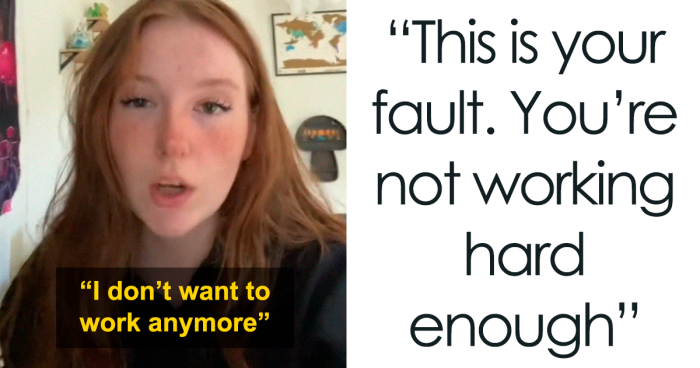
Every few years, society dusts off the same old complaint, puts a fresh coat of panic on it, and sends it marching across the internet: “Young people don’t want to work anymore.” It is a phrase with the staying power of glitter in a carpet. No matter how often people explain the real issue, there it is again, sparkling aggressively in comment sections, office break rooms, family dinners, and social media debates.
But a woman on TikTok helped turn the conversation in a smarter direction by saying the quiet part out loud: younger generations are not rejecting work itself. They are rejecting the idea that work should swallow their lives and still leave them unable to afford rent, groceries, healthcare, debt payments, transportation, or the occasional luxury of ordering tacos without needing a spreadsheet.
The viral point landed because it was simple, blunt, and painfully relatable. Millennials and Gen Z workers are not sitting around in silk robes refusing employment because the vibes are off. Many are working full-time, juggling side hustles, studying, caregiving, commuting, freelancing, and answering emails at hours when even raccoons have clocked out. The frustration is not with effort. It is with the bargain.
For decades, the American work promise sounded straightforward: study hard, get a job, work hard, and build a stable life. Younger generations followed that script, only to discover that the stage had been quietly removed, the ticket prices tripled, and someone in management was calling it “character building.”
The Real Meaning Behind “We Don’t Want To Work Anymore”
When younger workers say they do not want to work anymore, most are not literally announcing a lifelong commitment to becoming decorative couch pillows. What they often mean is: “We do not want to work under conditions that make survival feel like a subscription service with surprise fees.”
That distinction matters. Work can provide purpose, structure, identity, community, skill, pride, and independence. Most young people know that. Many want meaningful careers. They want to contribute. They want to grow. They want to be good at something. They also want their labor to result in a life that includes more than exhaustion and a bank account making the Windows shutdown sound.
The viral woman’s argument resonated because it reframed the complaint. Younger generations are not allergic to work. They are allergic to being told that burnout is maturity, low pay is motivation, and questioning unfair conditions is entitlement.
Why The Old Work Deal Feels Broken
For many younger workers, the frustration begins with affordability. Housing costs have climbed faster than many wages. Groceries, insurance, cars, repairs, student loans, childcare, and healthcare can quickly turn a decent paycheck into a disappearing magic trick. One minute it is payday; the next minute the money has evaporated into rent, utilities, and a sad little sandwich eaten over the kitchen sink.
This is why the “just work harder” advice feels so stale. Plenty of young adults are already working hard. Some work more than one job. Some have full-time jobs and freelance gigs. Some have degrees and still live with roommates because “starter apartment” now sounds like a mythical creature from a medieval bestiary.
The problem is not that young people cannot do math. It is that they can do math extremely well. They see the numbers. They know when a job asks for a degree, three years of experience, weekend availability, “passion,” and advanced Excel skills, then offers a salary that barely covers rent in the same city where the office is located.
Wages, Productivity, And The Feeling Of Being Played
A major reason younger generations feel disillusioned is the gap between what workers produce and what many workers receive. The modern economy has become more productive, more automated, more connected, and more profitable for many companies, yet typical workers often feel like they are getting the office pizza party version of prosperity.
That does not mean every employer is greedy or every workplace is toxic. Many businesses are also dealing with higher costs, uncertainty, and competitive pressure. But from the worker’s seat, the message often sounds like this: “We had record profits, so here is a branded water bottle and a reminder that raises are not in the budget.”
Younger employees grew up watching layoffs, recessions, rising tuition, housing instability, pandemic disruption, and leaders telling everyone to be “resilient,” which is sometimes corporate language for “please absorb the damage quietly.” They are not confused about loyalty. They simply noticed that loyalty has frequently been a one-way street with potholes.
Gen Z And Millennials Are Not LazyThey Are Calculating ROI
One of the biggest misunderstandings about Gen Z and Millennials in the workplace is that they lack ambition. In reality, many are deeply ambitious, but their definition of success has changed. They are less impressed by climbing a ladder if the ladder is leaning against a wall labeled “stress-related illness.”
Younger workers often ask practical questions that older workplace cultures did not always welcome. Does this job pay enough to live? Is there room to grow? Are expectations clear? Is overtime compensated or merely baptized as dedication? Does the company value mental health, or does it just post about it once a year with a stock photo of a fern?
This is not laziness. This is return-on-investment thinking. Younger workers are asking whether the time, energy, commute, stress, and emotional labor they put into a job produce a reasonable life in return. When the answer is no, they look for alternatives.
Work-Life Balance Is Not A Luxury Request
Older generations sometimes hear “work-life balance” and translate it as “I want to be paid for doing nothing while wearing sweatpants.” But for many younger workers, balance means something more basic: having enough time and energy to be a functioning human being.
They want to sleep. They want to cook meals that did not arrive in a cardboard box. They want to see friends, care for family, exercise, rest, learn, date, volunteer, or simply stare at a wall for ten minutes without a Slack notification attacking their nervous system.
The pandemic changed the conversation because it forced millions of people to reevaluate time. Once workers experienced remote or hybrid options, flexible schedules, or reduced commuting, many began asking why rigid systems were treated as sacred. If the work gets done, why must every job operate like it is still 1997 and the office fax machine is the emotional center of the universe?
The Mental Health Factor Companies Can No Longer Ignore
Younger generations are also more open about mental health, which can make them seem “soft” to people raised in workplaces where stress was supposed to be swallowed with vending-machine coffee. But awareness is not weakness. It is often pattern recognition.
Gen Z entered adulthood during economic uncertainty, climate anxiety, political polarization, social media overload, pandemic disruption, and a job market that can feel unstable even for skilled workers. Millennials, meanwhile, came of age through the Great Recession, crushing student debt, housing challenges, and repeated lectures about avocado toast from people who bought homes when dinosaurs were still approving mortgages.
When these generations talk about burnout, they are often describing a real collision between economic pressure and workplace expectations. They are not asking to be wrapped in bubble wrap and carried gently through life by a committee of emotional support golden retrievers. They are asking for workplaces that do not treat chronic stress as proof of character.
Why Job Loyalty Has Changed
Another common complaint is that younger workers “job hop.” But job hopping did not appear out of nowhere like a raccoon in an office ceiling. It is often a response to stalled wages, limited promotion paths, weak benefits, unstable management, or better opportunities elsewhere.
If staying at a company for five years brings tiny raises while switching jobs brings a meaningful salary bump, workers will behave rationally. Companies taught younger employees to treat themselves like businesses. Then everyone acted surprised when they did.
This does not mean young workers hate commitment. Many want stability. But they are less likely to confuse stability with staying in a role that underpays them, drains them, and offers “growth opportunities” that mysteriously never include actual money.
The Generational Divide Is Really A Communication Divide
The debate often becomes “Boomers versus Millennials” or “Gen X versus Gen Z,” but that framing is too simple. Plenty of older workers understand the problem because they are tired too. Many are still working long hours, renting, supporting adult children, delaying retirement, or realizing that the old system did not love them back either.
The real divide is not always age. It is perspective. Some people survived harsh work conditions and believe everyone else should endure the same thing. Others survived harsh work conditions and ask, quite reasonably, “Why are we still doing this?”
Younger generations are not the first to complain about work. They are just doing it with better lighting, better memes, and the ability to make a TikTok that reaches millions before lunch.
What Younger Workers Actually Want
Despite the dramatic headlines, the list of what younger workers want is not outrageous. It is almost boring in its reasonableness. They want fair pay, flexible options when possible, clear expectations, respectful managers, growth opportunities, mental health support, honest communication, and work that does not require sacrificing every other part of life.
They also want purpose, but purpose is not a coupon that replaces compensation. A mission-driven job still needs to pay the electric bill. “We are changing the world” is inspiring until the employee cannot afford dental care.
Fair Compensation
Younger workers want pay that reflects the cost of living, skills required, and value created. They are increasingly comfortable discussing salary transparency because secrecy usually benefits the party writing the checks.
Flexibility
Flexibility does not always mean remote work. It can mean predictable schedules, hybrid options, flexible start times, compressed workweeks, or the ability to attend a doctor’s appointment without being treated like a fugitive.
Respectful Management
Young employees often leave managers, not jobs. They want feedback, mentorship, clarity, and basic human respect. Revolutionary stuff, apparently.
Real Growth
They want training and promotion paths that are more substantial than “keep doing excellent work and maybe someday we will remember you exist.”
Why Employers Should Listen Instead Of Mock
Companies that dismiss younger workers as lazy are missing the bigger opportunity. The workforce is changing whether leadership likes it or not. Employers that adapt will attract better talent, reduce turnover, and build stronger cultures. Employers that refuse may continue posting job ads that sound like hostage notes with dental insurance.
Listening does not mean giving every employee everything they want. It means understanding the real causes of disengagement. If workers feel underpaid, ignored, overworked, or trapped, calling them entitled will not fix productivity. It will simply make the exit interview more awkward.
Smart employers can respond with practical changes: transparent pay ranges, realistic workloads, better onboarding, manager training, flexible policies, career development, and regular check-ins that are not just calendar invitations disguised as concern.
Specific Examples: What This Looks Like In Real Life
Imagine a 26-year-old customer support specialist making a modest salary in a major city. She works full-time, pays rent with two roommates, handles student loans, pays for public transit, and takes freelance design projects at night. When someone says she “doesn’t want to work,” she laughs so hard her budgeting app opens by itself.
Or consider a 31-year-old teacher who loves the classroom but works a summer job to cover bills. He is not lazy. He is exhausted. Passion does not pay car insurance, and “doing it for the kids” does not magically lower grocery prices.
Then there is the entry-level office worker who is told to be grateful for opportunity while answering emails after hours, covering the workload of two open positions, and being informed that promotions are paused due to “market conditions.” When that person updates their resume, it is not betrayal. It is survival wearing a blazer.
The Internet Gave Young Workers A Megaphone
One reason this debate feels louder now is that social media lets workers compare notes. In the past, someone might have thought their low pay, chaotic manager, or impossible workload was a personal failure. Now they can go online and discover thousands of people having the same experience.
That collective realization is powerful. It turns private frustration into public conversation. It also makes bad workplace practices harder to hide behind motivational posters.
Of course, social media can oversimplify. Not every complaint is fair. Not every viral workplace story tells the full picture. But the larger pattern is difficult to ignore: younger generations are openly questioning whether the old model of work still delivers what it promised.
Experience Section: What The Conversation Feels Like From The Ground
Anyone who has talked with younger workers lately has probably heard some version of the same story. A person did what they were told to do. They studied, took internships, built a resume, accepted an entry-level role, stayed professional, and tried to be optimistic. Then the bills arrived like a parade of tiny financial goblins.
One common experience is the shock of realizing that a “good job” does not automatically equal a stable life. A young worker may land a position that sounds impressive at family gatherings, only to discover that after taxes, rent, insurance, transportation, student loans, and food, there is barely enough left for savings. The title looks great on LinkedIn. The checking account looks like it needs a wellness retreat.
Another experience is the emotional whiplash of being told to show loyalty while watching companies restructure without much loyalty in return. Younger employees have seen friends laid off over video calls, departments cut after record profits, and job descriptions expand without matching pay. They have learned that being “like family” at work often means someone expects you to stay late, not that they will help with your medical deductible.
Many young workers also describe feeling trapped between ambition and burnout. They want to grow, but they do not want to become the manager who answers emails during dinner, vacation, and possibly dental surgery. They want mentorship, but they are often handed vague advice like “be more proactive,” which is corporate astrology unless paired with actual direction.
There is also a social experience that older generations may underestimate: constant comparison. Younger workers see peers posting promotions, side hustles, apartment tours, travel, layoffs, breakdowns, and career pivots all in the same endless feed. It creates pressure to succeed quickly while the economy makes success feel expensive, delayed, or random. No wonder so many people feel tired before they even reach their thirties.
At the same time, the younger generation’s response is not just complaint. Many are experimenting. They are building portfolio careers, learning digital skills, freelancing, starting small businesses, negotiating salaries, moving to cheaper cities, rejecting unpaid labor, and asking better questions in interviews. They are trying to design lives that do not depend entirely on a single employer’s mood.
The most honest experience may be this: younger generations still want dignity. They want to feel that their time matters. They want to work, rest, contribute, earn, and live without constantly feeling behind. They are not asking for a fantasy life where money rains from the ceiling and every meeting includes snacks. They are asking why full-time work so often fails to provide full-time security.
That is why the woman’s explanation hit such a nerve. She did not present a complicated economic thesis. She simply translated a feeling millions of people already had: “We are not refusing effort. We are refusing a broken exchange.” Sometimes the clearest analysis comes not from a boardroom, but from someone tired enough to tell the truth into a phone camera.
Conclusion: Young People Do Want To WorkThey Want Work To Work Back
The claim that younger generations do not want to work anymore is catchy, but it misses the point. Millennials and Gen Z are not rejecting responsibility. They are questioning a system where responsibility keeps increasing while security keeps shrinking.
They want jobs that pay enough to live, managers who communicate clearly, workplaces that respect boundaries, and careers that do not require sacrificing health for approval. That is not laziness. That is a demand for a better deal.
The viral woman’s explanation worked because it cut through the noise. Younger workers are not saying, “We hate work.” They are saying, “We hate being exploited, underpaid, and then blamed for noticing.” And honestly, that is not a generational flaw. That is a pretty solid performance review of modern work.
Note: This article was written as original, publication-ready content based on current labor-market research, workplace surveys, and the public conversation around the viral explanation. Source links were intentionally not embedded in the article body.