Some marriage stories arrive like a soft rain. This one lands like a piano falling from a third-floor balcony. A husband, married for seven years and raising a 5-year-old daughter, reportedly discovers that his wife had a long-running affair with one of his friends. Then comes the second shock: a paternity test suggests the child he has loved and raised may not be biologically his.
It is the kind of story that makes the internet drop its coffee, open the comments, and immediately start typing in all caps. But beneath the viral drama is a much harder question: when betrayal destroys a marriage, what happens to the child who did nothing wrong?
This article looks at the emotional, ethical, and family consequences behind the story. It is not legal advice, and it is not a courtroom verdict. It is a deeper look at infidelity, paternity shock, divorce after betrayal, and why the adults’ pain should never become a child’s punishment.
The Story: A Marriage, A Confession, And A Paternity Bombshell
According to the viral relationship story, the husband believed he had a stable family life: a wife, a young daughter, and a marriage that had lasted seven years. Then a friend allegedly confessed that he had been involved with the wife. Not a tiny “oops” moment. Not a suspicious text that could be explained away as “just work stuff.” A long-term affair.
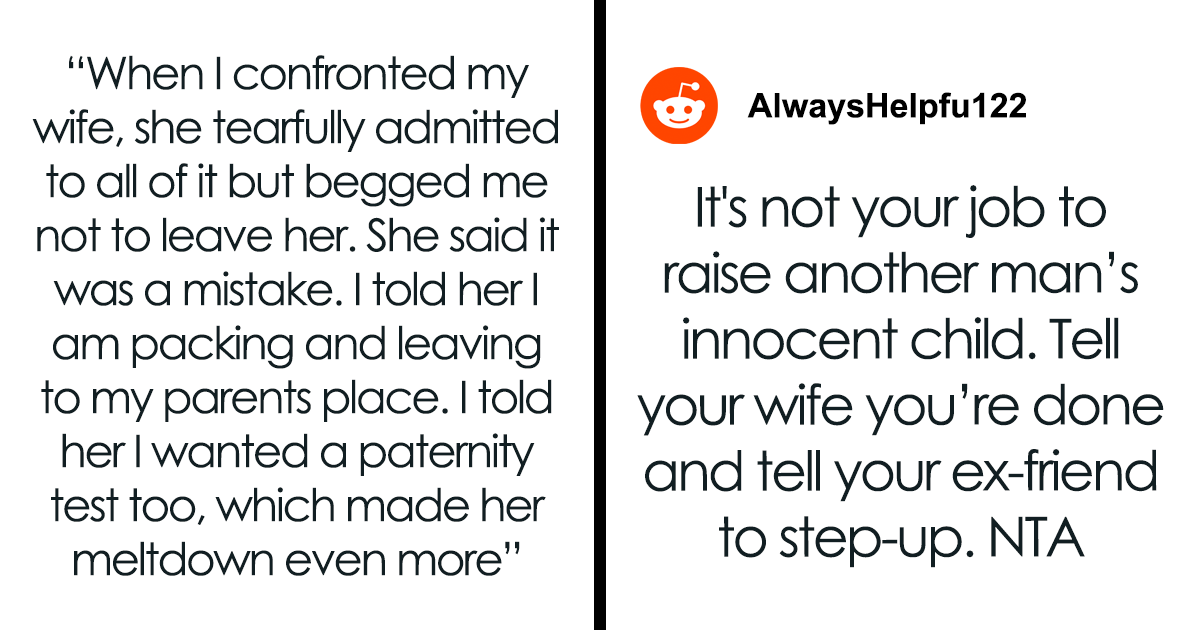
The husband confronted his wife, who reportedly admitted the affair. From there, the situation escalated quickly. He demanded a paternity test, and the result suggested that the little girl he had been raising was not his biological child. He then chose to leave the marriage and distance himself from both his wife and the child.
That final decision is what turned the story from “marriage betrayal” into a moral thunderstorm. Many readers sympathized with his shock, humiliation, and grief. Others argued that walking away from a 5-year-old child who only knew him as Dad was cruel. And honestly, both reactions make sense. Betrayal can break a person open. But a child’s heart is not a receipt you can return when the purchase history looks suspicious.
Why Infidelity Hurts So Deeply
Infidelity is not just about romance, attraction, or one spouse making a reckless choice. For many betrayed partners, the deepest injury is the collapse of reality. The person they trusted most becomes the person who rewrote the story behind their back.
In a marriage, trust is the invisible furniture. You do not notice it every minute, but you build your entire life around it. When an affair is exposed, that furniture disappears overnight. Suddenly, every memory becomes suspicious. Family vacations, anniversaries, pregnancy announcements, bedtime routines, old photos on the refrigeratoreverything gets dragged into emotional court.
That is why betrayed spouses often feel anger, grief, shame, confusion, and even physical stress. They may replay conversations, question their judgment, and wonder how they missed the signs. The mind becomes a detective with no lunch break.
The Extra Pain Of Betrayal By A Friend
This story has an additional sting: the alleged affair partner was not a stranger. He was reportedly the husband’s friend. That matters. Betrayal by one person is painful; betrayal by two trusted people feels like being pushed from both sides at once.
A spouse’s affair can damage romantic trust. A friend’s involvement can damage social trust. The betrayed partner may start asking, “Who knew?” “Was I the joke?” “Did people pity me?” “Can I trust anyone now?” That kind of double betrayal can make isolation feel tempting, even when support is exactly what the person needs most.
The Paternity Test: When Biology And Fatherhood Collide
Paternity shock is one of the most emotionally complicated parts of this story. Biology matters. So does the lived relationship between parent and child. A man who has spent five years feeding, comforting, teaching, protecting, and loving a child has not been doing “fake parenting.” He has been parenting.
At the same time, discovering that fatherhood was built on deception can create a powerful sense of violation. The husband may feel that his consent was stolen, his identity was manipulated, and his future was planned around a lie. Those feelings are not small. They deserve serious attention, not internet eye-rolls.
But the child’s perspective is different. A 5-year-old does not understand DNA, marital betrayal, or adult misconduct. She understands who reads bedtime stories, who picks her up when she falls, who knows which cereal she likes, and who she calls Dad. For her, abandonment may feel like proof that love can disappear without warning.
The Child Is Not The Affair
One of the most important ideas in this situation is also the simplest: the child is not the affair. The child did not lie. The child did not cheat. The child did not hide the truth. She is not evidence, punishment, or a living reminder that deserves blame.
Adults often say they want to “protect the children,” but in high-conflict breakups, kids can accidentally become emotional luggage. One parent wants justice. Another wants forgiveness. Relatives pick teams. Friends give dramatic advice. Meanwhile, the child just wants someone to make breakfast and act normal for ten minutes.
When a child is caught in the middle of betrayal and divorce, stability matters. Routines, calm explanations, and reliable caregiving help children feel safer. Even when the marriage is beyond repair, the parenting environment does not have to become a disaster zone with matching throw pillows.
Is The Husband Wrong For Leaving?
The honest answer is complicated. He may be completely justified in ending the marriage. No one should be pressured to stay in a relationship built on long-term deception. Divorce after infidelity is often a painful but reasonable choice.
The harder question is whether he should abandon the child emotionally. That is where many readers draw a line. The husband’s pain is real, but the child’s attachment is real too. A sudden disappearance can be deeply confusing for a young child, especially when she cannot understand the adult reasons behind it.
A healthier path might involve distance from the former spouse while still carefully considering the child’s emotional needs. That could mean therapy, legal guidance, gradual transitions, or a structured conversation with professionals involved. The worst option is often the impulsive one: vanishing overnight and leaving a child to wonder what she did wrong.
What The Wife’s Betrayal Changes
The wife’s reported choices are central to the damage. An affair is already a breach of trust. If paternity was also misrepresented, the betrayal expands beyond marriage into parenting, identity, finances, and family history.
Accountability matters here. Apologies are not magic spells. “I’m sorry” does not instantly repair years of deception, especially when a child’s life is involved. True accountability would require honesty, transparency, emotional responsibility, and a willingness to put the child’s well-being above personal panic.
That means no using the child as a shield. No demanding instant forgiveness. No rewriting the betrayal as a tiny misunderstanding. And definitely no acting shocked that trust has left the building, packed a suitcase, and changed its phone number.
What The Friend’s Role Reveals About Boundaries
The friend’s alleged confession adds another lesson: boundaries matter. Friendships with married people are not the problem. Secret intimacy, deception, and betrayal are the problem.
Healthy adult friendships respect the relationship agreements of everyone involved. If a friendship becomes secretive, emotionally charged, or dependent on hiding messages and meetings, it has probably crossed into dangerous territory. In many relationships, the affair begins long before anything physical happens. It begins when someone starts giving another person the honesty, energy, flirtation, and emotional access they are withholding from their spouse.
The friend in this story, if accurately described, did not simply betray another man. He helped create chaos for a child. That is not “messy romance.” That is grown-up irresponsibility wearing cheap cologne.
How Betrayed Partners Can Respond Without Destroying Themselves
When betrayal is fresh, the instinct is to act immediately: pack bags, send screenshots, post everything online, call every relative, and possibly throw a toaster into the emotional ocean. But the first stage after discovery should be stabilization.
1. Pause Before Making Permanent Decisions
Not every decision can wait, especially if safety, housing, or finances are involved. But life-changing choices made in the first wave of rage can create regrets. Taking a short pause allows the betrayed partner to gather facts, speak with a therapist or counselor, and consult legal professionals before acting.
2. Separate Marriage Issues From Parenting Issues
A spouse can be a terrible partner and still have a child who needs stability. This does not mean ignoring betrayal. It means refusing to make the child carry it.
3. Get Professional Support
Therapy is not just for couples trying to stay together. Individual counseling can help a betrayed partner process shock, grief, anger, and identity confusion. Family therapy may also help adults plan age-appropriate conversations for the child.
4. Avoid Public Revenge
Posting private details online may feel satisfying for eleven minutes. After that, it can complicate divorce, co-parenting, employment, and the child’s future digital footprint. The internet has a long memory and terrible manners.
What Children Need During Divorce After Infidelity
Children do not need every adult detail. They do need reassurance, routine, and emotional safety. A 5-year-old should not be told graphic information about an affair or be pulled into adult blame. The message should be simple, calm, and repeated as needed: “The adults are having problems. This is not your fault. You are loved. You will be taken care of.”
Kids often react to family separation through behavior rather than sophisticated speeches. They may become clingy, angry, quiet, restless, or suddenly interested in sleeping with every stuffed animal they own plus three couch pillows. Adults should look for changes in sleep, appetite, school behavior, separation anxiety, and emotional outbursts.
The goal is not to pretend everything is fine. The goal is to make the child feel that the adults are still capable of being adults. In other words: fewer screaming hallway arguments, more predictable dinners.
Can A Marriage Survive An Affair?
Some marriages do survive infidelity, but survival requires more than tears and promises. Rebuilding trust usually demands full honesty, remorse, boundaries, counseling, patience, and consistent changed behavior over time.
In this story, the paternity issue makes reconciliation far more complicated. The betrayed husband would not only need to process the affair but also the possibility that years of fatherhood were shaped by deception. That is not impossible to heal from, but it is a mountain, not a speed bump.
For couples who attempt repair, the unfaithful partner must stop minimizing the damage. The betrayed partner must be allowed to grieve and ask hard questions. Both must decide whether they are rebuilding a marriage or simply avoiding the pain of ending one.
When Leaving Is Necessary
Sometimes the healthiest choice is to leave the marriage. Ending a relationship after betrayal can be an act of self-respect, especially when trust is gone and the unfaithful partner refuses accountability.
However, leaving a marriage and abandoning a child are not automatically the same thing. A person may need space, legal clarity, and emotional boundaries. But if a child has known that person as a parent for years, the exit should be handled with care. The adults may be furious, but the child needs compassion more than anyone needs a dramatic exit scene.
Experience-Based Reflections: Lessons From Stories Like This
Stories about infidelity, paternity tests, and family breakdown often go viral because they let readers play judge. People rush to decide who is the villain, who deserves sympathy, and what they would do if life handed them the same flaming envelope. But real life is rarely that tidy.
One major lesson is that secrets do not stay buried quietly. They leak into behavior, intimacy, parenting, finances, and friendships. Even when nobody says the truth out loud, families often feel the tension. Children especially can sense when adults are emotionally off-balance. They may not know the reason, but they feel the weather change.
Another lesson is that betrayal recovery cannot be powered by pride alone. Many betrayed spouses try to “tough it out” because they think needing help makes them weak. It does not. Betrayal can shake a person’s sense of reality. Talking to a professional, a trusted friend, or a support group can prevent pain from turning into bitterness that follows them into every future relationship.
A third lesson is that DNA answers biological questions, but they do not automatically answer emotional ones. A paternity test can reveal genetic truth, but it cannot measure bedtime stories, scraped-knee comfort, birthday candles, or five years of attachment. Adults must be brave enough to consider both truth and tenderness.
Fourth, children should never become bargaining chips. In painful separations, adults may be tempted to say, “Your mother ruined everything,” or “Your father left because he does not love us.” Those statements may feel emotionally satisfying in the moment, but they can injure a child’s identity. A child often sees themselves as part of both parents. Attack the parent too harshly, and the child may feel attacked too.
Fifth, forgiveness is often misunderstood. Forgiveness does not mean staying married. It does not mean pretending the betrayal was small. It does not mean giving someone unlimited access to hurt you again. Sometimes forgiveness simply means deciding that the betrayal will not be the landlord of your mind forever.
Sixth, accountability must be practical. The person who cheated cannot repair damage with speeches alone. They must answer questions honestly, respect boundaries, support the child’s stability, and accept that trust may not return on their preferred schedule. The betrayed partner does not owe instant emotional convenience.
Finally, stories like this remind us that family is built from both truth and care. A marriage cannot thrive without honesty. A child cannot thrive without love and stability. When adults break trust, the repair should begin with the most vulnerable person in the room. In this case, that is not the husband, the wife, or the friend. It is the 5-year-old child whose world changed because of choices she never made.
Conclusion
The story of a wife’s affair exposed after seven years of marriage is shocking because it combines betrayal, friendship, fatherhood, and identity into one emotional explosion. The husband’s heartbreak is understandable. The wife’s alleged deception is serious. The friend’s role is deeply damaging. But the child remains innocent.
The strongest takeaway is not that every betrayed spouse must stay, forgive, or continue parenting in the exact same way. The takeaway is that adult pain requires adult handling. When infidelity destroys a marriage, the child should not become collateral damage.
Trust can break quickly. Healing takes longer. And when a child is involved, the most important question is not only “Who betrayed whom?” but also “Who will protect the child from becoming the final victim of the betrayal?”