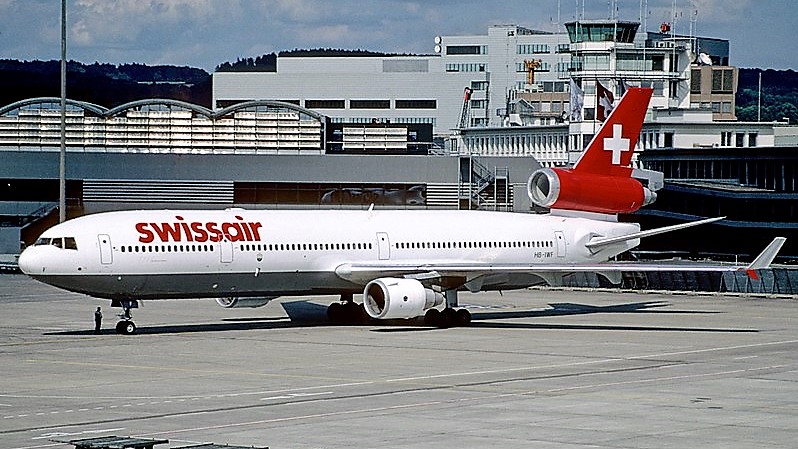
For a few glorious decades, commercial aviation had a three-engine answer for nearly everything. Need more thrust than rom diversion airports? Add an engine. Need an airplane that looked like it had a jet engine hiding in its hairstyle? Put one in the tail.
That logic produced memorable aircraft such as the Boeing 727, McDonnell Douglas DC-10, MD-11, and Lockheed L-1011 TriStar. Trijets were fast, capable, distinctive, and often surprisingly elegant. But by the late 20th century, the airline world had moved on. The twinjet became the default for everything from short domestic routes to ultra-long-haul international flights.
So, why did trijets lose against twinjets? The answer was not that trijets suddenly became unsafe or useless. They lost because the industry changed around them. Better engines, stricter economics, extended-range operating rules, lower maintenance costs, and airline fleet simplification made two engines the smarter long-term business decision.
Trijets Were Built for a Different Aviation World
To understand why trijets disappeared, it helps to remember the world that created them. In the early jet age, engines were improving quickly, but they were not yet powerful, efficient, or reliable enough to make large two-engine airliners practical on many routes.
Airlines wanted airplanes that could carry more passengers than early narrow-body jets while still serving airports with shorter runways, warm weather, high elevations, or demanding routes. They also wanted better long-distance capability without stepping all the way up to a giant four-engine Boeing 747.
The Three-Engine Compromise
A trijet was the aviation equivalent of ordering the medium pizza because the small looked risky and the extra-large seemed financially irresponsible. Three engines gave airlines more takeoff power and more redundancy than a twinjet, but usually with less fuel burn and weight than a four-engine aircraft.
The Boeing 727 became a massive success because it fit this formula beautifully. Introduced in the 1960s, it could operate from many airports that were difficult for larger jets, carry a useful passenger load, and fly routes that airlines considered too demanding for earlier twin-engine designs. Boeing eventually built more than 1,800 727s, a remarkable production run for a three-engine jetliner.
At the larger end of the market, the DC-10 and L-1011 TriStar were designed for medium- and long-haul travel. They offered wide cabins, substantial payloads, and enough performance to serve major domestic and international markets. For a time, the trijet looked like the perfect middle ground between smaller twins and fuel-hungry four-engine giants.
The Third Engine Became an Expensive Guest
The biggest reason trijets lost was painfully simple: airlines had to pay for that third engine every single day.
Jet engines are expensive to buy, inspect, maintain, remove, repair, overhaul, monitor, and eventually replace. A trijet had three engines needing care instead of two. That meant more engine shop visits, more spare parts, more maintenance planning, more mechanics with specialized knowledge, and more chances for an expensive component to decide it had developed “character.”
Fuel Burn Was the Daily Reality Check
Fuel is one of the largest and most volatile airline expenses. When fuel prices rise, even a small efficiency disadvantage can become a major financial problem across thousands of flights. A third engine adds weight and drag, and it also burns fuel. Even when the engine is operating efficiently, it is still another hungry metal cylinder attached to the airline’s budget.
Modern twinjets benefited from advances in high-bypass turbofan engines, which produce more thrust with less fuel than earlier jet engines. As engine technology improved, manufacturers could create aircraft that matched or exceeded the performance of older trijets while using only two engines.
For airline executives, this was not a poetic moment. It was a spreadsheet moment. Two engines could do the job that once required three. The accounting department did not need a second invitation.
Tail Engines Added Complexity
Most trijets placed their third engine in the tail. The layout looked fantastic, especially on the 727, L-1011, DC-10, and MD-11. It also created engineering and maintenance complications.
The center engine often required an intake duct built into the tail. On several trijet designs, air traveled through an S-shaped duct before reaching the engine. This was clever engineering, but clever engineering is not always inexpensive engineering. Accessing a tail-mounted engine could take more time than servicing an engine mounted under a wing.
Tail-mounted engines also required additional structure in the rear fuselage and vertical stabilizer. That structure added weight. The airplane had to carry that weight on every flight, including flights where the passenger load was light and the route did not need maximum performance.
Modern Twinjet Engines Changed the Math
Trijets existed partly because earlier engines could not deliver enough reliable thrust for larger two-engine aircraft. Once engine manufacturers solved that problem, the trijet’s main advantage began to fade.
High-bypass turbofan technology became a game changer. Bigger fans moved more air around the engine core, producing efficient thrust with lower fuel consumption and less noise. Engine families such as the General Electric CF6, GE90, GEnx, and later-generation powerplants helped make modern twinjets powerful enough for routes that once favored three- or four-engine aircraft.
More Thrust, Better Reliability
The Boeing 767 helped prove that a widebody twinjet could be commercially successful. The Airbus A330 reinforced the idea. Then the Boeing 777 arrived with engines so large and powerful that earlier generations of airline engineers might have stared at them for several minutes before asking whether they came with their own zip code.
Modern twinjet engines also became extraordinarily reliable. Airlines and regulators gained decades of operational evidence showing that well-maintained turbine engines could perform safely over long distances. This did not eliminate the need for maintenance discipline, crew training, diversion planning, and safety oversight. It did, however, remove the assumption that a large airliner needed three or four engines simply to cross an ocean.
ETOPS Removed the Trijet’s Strategic Advantage
The other major turning point was ETOPS, originally known as Extended-range Twin-engine Operational Performance Standards. The name is long enough to qualify as its own flight plan, but the concept changed airline history.
For many years, twin-engine airliners were restricted from flying routes that took them too far from a suitable diversion airport. This rule made sense when piston engines and early turbine engines had lower reliability. If one engine failed, regulators wanted the aircraft to remain within a manageable flying distance of an airport using its remaining engine.
Three- and four-engine aircraft had more freedom on certain overwater and remote routes. That gave trijets an important commercial advantage. A DC-10 or L-1011 could fly routes that were awkward or unavailable for a twinjet operating under older restrictions.
Extended Operations Made Twins More Flexible
As engine reliability improved, regulators introduced extended-range approvals for twin-engine aircraft. ETOPS required a combination of aircraft capability, engine reliability, maintenance procedures, operational controls, dispatch planning, crew training, and suitable diversion airports.
In other words, ETOPS was not a magical permission slip that said, “Sure, fly wherever you like.” It was a demanding system designed to prove that a twinjet could safely operate farther from an alternate airport than earlier rules allowed.
Once twinjets earned higher extended-range approvals, airlines could operate direct long-haul routes with two engines. That allowed aircraft such as the Boeing 767, Boeing 777, Boeing 787, Airbus A330, and Airbus A350 to connect cities across oceans without the old trijet advantage.
When a twinjet could fly the same route, carry a similar payload, burn less fuel, and cost less to maintain, the trijet’s business case began to resemble a pay phone: still interesting, still functional, but no longer the obvious choice.
Airlines Wanted Simpler Fleets
The modern airline business rewards commonality. Airlines save money when pilots can move between related aircraft types, maintenance teams can use familiar procedures, spare-parts inventories stay manageable, and training programs do not multiply like rabbits in a cargo hold.
A large airline might once have operated a mix of 727s, DC-10s, L-1011s, 747s, and several smaller aircraft types. Over time, many carriers moved toward simpler fleets centered on a few major families. A common narrow-body family could handle domestic and regional work, while a common twinjet widebody family could cover long-haul routes.
Fleet Commonality Became a Competitive Weapon
Aircraft commonality reduces training costs, maintenance complexity, spare-parts requirements, and scheduling headaches. It also helps airlines use pilots and aircraft more efficiently. A carrier that can operate several related aircraft types with shared systems has an advantage over a carrier managing a museum of unrelated designs.
Trijets were not uniquely difficult to operate, but they became less attractive when airlines could choose newer twinjets with better economics and stronger family connections. The Boeing 757 and 767, for example, offered a degree of cockpit commonality. Later aircraft families continued the trend of standardized training, maintenance practices, and operating philosophies.
Noise Rules and Environmental Pressure Added More Trouble
Older trijets were designed before today’s noise and emissions expectations became central airline concerns. Many early jets, especially first-generation models with older low-bypass engines, were louder and less fuel-efficient than newer aircraft.
As airports, regulators, and communities demanded quieter aircraft, airlines faced difficult choices. They could retrofit older jets with hush kits or upgraded engines, limit where the aircraft could operate, or retire them in favor of newer models. Retrofitting could extend an airplane’s useful life, but it rarely transformed an aging trijet into a modern twinjet with lower fuel burn and lower maintenance costs.
Environmental pressure also strengthened the case for efficient aircraft. Less fuel burn generally means lower operating costs and lower carbon dioxide emissions. Airlines did not abandon trijets because of one environmental rule or one dramatic announcement. Instead, the industry gradually favored airplanes that delivered better economics while also meeting tougher expectations for noise and fuel efficiency.
The Trijet Legends: Boeing 727, DC-10, L-1011, and MD-11
Boeing 727: The Workhorse That Ruled Domestic Skies
The Boeing 727 was one of the most successful trijets ever built. It was fast, versatile, and capable of serving a broad range of airports. Its built-in rear stairs even gave it a bit of dramatic flair, as though every arrival deserved a movie scene.
But the same qualities that made the 727 useful in the 1960s and 1970s became less compelling later. Newer twinjets such as the Boeing 737 and Airbus A320 family offered lower fuel burn, quieter engines, modern cockpits, and better fleet commonality. The 727 remained valuable in cargo and charter roles for years, but passenger airlines gradually moved on.
DC-10 and L-1011: Widebody Pioneers With Expensive Appetites
The McDonnell Douglas DC-10 and Lockheed L-1011 TriStar were designed to bring widebody comfort to routes that did not require a 747. They were spacious, capable, and technologically important. The L-1011 earned praise for its advanced systems and passenger comfort, while the DC-10 became a major passenger and cargo platform.
Still, both faced the same long-term challenge: a three-engine widebody had to compete against increasingly capable two-engine widebodies. Once the Boeing 767 and Airbus A330 showed that twinjets could handle long-distance missions efficiently, the economic pressure increased.
MD-11: The Trijet’s Final Commercial Push
The MD-11 represented one of the last major attempts to keep the trijet concept competitive. It offered improved range, updated systems, and better efficiency than the DC-10. Yet it entered a market that was already moving toward advanced twinjets.
The MD-11 found a stronger second life in cargo operations, where payload, range, and acquisition cost can matter differently than passenger comfort and fuel efficiency. Freight operators used many MD-11s effectively for years, proving that the trijet was not obsolete in every role. It was simply no longer the default answer for passenger airlines buying new aircraft.
Why Trijets Did Not Make a Comeback
Could trijets return? In theory, almost anything can return. Vinyl records returned. Bell-bottom jeans returned. People voluntarily began taking photos of their food from directly above again.
In practice, a new trijet airliner would need a very specific reason to exist. It would have to offer something a twinjet cannot: dramatically better runway performance, unusual cargo capability, special reliability requirements, or a unique range-payload advantage. Modern engine technology has made that difficult.
Two huge, efficient engines can now provide the thrust that once required three smaller engines. Aircraft designers can build lighter, more aerodynamic wings and fuselages. Regulators have developed robust extended-operations standards. Airlines increasingly want common fleets, predictable maintenance, and lower fuel burn.
| Factor | Traditional Trijet Advantage | Why Twinjets Won |
|---|---|---|
| Engine redundancy | More engines provided reassurance and route flexibility. | Modern engine reliability and extended operations reduced the advantage. |
| Takeoff performance | Three engines offered more total thrust. | Modern high-thrust turbofans gave twinjets comparable capability. |
| Fuel use | Better than many four-engine aircraft. | Two efficient engines usually burn less fuel than three. |
| Maintenance | More engines meant more redundancy. | More engines also meant more maintenance, spares, inspections, and cost. |
| Route planning | Older rules favored aircraft with more than two engines. | ETOPS enabled twinjets to fly long, direct overwater routes. |
| Fleet strategy | Trijets filled unique gaps in earlier airline networks. | Modern twinjet families offered training and maintenance commonality. |
Experiences From the Trijet Era: What Airlines, Crews, and Passengers Learned
The history of trijets is not only a story about engine counts. It is also a story about how airlines learned to balance performance, comfort, reliability, operating cost, and passenger expectations. The people who flew, maintained, dispatched, and traveled on trijets experienced an era when aircraft design felt visibly different from one model to the next.
Passengers often remembered trijets because they had personality. The Boeing 727 had its unmistakable T-tail and three-engine silhouette. The L-1011 had a quiet, smooth reputation among many travelers. The DC-10 and MD-11 looked enormous compared with smaller jets, yet they were less overwhelming than a 747. Boarding one could feel like entering a future imagined by the 1970s: wide aisles, large windows, dramatic engine noise, and a cabin that seemed designed for people who still dressed up to fly.
For pilots, trijets represented a meaningful step in airline technology. They combined systems from the early jet age with increasingly sophisticated automation. Crews had to understand three-engine performance, fuel management, systems monitoring, and the peculiarities of tail-mounted engines. The aircraft were not merely “twins plus one.” Their weight distribution, engine-out procedures, and performance planning created their own operational character.
Maintenance teams gained equally valuable experience. A third engine increased the workload, but it also gave technicians a deeper understanding of complex propulsion systems and airframe integration. Tail engines required special access procedures, inspections, and planning. On some models, the center engine and its intake duct were engineering masterpieces that also ensured nobody would accuse the maintenance department of being bored.
Dispatchers saw another side of the trijet story. Before extended-range twinjet operations became routine, aircraft with three engines could offer useful route flexibility. Dispatchers could plan flights with fewer limitations on certain overwater paths, which mattered in an era when direct routing and efficient long-range operations were becoming increasingly important.
Airlines also learned that technical capability is only half the battle. An airplane can be safe, comfortable, capable, and beloved by crews, yet still lose in the marketplace if a competing model offers lower costs. The trijet era made that lesson impossible to ignore. As fuel prices rose and modern twinjets improved, airlines had to prioritize operating economics over nostalgia.
Cargo operators provided the final chapter of the trijet experience. Many former passenger trijets continued flying freight long after their airline cabin seats were removed. Cargo carriers often valued the aircraft differently because utilization patterns, payload requirements, fleet acquisition costs, and route structures were not identical to passenger service. The MD-11, especially, became a familiar sight in global freight operations.
That lingering cargo life is important because it shows that trijets did not vanish overnight. They gradually moved from the center of passenger aviation to specialized roles where their strengths still mattered. Their story is not one of failure. It is the story of technology being overtaken by a more efficient solution.
Anyone who has watched a trijet climb away from an airport understands why aviation fans still love them. Three engines produced a distinctive sound, a dramatic profile, and a sense that the airplane was built for serious work. Twinjets won the economics battle, but trijets won a permanent place in aviation history.
Conclusion: Twinjets Won the Business Case, Not the Beauty Contest
Trijets lost against twinjets because airline economics, engine technology, and regulations changed at the same time. The third engine that once solved major performance and reliability concerns became an extra cost in a market where fuel burn, maintenance expense, and fleet efficiency mattered more than ever.
Modern turbofan engines gave twinjets the thrust and reliability needed for long-haul flying. ETOPS removed many route restrictions that had once favored aircraft with three or four engines. Airlines embraced common fleets and lower operating costs, while quieter and more efficient aircraft became essential for meeting environmental and airport requirements.
The Boeing 727, DC-10, L-1011 TriStar, and MD-11 were not defeated because they were poor airplanes. They were defeated because they were excellent answers to yesterday’s problems. Twinjets became better answers to today’s problems.
Note: Trijets were not inherently unsafe aircraft. Their decline was primarily driven by changing economics, improved engine reliability, evolving route regulations, and airline fleet strategy.