Some photos make you smile. Some make you stop scrolling. And some quietly reach into your brain, set up camp, and refuse to leave. Conservation photography belongs in that last category. It is not just about pretty sunsets, majestic wolves, or birds looking suspiciously more photogenic than most humans before coffee. It is about using images to help protect species, habitats, and the people whose lives are tied to those places.
That distinction matters. A beautiful nature photo can delight you for three seconds. A strong conservation photograph can do something bigger: it can show what is worth saving, reveal what is being lost, and push people from admiration to action. In a noisy media world where climate change, habitat loss, biodiversity decline, and pollution all compete for attention, conservation photography gives these issues a human heartbeat. It turns abstract concern into something visible, emotional, and impossible to ignore.
In other words, conservation photography matters because it does the hard job that statistics often cannot. It helps people care before it is too late. And when it is done well, it does not just shout, “Look at this.” It asks a tougher question: “Now that you’ve seen it, what will you do?”
What Conservation Photography Actually Is
Conservation photography lives at the intersection of art, journalism, science, and advocacy. It is not simply wildlife photography with better branding. It is image-making with a purpose. The point is not to collect applause, likes, or a suspicious number of comments that say “Wow!!!” from strangers with eagle emojis in their usernames. The point is to support conservation outcomes.
That can mean documenting endangered species, showing the effects of habitat destruction, highlighting restoration success stories, or making people care about ecosystems they may never visit. It can also mean photographing communities, Indigenous knowledge, cultural landscapes, working lands, and the people on the front lines of environmental change. Conservation is not just about animals in remote places. It is about relationships: between land and water, people and wildlife, policy and place.
At its best, conservation photography blends beauty with evidence. It says, “This place is extraordinary,” while also saying, “This place is vulnerable.” It resists the temptation to make nature feel like a decorative backdrop and instead presents it as a living system under pressure.
It Turns Distant Problems Into Personal Stories
One reason conservation photography matters so much is simple: people protect what they feel connected to. Most of us will never stand beside a vanishing glacier, swim near an endangered whale, or crouch in a forest hoping to glimpse a rare cat. Photography closes that distance. It brings faraway species and ecosystems into living rooms, classrooms, news feeds, and public campaigns.
That emotional bridge is powerful because environmental problems are often presented in a language that feels clinical. Habitat fragmentation. Species decline. Ocean acidification. These are real and urgent terms, but they do not always spark feeling. A photograph can. A single image of a whale scarred by entanglement, a dried river cutting through what used to be wet habitat, or a pollinator returning to a restored grassland can transform a policy issue into a human one.
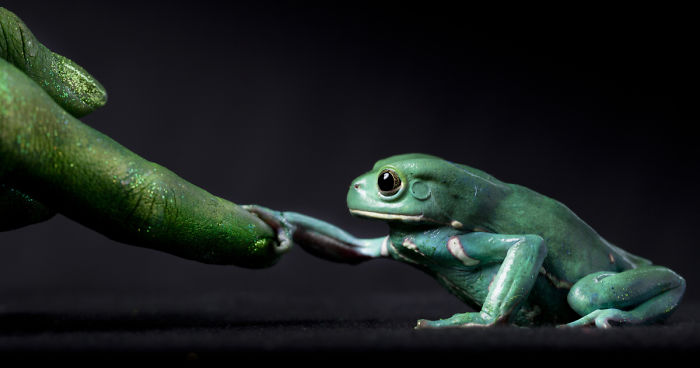
And yes, beauty plays a role here. Beauty is not fluff. It is often the first doorway to empathy. When people are struck by the elegance of a bird in flight, the texture of coral, or the face of an endangered amphibian, they become more willing to learn the harder story behind the image. Beauty grabs attention; storytelling gives it direction.
Photography Has a Real Track Record in Conservation
This is not a new idea born from social media and drone footage. Photography has influenced conservation for more than a century. Historic images of Yosemite helped shape public imagination and build support for protecting the landscape. Long before environmental communication became a formal field, photographs helped people understand that certain places were not just useful pieces of land but shared treasures worth preserving.
That legacy continues today. Modern conservation photographers do more than capture wilderness calendars and make us question our career choices. They help build public pressure, support nonprofit campaigns, and strengthen policy conversations. When photographs are paired with science, reporting, community voices, and strategic advocacy, they can become part of real-world change.
A strong example is the Florida Wildlife Corridor. Powerful visual storytelling helped bring national attention to the importance of protecting connected habitat across the state. Instead of treating conservation as a niche issue for specialists, photography helped make it legible to voters, lawmakers, families, and landowners. That is a big deal. Conservation wins often depend on public understanding, and public understanding usually begins with something people can see.
It Helps Science, Not Just Sentiment
Here is where conservation photography gets even more interesting: it is not only persuasive, it is practical. Photographs are not just emotional tools. They are data, records, evidence, and monitoring instruments.
Scientists use repeat photography to document landscape change over time. When photographs are taken from the same location across years or decades, they reveal shifts in vegetation, glaciers, river systems, fire impacts, or habitat condition. That kind of visual evidence can support land management, restoration planning, and public communication all at once. It is hard to argue with a side-by-side image that shows a place changing before your eyes.
Photography also supports species monitoring. In marine conservation, photo-identification helps researchers distinguish individual whales and dolphins by unique markings, fins, flukes, or scars. That allows scientists to study abundance, movement, reproduction, survival, and health over time. In plain English, a camera can help answer questions that would otherwise require much more invasive or expensive methods.
Camera traps are another conservation workhorse. These remotely triggered cameras quietly collect images of animals moving through landscapes, often in places where direct observation is difficult. They help scientists monitor rare species, map habitat use, understand wildlife behavior, and even examine how animals and humans share trails and working lands. Sometimes the image that moves the public is the same image that helps a field team make better decisions.
Even smaller-scale projects show the value of photography. Time-lapse and close-focus images can document pollinators using restored habitat. That matters because conservation is often judged by results. A restored site does not become a success story just because someone seeded native plants and crossed their fingers. Photography can help show whether wildlife is actually returning.
It Makes the Overlooked Visible
Conservation photography matters because it fights one of the biggest biases in environmental storytelling: we tend to care most about what is charismatic, large, fluffy, or conventionally adorable. Tigers? Easy sell. Elephants? Crowd favorite. Tiny mussel with a complicated name and zero publicist? Tougher road.
That is why projects like Joel Sartore’s Photo Ark are so important. By creating vivid portraits of animals from insects to mammals, the work argues that every species has value. Not just the ones that end up on posters, mascots, or children’s pajamas. Conservation photography can elevate species that are ecologically essential but easy to ignore, showing that biodiversity is not a luxury collection of crowd-pleasers. It is a system.
Good conservation images can also challenge the lazy hierarchy of what counts as “worthy” nature. They can show a drained wetland as more than empty mud, a grassland as more than “just open land,” or a pollinator as more than a tiny blur near a flower. Once people understand that whole ecosystems depend on these supposedly unglamorous pieces, the conservation story gets smarter and stronger.
It Creates Public Accountability
There is another reason images matter: they leave receipts. Conservation photography can document illegal dumping, deforestation, wildlife disturbance, pollution, and weak land stewardship. It can also record recovery, resilience, and successful restoration. Either way, photographs create a visual record that can outlast spin, denial, and selective memory.
That matters in a world where environmental damage is often slow, scattered, or easy to normalize. A community may adjust to a shrinking shoreline, dirtier water, fewer birds, or a disappearing seasonal bloom without realizing how much has changed. Photography interrupts that drift. It says, “No, this used to look different. Yes, something changed. And no, we should not pretend this is normal.”
At the same time, accountability is not only about exposing harm. It is also about showing that solutions are real. Conservation photography can spotlight rewilding, habitat restoration, community stewardship, regenerative land management, and collaborative conservation projects. That matters because doom alone rarely motivates people for long. People need to see what hope looks like too.
Ethics Matter Just as Much as the Image
Not every photo taken in nature is good for nature. That is why ethics are central to conservation photography. If a photographer stresses nesting birds, crowds wildlife, tramples habitat, uses bait irresponsibly, or disregards cultural sensitivities, the image may undermine the very values it claims to support.
Ethical conservation photography asks hard questions. Was the animal disturbed? Was the habitat damaged? Was consent respected when people or communities were photographed? Was the story honest, or was it manipulated into something more dramatic but less true? A powerful photo is not worth much if it is built on harm.
Good conservation photographers understand that the welfare of the subject comes before the shot. That sounds obvious, but in the age of viral content, obvious things suddenly need bodyguards. Ethical practice means distance, patience, restraint, accuracy, and respect. It means understanding that some places are ecologically fragile, legally protected, or culturally sensitive. The image is important, but the living world is more important.
Why It Matters in the Digital Age
We now live inside an endless image stream. Every day, people absorb thousands of visuals without remembering most of them. That might seem like bad news for conservation photography, but it also makes strong visual storytelling more necessary than ever. The challenge is no longer access to images. The challenge is meaning.
Conservation photography cuts through because it offers more than spectacle. It provides context, narrative, credibility, and purpose. A random beach photo might get a heart emoji. A carefully framed image of the same shoreline, paired with reporting on erosion, habitat loss, or restoration, can shift understanding. It can teach. It can mobilize. It can stick.
It also expands who gets to participate. You do not have to be a world-famous photographer hanging out of a helicopter over Patagonia. Local photographers, community storytellers, students, scientists, and citizen observers all have a role to play. Conservation photography can happen in national parks, but it can also happen in urban wetlands, suburban creeks, farm fields, restored prairies, and neighborhood tree canopies. Conservation starts where people are willing to notice.
The Experience of Seeing Through a Conservation Lens
Spend a morning around conservation photography and you begin to understand why it stays with people. It usually starts long before the nice light arrives. There is damp grass on your shoes, a battery you hope is charged, and a level of patience that would make a saint look fidgety. The scene is quiet, but it is not empty. A marsh wakes up in layers. A heron shifts. Insects begin their tiny engine sounds. Wind drags over reeds like someone slowly unzipping the landscape.
And then you wait.
That waiting is part of the lesson. Conservation photography teaches you that the natural world does not perform on command. It does not care that your coffee is cold or that your back hurts or that the mosquito population appears to be holding a strategic planning session on your neck. You wait because attention is the job. Before you make an image, you learn to notice relationships: where the animal moves, how light changes the mood of a place, what the waterline says about drought, what silence says about absence.
Sometimes the experience is unexpectedly joyful. A monarch lands on milkweed in restored grassland and suddenly a project becomes real. It is no longer a line item in a grant report or a phrase like “habitat enhancement.” It is a butterfly using a place that humans helped recover. A camera trap reveals a puma passing through at night, and a corridor stops being an abstract map concept. It becomes a route, a decision, a living thread.
Sometimes the experience hurts. You stand where an older photograph was taken decades ago and realize the glacier has retreated, the river has narrowed, the trees have burned, or the shoreline has shifted. Nothing dramatic is happening in the moment, yet the evidence lands with force. That is one of the strange powers of conservation photography: it can make slow change feel immediate. It can show loss without exaggerating it.
There is also humility in it. The best conservation images are not trophies. They are conversations between the photographer, the subject, and the audience. The photographer is not the hero of the story. The place is. The species is. The community is. The photographer is a translator, trying to turn field experience into public understanding.
And for viewers, the experience can be surprisingly intimate. You look into the face of an animal you may never see in person and feel a flicker of recognition. You see a forest edge, a mangrove creek, a pollinator meadow, or a whale marked by life at sea, and the issue stops feeling distant. It enters your emotional world. You remember it when you vote, donate, teach, travel, volunteer, garden, or simply choose to pay closer attention.
That is why these experiences matter so much. Conservation photography is not only about documenting the planet. It is about training us to see it better. And once people really see something, they become a lot harder to convince that it is disposable.
Conclusion
Conservation photography matters because it makes conservation visible, emotional, and actionable. It helps people connect with places and species they might otherwise overlook. It supports science through monitoring and documentation. It strengthens public understanding, reinforces accountability, and gives campaigns, educators, and policymakers a powerful communication tool. Most of all, it reminds us that nature is not background scenery for human life. It is the living system that makes human life possible.
In a world overflowing with images, the ones that matter most are the ones that help us care wisely. Conservation photography does exactly that. It does not just ask us to admire the planet. It asks us to defend it.