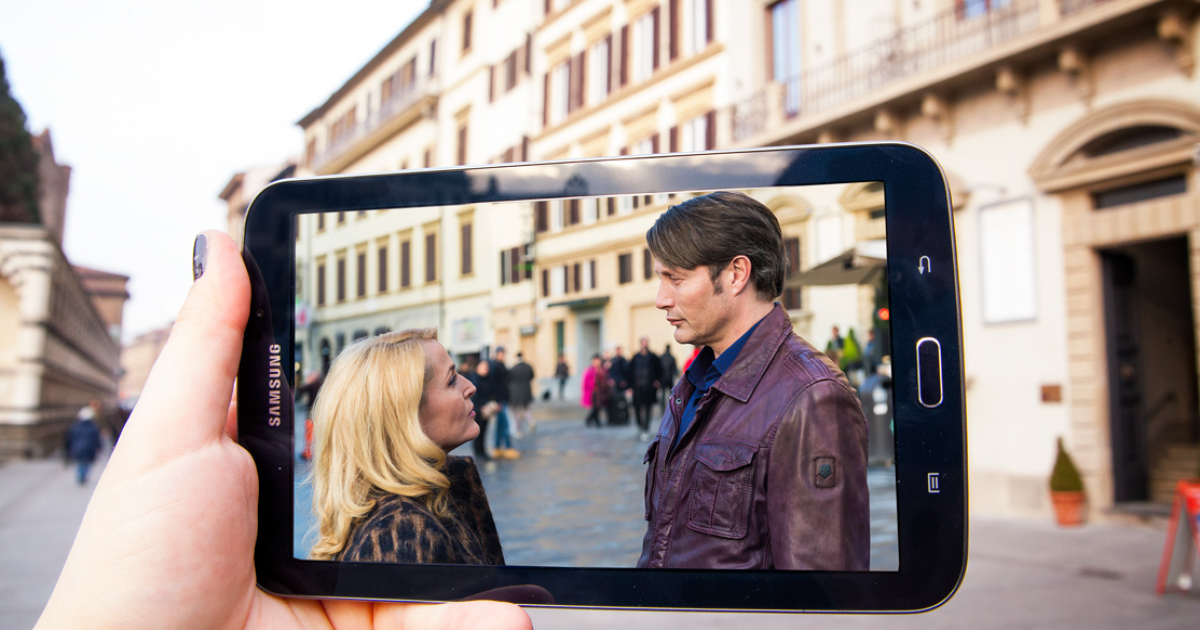
Florence is already dramatic before you add a cannibal psychiatrist in an immaculate suit. The city has marble churches, shadowy palaces, Renaissance courtyards, alleys that appear to have been designed specifically for elegant stalking, and enough art history to make your high school textbook quietly apologize. So it makes perfect sense that Hannibalboth the cult NBC series starring Mads Mikkelsen and the 2001 Ridley Scott film starring Anthony Hopkinswould use Florence as more than a backdrop. Florence becomes a character: cultured, beautiful, dangerous, and probably judging your shoes.
Our goal was simple: follow the trail of Hannibal filming locations in Florence, compare the screen frames with the real streets, and see whether the city still carries that eerie, operatic mood. Spoiler: it does. Also, it serves better coffee than any crime scene has a right to.
This guide walks through the major Florence locations connected to Hannibal, including Palazzo Medici Riccardi, Piazza della Repubblica, Piazza di Santa Maria Novella, the Uffizi Gallery, Ponte Santa Trinita, Piazzale Michelangelo, Palazzo Capponi, Ponte Vecchio, Piazza della Signoria, Palazzo Vecchio, and the famous Porcellino Fountain. Bring comfortable shoes, a charged phone, and perhaps avoid asking strangers whether they are “observing or participating.” Florence is friendly, but let’s not test it.
Why Florence Fits Hannibal So Perfectly
Florence is not merely pretty. It is layered. Every stone seems to know a secret, every palace wall has witnessed ambition, betrayal, art, politics, and the occasional tourist confidently walking in the wrong direction. That combination makes it ideal for Hannibal, a story obsessed with beauty and horror sitting at the same table and pretending this is normal.
In NBC’s Hannibal Season 3, Dr. Hannibal Lecter hides in Italy under a false identity, living among masterpieces while trying to look as if murder is just a demanding form of dinner planning. Florence gives the show a refined, ghostly atmosphere. The Renaissance art is not decoration; it mirrors Hannibal’s mindprecise, theatrical, brilliant, and deeply alarming.
The 2001 film Hannibal uses Florence in a similarly lavish way. Ridley Scott’s version leans into the city’s operatic scale: grand squares, ancient bridges, private palaces, and the famous image of Inspector Pazzi meeting his terrible fate outside Palazzo Vecchio. The city’s beauty makes the violence feel even more unsettling, like finding a spider in a jewelry box.
Palazzo Medici Riccardi: Hannibal’s Grand Florence Hideout
Our first major stop was Palazzo Medici Riccardi, one of the most important Hannibal TV series filming locations in Florence. In Season 3, the palace exterior helps create the world where Hannibal lives and works under his assumed identity. The building’s heavy stone façade, elegant courtyard, and Renaissance authority make it believable that someone like Hannibal would choose it. Subtle? No. But subtlety has never been his signature dish.
The real Palazzo Medici Riccardi was commissioned by Cosimo the Elder and designed by Michelozzo in the 15th century. It was the first great Medici residence in Florence, which means it practically radiates power. Standing outside, you understand why the production used it. It has the kind of façade that says, “I own several secrets and possibly a chapel.”
For fans, this location is especially memorable because it connects to tense scenes involving Hannibal, Jack Crawford, and Inspector Rinaldo Pazzi. The series uses the palace to turn Florence into a chessboard where everyone is clever, wounded, and walking directly toward disaster.
The Gardens Of Palazzo Medici Riccardi: Beauty With A Bad Feeling
The palace garden is another recognizable part of the Florence Hannibal trail. On screen, it looks controlled and serene, which is exactly why it feels unsettling. In Hannibal, beautiful places rarely mean safety. They usually mean someone has arranged the flowers and the alibi.
In person, the garden is calmer than the show suggests. Birds chirp. Visitors take photos. The architecture glows softly in the light. Yet if you watched the series first, your brain keeps trying to add ominous music. That is one of the pleasures of visiting filming locations: real life and fiction overlap just enough to make an ordinary courtyard feel cinematic.
Piazza della Repubblica: Bedelia Walks Through The City
Next came Piazza della Repubblica, where Bedelia Du Maurier is seen walking through Florence in Season 3. The square is open, bright, and busy, with cafés, arcades, street musicians, and the famous carousel. It is one of those Florence locations where you can point your camera in almost any direction and accidentally create a postcard.
On screen, Bedelia’s walk through the piazza feels elegant but uneasy. She is surrounded by beauty, yet the situation is anything but relaxing. In person, the piazza has a more cheerful mood. Children ride the carousel, waiters glide between tables, and tourists perform the ancient ritual of checking Google Maps while standing directly in everyone’s path.
That contrast is what makes the location work. Hannibal often places disturbing characters in graceful public spaces, making Florence feel like a museum where the exhibits might be watching you back.
Piazza Di Santa Maria Novella: The Promotional Shot Everyone Remembers
Piazza di Santa Maria Novella is another essential stop for fans. The square is connected to promotional imagery featuring Hannibal and Bedelia, and it is one of the most atmospheric open spaces in Florence. The basilica’s marble façade creates an elegant stage, while the square itself gives you room to step back and compare the real view with the screen image.
The Basilica of Santa Maria Novella is one of Florence’s major religious and artistic landmarks. It contains masterpieces such as Masaccio’s Holy Trinity and major chapel fresco cycles. Even if you arrived only because of Hannibal, the basilica has a way of gently reminding you that Florence was famous before your favorite TV trauma.
For filming-location hunters, this is a great place to pause. The square is close to the train station, easy to find, and photogenic from multiple angles. It is also a good reminder that Florence rewards slow looking. The more you stand still, the more details appear.
The Duomo Area: Florence Turns The Drama Up To Eleven
The area around the Cattedrale di Santa Maria del Fiore, better known as the Duomo, appears in the Florence atmosphere of Hannibal. Even when the show uses quick exterior views, the cathedral’s presence is unmistakable. Brunelleschi’s dome rises above the city like Florence’s final boss.
Visiting the Duomo area while thinking about Hannibal is a strange experience. During the day, it is crowded, noisy, and full of tour groups, gelato, and selfie sticks. But look upward, focus on the marble, and suddenly you understand why filmmakers keep returning here. The building has scale, symbolism, and visual force. It can make any character look small, even one with Hannibal Lecter’s confidence.
The Uffizi Gallery And Botticelli’s Primavera
No Hannibal Florence locations guide would be complete without the Uffizi Gallery. In NBC’s Hannibal, Botticelli’s Primavera becomes part of the emotional and symbolic language of Season 3. The painting’s mythological figures, mysterious meaning, and lush botanical detail make it a perfect match for the show’s obsession with beauty, transformation, and danger dressed as elegance.
Seeing Primavera in person is different from seeing it on screen. The painting is larger, stranger, and more alive than expected. Venus stands at the center, Cupid hovers above, the Three Graces dance, and Flora scatters flowers with the calm confidence of someone who has never had to deal with airport security. The Uffizi’s official description notes the painting’s mythological figures and its dense world of orange, laurel, fruits, and flowers.
For Hannibal fans, the Uffizi is not just a museum stop. It is where art history and character psychology meet. Will Graham and Hannibal Lecter’s connection has always been framed through perception: seeing, understanding, becoming. In front of Primavera, that theme becomes painfully clear. Also, the museum gift shop is dangerously good, which is the least murderous but most financially threatening part of the visit.
Ponte Santa Trinita: A Bridge For Grief And Aftermath
Ponte Santa Trinita is one of the most graceful bridges in Florence and appears in Season 3’s Florence storyline. It is associated with Jack Crawford and Bella, and later with Hannibal moving through the city after violence has already shifted the emotional temperature.
Compared with Ponte Vecchio, Ponte Santa Trinita is calmer and less crowded. That makes it easier to stand there and absorb the view of the Arno River. From the bridge, Florence looks almost too composed: ocher buildings, soft light, reflections in the water, and the Ponte Vecchio in the distance. It is cinematic without trying.
This location works because it gives the story breath. Not every Hannibal moment is a grand confrontation. Some are quiet, bruised, and full of grief. Ponte Santa Trinita gives those emotions a beautiful place to land.
Piazzale Michelangelo: The City From Above
Piazzale Michelangelo offers one of the most famous panoramic views of Florence. It appears in the Season 3 location trail and is absolutely worth the climb, even if your legs file a formal complaint halfway up.
From the terrace, the whole city unfolds: the Duomo, Palazzo Vecchio, the Arno, the bridges, the hills beyond. It is easy to see why filmmakers love this viewpoint. Florence becomes both real and unreal from above, a map of beauty and history. For Hannibal, that elevated view reinforces the show’s operatic tone. Characters may move through alleys and rooms, but the city watches from every angle.
Practical tip: go near sunset if you can tolerate crowds. The light turns warm, the skyline glows, and everyone around you briefly believes they are in a movie. Statistically, at least three people will whisper “wow,” and one person will block your shot with an iPad.
Palazzo Capponi: The Anthony Hopkins Connection
For the 2001 film Hannibal, Palazzo Capponi is one of the most important Florence locations. In the film, Hannibal Lecter lives under the identity of Dr. Fell and works in a library connected to the palazzo. Real reporting from the time describes Ridley Scott’s crew filming inside the historic Capponi home, using its atmosphere, heirlooms, and aristocratic character to create Hannibal’s Florentine world.
The palace is located on Via de’ Bardi, near the Oltrarno side of the city. It is not a standard tourist attraction in the way the Uffizi or Palazzo Vecchio are, so visitors should be respectful and avoid treating a private or semi-private historic building like a theme park. Still, even seeing the exterior adds depth to the Hannibal route.
What makes Palazzo Capponi fascinating is how perfectly it suits the character. Hannibal hiding in a Renaissance palace is ridiculous and completely believable at the same time. Of course he would choose somewhere with history, art, and excellent acoustics for ominous letter writing.
Ponte Vecchio: The Bracelet, The Shops, The Arno
Ponte Vecchio appears in the 2001 film, where Inspector Pazzi buys a silver bracelet connected to his plan to capture Hannibal’s fingerprint. The bridge is one of Florence’s most famous landmarks, lined with jewelry shops and packed with visitors from morning to night.
In person, Ponte Vecchio is less sinister and more glittery. The shop windows sparkle, people squeeze past one another, and the Arno flows beneath as if it has seen every possible tourist mistake and forgiven most of them. Still, if you know the film, the location gains a little extra tension. A simple shopping scene becomes a trap being assembled piece by piece.
For the best experience, visit early in the morning or later in the evening. Midday is beautiful but crowded enough to make you understand why fictional villains prefer private palaces.
Loggia Del Mercato Nuovo And The Porcellino Fountain
Near Ponte Vecchio is the Loggia del Mercato Nuovo, home to the famous Porcellino Fountain, the bronze wild boar whose snout has been polished by generations of visitors hoping for good luck. In the 2001 film, this area is tied to a tense and bloody encounter, and Pazzi washing blood from his hands at the fountain is one of the more memorable Florence moments.
Today, the Porcellino is surrounded by tourists performing the standard ritual: rub the boar’s snout, place a coin in its mouth, and hope it falls through the grate. It is charming, crowded, and slightly chaotic. Knowing the Hannibal connection adds a darkly comic layer. Nothing says “family vacation” like standing next to a beloved bronze pig while thinking about Ridley Scott’s cannibal thriller.
Piazza Della Signoria And Palazzo Vecchio: Florence Goes Full Gothic
Piazza della Signoria is the political heart of Florence and one of the city’s most dramatic public spaces. It is framed by Palazzo Vecchio, the Loggia dei Lanzi, the Fountain of Neptune, and sculptures that seem to announce, “Yes, we invented visual intimidation.”
For Hannibal fans, this area is essential because the 2001 film uses Palazzo Vecchio for Inspector Pazzi’s infamous death scene. The real Palazzo Vecchio has served as a symbol of Florence’s government for centuries, and official museum information describes it as a monument of the city and a seat of government for over seven hundred years.
Standing in the piazza, the scene feels both unbelievable and weirdly plausible. The tower rises above the square, the stone walls look severe, and the open-air sculpture gallery adds a mythological intensity. Florence does not need production design here. It is already production design, except older, more expensive, and less likely to accept notes from Hollywood.
How To Plan Your Own Hannibal Filming Locations Walk
The good news is that many of the Hannibal filming locations in Florence are walkable. Florence’s historic center is compact, though the stone streets will remind your feet that “compact” does not always mean “gentle.”
A Smart One-Day Route
Start at Piazza di Santa Maria Novella, then walk toward Piazza della Repubblica. Continue to the Duomo area, then head toward Palazzo Medici Riccardi. From there, make your way to the Uffizi Gallery and Piazza della Signoria. After visiting Palazzo Vecchio, continue to the Porcellino Fountain and Ponte Vecchio. Cross the Arno and look for exterior views connected to Palazzo Capponi. If you still have energy, continue toward Ponte Santa Trinita and finish with sunset at Piazzale Michelangelo.
What To Book Ahead
Book the Uffizi Gallery in advance, especially if you want to see Primavera without spending half your day in a line questioning your life choices. Palazzo Vecchio is also worth booking if you want to go inside. For churches and historic sites, check current opening hours before you go, because Florence buildings enjoy closing at exactly the moment you become emotionally invested.
What To Bring
Bring comfortable shoes, water, a camera, and screenshots of the scenes you want to match. A portable charger is also useful, because filming-location hunting drains phone batteries with the enthusiasm of a Gothic vampire.
Why These Locations Still Matter To Fans
Visiting these places is not just about saying, “That’s where the scene happened.” It is about understanding how location shapes mood. Hannibal uses Florence because the city already contains the show’s central contradictions: beauty and violence, civilization and appetite, refinement and rot.
Palazzo Medici Riccardi gives Hannibal historical authority. The Uffizi gives him artistic obsession. Piazza della Repubblica gives Bedelia a public stage for private dread. Ponte Santa Trinita gives Jack’s grief a landscape. Palazzo Vecchio gives the 2001 film its most operatic shock. Together, these places form a map of elegance under pressure.
Florence also rewards repeat viewing. After visiting, scenes from the series and film feel different. You notice the real geography, the distances, the textures of walls, the way light falls on stone. The city is not a green-screen fantasy. It is very real, which somehow makes the fiction stranger.
Extra Travel Experience: What It Felt Like To Chase Hannibal Through Florence
The funniest part of visiting all these Hannibal locations in Florence is how normal the city remains while your brain is busy being cinematic. You stand in Piazza della Repubblica thinking about Bedelia’s elegant dread, while beside you someone is trying to keep a toddler from launching gelato into a carousel horse. You line up at the Uffizi thinking about Hannibal and Will in front of Primavera, while the person ahead of you is loudly debating whether the ticket time says 10:15 or “Italian 10:15,” which apparently means destiny will decide.
At Palazzo Medici Riccardi, the mood shifted. The building has that heavy Florentine authority that makes you lower your voice without being asked. We stood outside comparing angles, trying to match the façade from the show, and for a moment the traffic, scooters, and passing tour groups faded. That is the magic of location hunting: you are not escaping reality; you are layering fiction over it. The palace was still a palace, the street was still a street, but suddenly it had narrative electricity.
The Uffizi was the most emotionally satisfying stop. Botticelli’s Primavera is famous enough to feel familiar before you see it, but the real painting still surprises you. It is not just beautiful; it is weird, dense, symbolic, and slightly hypnotic. Standing there, it was easy to understand why Hannibal chose it. The show loves images that look serene until you stare too long. Primavera does exactly that. It blooms, smiles, and keeps its secrets.
Ponte Santa Trinita gave us the quietest moment of the route. Ponte Vecchio gets the fame, but Ponte Santa Trinita gives you space to breathe. The Arno moved slowly below, the evening light softened the buildings, and Florence looked less like a destination and more like a memory. That location made the show’s grief feel tangible. Not flashy, not theatricaljust present.
The 2001 film locations added a different flavor. Piazza della Signoria and Palazzo Vecchio are so grand that Ridley Scott barely needed to exaggerate them. The square already feels like a stage for betrayal. The statues look muscular and judgmental. The tower looms. The whole place seems to say, “Something dramatic happened here,” and in Florence that statement is almost always historically accurate.
The Porcellino Fountain was the most delightfully strange stop. On one level, it is a cheerful tourist ritual involving a bronze boar and a coin. On another, it is tied to one of the film’s darker Florence moments. Watching visitors rub the boar’s shiny nose while remembering the scene produced a tonal collision so absurd it became perfect. That, in a way, is the entire Hannibal experience: beauty, horror, humor, and appetite standing uncomfortably close together.
By the end of the walk, Florence felt bigger than the screen and more intimate than a map. The best filming locations do not simply recreate a scene; they reveal why the scene worked. Florence worked for Hannibal because it is gorgeous but never simple. It has churches built for heaven, palaces built for power, bridges built for commerce, and alleys that become mysterious the moment the sun slips behind the rooftops. You can visit for art, food, architecture, or fan devotionand somehow the city feeds every appetite. Fortunately, most of them are legal.
Conclusion: Florence Is The Perfect Hannibal Location
Following the Hannibal filming locations in Florence, Italy is one of the best ways to experience the city from a different angle. Instead of simply moving from museum to monument, you begin to see Florence as a living film setone shaped by Renaissance history, cinematic suspense, and unforgettable performances.
From Palazzo Medici Riccardi to the Uffizi, from Piazza della Repubblica to Ponte Santa Trinita, and from Palazzo Capponi to Palazzo Vecchio, each location adds something distinct to the story. Some are elegant. Some are eerie. Some are packed with tourists eating panini near places where fictional people made catastrophic decisions. That is Florence: high culture with excellent snacks.
For fans of NBC’s Hannibal, Ridley Scott’s 2001 film, or simply atmospheric travel, this route is a feast for the eyes. And unlike Hannibal’s preferred feasts, this one is safe, legal, and best enjoyed with espresso.