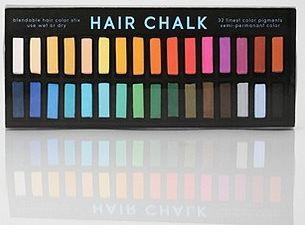
There was a moment when changing your hair color did not require bleach, a salon appointment, or an emotional support group for your bathroom towels. The UO Hair Chalk Rainbow Set offered a much simpler proposition: choose a color, rub it onto your hair, enjoy your temporary transformation, and wash away the evidence later.
Originally sold as an Urban Outfitters exclusive, the set contained 32 vibrant, blendable chalk sticks designed for application to wet or dry hair. Archived product information listed a seven-ounce package and a price of approximately $14 at the time of publication, although some later fashion coverage showed a slightly higher price. The original set now appears to be an archived product rather than an item in Urban Outfitters’ current beauty assortment.
Despite its disappearance from current shelves, the UO Hair Chalk Rainbow Set remains a useful case study in temporary hair color. It represented everything appealing about the early hair-chalk trend: lots of shades, little commitment, endless styling possibilities, and just enough mess to remind you that creativity has consequences.
What Was the UO Hair Chalk Rainbow Set?
The UO Hair Chalk Rainbow Set was a boxed collection of small colored chalk sticks made for temporarily adding pigment to sections of hair. Its 32-color palette included enough bright, pastel, warm, cool, and neutral tones to create everything from one discreet pink streak to a full rainbow worthy of a music-festival entrance.
Urban Outfitters described the colors as blendable and suitable for use on either wet or dry hair. The product was also marketed as semi-permanent, although hair chalk is more accurately understood as a temporary, surface-depositing color product. Unlike permanent dye, which changes color through chemical processing inside the hair shaft, traditional chalk mainly coats the exterior of the strand. The color generally disappears after shampooing, though porous, very light, bleached, or damaged hair may hold certain pigments longer.
Original Product Highlights
- 32 individual hair-chalk colors
- Blendable pigments for custom shades
- Usable on wet or dry hair
- Approximately seven ounces of product
- Originally marketed as a UO exclusive
- Historical price of about $14
- Temporary color without conventional permanent dye
The generous shade range was the set’s biggest advantage. Many competing hair-chalk products were sold individually or in small packs, forcing shoppers to commit to one or two colors. The UO kit approached hair like an art project. It provided enough options to experiment, mix colors, coordinate with an outfit, or make several friends look like a wandering packet of fruit-flavored candy.
Why Hair Chalk Became So Popular
Hair chalk arrived at exactly the right cultural moment. Bright pink ends, blue streaks, pastel ombré styles, and rainbow braids were appearing in fashion editorials, festival photographs, college style guides, and celebrity-inspired tutorials. Permanent fantasy color looked exciting, but achieving it often required bleaching, repeated coloring, and ongoing maintenance.
Chalk offered a lower-commitment alternative. Beauty publications promoted it for temporary highlights, face-framing color, ponytails, buns, braids, costumes, concerts, and weekend experimentation. The UO set was frequently recommended because its 32 shades made both subtle and dramatic looks possible.
The psychological appeal was just as important as the practical one. Someone could wear conservative hair Monday through Friday, add electric-blue tips on Saturday, and return to the office without scheduling an emergency color correction. Temporary hair chalk turned color into an accessory rather than a long-term identity decision.
How to Apply the UO Hair Chalk Rainbow Set
Hair chalk is simple to use, but technique determines whether the finished result looks like deliberate color or evidence of a close encounter with a sidewalk mural.
1. Prepare Your Workspace
Wear an old shirt or place a towel around your shoulders. Cover nearby counters and floors, especially if you are using strong pink, blue, red, or purple pigments. Hair chalk can create loose dust and may transfer during application.
Put on disposable gloves if you want to keep your hands clean. The FDA and dermatology professionals generally recommend following product instructions carefully, protecting the skin, and avoiding the eye area when using hair-coloring cosmetics.
2. Detangle and Section the Hair
Brush or comb the hair before adding color. Separate the sections you want to chalk and secure the rest with clips. Small sections usually produce stronger, more even color than thick bundles of hair.
A one-inch section is a practical starting point. Thin strands are ideal for subtle highlights, while wider sections create more visible blocks of color. For rainbow styles, divide the hair into several narrow sections before opening every shade in the box and immediately questioning your ability to make decisions.
3. Decide Between Wet and Dry Application
Dry application usually creates a softer result and may be preferable for blonde, bleached, porous, or very light hair. Wet application generally produces stronger pigment, particularly on brown or black hair, because moisture helps the color cling to the strand.
Contemporary reports about the UO set found that light hair accepted color readily when dry, while dampening darker hair produced more noticeable results. General hair-chalk guidance likewise recommends adding a small amount of water when stronger payoff is needed.
Do not soak the section. A light mist from a spray bottle is enough. Very wet hair can turn the process into colorful runoff with the consistency and emotional energy of a melting snow cone.
4. Apply Color Downward
Hold the selected section firmly and move the chalk downward from the upper part of the strand toward the ends. Avoid rubbing aggressively in both directions. Repeated back-and-forth movement can roughen the cuticle, create tangles, and increase breakage.
Repeat the downward stroke until you achieve the desired intensity. Dark hair may require several passes. For an ombré effect, concentrate the pigment on the lower half of the section. For blended color, apply one shade first and overlap a second shade near the transition point.
5. Let the Hair Dry Completely
If you applied the chalk to damp hair, let it air-dry or use a blow-dryer on a moderate setting. Avoid putting on clothing, leaning against furniture, or hugging anyone dressed in white until the hair is fully dry.
Heat styling may help set some temporary hair-color formulas, but the safest approach is to follow the directions supplied with the specific product. Limit unnecessary heat, especially on bleached, dry, fragile, or frequently processed hair. Dermatologists recommend reducing excessive heat styling and harsh chemical treatments to minimize dryness and breakage.
6. Seal the Color
Finish with a light mist of hairspray. This helps reduce loose pigment and color transfer. Historical tutorials involving the UO set and similar chalk products regularly recommended hairspray as the final step.
Use only enough spray to secure the style. Emptying half a can onto one pink streak will not make the color immortal; it will simply give your hair the structural integrity of patio furniture.
How the Colors Perform on Different Hair Shades
Blonde and Light Hair
Light hair provides the clearest canvas. Pink, lavender, turquoise, peach, yellow, and pastel blue can appear bright with relatively little product. Dry application may be enough for a soft finish.
However, light and bleached hair is often more porous. Strong pigment can remain after the first shampoo, especially when applied wet. Test the chalk on a hidden strand before creating a full-head design.
Brown Hair
Medium-brown hair typically shows vivid pink, red, purple, blue, and green better than pale pastel shades. Slightly dampening the hair and applying several thin layers can improve visibility. White chalk can also be used as a base beneath brighter colors, though this increases product buildup.
Black and Very Dark Hair
On black hair, lighter pigments may appear as a tinted sheen rather than an opaque stripe. Saturated pink, cobalt, turquoise, red, violet, and white generally create the strongest contrast. Apply the product to damp, narrow sections, build the pigment gradually, and inspect the result under natural light.
Temporary color cannot actually lighten dark hair. It sits on top of the existing shade, so the base color always affects the final appearance. Truly pale or neon results on naturally dark hair usually require lightening, extensions, hair makeup, or another more opaque formula.
Gray and Silver Hair
Gray or silver strands may display chalk color vividly, but they can also be porous. A strand test is especially important when using blue, purple, green, or red pigments that might leave a temporary tint.
Best Hairstyles for Rainbow Hair Chalk
The UO Hair Chalk Rainbow Set worked best when color and hairstyle supported each other. Randomly coloring large sections could be fun, but strategic placement often produced a cleaner result.
Rainbow Braid
Color several individual sections before creating a French braid, Dutch braid, or fishtail braid. As the strands cross, different shades appear throughout the finished style. Chalked rainbow braids became a popular tutorial look because braiding also helps contain loose pigment.
Colored Ends
Apply two or three complementary colors to the bottom few inches of the hair. Pink fading into purple or blue blending into turquoise creates an easy temporary ombré effect.
Peekaboo Panels
Color sections underneath the top layer of hair. The shades remain subtle when the hair is down and become more visible in a ponytail, braid, bun, or half-up style.
Face-Framing Highlights
Add color to two narrow sections near the face. This approach uses less product and delivers a noticeable change without turning the entire bathroom into a powder-based weather event.
Festival Ponytail
Place several colors throughout the length of a high or low ponytail. Bubble ponytails, twisted ponytails, and braided ponytails make the color placement look intentional while minimizing contact with clothing.
Advantages of the UO Hair Chalk Rainbow Set
- Large color selection: Thirty-two shades encouraged experimentation and blending.
- No permanent commitment: Most applications could be removed with shampoo.
- Useful for many occasions: The set suited parties, costumes, concerts, festivals, photographs, and themed events.
- Customizable intensity: Users could apply a faint tint or build a stronger stripe.
- Works with many styles: Chalk could be added to braids, curls, ponytails, buns, and straight hair.
- Historically affordable: The original approximate $14 price was economical for a 32-color collection.
Drawbacks to Consider
The rainbow set was playful, but it was not a mess-free miracle. Historical product tests reported loose chalk, stained hands, color transfer, and a noticeable change in hair texture. One widely circulated trial involving a blonde and a brunette concluded that the process created a substantial mess but still produced enjoyable results.
Hair chalk can make strands feel dry, coated, stiff, or gritty. The texture becomes more obvious when multiple layers are applied to dark hair. Color may also transfer to pillowcases, hats, collars, furniture, and skin, particularly in humid conditions or before the product has been sealed.
The small sticks can break during use, and achieving even coverage on long or thick hair may consume a surprising amount of product. Hair chalk is therefore better suited to selected strands than complete, root-to-tip color.
Safety and Hair-Care Tips
Because the original UO set is no longer a current retail product, anyone encountering old stock should be cautious. Check the packaging, ingredients, condition, odor, storage history, and any expiration or batch information. Do not use a cosmetic that appears contaminated, damp, discolored, crumbling abnormally, or altered by years of storage.
- Perform a small skin and strand test before wider use.
- Follow the instructions included with the product.
- Avoid applying chalk directly to irritated or broken skin.
- Keep the powder away from the eyes, eyebrows, eyelashes, mouth, and nose.
- Apply the product in a ventilated space and avoid inhaling loose dust.
- Stop immediately if you notice burning, itching, swelling, or significant irritation.
- Use conditioner after shampooing to restore softness.
The FDA notes that hair-color products can cause allergic reactions and serious eye injuries when misused. Dermatology guidance also emphasizes following label directions and washing off products promptly if excessive stinging or burning occurs.
How to Remove Hair Chalk
Brush the hair gently before getting it wet to remove some loose pigment. Then shampoo thoroughly with warm water. A second wash may be necessary for heavily chalked sections or very porous light hair.
If the color is stronger than intended before you leave home, use a paddle brush to soften it. Slightly dampening the section and blotting it with a paper towel can remove additional pigment.
Follow with conditioner or a moisturizing mask. Avoid scrubbing the hair aggressively, as friction can worsen tangling and dryness. Use a dark towel until you are confident that all pigment has been removed.
Is the UO Hair Chalk Rainbow Set Still Worth Buying?
As a historical beauty product, the set remains interesting for collectors and anyone researching the temporary hair-color trend of the early 2010s. As a cosmetic for actual use, buying old stock requires more caution. The original ingredients are not consistently available in surviving listings, and storage conditions may be impossible to verify.
A new, currently manufactured hair-chalk product with a complete ingredient list, sealed packaging, clear instructions, and accessible customer support is usually the more sensible choice. Modern alternatives include chalk compacts, color sticks, temporary styling gels, colored sprays, clip-in extensions, and washable hair makeup. Each provides a different balance of pigmentation, transfer resistance, texture, and washout time.
The central appeal of the UO Hair Chalk Rainbow Set, however, remains easy to understand. Thirty-two colors transformed hair into a temporary canvas. It allowed users to experiment without promising to remain turquoise through three family gatherings and a performance review.
Composite Experience: What Using the Set Was Typically Like
The following experience is a composite scenario based on archived product tests, styling tutorials, and user reports rather than a claim of personal use.
Opening the UO Hair Chalk Rainbow Set would have felt less like opening a conventional beauty product and more like opening an art supply box. Thirty-two small sticks offered an immediate problem: choosing one color suddenly seemed unnecessarily responsible. Pink looked cheerful, violet looked dramatic, turquoise looked festival-ready, and orange looked like it might either become unexpectedly fashionable or trigger questions from concerned relatives.
The first practical lesson arrived before the first completed streak: preparation mattered. Without a towel and covered counter, colored dust could spread quickly. Gloves were technically optional, but bare fingers often became part of the rainbow. The chalk was compact enough to control, yet powdery enough to make the workspace look as though a very small unicorn had sneezed.
On blonde hair, dry application could create an immediate pastel streak. A few downward passes produced visible color without much water or pressure. The result looked bright in daylight and slightly softer indoors. Adding moisture deepened the pigment, but it also increased the possibility that the color would remain after the first shampoo.
Brown or black hair required more negotiation. A pale yellow might barely appear, while pink, blue, purple, and turquoise performed better. Misting a narrow section with water and working repeatedly from top to bottom improved the color payoff. The process was not fast, but watching a dark strand gradually turn violet provided enough satisfaction to justify the effort.
Texture was the compromise. Chalking several sections could leave the hair feeling dry and coated. Running fingers through the finished color was a bad idea because pigment transferred back to the hands. Brushing too much weakened the effect. The best strategy was to finish the application, let it dry, add hairspray, and then treat the hairstyle as a completed craft project rather than something to touch every thirty seconds.
Styling made a major difference. Loose streaks showed the colors clearly but could brush against clothing. A braid made the shades appear more polished and kept much of the pigment contained. A ponytail with pink, blue, and purple pieces looked deliberate even when the original color placement had involved very little planning.
Throughout the day, the strongest concern was transfer. A black shirt was a strategic choice; a white collar was an act of courage. Humidity, sweat, and repeated contact could loosen pigment near the neck or hairline. Keeping the color away from the scalp and sealing it with hairspray reduced the problem but did not eliminate it completely.
Removal was easier than application. Shampoo lifted most of the pigment, although heavily saturated or lightened strands could require another wash. Conditioner helped soften the slightly rough texture left behind. The final result was not salon-perfect, but perfection was never the point. The pleasure came from trying a dramatic color for a few hours, taking photographs, changing it the next day, and making no long-term promises to any shade in the box.
Conclusion
The UO Hair Chalk Rainbow Set captured the best and messiest qualities of temporary hair color. Its 32-shade collection offered impressive variety at an accessible historical price, while its blendable pigments encouraged custom streaks, rainbow braids, colorful ends, and experimental festival styles.
It also demanded realistic expectations. Hair chalk could feel dry, transfer onto clothing, appear differently across natural hair colors, and linger on porous blonde or bleached strands. Careful sectioning, light moisture, downward application, a strand test, and a finishing spray produced the most reliable results.
Although the original Urban Outfitters set appears to be discontinued, its concept remains relevant. Temporary color lets people explore bold looks without bleaching their hair or committing to weeks of maintenance. The UO set may now belong to beauty-trend history, but the desire to become a rainbow for one nightand return to normal by Monday morningis clearly not going anywhere.
Note: Original specifications and prices are historical. Product availability, formulas, packaging, and condition may vary. Avoid using vintage cosmetic stock unless its identity, ingredients, seal, and storage condition can be verified.