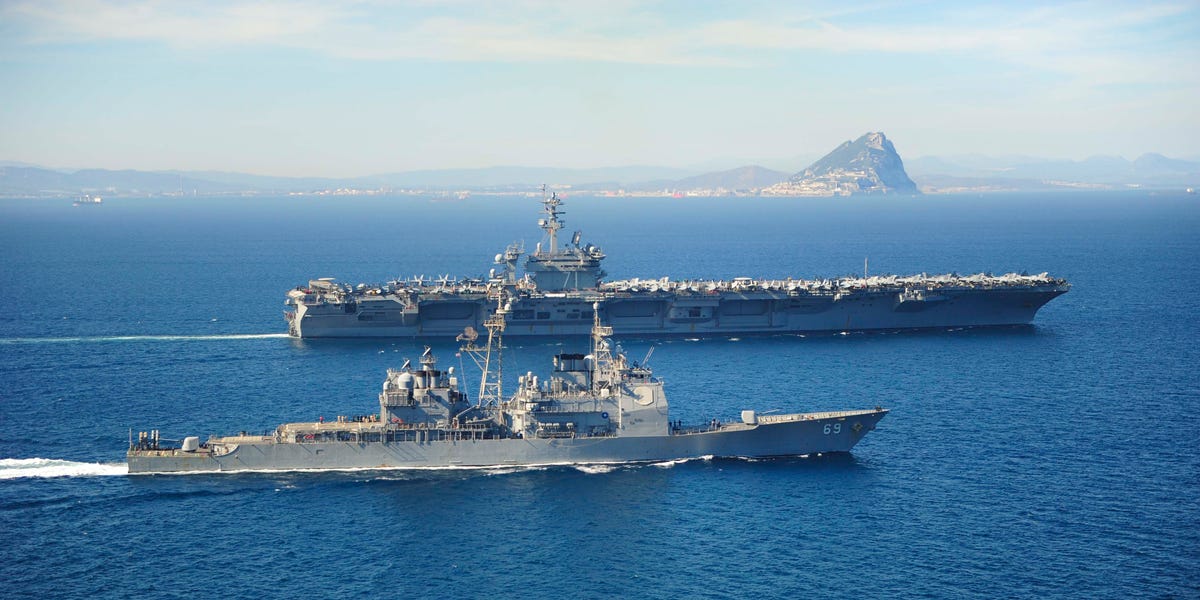
The U.S. Navy is entering one of those awkward but necessary moments in military history: the moment when beloved, heavily armed, salt-stained workhorses must finally leave the stable. By 2027, a significant wave of U.S. Navy warships will be retired, decommissioned, recycled, transferred, or converted into logistics support assets. That may sound like routine fleet housekeeping, but the implications are much larger than a few ships quietly sailing into the sunset.
This transition affects the Navy’s missile capacity, shipyard workload, carrier-strike-group operations, submarine availability, and America’s ability to project power in the Indo-Pacific, the Middle East, the Atlantic, and everywhere else where oceans still matterwhich is, inconveniently for defense planners, most of the planet.
At the heart of the story is the retirement of aging surface combatants, especially the Ticonderoga-class guided-missile cruisers, along with older littoral combat ships, submarines, amphibious vessels, and support ships. The Navy is not simply shrinking for fun, like someone deleting unused apps from a phone. It is trying to trade old maintenance-heavy hulls for newer platforms with better sensors, improved missile defense, stronger networking, and longer-term relevance in a world of hypersonic weapons, drone swarms, and great-power competition.
Why the Navy Is Retiring Warships by 2027
Warships are not immortal. They may look indestructible from a pier, but inside the hull are aging pipes, electronics, propulsion systems, combat systems, radar components, and thousands of maintenance headaches waiting for their moment to become tomorrow morning’s emergency meeting.
The Navy’s retirement decisions are driven by a combination of age, cost, readiness, manpower, and strategic value. Some ships have reached or exceeded their expected service lives. Others are being retired early because their repair costs are no longer justified by the capability they provide. In plain English: at some point, fixing the old ship becomes more expensive than moving sailors, money, and shipyard labor toward something newer and more useful.
This is especially true for large surface combatants. The Ticonderoga-class cruisers were powerful, flexible, and famous for their Aegis combat system and Mk 41 Vertical Launch System. For decades, they served as air-defense commanders for carrier strike groups and brought a heavy missile load to the fight. But many of these cruisers are now well past the age when even the best paint job can hide the fact that maintenance bills are starting to behave like hungry sea monsters.
The End of the Ticonderoga-Class Cruiser Era
The retirement of the Ticonderoga-class guided-missile cruisers is the emotional centerpiece of this shift. These ships have been part of the U.S. Navy’s identity since the 1980s. Built around the Aegis weapon system, the class helped define modern naval air defense, giving carrier strike groups a shield against aircraft, missiles, and other threats.
The cruisers were never small players. A Ticonderoga-class cruiser carried a large missile capacity, including Standard Missiles for air defense, Tomahawk cruise missiles for land attack, anti-submarine weapons, torpedoes, 5-inch guns, and close-in defensive systems. In a fleet where missile cells are the currency of combat power, the Ticonderogas were basically floating armored savings accounts.
The problem is that old ships do not retire gracefully on their own. They require shipyard time, skilled workers, spare parts, inspections, modernization work, and moneylots of money. The Navy and Congress have debated for years whether to preserve some cruisers longer or accelerate their retirement. Government reviews have found that some cruiser modernization efforts suffered from delays, cost growth, and disappointing results. That makes the retirement debate less sentimental and more practical: should the Navy pour more resources into ships near the end of life, or should it focus on Flight III Arleigh Burke destroyers, future large surface combatants, submarines, unmanned systems, and logistics ships?
What Ships Are Leaving the Fleet?
The Navy’s retirement wave is not limited to cruisers. The FY2026 inactivation schedule already included several notable vessels, such as guided-missile cruisers USS Shiloh and USS Lake Erie, littoral combat ship USS Fort Worth, dock landing ship USS Germantown, attack submarines, a guided-missile submarine, oilers, roll-on/roll-off cargo ships, and other support vessels.
The FY2027 shipbuilding plan continues this broad reshaping of the battle force. The plan shows retirements across categories such as aircraft carriers, cruisers and destroyers, littoral combat ships and related smaller combatants, and attack submarines. That mix matters because it affects more than the number of hulls. It affects missile tubes, command spaces, maintenance demand, crew distribution, undersea strike capacity, amphibious support, and logistics endurance.
In naval strategy, a ship is never just a ship. It is a bundle of sensors, weapons, people, fuel demand, maintenance cycles, training pipelines, and political symbolism wrapped in steel. Remove one from the force, and the Navy may lose capability immediately. Replace it with a newer ship years later, and the Navy may gain better long-term capabilitybut only if the ship arrives on time, works as promised, and does not spend its early life being “debugged” at sea while sailors invent new swear words.
Why This Retirement Wave Changes Naval Power
The phrase “shifting naval power” is not dramatic seasoning sprinkled on a defense article. It is the core issue. The U.S. Navy is trying to modernize while China is expanding the world’s largest navy by ship count and investing heavily in missiles, sensors, submarines, aircraft, and maritime infrastructure. Russia remains a submarine and missile threat. Iran, North Korea, and non-state groups have shown that relatively cheap drones and missiles can complicate naval operations.
When older U.S. warships retire, the Navy loses physical capacity before replacements fully arrive. A retired cruiser takes its missile cells with it. A retired submarine reduces undersea availability. A retired support ship can affect logistics reach. Even if a new destroyer has better radar and better combat systems, it cannot be in two oceans at once. The Navy’s challenge is not only building more advanced ships; it is building enough of them, fast enough, while maintaining the fleet already deployed.
This is where the strategic math gets uncomfortable. A smaller number of exquisite ships can be extremely powerful, but modern conflict may demand mass, redundancy, and distributed presence. Missiles get used. Ships need repair. Crews need rest. If a conflict stretches across the Pacific, the Navy cannot rely on glossy brochures. It needs hulls, magazines, tankers, repair yards, sailors, and resilient networks.
The China Factor: Missile Cells and Maritime Pressure
The retirement of U.S. cruisers also draws attention because China’s Type 055 destroyers, often described by analysts as cruiser-like warships, carry a large missile load and symbolize Beijing’s ambition to operate a blue-water navy. China’s navy has grown rapidly in size and sophistication, and its shipbuilding base has become a major strategic advantage.
The United States still holds enormous strengths: nuclear-powered aircraft carriers, world-class submarines, combat experience, global alliances, advanced naval aviation, and decades of operating across multiple theaters. But China’s shipbuilding pace has changed the conversation. The question is no longer whether the U.S. Navy has the best individual ships in many categories. The question is whether the Navy can sustain enough forward presence and combat power across a large, contested maritime map.
In a Western Pacific crisis, numbers matter. So do missile inventories, repair capacity, logistics routes, submarine patrol cycles, tanker availability, satellite networks, and allied bases. Retiring older ships may be the right long-term decision, but it creates a near-term balancing act: the Navy must avoid hollowing out capacity before newer ships and systems are ready.
What Replaces the Retiring Warships?
The Navy’s replacement strategy is not built around one magic ship. There is no “super boat” waiting backstage with a cape and a theme song. Instead, the Navy is moving toward a mix of upgraded destroyers, future large surface combatants, frigates, submarines, amphibious ships, logistics ships, unmanned systems, and improved networks.
Flight III Arleigh Burke Destroyers
The Flight III Arleigh Burke-class destroyers are central to the transition. They bring the AN/SPY-6 radar, improved air and missile defense capability, and an evolved Aegis combat system. These destroyers are expected to absorb many missions once performed by cruisers, especially carrier-strike-group air defense. They may not fully replicate every command-and-control advantage of a cruiser, but they represent the Navy’s near-term backbone for surface combat.
Constellation-Class Frigates
The Constellation-class frigate is intended to add a more affordable, flexible small surface combatant to the fleet. Frigates can escort logistics ships, hunt submarines, contribute to air defense, and operate in areas where sending a large destroyer may be overkill. The idea sounds sensible: not every job requires the naval equivalent of a sledgehammer. Sometimes a sharp, reliable multi-tool is exactly what the fleet needs.
Submarines and Undersea Dominance
The Navy is also leaning heavily into submarines. Virginia-class attack submarines remain among the most important assets in U.S. strategy, especially in a conflict where surface ships may face dense missile threats. Columbia-class ballistic missile submarines are critical to the nation’s nuclear deterrent. The undersea fleet is expensive, difficult to build, and constrained by industrial capacity, but it is also one of America’s strongest maritime advantages.
Unmanned and Distributed Systems
Unmanned vessels and distributed maritime operations are part of the future fleet vision. The Navy wants more sensors, more shooters, and more ways to confuse, stretch, and overwhelm an adversary. A distributed fleet can be harder to target than a concentrated one, but it also requires reliable communications, cyber resilience, command discipline, and a logistics system that can keep widely scattered forces supplied.
The Maintenance Lesson: Old Ships Can Become Expensive Teachers
One of the most important lessons from the retirement debate is that modernization must be realistic. Extending a ship’s service life sounds cheaper than buying a new oneuntil the ship enters the yard and hidden problems begin popping up like whack-a-moles with security clearances.
Large warships are incredibly complex. When modernization planning underestimates the amount of work required, costs rise, schedules slip, and the fleet loses availability. A ship that spends years in maintenance is not exactly deterring anyone, unless the enemy is intimidated by scaffolding.
This does not mean the Navy should never extend the life of older ships. Sometimes it should. But the decision must be based on honest assessments of hull condition, combat relevance, workforce capacity, spare parts, and future mission demand. Keeping a ship on paper is not the same as having a ready, deployable warship.
Impact on Sailors and Shipyards
Retiring ships also affects people. Sailors build careers, traditions, and identities around ships. A decommissioning ceremony is not just a bureaucratic milestone; it is the closing chapter of a floating community. Crews remember deployments, repairs, port calls, storms, drills, and all the strange little rituals that make shipboard life both exhausting and unforgettable.
Shipyards feel the shift too. Retirements can free workers from maintaining aging hulls, but they also create new pressure to build, repair, and modernize the next generation. The Navy’s biggest challenge may not be designing future ships; it may be producing them quickly enough with a workforce and industrial base that have been stretched thin for years.
Shipbuilding is not like ordering office chairs. Nuclear submarines, aircraft carriers, destroyers, and amphibious ships require specialized labor, long supply chains, nuclear-qualified components, high-end electronics, and years of planning. If the industrial base cannot keep pace, the retirement of old ships creates a gap that strategy documents cannot magically fill.
Will the U.S. Navy Become Weaker?
The honest answer is: temporarily in some categories, potentially stronger in others, and highly dependent on execution. Retiring old ships reduces numbers and, in some cases, missile capacity. But keeping old ships that cannot deploy reliably also weakens the fleet. A warship that exists mostly in budget tables and maintenance delays is not the same as combat power.
The Navy’s goal is to become more lethal, better networked, and more sustainable. That means fewer ships of some legacy types and more investment in platforms that can survive and fight in heavily contested environments. The danger is the transition period. If retirements happen faster than replacements arrive, the Navy may face a capacity dip at exactly the wrong time.
That is why Congress, the Navy, shipbuilders, and defense analysts keep arguing about these plans. The debate is not merely about nostalgia for old hulls. It is about whether the fleet can preserve near-term deterrence while preparing for future warfare.
Experiences and Takeaways: What This Shift Feels Like in the Real World
For people who follow naval affairs closely, the retirement of major warships feels a bit like watching a city skyline change. One day the familiar shape is therethe cruiser at the pier, the old submarine name in the fleet list, the support ship that has quietly done the unglamorous work for decades. Then the schedule changes, the ceremony happens, and the ship becomes history. The ocean does not look different the next morning, but the fleet does.
For sailors, ship retirements can be personal. A ship is not just a platform; it is a workplace, home, gym, cafeteria, repair shop, classroom, and pressure cooker with a hull number. Sailors remember the sound of the engines, the smell of the passageways, the exact ladderwell that always seemed designed by someone with a personal grudge against knees, and the strange pride of seeing their ship pull into port after a hard deployment. When that ship retires, it is not simply removed from an inventory chart. A chapter of lived experience closes.
For maintenance teams, the retirement wave can feel like overdue realism. Old ships often demand heroic effort from crews and yard workers. Systems break. Parts are hard to find. Repair timelines stretch. A technician may spend weeks solving a problem that would be easier to prevent with a newer design. In that sense, decommissioning can be a relief. It allows scarce talent to move toward ships with longer futures instead of pouring energy into platforms that are already near the end of the road.
For strategists, the feeling is more complicated. Retiring a cruiser makes sense when the cruiser is costly, aging, and unreliable. But losing its missile cells still hurts. Retiring a submarine may be reasonable if repairs are too expensive, but undersea capacity is precious. Removing support ships may look less dramatic than retiring a combatant, but logistics is what turns military ambition into operational reality. Nobody writes action movies about oilers, but without them, the action stops.
For the public, the best way to understand this transition is to think of the Navy as both a fighting force and a giant engineering ecosystem. The retirement of older warships is not a sign that the Navy has given up power. It is a sign that the definition of power is changing. In the next era, naval strength will depend not only on big ships and big missiles, but also on networks, sensors, speed of production, repair capacity, unmanned systems, resilient logistics, and the ability to replace losses in a long fight.
The most important experience from this moment is humility. Naval power is not built overnight, and it is not preserved by sentiment. Ships that once looked unbeatable eventually become maintenance challenges. Technologies that once seemed futuristic become standard. Rivals adapt. Shipyards age. Budgets tighten. Sailors keep showing up anyway. That is the real story behind the Navy’s retirement wave: an old fleet is making room for a new one, but the handoff must be managed carefully, because oceans do not pause while America modernizes.
Conclusion
The retirement of U.S. Navy warships by 2027 marks a turning point in American sea power. The departure of Ticonderoga-class cruisers and other aging vessels will reduce familiar forms of capacity, including missile cells, command spaces, and hull numbers. Yet the Navy is betting that newer destroyers, submarines, frigates, logistics ships, and future unmanned systems will create a fleet better suited for modern threats.
This shift is not without risk. China’s naval rise, shipbuilding speed, and missile-heavy strategy make every U.S. retirement decision more consequential. The Navy must avoid trading too much near-term strength for future promise. It must also fix shipbuilding delays, maintenance backlogs, and industrial-base limits if modernization is to become more than a PowerPoint victory parade.
Still, retirement is not retreat. Done wisely, it is renewal. The Navy’s challenge is to ensure that as older ships leave the fleet, the next generation arrives with enough speed, reliability, firepower, and endurance to keep American naval power credible in the decades ahead.