Editorial note: This is a historical ranking based on conditions and officeholders during 2019, not a current list for 2026. The word dictator is used broadly for rulers who concentrated personal power, neutralized meaningful political competition, restricted civil liberties, and relied on coercion to remain in office. The ranking is an editorial judgment, not a legal classification or a scoreboard anyone should want to top.
How This 2019 Ranking Was Evaluated
Authoritarian rulers do not arrive with matching uniforms and a convenient label on the door. Some inherit dynasties. Some seize power through the military. Others hold elections after making sure the referee, the scoreboard, the stadium, and most of the opposition locker room belong to them. For this list, five factors carry the most weight: the scale of political imprisonment and torture, attacks on civilians, destruction of independent institutions, censorship, and the duration of personal rule.
Freedom House’s 2019 assessment placed Syria, South Sudan, Eritrea, Turkmenistan, North Korea, and Equatorial Guinea among the world’s lowest-scoring states for political rights and civil liberties. Human-rights reporting from the same period also documented severe deterioration in China, Venezuela, Egypt, and Russia. No ranking can perfectly compare a prison camp, a bombed hospital, a rigged election, and a censored internet. The common thread is simpler: ordinary people were denied peaceful ways to challenge those governing them.
10. Vladimir Putin Russia
By 2019, Vladimir Putin had dominated Russian politics for nearly two decades, alternating between president and prime minister while the Kremlin steadily narrowed the space for genuine competition. Opposition candidates faced legal barriers, critics were prosecuted, independent media operated under pressure, and public demonstrations could produce rapid encounters with police vans.
Putin’s place on this list also reflects the reach of his government beyond Russia’s borders. The annexation of Crimea, military involvement in eastern Ukraine, support for Bashar al-Assad, and information operations abroad turned domestic authoritarianism into an international export product. Russia still possessed courts, elections, television debates, and political parties, but their existence did not guarantee meaningful accountability. Authoritarian systems often keep the furniture of democracy after removing the electricity.
9. Abdel Fattah el-Sisi Egypt
Abdel Fattah el-Sisi rose from defense minister to president after the military removed Mohamed Morsi in 2013. By 2019, his government had built a broad system of repression affecting Islamists, secular activists, journalists, lawyers, researchers, and online critics. The government frequently framed dissent as a security threat, a remarkably flexible phrase when the state controls the dictionary.
Constitutional amendments approved in an unfair 2019 referendum strengthened presidential authority, weakened judicial independence, expanded the military’s political role, and opened a path for Sisi to remain in power longer. After rare anti-government protests in September, authorities arrested large numbers of people. Egypt faced real security threats, especially in North Sinai, but fighting terrorism did not require treating peaceful criticism as a contagious disease.
8. Salva Kiir Mayardit South Sudan
South Sudan became independent in 2011 amid enormous hope. Two years later, a political struggle between President Salva Kiir and former vice president Riek Machar helped ignite a civil war that fractured the young country along political and ethnic lines. By 2019, more than four million people had fled their homes, millions required humanitarian assistance, and civilians had endured killings, sexual violence, forced displacement, and hunger.
Responsibility for atrocities was shared among government forces, opposition groups, and local armed actors, so blaming every crime personally on Kiir would be inaccurate. His inclusion rests on something narrower but still damning: forces aligned with his government committed grave abuses, political space remained restricted, and national institutions were repeatedly subordinated to elite survival. A country founded to escape oppression had acquired a ruling class skilled at reproducing it.
7. Nicolás Maduro Venezuela
Nicolás Maduro began a disputed second term in January 2019 after an election widely criticized for lacking basic guarantees of fairness. The opposition-led National Assembly had already been stripped of practical power, and security forces responded to protests with arrests, abuse, and intimidation. Political opponents, journalists, and human-rights defenders operated in an environment where the law could change from rulebook to flyswatter depending on whom it needed to hit.
Venezuela’s economic collapse had multiple causes, including policy failures, corruption, declining oil production, and the effects of sanctions. What made Maduro’s rule especially destructive was the combination of humanitarian emergency and political closure. Severe shortages of food, medicine, electricity, and essential services pushed millions to leave the country, while the government blocked or manipulated institutions that might have corrected its course.
6. Teodoro Obiang Nguema Mbasogo Equatorial Guinea
Teodoro Obiang seized power in a 1979 coup and marked forty years in office in 2019, making him the world’s longest-serving president at the time. Equatorial Guinea’s oil wealth could have funded excellent schools, hospitals, roads, and public services. Instead, human-rights organizations described a system in which political repression and corruption persisted while the ruling elite enjoyed the country’s riches.
Opposition activity was tightly constrained, civil society remained weak, and the press lacked independence. Obiang’s longevity is not merely a curious statistic for political trivia night. Four decades in office meant that an entire generation grew up without experiencing a peaceful transfer of presidential power. When one leader stays long enough to appear permanent, government starts looking less like public service and more like a family-owned subscription nobody remembers ordering.
5. Gurbanguly Berdimuhamedow Turkmenistan
Turkmenistan in 2019 was one of the most isolated and tightly controlled countries on Earth. President Gurbanguly Berdimuhamedow presided over a system without meaningful opposition, independent national media, or credible elections. State television celebrated the president’s activities with such enthusiasm that ordinary public-relations departments would need oxygen masks to keep up.
The humor ends quickly for citizens. Independent reporting was conducted largely from exile, internet access was heavily restricted, activists and their relatives faced pressure, and unexplained travel bans limited movement. Economic problems and shortages were difficult to discuss openly because the government treated bad news as if it were an enemy agent. The Committee to Protect Journalists ranked Turkmenistan among the three most censored countries in 2019.
4. Isaias Afwerki Eritrea
Isaias Afwerki had ruled Eritrea since independence in 1993 without holding a national election. The country lacked an independent legislature, judiciary, civil society, and domestic press. After the government shut down independent newspapers in 2001, journalists and political figures disappeared into detention, often without trial or contact with their families.
Eritrea’s system of national service was officially connected to defense and development, but in practice it could become open-ended and coercive, disrupting education, employment, and family life. The 2018 peace agreement with Ethiopia raised hopes that the government would relax its grip. In 2019, those hopes remained largely unanswered. CPJ called Eritrea the world’s most censored country, while rights monitors continued to report arbitrary detention, forced labor, and severe restrictions on religion and expression.
3. Xi Jinping China
China’s political system had been authoritarian long before Xi Jinping, but his leadership concentrated power to a degree not seen in decades. The 2018 removal of presidential term limits symbolized the shift. By 2019, Xi stood at the center of the Communist Party, the state, the military, and an expanding personality cult, while ideological discipline tightened across universities, religious organizations, businesses, media, and the internet.
The most alarming development was the mass-detention and coercive-assimilation campaign targeting Uyghurs and other Turkic Muslims in Xinjiang. Authorities also intensified surveillance, restricted civil society, imprisoned journalists, pressured lawyers, and challenged Hong Kong’s limited freedoms. China’s size matters in this ranking: repression affected an enormous population, and Beijing increasingly promoted technologies and governing practices useful to other authoritarian states. Digital dictatorship does not always kick down the door; sometimes it scans your face first.
2. Kim Jong Un North Korea
Kim Jong Un led the third generation of a hereditary totalitarian dynasty. North Korea permitted no independent media, opposition parties, trade unions, or civil society. The government controlled movement, employment, education, information, and access to the outside world. Punishment could extend beyond an accused person to relatives, reinforcing obedience through fear.
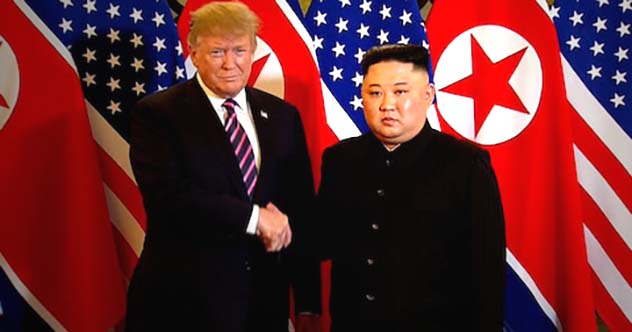
Political prison camps, forced labor, torture, executions, food insecurity, and the songbun social-classification system formed parts of a deeply coercive order. Diplomatic summits in 2019 produced striking photographs, but the cameras focused on nuclear negotiations rather than the people denied basic freedoms behind the scenery. North Korea illustrates the difference between international visibility and domestic transparency: a leader may appear constantly on global television while his citizens are prevented from seeing the world.
1. Bashar al-Assad Syria
Bashar al-Assad ranks first because few rulers in 2019 were connected to destruction on such a catastrophic scale. What began in 2011 as peaceful protests against authoritarian rule became a devastating war after the government met dissent with detention, torture, and lethal force. Syrian government forces and allies were repeatedly accused of indiscriminate attacks on civilian areas, hospitals, schools, and rescue workers.
By 2019, hundreds of thousands had been killed during the conflict, millions had fled the country, and millions more were displaced internally. Government detention facilities became synonymous with torture, disappearance, and death. Other armed groups also committed atrocities, including ISIS and abusive opposition factions, but Assad’s state possessed the institutions, armed forces, aircraft, prisons, and international backing used to conduct repression at a national scale.
Syria received the lowest possible aggregate score in Freedom House’s 2019 global assessment. That number cannot capture a missing parent, a destroyed neighborhood, or a child raised in a refugee camp. Statistics help measure catastrophe; they should never be mistaken for the catastrophe itself.
What These Dictatorships Had in Common
They Turned Institutions Into Decorations
Most authoritarian governments kept constitutions, courts, parliaments, ministries, and elections. The problem was not always the absence of institutions; it was their capture. Courts punished opponents instead of restraining officials. Legislatures approved decisions rather than debating them. Elections measured obedience more reliably than public preference.
They Controlled Information Before Controlling Behavior
Censorship was not simply about deleting a newspaper article. It shaped what citizens could know about corruption, shortages, war, public health, and one another. In the most closed systems, the state monopolized facts. In more connected systems, authorities mixed censorship with surveillance, propaganda, online harassment, and manufactured confusion.
They Made Fear Administrative
Repression often looked less cinematic than people imagine. It appeared as a denied passport, an employer ordered to fire someone, a midnight summons, a relative questioned, a website blocked, or a court date postponed again. Dictatorship survives not only through spectacular violence but through thousands of small warnings that teach citizens where the invisible walls stand.
Experiences and Lessons From Studying the Worst Living Dictators of 2019
Reading about authoritarian rule for hours produces an uncomfortable experience: the headlines begin to look different, but the mechanics begin to look familiar. One country has oil, another has nuclear weapons, another has a revolutionary party, and another has a president who insists every election victory is a national love letter. Underneath the costumes, the systems repeatedly rely on the same toolsfear, isolation, patronage, censorship, and the destruction of peaceful alternatives.
The first lesson is that propaganda rarely needs to persuade everyone. It only needs to dominate public space, exhaust critics, and make truth feel expensive. Citizens may privately laugh at official television or ridiculous personality cults, yet still understand that laughing in the wrong room can cost a job, an education, or freedom. Humor becomes a survival tool, but it does not erase danger. People joke because the absurdity is real and because fear needs somewhere to breathe.
The second lesson comes from refugee and survivor testimony: repression is experienced through uncertainty. Families often do not know whether a detained relative is alive, where that person is held, what charge exists, or whether asking questions will create another arrest. Outsiders naturally search for clear totals, dates, and legal labels. Victims frequently live inside unanswered questions. That gap should make writers careful. A neat paragraph can describe a messy reality, but it should never pretend to tidy it.
The third lesson is that dictatorships are not maintained by one frightening personality alone. They require officers, judges, propagandists, business allies, party officials, informants, and foreign partners. Focusing only on the ruler can accidentally turn politics into villain biography. Personal power matters, but networks make it durable. The leader is the face on the poster; the system is everyone required to hang the poster, praise it, protect it, and report anyone who takes it down.
The fourth lesson is that economic pain does not automatically produce political change. People struggling to find food, medicine, fuel, or safe transportation may have less time and energy to organize. Governments can also redirect anger toward sanctions, foreigners, minorities, saboteurs, or vague conspiracies. Material crisis can weaken a regime, but it can also deepen dependence on the same state that helped create the crisis.
The fifth lesson is personal for any reader in a freer society: democratic habits are less glamorous than democratic slogans. Independent courts, local newspapers, transparent budgets, boring committee hearings, protected protests, and peaceful transfers of power may not make thrilling television. That is partly the point. Healthy institutions prevent politics from becoming a permanent emergency starring one indispensable man.
Finally, researching these regimes should create respect for the people resisting them, not fascination with the rulers. Journalists continued reporting from exile. Families searched for the disappeared. Lawyers defended clients in politicized courts. Citizens shared forbidden information, documented abuses, preserved evidence, and organized despite enormous risks. Dictators often look powerful because they control the stage. The quieter story is that countless people keep refusing to applaud.
Conclusion
The top 10 worst living dictators of 2019 ruled very different countries, but each concentrated power by weakening the public’s ability to remove, restrain, or even openly criticize the government. Some relied on total isolation; others preferred managed elections and digital surveillance. Some presided over mass atrocities and war; others built quieter systems of indefinite rule, censorship, and corruption.
The ranking is necessarily subjective, and it should be read as a historical guide rather than a permanent verdict. Leaders fall, systems evolve, evidence develops, and countries cannot be reduced to the people who govern them. The most important conclusion is not that ten men were unusually cruel. It is that institutions matter, information matters, peaceful opposition matters, and concentrated power becomes dangerous when nobody can say “no” without wondering who is listening.