Winning a year’s supply of something sounds like the kind of sentence that should end with confetti, a parade, and a tiny forklift backing up to your garage. In your imagination, it is pure movie magic: towers of snacks, a freezer full of ice cream, a golden card that makes burritos appear on command, and a future where your grocery budget quietly taps out and says, “You got this.”
Then reality shows up wearing khakis and carrying official rules.
After reading through a pile of firsthand winner accounts and brand contest definitions, one thing becomes hilariously clear: a year’s supply is almost never “all you can consume until you become one with the product.” It is usually a sponsor’s carefully measured, budget-friendly, legally defensible version of a year. Sometimes that means one free item a week. Sometimes it means a stack of coupons. Sometimes it means a gift card with a value that makes you say, “Okay, that is useful,” instead of, “I am now the mayonnaise king of North America.”
Still, the stories are fantastic. Some winners struck gold. Some discovered that free pizza twice a month is somehow both underwhelming and amazing. Some got sick of the very thing they once loved. Some shared the prize, donated it, traded it, lost it, or somehow turned it into the weirdest chapter of their personal lore. And that is what makes these year’s supply winner stories so readable: they are not really about snacks or coupons. They are about expectations colliding with fine print in the funniest possible way.
What “A Year’s Supply” Really Means
Here is the truth nobody tells you when the radio host screams, “You just won a year’s supply!” The phrase is marketing poetry, not warehouse inventory. Brands often define the prize around average use, weekly redemption, or a fixed retail value. That is why one person gets 52 vouchers, another gets 12 monthly shipments, and someone else gets a gift card amount that feels less like “a year of abundance” and more like “three enthusiastic weekends.”
Oddly enough, that does not always make the prize bad. In many of the best stories, the winner loved the setup because it was manageable. A weekly smoothie. A loaf of bread now and then. A meal card that quietly carried someone through college. A pet food prize that erased one bill for months. The fantasy version is bigger, sure. But the practical version often fits real life better.
The funniest part is how often winners had to mentally translate the promise. “A year’s supply of fries” became a coupon box. “A year of tacos” became a gift card. “A year of beverages” became one case a week or one drink a day. Suddenly, people were doing math they never expected to do: How many burgers equal a year? How many smoothies make a lifestyle? How many free coffees before the cashier starts greeting you like family?
35 Stories That Show How These Prizes Really Go Down
- A college winner of free burrito meals discovered that a loaded meal card can feel more valuable than a trophy when tuition is real and lunch keeps happening.
- A gaming contest winner scored burgers for a year, only to leave the voucher booklet in a car that got sold. Somewhere out there, a stranger accidentally drove off with lunch.
- One pizza winner learned that “for a year” sometimes means two pizzas a month, which is not a fantasy banquet but is still an excellent Tuesday.
- A family that won soup found out the prize was basically a case delivered every month, which becomes a lot less glamorous after the fifth round of “guess what’s for dinner.”
- A tea winner got so much tea that the stash outlived trends, appliances, and probably several kitchen reorganizations.
- A small biweekly ice cream prize turned out to be perfect: enough to feel lucky, not enough to become emotionally dependent on mint chip.
- A pet food winner said the best part was not excitement but relief. Free pet food is not flashy, but it is the kind of prize your budget actually applauds.
- A queso prize arrived as a gift card, proving once again that melted cheese and financial convenience are a powerful combo.
- A bread prize was defined as a loaf a week, then split across family members, which may be the most wholesome use of fine print in recorded history.
- A soda winner received the prize in a regular weekly rhythm and loved it because it felt like a tiny holiday that kept showing up.
- A beer winner got a monthly allotment that somehow managed to sound responsible and slightly dangerous at the same time.
- A wings winner spent a full year proving that repetition is not a problem when hot sauce is involved.
- A reopening-day fast-food prize rewarded people who camped out in line, which is the purest example of Americans turning patience into fries.
- A pasta prize got shared across a whole family, because carbs may be personal, but free carbs are communal.
- A child who won Pepsi mostly wanted to meet a mascot and ended up learning that destiny sometimes tastes like a drink you do not even like.
- A juice winner expected magic and got dated monthly vouchers instead, which is a very adult sentence disguised as a childhood memory.
- An M&M winner opened the package expecting a jackpot and got hundreds of coupons instead, which is still a pretty strong consolation prize for candy people.
- An Oreo contest winner received weekly coupons and felt like royalty, mostly because name-brand cookies had suddenly entered the chat.
- A doughnut winner waited for hours at a grand opening and was paid in dozens, which is both heroic and slightly unhinged.
- A grocery winner got gift cards and treated life like a personal food festival for months.
- A coffee winner ended up with a refill ritual so consistent it basically became a personality trait.
- A dog food winner tried to use the victory as a sign from the universe to get a dog. The universe was overruled by Mom.
- Another dog food prize lasted longer than a year because, as it turns out, dogs do not read promotional language.
- A chicken wing winner sampled every flavor for 52 weeks and remained loyal, which is the kind of brand outcome marketing teams dream about.
- A guy sent a beer company a suggestion, got rewarded with a year’s supply, and accidentally invented the most efficient feedback form in history.
- One Applebee’s winner found out that “for a year” really meant gift cards with a hard dollar value, which is less dramatic but still very usable.
- A rib prize sounded magnificent until the winner discovered that even beloved foods can become a lot when they keep showing up with barbecue sauce.
- A bacon winner got coupons that expired before the calendar had the decency to finish the year, so the freezer had to step in like a supporting actor.
- A band won what sounded like free fast food glory, only to realize the prize had to be split six ways, which is how math ruins a rock-and-roll moment.
- A teenager won gum through a gaming competition and was fully satisfied, because adolescence is the golden age of appreciating bulk gum.
- A smoothie promotion for people willing to stand in line turned into 52 drinks, which is basically hydration with a backstory.
- A Wendy’s winner got a gift card and immediately stress-tested the menu, as any responsible citizen would.
- A Hot Pockets complaint somehow turned into a golden coupon and eventually into long-term food fatigue. That is the full hero’s journey, but microwaved.
- An energy drink prize arrived in such quantity that it became a dorm-wide social event and possibly a threat to normal sleep cycles.
- A burrito winner used the freebies generously, handing them to friends, family, and strangers, which proves the best year’s supply stories are often about sharing.
- A free-fries winner got so many coupons that generosity became the only realistic survival strategy.
- Another burrito winner got tired of the weekly routine, negotiated with a manager, and converted leftover coupons into a catered taco spread. Honestly? Elite move.
- A cherry soda winner ended up with pallets in the garage, which is exactly the level of suburban chaos these prizes deserve.
- A chicken-shop winner found out the weekly value sounded generous until one real order blew past the allowance like it had somewhere to be.
- A printer paper winner learned that even “free forever” can become too much when the mail keeps arriving and your actual need is close to zero.
Why These Winner Stories Are So Funny
The humor comes from the gap between the phrase and the product. “A year’s supply” is so oversized in our minds that the real version almost always lands with a tiny comic thud. Not because the prize is worthless, but because the human brain hears “year’s supply” and immediately imagines industrial shelving.
That mismatch creates every kind of comedy. The winner who expected endless fast food and got a modest gift card. The person who suddenly had to redeem exactly one item per week like they were maintaining a subscription to their own luck. The kid who won something they did not even like. The family who found out a “year” can shrink suspiciously once expiration dates enter the room.
But the stories are not just funny. They are weirdly revealing. They show how people actually use prizes when real life gets involved. Some maximize every coupon like strategic geniuses. Some forget about redemptions and let value expire. Some share everything. Some discover that having too much of one thing is the fastest route to never wanting it again. If romance dies in routine, apparently so can enthusiasm for free burritos.
When A Year’s Supply Is Actually a Great Prize
For all the jokes, a lot of these prizes genuinely helped people. College students loved meal cards. Parents appreciated diapers, wipes, and groceries. Pet owners were thrilled by food or routine care. Even winners who called the prize “lame” usually still used it. Free is free, and free with structure is often easier to enjoy than a one-time avalanche of product you have to store, carry, and explain to your guests.
That is the hidden lesson in these contest winner stories: the best year’s supply is not always the biggest one. It is the one that fits your life. A weekly smoothie is fun if you already pass the shop. A daily coffee works if you are a creature of habit. A burger booklet is amazing until you lose it. A garage full of soda is incredible until you have to move.
In other words, the dream prize is personal. Free pet food may sound less exciting than free nachos, but ask your wallet which one it wants.
The Fine Print Always Gets the Last Laugh
If these stories teach anything, it is this: read the details before naming your future children after the brand. Find out whether the prize is coupons, gift cards, shipments, daily credits, or weekly redemptions. Check whether it expires, whether it accumulates, whether it is transferable, and whether it is based on “average use” rather than your personal level of enthusiasm.
That does not ruin the fun. It improves it. Once expectations match reality, these contests become what they really are: quirky, memorable little windfalls. Not lifetime wealth. Not a warehouse miracle. Just a very funny way to get free stuff and a story you will be telling at parties long after the last coupon is gone.
More Experiences From the Year-Supply Universe
What makes these winner experiences stick is how ordinary life keeps barging into the prize. The college student with free meals did not just win food; they won breathing room. The parent with diaper coupons did not just win baby products; they won a lighter month. The person with free groceries did not describe luxury in the glamorous sense. They described the simple joy of saying yes at checkout without doing emergency calculator work in their head. That is why so many of these stories feel more human than flashy. The prize is funny. The effect is real.
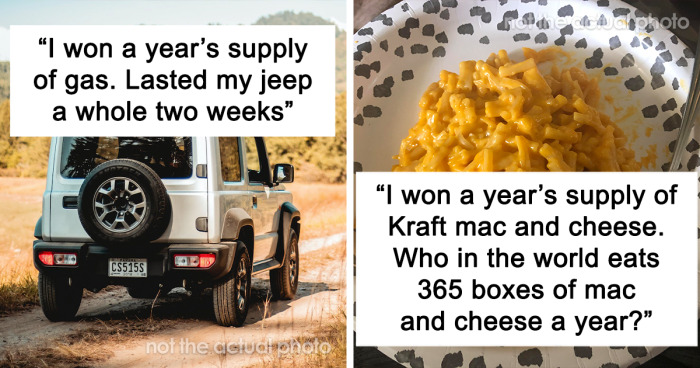
Then there are the winners who discovered that abundance can become a part-time job. Weekly coupons sound easy until you are remembering redemption dates like it is a side quest. A box of 365 fry coupons sounds incredible until you realize you must either become the mayor of French fries or start gifting them to everybody you know. Several winners solved the problem exactly the way normal people do: they shared. Friends got fed. Coworkers benefited. Family members suddenly became very interested in your social calendar. Free food has a remarkable ability to make you popular.
Some of the best stories come from the winners who adapted on the fly. One burrito champion turned leftover freebies into a catered lunch. Another prize recipient donated extra supplies. Someone else stretched a movie-card prize for years by being strategic. These are not just stories about winning; they are stories about improvising. The contest gives you the headline. Real life writes the ending.
And yes, sometimes the ending is absurd. A child wins soda and does not want it. A burger booklet vanishes into a sold car. A winner suspects the cashier quietly rigged destiny in their favor. A product arrives so slowly that the “year’s supply” is almost over before the package shows up. A beloved snack becomes the very thing you never want to see again. That emotional arc is surprisingly common: excitement, overexposure, mild regret, then a funny story forever.
In the end, that may be the real prize. Sure, the coupons matter. The gift cards matter. The free coffee, wings, burritos, smoothies, fries, soda, bread, bacon, diapers, and dog food all matter in practical ways. But what lasts even longer is the story of how it happened. People do not just remember the product. They remember camping outside a grand opening, opening the weird candy bag, sending the complaint email, entering the goofy drawing, or randomly being the only person who showed up. A year’s supply may not always fill your pantry the way your imagination hoped. But it absolutely fills your anecdote inventory, and that supply seems to last forever.
Conclusion
So, how did it go down for people who won a year’s supply of something? In the funniest, most human way possible. The prizes were smaller, stranger, and more fine-print-heavy than the fantasy version. But they were also useful, memorable, and often surprisingly generous once real life entered the equation.
That is why these 35 stories work so well. They are not just contest winner stories. They are little case studies in hope, hype, budgeting, appetite, and the universal truth that free stuff is wonderful right up until you have to find shelf space for it. If you ever win a year’s supply of anything, celebrate first. Then read the rules. Then maybe clear a drawer, a freezer shelf, or a corner of the garage. Just in case destiny arrives in coupon form.