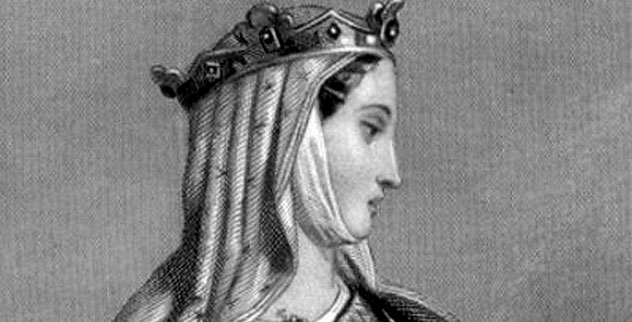
History has never suffered from a shortage of powerful women. It has, however, occasionally suffered from historians who forgot to mention them, minimized their authority, blamed them for everything, or reduced complicated political careers to romantic gossip.
The women on this list governed kingdoms, redirected empires, commanded armies, shaped religions, expanded trade, reformed institutions, and influenced the lives of millions. Some used their authority constructively. Others paired impressive achievements with repression, persecution, warfare, or colonial expansion. Frequently, they did bothbecause history rarely sorts its major figures into tidy boxes labeled “hero” and “villain.”
Ranking the most powerful women in history is inevitably subjective. This list emphasizes direct political authority, geographic reach, control over institutions, international influence, and long-term historical impact. Fame helped, but actual power mattered more. A memorable portrait is nice; command of a treasury, army, court, or government is considerably more persuasive.
What Made These Historical Women So Powerful?
Power is not simply popularity, wealth, or having an impressive title embroidered on several thousand banners. For this ranking, a woman needed to influence major decisions rather than merely appear beside the person making them.
Some women ruled in their own names. Others governed as regents, royal partners, or political power brokers. Their authority came from different sources: inheritance, military success, marriage, electoral politics, religious legitimacy, administrative skill, or an exceptional ability to survive court intrigue without accidentally drinking the poisoned wine.
Their legacies are also evaluated honestly. Building an empire may demonstrate extraordinary power, but it can also involve conquest, exploitation, forced conversion, censorship, or violence. Historical importance is not the same as moral approval.
10. Eleanor of Aquitaine: The Medieval Dynasty Builder
Eleanor of Aquitaine was one of the wealthiest and most politically significant figures of medieval Europe. As the sovereign duchess of Aquitaine, she controlled a vast territory in what is now southwestern France. She became queen of France through her marriage to Louis VII and later queen of England after marrying Henry II.
Her influence extended far beyond ceremonial queenship. Eleanor participated in the Second Crusade, supported her sons during their revolt against Henry II, endured years of confinement, and returned to public authority after Henry’s death. While her son Richard I was away on crusade, she helped govern England, raised money for his ransom, and defended his interests against political rivals.
Eleanor also helped construct one of Europe’s most influential royal networks. Her children and grandchildren occupied thrones across the continent, giving her dynastic decisions consequences that lasted for generations. Medieval politics was essentially a family group chat with castles, and Eleanor was often the most capable person in it.
9. Empress Theodora: The Power Beside the Byzantine Throne
Theodora rose from a socially disadvantaged background to become one of the most influential women in the Byzantine Empire. As the wife and political partner of Emperor Justinian I, she participated in imperial decision-making, received diplomats, supported religious factions, and built an independent network of allies.
Her most famous moment came during the Nika Revolt of 532, when riots threatened to remove Justinian from power. According to the traditional account, imperial officials considered fleeing Constantinople, but Theodora argued that abandoning the throne would be worse than death. The government stayed, defeated the rebellion, and retained control of the empire.
Her influence has also been associated with laws that improved certain protections for women, particularly measures addressing forced prostitution, marriage, property, and abuse. The exact degree of her authorship remains debated, but contemporary and later sources agree that she was far more than a decorative empress. Her mosaic in Ravenna does not portray a woman standing quietly behind her husband. It portrays a ruler.
8. Cleopatra VII: Egypt’s Diplomatic Strategist
Cleopatra VII has been buried beneath so many romantic legends that her political career sometimes disappears completely. In reality, she was the last active ruler of Egypt’s Ptolemaic dynasty, governing for nearly three decades during a period when the Roman Republic was swallowing the Mediterranean world.
Educated, multilingual, and economically informed, Cleopatra presented herself as both a Hellenistic monarch and a traditional Egyptian ruler. She restored her position after being driven from Alexandria, secured an alliance with Julius Caesar, and later formed a political and military partnership with Mark Antony.
These relationships were not merely love stories with unusually large naval budgets. They were attempts to preserve Egyptian sovereignty by working through Rome’s internal power struggles. Cleopatra controlled enormous agricultural wealth, financed military campaigns, negotiated at the highest diplomatic level, and briefly expanded her kingdom’s regional influence.
Her defeat by Octavian ended independent Ptolemaic rule, but Roman propaganda helped turn a sophisticated monarch into a cautionary tale about dangerous female seduction. The myth became famous; the administrator behind it was even more formidable.
7. Empress Dowager Cixi: The Ruler Behind China’s Throne
Empress Dowager Cixi dominated Qing court politics for much of the period between 1861 and 1908. Beginning as an imperial concubine, she became the mother of an emperor and later served as regent during the reigns of two young monarchs. Although she never formally took the title of emperor, major decisions routinely passed through her hands.
Cixi governed during an extraordinarily difficult era marked by domestic rebellions, foreign intervention, military defeats, financial pressure, and demands for modernization. She supported portions of the Self-Strengthening Movement, including selected military, industrial, educational, and diplomatic reforms. At other moments, she resisted changes that threatened the court’s authority.
Her legacy remains controversial. Older accounts often portrayed her as almost cartoonishly corrupt, while later scholarship has offered a more complicated assessment. She was neither the sole cause of the Qing dynasty’s decline nor a misunderstood modern democrat hiding inside the Forbidden City. She was a skilled survivor who preserved her dominance for nearly half a century while China’s imperial system cracked around her.
6. Indira Gandhi: India’s Formidable Prime Minister
Indira Gandhi became India’s first female prime minister in 1966 and eventually served for almost 16 years. She centralized authority within the government and the Indian National Congress, building a political identity independent of her father, Jawaharlal Nehru.
Her government nationalized major banks, promoted agricultural production, strengthened India’s international position, and led the country during the 1971 war that resulted in the creation of Bangladesh. India also conducted its first nuclear test during her leadership in 1974, announcing itself as a major strategic power.
Yet Gandhi’s record includes one of the darkest episodes in modern Indian democracy. During the Emergency from 1975 to 1977, civil liberties were suspended, political opponents were jailed, the press was censored, and abusive state campaignsincluding forced sterilizations associated with her son Sanjay’s political programcaused widespread suffering.
Voters removed her from office in 1977, but she returned after winning the 1980 election. Her career demonstrates both the possibilities and dangers of concentrated executive power. She broke a historic gender barrier and then proved that authoritarian temptation is, unfortunately, an equal-opportunity problem.
5. Isabella I of Castile: The Queen Who Reshaped the World
Isabella I secured the throne of Castile after a succession struggle and governed alongside Ferdinand II of Aragon. Their marriage linked two major crowns and helped establish the foundations of a more unified Spanish monarchy, although their kingdoms retained separate institutions.
In 1492, their forces captured Granada, ending the last Muslim-ruled kingdom on the Iberian Peninsula. That same year, Isabella supported Christopher Columbus’s Atlantic voyage, setting in motion European colonization in the Americas and a global transformation involving commerce, conquest, migration, disease, forced labor, and cultural destruction.
Her reign strengthened royal administration and elevated Spain into an emerging international power. It also supported the Spanish Inquisition and ordered the expulsion of Jews who refused conversion. Muslim communities later faced coercive conversion and expulsion as well.
Isabella’s decisions therefore changed history on several continents, but enormous influence does not erase enormous harm. Her career is a reminder that a powerful ruler can build an effective state while making choices that devastate vulnerable populations for centuries.
4. Hatshepsut: The Pharaoh Who Made Prosperity Monumental
Hatshepsut began as regent for the young Thutmose III but eventually adopted the full titles and symbols of an Egyptian pharaoh. She ruled for roughly two decades during the prosperous Eighteenth Dynasty, presenting herself not merely as a queen temporarily minding the palace, but as the divinely legitimate king of Egypt.
Her reign emphasized economic stability, trade, architecture, and religious legitimacy. A celebrated expedition to the land of Punt brought valuable goods to Egypt, while her building program produced temples, chapels, statues, and obelisks. Her mortuary temple at Deir el-Bahri remains one of ancient Egypt’s architectural masterpieces.
Later rulers attempted to remove or obscure portions of her public image, possibly for dynastic rather than purely gender-based reasons. The campaign was unsuccessful in the long run. Stone monuments are famously stubborn witnesses.
Hatshepsut demonstrated that a woman could occupy one of the ancient world’s most masculine political and religious offices while maintaining stability, wealth, and administrative continuity. She did not simply borrow pharaonic power; she redesigned its imagery around herself.
3. Elizabeth I: The Queen Who Stabilized a Kingdom
Elizabeth I inherited an England divided by religion, threatened by foreign powers, and uncertain about succession. During her reign from 1558 to 1603, she established a Protestant religious settlement that sought outward conformity while avoiding some of the more extreme policies demanded by competing factions.
Her government survived assassination plots, papal opposition, war with Spain, and the attempted invasion of the Spanish Armada in 1588. Elizabeth carefully managed her public image, presenting herself as a monarch married to her kingdom. Her refusal to marry also prevented a foreign husband or domestic favorite from formally claiming royal authority.
The Elizabethan era witnessed maritime expansion and remarkable literary achievement, although later generations exaggerated it into an uncomplicated golden age. England’s campaigns in Ireland were brutal, and overseas ventures helped establish patterns that would eventually support colonial expansion and the slave trade.
Elizabeth’s greatest strength may have been political balance. She delayed decisions, played rivals against one another, protected royal authority, and survived crises that could easily have destroyed a less patient ruler. Sometimes power looks like charging into battle. Sometimes it looks like making everyone wait while you consider the paperwork.
2. Catherine the Great: Russia’s Enlightened Autocrat
Catherine II came to Russia as a minor German princess and seized power in a 1762 coup against her husband, Peter III. She then ruled for 34 years, expanded the Russian Empire, strengthened its position in European politics, and became one of the eighteenth century’s most famous monarchs.
Catherine corresponded with Enlightenment thinkers, promoted education, supported the arts, reorganized provincial administration, and attempted to modernize Russian law. She encouraged vaccination by publicly receiving an early form of smallpox inoculation, an unusually bold endorsement when many people regarded the procedure with terror.
Her armies defeated the Ottoman Empire, and Russia annexed Crimea during her reign. She also participated in the partitions of Poland, extending Russian territory westward. These achievements made Russia a greater power but imposed imperial rule on additional populations.
Catherine’s enlightened reputation had strict limits. Serfdom expanded, noble privilege remained entrenched, and the Pugachev Rebellion encouraged a more conservative approach to reform. She admired liberty in philosophical correspondence while governing through autocracy at homea contradiction that apparently did not interfere with the mail service.
1. Wu Zetian: China’s Only Female Emperor
Wu Zetian ranks first because she achieved something no other woman in imperial Chinese history accomplished: she ruled under the title of emperor in her own name. Beginning as a concubine in the Tang court, she became empress, exercised authority beside Emperor Gaozong, governed through her sons, and finally established her own Zhou dynasty in 690.
Wu expanded the use of civil service examinations and promoted officials whose advancement depended more on ability and loyalty than aristocratic birth. Her government supported agriculture, strengthened administration, patronized Buddhism, and maintained Chinese influence across a vast and culturally dynamic empire.
Her rule was also ruthless. Secret-police networks, political purges, executions, and forced removals helped eliminate rivals. Some hostile stories about her were amplified by later writers uncomfortable with a woman occupying the supreme masculine office, but the violence of her government cannot be dismissed entirely as sexist propaganda.
Wu Zetian mastered the institutions designed to exclude her, changed the dynasty, adopted the highest imperial title, and controlled one of the world’s largest states. Plenty of rulers inherited power. Wu walked into a system that said a woman could never become emperor and effectively replied, “Your policy has been updated.”
Experiences and Lessons From Exploring Powerful Women in History
Experience Power Beyond Famous Titles
One of the most useful experiences when studying these women is learning to separate formal office from practical control. Hatshepsut and Wu Zetian claimed the highest available titles, while Cixi exercised enormous authority without formally becoming emperor. Theodora influenced policy as an imperial partner, and Eleanor governed through property, family connections, regency, and negotiation.
A good research exercise is to ask who controlled appointments, money, military forces, diplomatic access, and succession. The answer may be different from the name printed at the top of the royal family tree. This approach also makes history more interesting because it reveals that political power often operates through relationships and institutions rather than dramatic speeches alone.
Read Historical Propaganda With Caution
Studying powerful women provides a practical lesson in media literacy. Cleopatra was described by Roman enemies who benefited from presenting her as a foreign seductress. Wu Zetian’s reputation was shaped by later Confucian historians who regarded female sovereignty as a threat to political order. Cixi became the subject of sensational stories that mixed genuine failures with prejudice and rumor.
The experience can feel surprisingly modern. Political figures are still reduced to appearance, personality, family relationships, or gendered stereotypes. Comparing hostile accounts with administrative records, material evidence, and modern scholarship helps readers recognize how reputations are manufactured. It does not require turning every criticized ruler into a misunderstood saint. It simply requires better evidence than “someone at court wrote an angry paragraph.”
Explore the Physical Evidence of Authority
Another rewarding way to experience this topic is through objects and places. Hatshepsut’s temple and statues show how she transformed royal imagery. Theodora’s mosaic at Ravenna places her opposite Justinian with an imperial court of her own. Portraits of Elizabeth I communicate authority through crowns, pearls, maps, globes, and carefully constructed symbolism.
Museum collections, architectural plans, coins, letters, legal records, and contemporary artwork make political history tangible. A coin bearing Cleopatra’s face is not merely decoration; it is government messaging that circulated through daily economic life. A monumental obelisk is not just an enormous stone object with transportation problems. It is a public statement about divine approval, resources, labor, and permanence.
Compare Achievement With Human Cost
The most important experience is resisting the temptation to treat power as automatically admirable. Isabella strengthened royal government and helped launch Spain’s global expansion, but her policies also supported persecution and expulsion. Catherine promoted education while preserving serfdom. Indira Gandhi won a major war and enhanced India’s international influence, yet suspended democratic rights during the Emergency.
Readers can create a two-column timeline for each ruler: one side for state-building achievements and the other for repression, warfare, displacement, or exclusion. This exercise produces a richer understanding than either hero worship or total condemnation. History is not a talent competition in which the winner receives a flawless moral record.
Recognize Different Leadership Strategies
These women also demonstrate that leadership has no single personality type. Elizabeth often succeeded through caution and delay. Catherine built intellectual networks and cultivated elite support. Wu Zetian recruited new officials while destroying rival power centers. Eleanor relied on dynastic relationships, travel, negotiation, and sheer longevity.
The practical lesson is that power depends on context. A strategy effective in an imperial court may fail in a modern democracy, and military victory cannot substitute indefinitely for legitimacy. Strong leaders understand institutions, information, alliances, and timing. The wisest ones also recognize limitsalthough, as this list repeatedly demonstrates, recognizing limits has never been history’s most popular executive skill.
Conclusion: Power, Legacy, and Historical Memory
The most powerful women in history did not follow a single path. Some inherited kingdoms, some married into royal families, one became an elected prime minister, and others seized opportunities created by succession crises. What united them was the ability to convert access into authority and authority into lasting historical change.
Their stories also expose the complicated nature of power. Political achievement can coexist with cruelty. Administrative talent can support unjust systems. Cultural brilliance can grow beside conquest. Evaluating these women honestly means acknowledging both what they accomplished and who paid the price.
Most importantly, their careers challenge the idea that women were absent from the centers of historical decision-making. They were present in palaces, councils, military campaigns, diplomatic negotiations, religious institutions, and revolutionary moments. Sometimes their names were erased. Sometimes their actions were converted into gossip. Yet the evidence remains: women did not merely witness history. They governed it.