When a mining company buys rights to land that used to sit inside a national monument, the story is never just about rocks. It is about copper, cobalt, public lands, local economies, presidential power, desert fossils, tribal history, environmental law, and the kind of paperwork that can make even a lizard yawn. Yet the case of the Colt Mesa mining claims near Grand Staircase-Escalante National Monument in Utah shows why “former national monument land” can become one of the most loaded phrases in the American West.
In 2018, Canadian firm Glacier Lake Resources announced that it had acquired the Colt Mesa copper-cobalt property in Garfield County, Utah. The site had been within the original boundaries of Grand Staircase-Escalante National Monument, a sweeping red-rock landscape designated in 1996. After President Donald Trump reduced the monument in December 2017, areas excluded from the new boundary became newly attractive to mining interests. Glacier Lake’s announcement landed like a pickaxe on a dinner bell: investors noticed, conservationists mobilized, and public-land lawyers started sharpening their pencils.
The headline sounds simple: a mining company buys rights to former national monument land. The reality is more complicated. The company announced plans for surface exploration and drilling permits, but federal agencies had not yet received the kind of operations plan required for actual digging. Later public records from Utah’s geological reporting indicated that the company sampled the Colt Mesa property and then dropped it. Still, the episode remains a powerful example of how quickly a change in federal land protection can invite speculation, legal conflict, and public concern.
What Happened at Colt Mesa?
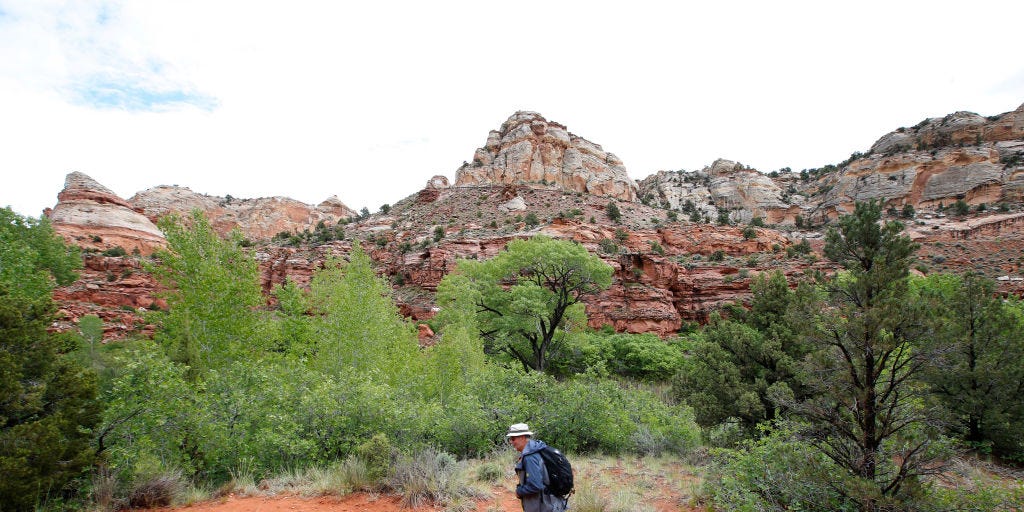
Colt Mesa is located in the Circle Cliffs region of southern Utah, a remote area known for layered geology, rugged roads, and the sort of scenery that makes cameras feel underqualified. The historic Colt Mesa mine was discovered in the late 1960s and mined intermittently in the early 1970s. Glacier Lake Resources described the property as a past-producing copper deposit with associated cobalt, zinc, nickel, and molybdenum mineralization.
The company’s timing was the spark. Grand Staircase-Escalante had protected the broader landscape from new mineral entry for more than two decades. But after the 2017 presidential proclamation reduced the monument by over 860,000 acres, the company said the area had become open for staking and exploration after a 21-year moratorium. In other words, a boundary change turned a previously protected place into a potential battery-metals play.
That mattered because cobalt and copper were, and still are, tied to the clean-energy economy. Electric vehicles, grid storage, electronics, and renewable energy infrastructure require large quantities of minerals. Mining companies understandably follow demand. But in this case, the resource was not sitting in an industrial park. It was in a landscape known for paleontology, archaeology, geology, wilderness character, recreation, and Indigenous cultural significance.
Why Grand Staircase-Escalante Matters
Grand Staircase-Escalante National Monument is not just a big patch of pretty Utah. The Bureau of Land Management describes it as nearly 1.9 million acres of cliffs, canyons, plateaus, badlands, fossils, and geological formations. Established in 1996, it was the first national monument managed by the BLM, and it became known as a “science monument” because of its extraordinary paleontological value.
The landscape preserves rock layers that read like a giant library of Earth history. Scientists have found major dinosaur fossils there, and many researchers argue that more discoveries remain locked in the sedimentary formations. The region also includes historic travel routes, sensitive desert ecosystems, and cultural resources connected to Indigenous peoples who have known and used these lands for generations.
That is why the mining-rights story became bigger than one company. To supporters of mining access, the case represented economic opportunity, domestic mineral supply, and local control. To conservationists, it showed exactly what monument opponents had denied would happen: once protections were reduced, extractive claims could appear almost immediately. To many readers, it felt like watching someone remove the museum rope and then act surprised when people walked toward the exhibit.
The Legal Gray Zone: Can a President Shrink a Monument?
The Antiquities Act gives presidents authority to create national monuments on federal lands to protect objects of historic or scientific interest. What the law does not clearly say is whether presidents may later shrink or revoke those monuments without Congress. That silence has fueled one of the West’s most stubborn legal debates.
President Trump’s 2017 proclamation reduced Grand Staircase-Escalante to about 1,003,863 acres and split the remaining monument into three units. Lands excluded from the monument were described as open, subject to valid existing rights and applicable law, to uses including mineral entry and leasing. Conservation groups challenged the reduction, arguing that the president lacked authority to remove lands and protected objects from a monument once designated.
In 2021, President Joe Biden restored Grand Staircase-Escalante to its pre-December 2017 boundaries. The restoration proclamation stated that the broader landscape itself contained objects of historic and scientific interest requiring protection and noted that ordinary land-management tools did not provide the same protection as monument status, including withdrawal from public land, mining, and mineral leasing laws. In 2023, a federal judge dismissed Utah’s challenge to Biden’s restoration of Grand Staircase-Escalante and Bears Ears, though public-land fights rarely disappear quietly. They tend to hibernate like legal marmots.
Was the Mining Project Actually Moving Forward?
One important detail often gets lost in the drama: buying or announcing mining rights is not the same thing as opening a mine. A company may acquire claims, promote exploration potential, collect samples, and talk about future drilling, but federal land mining still requires steps such as notices, plans of operations, environmental review, reclamation bonding, and compliance with applicable land-use rules.
At the time, reporting showed that the BLM had received some mining claims on lands cut from Grand Staircase-Escalante, but not a completed development plan from Glacier Lake Resources. The Washington Post later reported that the company had signaled interest but did not appear positioned to start full operations, and BLM had not received exploration notices or plans for the relevant excluded lands. Utah Geological Survey reporting later listed the Colt Mesa project as acquired, sampled, and dropped.
That sequence does not make the controversy meaningless. Speculation is part of the mining business. A claim can be valuable even before a drill rig arrives. Investors may respond to mineral grades, access, policy shifts, and commodity prices. Local communities may respond to the possibility of roads, trucks, water use, dust, noise, and long-term landscape changes. Environmental groups may respond because the first claim is often a warning flare, not the whole fire.
Economic Opportunity or Public-Land Giveaway?
The debate over mining on former national monument land often splits into two broad arguments. The first says the United States needs critical minerals, and public lands should not be locked away automatically. Copper is essential for transmission lines, buildings, electric vehicles, and renewable energy systems. Cobalt has been used in batteries and high-performance alloys. Supporters argue that domestic mineral projects can reduce reliance on foreign supply chains, create jobs, and bring investment to rural communities.
The second argument says some landscapes are too scientifically, culturally, and ecologically important to be treated like a mineral warehouse. Opponents of mining at Colt Mesa emphasized that Grand Staircase-Escalante had been protected for its fossils, geology, wildlife habitat, scenery, and cultural resources. They also noted that the federal government and Utah had previously completed land exchanges connected to monument management, meaning the public had already made major policy choices about protecting the area.
Both arguments contain real concerns. America does need minerals. Rural communities do need durable economies. But public lands are not empty spaces waiting for a spreadsheet to give them purpose. Recreation, tourism, scientific research, tribal access, wildlife habitat, and intact landscapes all carry value, even when they are harder to price than a ton of ore.
Why “Battery Metals” Changed the Conversation
Glacier Lake’s announcement leaned into investor interest in battery metals, including cobalt, nickel, and copper. That phrase is important because it connects mining to climate solutions. The clean-energy transition requires mining, and pretending otherwise is like pretending your smartphone was harvested from a gentle orchard of apps.
However, the climate argument does not automatically make every mine a good mine. Responsible mineral development depends on location, environmental safeguards, community consent, water impacts, cultural-resource protection, reclamation standards, and honest accounting of risks. A copper deposit under already-disturbed industrial land raises different questions than a deposit inside a restored national monument landscape known for fossils and sacred sites.
The Colt Mesa episode therefore became a case study in the tension between green technology and land conservation. Clean energy can reduce carbon pollution, but it still has material footprints. The key question is not whether minerals are necessary. They are. The better question is where mining should happen, under what rules, and who gets a meaningful voice before the first road is widened or the first drill pad appears.
Current Status: Restored Protection and Stronger Planning
Today, Grand Staircase-Escalante is again managed as a national monument across nearly 1.9 million acres. The BLM released a proposed management plan and final environmental impact statement in 2024 for roughly 1.87 million acres, emphasizing protection of monument objects, cultural sites, paleontological resources, wildlife habitat, and traditional uses. A 2025 management plan also implemented withdrawal of federal lands in the decision area from mineral and geothermal leasing, subject to valid existing rights.
That phrase, “valid existing rights,” is the hinge on which many public-land disputes swing. Monument status generally blocks new mining claims, but it may not automatically erase rights that were valid before protection took effect. Determining validity can require technical and legal review. In plain English: if someone says, “I already had rights here,” the government may have to check whether those rights are real, current, and legally sufficient.
For Colt Mesa, the most important practical fact is that the big mining rush many feared did not materialize there. But the episode still shaped the public conversation. It showed that policy changes can trigger immediate market behavior. It also showed that monument boundaries are not abstract lines on a map. Move the line, and the rules, expectations, investors, lawsuits, and land-use conflicts may move with it.
What This Means for Public Lands Across the West
The former national monument land debate is not limited to one mesa in Utah. Across the American West, the federal government manages lands that contain minerals, fossils, grazing allotments, recreation trails, cultural sites, and wildlife corridors. These places can be beautiful, economically important, and politically explosive all at once. In land-management terms, that is not a bug; it is the operating system.
As demand grows for copper, lithium, uranium, rare earth elements, and other strategic minerals, pressure on public lands will increase. At the same time, climate change, drought, biodiversity loss, and rising recreation use are making intact landscapes more valuable. Communities near monuments and mining districts are often asked to absorb the trade-offs, while national audiences argue from far away with impressive confidence and, occasionally, very limited cell service.
The lesson from Grand Staircase-Escalante is that public-land decisions need transparency. If mining is proposed, the public should know who holds the claims, what minerals are involved, what roads and water sources may be affected, what cultural resources exist nearby, and how reclamation would be enforced. If land is protected, agencies should explain what values are being protected and how local communities can participate in management. Sunlight, in the desert and in government, is usually useful.
Experiences and Observations Related to Mining Rights on Former Monument Land
Spend time around a place like Grand Staircase-Escalante and the phrase “mineral rights” starts to feel strangely small. On paper, it sounds tidy: a claim, a parcel, a commodity, a permit. On the ground, it is dust on your boots, ravens overhead, sandstone glowing at sunset, and a road that looks harmless until a storm turns it into pudding. The land has a way of making legal language feel both necessary and inadequate.
One practical experience that comes up again and again in public-land discussions is how quickly people talk past one another. A mining supporter may see Colt Mesa and think about jobs, supply chains, domestic production, and the hypocrisy of wanting electric cars without mines. A conservation advocate may see the same mesa and think about fossils, cultural landscapes, fragile desert soils, and the danger of treating every protected place as negotiable. Both may care deeply about the future. Both may also suspect the other side has arrived with a villain costume already zipped up.
Another experience is that rural communities often carry the emotional weight of decisions made elsewhere. National monument designations, reductions, lawsuits, and restorations are debated in Washington, D.C., Salt Lake City, courtrooms, agency offices, and national media. But the people closest to the land live with the road conditions, visitor traffic, seasonal jobs, grazing rules, outfitting permits, search-and-rescue calls, and economic uncertainty. Good policy should not treat local residents as background scenery. They are not desert shrubs with opinions; they are stakeholders with bills, memories, and long histories in the region.
At the same time, public lands belong to the broader public, and many sites hold meaning far beyond county lines. Indigenous nations have cultural and spiritual relationships with landscapes that long predate federal maps. Scientists may spend decades studying fossil-bearing formations. Visitors from across the country may build lifelong memories on trails, in canyons, and under dark skies. A national monument is, by definition, a national commitment. That commitment should be serious enough to withstand both political whiplash and commodity-price excitement.
The Colt Mesa controversy also offers a lesson in patience. The announcement sounded dramatic: a mining company had acquired rights and wanted to move quickly. Then came legal challenges, agency requirements, public scrutiny, financial questions, and eventually a much quieter ending than the headline suggested. This does not mean concerns were overblown. It means land-use fights unfold in stages. The first press release is rarely the final chapter. Sometimes it is just the trailer, complete with thunder music.
For readers trying to understand similar stories, the best habit is to separate the layers. Ask whether the land is currently protected. Ask whether the claim is new or based on valid existing rights. Ask whether a company has merely announced exploration or has filed a formal plan of operations. Ask what environmental review is required. Ask which tribes, local governments, scientists, businesses, and residents have been consulted. And ask who benefits if everyone else stops paying attention.
In the end, the story of a mining company buying rights to former national monument land is not simply anti-mining or pro-mining. It is a reminder that the American West is crowded with overlapping values. Some are measured in ore grades. Some are measured in visitor spending. Some are measured in fossils, stories, sacred places, quiet, water, and the rare luxury of a horizon without machinery. The hard work is deciding which values can coexist, which cannot, and which places deserve a firm “not here.”
Conclusion
The Colt Mesa case shows how a single mining announcement can expose a much larger national debate. Glacier Lake Resources’ acquisition of rights in a former section of Grand Staircase-Escalante National Monument was not just a business move; it became a symbol of what can happen when protected public lands are reduced and reopened to extractive interest. Although the project did not become a major operating mine, it helped clarify the stakes: critical minerals matter, but so do cultural landscapes, fossils, desert ecosystems, tribal connections, and the public’s trust in land protection.
Grand Staircase-Escalante’s restored status does not end America’s mining debate. If anything, it makes the debate more precise. The country must build a cleaner energy future, but it must also choose mining locations carefully, regulate honestly, and protect landscapes whose value cannot be replaced once disturbed. Some places can support responsible extraction. Others are better left as classrooms, sanctuaries, archives, and wild reminders that not every treasure belongs in a truck.