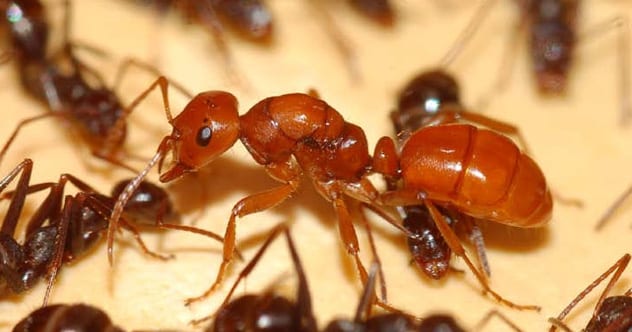
Ants look innocent at first. They are tiny, organized, and often described as hardworking little heroes of nature. Then one shows up in your kitchen, and suddenly there are 400 of them holding a family reunion inside your sugar jar. At that moment, the “cute little worker insect” story begins to fall apart.
To be clear, ants are not morally evil. They are insects, not tiny mustache-twirling villains in black capes. But if we judge them by their habitsinvading homes, farming pests, stinging repeatedly, chewing through damp wood, and running military-style coloniesants make a surprisingly strong case for being nature’s smallest supervillains.
This article explores the top 10 facts that prove ants are evil, in the most scientifically accurate and dramatically offended way possible. From fire ants to carpenter ants, from kitchen raids to underground empires, these facts show why ants deserve respect, caution, and maybe a tiny courtroom trial.
Why Do People Think Ants Are Evil?
People usually admire ants for their teamwork, strength, and survival skills. Ant colonies can function like superorganisms, with workers, queens, soldiers, and foragers all doing specialized jobs. That is impressiveuntil the “teamwork” is aimed directly at your picnic blanket.
Ants become annoying because they are persistent. They do not usually arrive alone. They leave chemical trails, recruit backup, protect their food sources, and keep searching until they find something useful. If one ant discovers a cookie crumb, the rest of the colony receives the equivalent of a breaking-news alert.
In nature, ants play important roles by aerating soil, recycling organic material, and feeding other animals. Around humans, however, they can become pests that contaminate food, damage structures, sting people and pets, protect plant-damaging insects, and spread into areas where they do not belong. In other words, ants are helpful in the forest and suspiciously criminal in the pantry.
Top 10 Facts That Prove Ants Are Evil
1. Ants Invade Homes Like Tiny Real Estate Developers
Ants do not politely knock. They enter through cracks, gaps, doors, windows, utility lines, foundations, and any opening small enough to make a human say, “How did they even get in here?” Once inside, they search for food, moisture, shelter, or nesting sites.
The reason ant infestations are so frustrating is that the visible ants are often only a small part of the problem. The real colony may be hidden outdoors, inside a wall, under a floor, in moist wood, or somewhere else that feels personally chosen to annoy you. Killing the ants you see may feel satisfying, but it often does little if the queen and nest remain active.
This is why pest experts usually focus on identification and nest location. Different ant species have different nesting habits and food preferences. Some love sweets, others prefer grease or protein, and some change preferences depending on the season. Ants are not just invadingthey are customizing the invasion.
2. Fire Ants Sting Repeatedly Because One Sting Was Apparently Not Dramatic Enough
Fire ants are among the strongest evidence in the “ants are evil” file. Unlike some insects that sting once and move on with their day, fire ants can sting repeatedly. They often attack when their mound is disturbed, and they may swarm quickly onto feet, legs, hands, pets, livestock, or unlucky lawn equipment operators.
A fire ant sting can cause burning pain, itching, swelling, and a white pustule that forms later. For many people, the reaction is uncomfortable but manageable. For others, especially those with allergies, fire ant stings can trigger serious reactions that require immediate medical attention. Outdoor workers, gardeners, children, and pets may be especially vulnerable in infested areas.
Fire ants also have excellent villain branding. Their name includes “fire,” their attacks feel like punishment from the lawn itself, and their mounds sit quietly until someone makes one wrong step. If insects had movie posters, fire ants would definitely get red lighting and ominous music.
3. Carpenter Ants Do Not Eat Your HouseThey Remodel It Without Permission
Carpenter ants are not termites, and that matters. Termites eat wood. Carpenter ants excavate it to create nesting galleries, especially in damp or moisture-damaged wood. Unfortunately, the result can still be structural trouble if the colony is active long enough.
These ants often prefer areas affected by leaks, condensation, poor ventilation, or wood decay. You might find them near window frames, roofs, decks, wall voids, bathrooms, kitchens, or anywhere moisture has softened the wood. Signs can include large dark ants, winged ants, faint rustling sounds, or piles of coarse sawdust-like material called frass.
The evil part is not that carpenter ants are hungry. It is that they behave like tiny contractors who show up uninvited, carve tunnels inside your home, and refuse to provide an estimate. If you see carpenter ants indoors, especially in winter or in large numbers, it may be a clue that a nest is nearby and a moisture problem needs attention.
4. Ants Farm Aphids Like Tiny Dairy Ranchers With Questionable Ethics
Some ants protect aphids and other plant-sucking insects because aphids produce honeydew, a sugary waste product ants like to eat. This relationship is often compared to ranching. Ants may guard aphids from predators, move them to better feeding spots, and harvest the sweet liquid they produce.
That sounds almost cute until your garden enters the conversation. Aphids can damage plants by sucking sap from leaves and stems. Heavy infestations may cause curled leaves, yellowing, stunted growth, sticky residue, sooty mold, and reduced yields. By protecting aphids, ants can make plant pest problems worse.
So yes, ants invented livestock management, but instead of cows, they chose tiny sap vampires that weaken your tomatoes. That is not just evil; it is agriculturally petty.
5. Some Ants Kidnap Other Ants
Many ant species are peaceful foragers. Others are less “community garden” and more “hostile takeover.” Certain ants raid the nests of other species and carry away brood. The captured young may later emerge as workers inside the raiding colony.
This behavior is often called slave-making in ant biology. It is one of the darker examples of ant evolution and social behavior. These ants can become highly specialized raiders, depending on stolen labor to help maintain their colony.
From a science perspective, it is fascinating. From a moral storytelling perspective, it is one tiny step away from ants wearing skull helmets and building a throne room out of crumbs. If you were looking for a fact that makes ants seem genuinely sinister, kidnapping rival ants is hard to beat.
6. Leafcutter Ants Run Underground Fungus Farms
Leafcutter ants are not evil because they eat leaves. In fact, they usually do not eat the leaves they cut. They carry pieces of vegetation back to the nest and use them to grow fungus, which becomes their food source. That means leafcutter ants are farmers.
This is scientifically amazing. It is also slightly unsettling. A colony can include workers that cut leaves, carry fragments, tend fungus gardens, care for brood, guard the nest, remove waste, and defend the queen. Their underground world can be highly organized, with different chambers serving different functions.
The villainous part is the scale and efficiency. Imagine waking up to find your plants being calmly dismantled by a workforce that has already invented agriculture, sanitation departments, nurseries, and security teams. Leafcutter ants are not just bugs. They are a six-legged civilization with landscaping opinions.
7. Pharaoh Ants Can Split Into More Colonies When Threatened
Pharaoh ants are tiny, but their strategy is deeply annoying. In some cases, sprays or disturbance can cause colonies to “bud,” meaning groups of ants split off with queens and workers to form new colonies. In practical terms, a bad control attempt can make the problem spread.
This is one reason baiting and professional identification matter. If the wrong treatment is used, the ants may scatter into multiple hidden nest sites. They can nest in wall voids, cabinets, appliances, warm areas, and hard-to-reach spaces. Their size makes them difficult to track, and their colony structure makes them difficult to eliminate.
That is not normal pest behavior. That is a backup plan. Pharaoh ants basically respond to danger by saying, “Fine, now there will be five of us.” Evil? Perhaps. Strategically gifted? Absolutely.
8. Ants Communicate With Chemical Trails Like a Secret Crime Network
Ants use pheromones, which are chemical signals, to communicate. When a foraging ant finds food, it can leave a scent trail for others to follow. Soon, a single scout becomes a moving line of workers carrying crumbs, syrup, pet food, or whatever else your kitchen accidentally donated.
This is why wiping up ant trails can help disrupt their movement. Cleaning surfaces removes food residue and may reduce the chemical signals ants use to navigate. However, if the colony is active and food remains available, new trails may appear.
The evil genius here is efficiency. Ants do not need group texts, maps, or motivational meetings. They just lay down invisible chemical instructions and suddenly your countertop becomes a highway. Humanity invented GPS. Ants invented “follow the smell to the cookie.”
9. Invasive Ants Can Damage Ecosystems and Push Out Native Species
Not all ants are a problem everywhere. Native ant species can be important parts of local ecosystems. The trouble begins when invasive ants move into new regions and spread aggressively. Imported fire ants, for example, can displace native ants, affect wildlife, damage crops, injure animals, and interfere with outdoor activities.
Invasive ants may compete with native insects, disturb food webs, and threaten vulnerable animals. Fire ants have been associated with risks to ground-nesting wildlife and young animals because they can attack in large numbers. Their mounds can also interfere with agriculture, mowing, and equipment use.
This is the point where the “ants are evil” joke becomes serious. An invasive ant colony is not merely annoying. It can change the balance of an ecosystem. Small bodies, huge consequencesclassic villain math.
10. Ants Are Almost Impossible to Impress With Your Cleaning Skills
You can wipe counters, seal crackers, sweep floors, and still find ants exploring like tiny health inspectors. That is because ants are relentless. They search widely, exploit small crumbs, detect moisture, and keep testing new routes. A home does not need to be dirty to attract ants. Sometimes a little food residue, a pet bowl, a leaky pipe, or a seasonal change is enough.
The best prevention usually combines sanitation, exclusion, moisture control, and species-specific management. That means sealing entry points, storing food tightly, cleaning spills, fixing leaks, removing outdoor nesting encouragement, trimming vegetation away from the building, and using baits carefully when needed.
The evil part is psychological. Ants make clean people feel accused. You see one ant on the counter and immediately think, “What does it know?” Then you find the trail and realize the colony has been conducting a full audit of your snack habits.
Are Ants Actually Evil or Just Extremely Good at Being Ants?
Ants are not evil in the human sense. They do not have wicked intentions. They are simply excellent at survival. Their success comes from cooperation, communication, division of labor, adaptability, and persistence. Unfortunately, those same traits make them difficult pests when they enter homes, farms, gardens, parks, and buildings.
Calling ants evil is a funny way to describe a real frustration. They are tiny but powerful. They are organized but intrusive. They are ecologically useful but personally offensive when they appear in the cereal box. The more you learn about ants, the more you realize they are not random little insects wandering around. They are members of complex colonies with strategies refined by millions of years of evolution.
That is why ant control is rarely as simple as smashing the few ants you see. A smarter approach starts with identifying the species, understanding what attracts them, and targeting the colony rather than just the scouts. In many cases, baits work better than sprays because worker ants carry bait back to the colony. Sprays may kill visible ants quickly, but they can also interfere with bait acceptance or, in certain species, worsen colony spread.
How to Keep Ants From Turning Your Home Into Their Headquarters
Seal the Easy Entrances
Check around windows, doors, baseboards, utility lines, foundation cracks, and plumbing openings. Ants do not need a grand entrance. A tiny gap can become a major travel route. Caulk cracks, repair screens, and add weather stripping where needed.
Control Food Sources
Store sugar, cereal, flour, pet food, and snacks in tightly sealed containers. Clean spills quickly, rinse sticky bottles, and avoid leaving dirty dishes out overnight. Ants have no respect for “I’ll clean it tomorrow.” Tomorrow, they bring cousins.
Fix Moisture Problems
Many ants are attracted to moisture. Carpenter ants, in particular, are associated with damp or damaged wood. Repair leaks, improve ventilation, clean gutters, and replace rotten wood when necessary.
Use Baits Carefully
Ant baits can be effective because workers carry the bait back to the colony. Choose bait based on the ant’s feeding preference, and avoid spraying near bait stations. If ants ignore one bait, they may need a different type.
Call a Professional for Serious Infestations
If you suspect carpenter ants, fire ants near high-traffic areas, pharaoh ants, or a large recurring infestation, professional pest management may be the safest and most effective choice. Some ant problems require species-specific treatment and careful nest targeting.
Personal Experiences That Make Ants Seem Even More Evil
Anyone who has dealt with ants knows the experience can feel oddly personal. One day your kitchen is peaceful. The next day, a single ant appears on the counter. You remove it. Five minutes later, three more arrive, as if the first ant filed a missing-person report. Then you look closer and find a full trail moving along the wall, behind the toaster, and directly toward the honey bottle you thought was sealed. That is when the emotional journey begins.
The worst part is how calm ants seem during the invasion. They do not panic. They do not look guilty. They simply continue their mission with the cold focus of tiny accountants. You wipe the counter, and they reroute. You move the sugar, and they investigate the fruit bowl. You clean the fruit bowl, and they discover the pet food. Ants have the energy of creatures who read your entire kitchen layout and found every weakness.
Outdoor experiences can be worse. Anyone who has stepped near a fire ant mound understands that the attack feels coordinated. At first, nothing happens. Then suddenly your ankle is on fire, and you are doing a dance that looks like a combination of emergency exercise and public embarrassment. The ants are tiny, but they somehow create a full-body crisis. It is difficult not to respect them, even while strongly disliking them.
Gardeners have their own ant stories. You notice ants climbing a plant and think, “How charming, nature is busy.” Then you inspect the leaves and discover aphids tucked underneath like unwanted tenants. The ants are not there for sightseeing. They are protecting their sugary honeydew supply. It feels like catching a tiny organized crime ring in your vegetable garden. The aphids damage the plant, the ants defend the aphids, and you are left wondering when your tomatoes became part of an insect economy.
Carpenter ant experiences are especially unsettling because they suggest something hidden. Seeing one large ant indoors may not seem dramatic at first. But when you keep seeing them, especially near damp areas, the mind begins to spiral. Is there a nest in the wall? Is the window frame damaged? What was that faint sound? Suddenly every creak in the house feels suspicious. Carpenter ants may not eat wood, but they are very good at eating peace of mind.
Even small ants can create big frustration. Pharaoh ants, odorous house ants, and pavement ants may appear in bathrooms, kitchens, offices, and break rooms. They show up in places that feel too clean, too dry, or too carefully maintained for insects. That is part of their evil charm. Ants make you question reality. How did they find the unopened snack? Why are they in the bathroom sink? Who invited them to the dishwasher?
Still, these experiences teach a useful lesson: ants reward patience and strategy. Panic-cleaning helps, but long-term success usually requires removing attractants, disrupting trails, sealing entrances, fixing moisture issues, and using the right control method. In other words, defeating ants requires thinking like antsorganized, persistent, and slightly dramatic.
Conclusion: Ants Are Tiny, Brilliant, and Deeply Suspicious
Ants are not truly evil, but they are brilliant enough to make the accusation feel reasonable. They invade homes, protect aphids, sting repeatedly, tunnel through damp wood, split colonies when threatened, and build societies so organized they make human group projects look embarrassing.
The top 10 facts that prove ants are evil are really facts that prove ants are incredibly successful. Their teamwork, communication, adaptability, and survival instincts are the same qualities that make them valuable in nature and maddening around people. The next time you see one ant on your counter, do not underestimate it. That tiny scout may be the opening scene of a much larger plot.
Respect ants. Learn from ants. Seal your snacks from ants. And if they try to move into your house, remember: the queen must not win.