Research synthesis informed by reputable U.S. home, bedding, textile, and design sources.
Note: This original guide is designed for homeowners, renters, decorators, and anyone who has looked under a bed and thought, “That storage situation needs a little diplomacy.”
A ticking stripe bedskirt may sound like a small detail, but it can do an impressive amount of decorating heavy lifting. It hides the metal bed frame, softens the hard visual line between mattress and floor, disguises under-bed storage, and gives a room a more intentional finish. Best of all, the classic stripe pattern brings personality without demanding that every pillow, curtain, and lampshade join a coordinated costume party.
Whether your bedroom leans farmhouse, coastal, cottage, traditional, Americana, or casually collected, a ticking stripe bedskirt can make the whole space feel more polished. The pattern has historic roots in practical mattress fabrics, but it has evolved into one of those rare design staples that looks equally at home in a vintage-inspired guest room or a fresh, modern bedroom with crisp white bedding.
This guide explains what makes a ticking stripe bedskirt special, how to choose the right one, how to style it without turning your bed into a striped circus tent, and how to keep it looking good after real life happens.
What Is a Ticking Stripe Bedskirt?
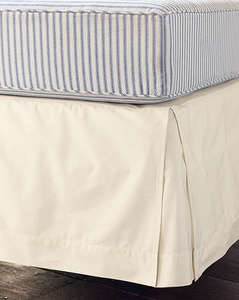
A ticking stripe bedskirt is a fabric panel that hangs from the foundation of a bed to conceal the box spring, platform base, frame, legs, and the not-so-photogenic area beneath the mattress. It is also called a dust ruffle, bed valance, or bed skirt. The ticking stripe version features narrow, evenly spaced stripes, often in navy, charcoal, soft gray, red, black, or muted blue against an ivory, cream, white, or natural cotton-colored background.
The word ticking originally referred to a tightly woven, durable fabric used to cover mattresses and pillows. Long before memory foam and mattress-in-a-box shipping labels existed, mattresses were often filled with straw, feathers, wool, or other materials that needed a sturdy cover. Ticking fabric was valued because its dense weave helped keep filling from poking through. In other words, it was the original “please do not let feathers escape at 2 a.m.” textile.
Today, ticking stripe fabric is less about containing mattress stuffing and more about adding timeless visual structure. The thin stripes create order without feeling stiff. They are bolder than a solid neutral, calmer than a large floral print, and more forgiving than bright white fabric when dust, pet hair, or a rogue sock appears nearby.
Why the Stripe Pattern Works So Well
Ticking stripes are usually narrow and repetitive, which makes them easy to layer with other bedding patterns. A navy ticking stripe bedskirt can sit comfortably beneath a white quilt, a floral duvet, a gingham throw, or a simple linen coverlet. The pattern has enough rhythm to look interesting, but it does not scream for attention from across the room.
That balance is exactly why ticking stripes remain popular in bedrooms. The look feels familiar and cozy, but it can still appear fresh when paired with clean-lined furniture, textured bedding, natural wood, or modern lighting. Think of it as the well-dressed friend who somehow looks great at both a backyard dinner and a boutique hotel.
Why Add a Ticking Stripe Bedskirt to Your Bedroom?
A bedskirt is not only decorative. It solves several practical problems while making a bed look more complete. If your frame has visible legs, exposed rails, or a box spring that does not match your room, a striped bedskirt can make the base of the bed disappear into the overall design.
It Hides Under-Bed Storage Gracefully
Under-bed storage is useful, especially in small bedrooms, apartments, guest rooms, and homes where closets seem to shrink whenever a new season arrives. Storage bins, spare blankets, luggage, wrapping paper, and off-season clothes can all fit beneath the bed. Unfortunately, clear plastic containers are not famous for their interior-design charisma.
A ticking stripe bedskirt hides those items while keeping them accessible. This is especially helpful when you want practical storage without turning your bedroom into a mini warehouse. The bedskirt creates a clean visual boundary, allowing the room to feel calmer even when life is stored a few inches away.
It Adds Pattern Without Overloading the Room
Many people want a bedroom with character but hesitate to use pattern on large surfaces. A ticking stripe bedskirt is a smart compromise. Because it sits low on the bed, it introduces color and movement without dominating the room. It can also anchor an otherwise plain bed, particularly when the duvet, sheets, and pillows are mostly neutral.
For example, a white linen duvet, cream quilt, and navy ticking stripe bedskirt create a layered coastal look. Add one blue lumbar pillow and a woven throw, and the room suddenly feels styled rather than merely assembled five minutes before guests arrive.
It Makes a Bed Look More Finished
A bare bed frame can make a room feel unfinished, even when the bedding itself is beautiful. A bedskirt visually connects the mattress to the floor and creates a softer silhouette. In design terms, it gives the bed more presence. In everyday terms, it makes the whole setup look like someone meant for it to look that way.
How to Choose the Right Ticking Stripe Bedskirt
The best ticking stripe bedskirt is not necessarily the most expensive one or the one with the loudest stripe. It is the one that fits your bed correctly, suits the room’s scale, and works with your cleaning routine. Before you fall in love with a fabric, measure your bed and think about how the skirt will function in your home.
Measure the Drop Length First
The most important measurement is the drop length, which is the distance from the top of the box spring or bed foundation to the floor. Common bedskirt drops are around 14, 15, 16, 18, and 21 inches, but the correct size depends on your specific bed.
Measure from the point where the bedskirt will sit down to the floor. Do not assume every queen or king bed uses the same drop length. A low-profile platform bed may need a short skirt, while a taller bed with a box spring and mattress topper may need a longer one. A skirt that hangs too high can look awkward, while one that puddles on the floor may collect dust like it has taken on a second job.
Match the Mattress Size, But Check the Construction
Choose the correct mattress size: twin, twin XL, full, queen, king, or California king. However, size alone is not enough. Look at whether the bedskirt has a full platform, a wrap-around design, detachable panels, or three-sided construction.
A traditional bedskirt includes a fabric platform that sits between the mattress and foundation. It stays in place well, but installing it may require lifting the mattress. A wrap-around bedskirt uses elastic or adjustable straps and can be easier to install. Detachable options often use hook-and-loop fasteners, allowing you to remove the skirt for washing without dismantling the entire bed like you are preparing for a small renovation project.
Consider Split Corners and Pleats
Split corners are useful if your bed has posts, a footboard, or visible legs. The slits allow the fabric to fit around the bed structure instead of bunching up like an unhappy shower curtain. Tailored pleats create a crisp, more formal look, while gathered bedskirts feel softer and more romantic.
For a ticking stripe pattern, tailored pleats often work especially well because the vertical stripes can align with the clean lines of the bed. A center pleat or corner kick pleat adds shape without making the skirt overly fussy. If your room has cottage, vintage, or farmhouse influences, a lightly gathered ticking stripe bedskirt can bring in a relaxed, lived-in charm.
Choose a Fabric That Fits Your Lifestyle
Cotton is a popular choice because it feels breathable, natural, and easy to style. A cotton ticking stripe bedskirt often has enough structure to hang neatly while still looking soft and casual. Cotton-linen blends offer a more relaxed, textured appearance, while linen can create a breezy, slightly rumpled look that suits coastal and European-inspired bedrooms.
If you prefer a crisp, tailored look, choose a tightly woven cotton or cotton-blend fabric with enough weight to hold its shape. If your room is more casual, a washed cotton or linen blend can look inviting without requiring military-grade ironing skills.
Pick the Right Stripe Color
Navy ticking stripes are the classic choice because they work with white, ivory, gray, tan, denim blue, sage green, and warm wood tones. Black or charcoal stripes can feel more modern and graphic, especially in a white or gray bedroom. Red ticking stripes bring vintage Americana energy, while soft blue or gray stripes create a calmer, more understated look.
When in doubt, pull a color from an existing element in the room. Match the stripe to a pillow, painted nightstand, rug detail, curtain trim, or piece of art. The goal is not to make everything match perfectly. The goal is to make the room feel connected.
How to Style a Ticking Stripe Bedskirt
A ticking stripe bedskirt is surprisingly flexible. It can be the room’s main pattern, a supporting detail, or a subtle contrast against solid bedding. The secret is balance. Let the bedskirt have a job, but do not ask it to perform every job in the room.
Pair It With Solid White or Ivory Bedding
This is the easiest and most reliable combination. A white duvet cover, cream quilt, or ivory coverlet allows the stripe to stand out without making the bed look busy. Add textured pillows in linen, waffle weave, matelassé, or knit cotton for depth.
A navy ticking stripe bedskirt with white bedding feels clean and classic. It works in guest rooms, coastal bedrooms, children’s rooms, and traditional primary bedrooms. It also gives you room to change accent pillows seasonally without replacing the entire bed setup.
Mix It With Florals, Checks, and Small Prints
Ticking stripes are pattern-friendly, but scale matters. Pair narrow stripes with a larger floral print, a small block print, or a simple gingham. Avoid combining several patterns of identical size, because they can compete instead of complementing one another.
For example, use a blue-and-white ticking stripe bedskirt beneath a white quilt, then add a floral lumbar pillow featuring shades of blue, sage, and cream. The stripes provide structure, while the floral adds softness. The result feels layered and collected rather than overly matched.
Use It in a Farmhouse or Cottage Bedroom
Ticking stripes are practically fluent in farmhouse and cottage style. Pair a striped bedskirt with painted wood furniture, a quilt, vintage-style brass lamps, woven baskets, and a soft area rug. Keep the palette warm and simple: cream, navy, faded red, dusty blue, sage, or natural linen.
For a more modern cottage look, skip overly distressed furniture and focus on clean shapes, natural materials, and a few old-fashioned details. A ticking stripe bedskirt can bring in the nostalgia without making the room feel like it is auditioning for a historical drama.
Use It in a Coastal Bedroom
Navy and white ticking stripes feel especially natural in coastal interiors. Pair the bedskirt with white linen bedding, pale wood nightstands, a woven pendant light, and a textured neutral rug. Add one or two ocean-inspired accents, such as a blue glass vase or framed shoreline artwork, but resist the urge to fill every surface with seashells. Your bedroom is a retreat, not a souvenir shop.
Use It in a Kid’s or Guest Room
A ticking stripe bedskirt is a practical choice for children’s bedrooms and guest rooms because the pattern is classic, forgiving, and easy to update. Navy stripes can work for a child’s room without feeling too juvenile, while soft gray or blue stripes can make a guest room feel welcoming and timeless.
Use the bedskirt as a base layer, then change pillows, wall art, and throws as the room evolves. This approach helps the room grow with its occupants instead of requiring a complete decorating overhaul every few years.
How to Install a Ticking Stripe Bedskirt
Installing a traditional bedskirt is simple, but it can require a little patience and possibly a second person if your mattress is heavy. Begin by removing the mattress and placing the platform portion of the bedskirt over the box spring or foundation. Align the corners carefully so the skirt hangs evenly on all visible sides.
Replace the mattress, then check the drop around the sides and foot of the bed. Adjust the fabric so it is straight, centered, and lightly touching the floor without dragging. If the bedskirt includes split corners, make sure they line up with bedposts or footboard legs.
For wrap-around styles, attach the elastic, straps, or fasteners around the bed base according to the manufacturer’s directions. These styles are convenient for people who do not want to lift a mattress every time the bedskirt needs cleaning. They can also be useful in rental homes, dorm rooms, and guest rooms where quick updates matter.
Installation Tips for a Better Finish
- Steam or lightly iron the bedskirt before installing it.
- Check the hemline from across the room, not just while standing beside the bed.
- Use upholstery pins or bedskirt pins if the fabric shifts frequently.
- Make sure storage bins beneath the bed do not push against the fabric.
- Keep the skirt slightly above the floor if you have a robot vacuum that enjoys eating fabric edges.
How to Clean and Maintain a Ticking Stripe Bedskirt
Because a bedskirt sits near the floor, it can collect dust, pet hair, and mystery fuzz with surprising enthusiasm. It does not need washing as often as sheets, but regular maintenance keeps it looking fresh and helps preserve the fabric.
Always check the care label first. Many cotton and cotton-blend bedskirts can be washed in cool or cold water on a gentle cycle and dried on low heat. Remove the skirt promptly from the dryer to reduce wrinkles. Linen and linen blends may benefit from low heat or air drying, followed by a quick steam if you want a smoother finish.
Vacuuming the visible panels occasionally with a soft upholstery attachment can help reduce dust between washings. This is especially useful if you have pets or a bed positioned near a window. A lint roller is also a surprisingly effective tool for dark ticking stripes, which can reveal light-colored pet hair like a tiny fur-based constellation.
Wash the bedskirt several times a year, or more often if you have pets, allergies, or a particularly adventurous household. If the stripes begin to fade, the hem frays, or the fabric loses its shape, it may be time to replace it. A bedskirt is a finishing layer, so it should look intentional rather than exhausted.
Common Ticking Stripe Bedskirt Mistakes to Avoid
The most common mistake is choosing the wrong drop length. A bedskirt that is too short looks accidental, while one that is too long can drag, wrinkle, and gather dust. Measure before ordering, even if you are certain your bed is “probably standard.” Bedrooms have humbled more confident people than that.
Another mistake is pairing a ticking stripe bedskirt with too many competing patterns. If the bedskirt is striped, keep at least one major bedding layer solid. A patterned duvet can work, but make sure the scale and colors complement the stripes.
Finally, do not forget the bed frame. Some modern platform beds, upholstered beds, and low-profile frames are designed to look good without a skirt. In those cases, a bedskirt may hide a feature you actually want to show off. The best design choice is not always adding more fabric; sometimes it is knowing when the bed already has enough personality.
Real-Life Experiences With a Ticking Stripe Bedskirt
The first thing many people notice after adding a ticking stripe bedskirt is not the stripe itself. It is the fact that the bed suddenly looks complete. The room may have the same mattress, same pillows, same nightstands, and same old lamp that has somehow survived three moves, but the lower half of the bed finally stops looking unfinished. It is one of those changes that feels small until you see it in place.
In a guest bedroom, a navy ticking stripe bedskirt can make basic white bedding look more thoughtful and welcoming. A simple quilt becomes a layered bed. A plain metal frame disappears. Storage bins holding extra towels, seasonal blankets, or emergency air mattresses vanish from view. Guests do not need to know that the bed is secretly sitting above the household’s backup supply of wrapping paper and extension cords.
For families with children, ticking stripes tend to be more forgiving than bright solid colors. A navy, charcoal, or gray stripe can hide minor scuffs and everyday dust better than an all-white bedskirt. That does not mean it becomes magically self-cleaning, sadly. It simply means the room can look presentable between laundry days without requiring a dramatic rescue mission every time someone drops a cracker near the bed.
Pet owners often appreciate the pattern for similar reasons. A striped bedskirt can camouflage a little more than a solid one, especially when the fabric has a natural cotton or linen texture. Of course, a long-haired golden retriever or a determined cat may still consider the skirt an exciting new curtain, tunnel, or nap zone. A bedskirt cannot solve every domestic mystery, but it can make the under-bed area easier to manage.
In a primary bedroom, the experience is often about softness and balance. A room with a large upholstered headboard or dark wood furniture can feel heavy near the floor. A light ticking stripe bedskirt breaks up that weight and adds a gentle visual rhythm. The bed appears more grounded without looking bulky. This is especially helpful in rooms where the bed is the largest piece of furniture and naturally becomes the focal point.
Many decorators also find that ticking stripes make seasonal updates easier. In summer, pair the bedskirt with white linen, a pale blue throw, and woven accents. In fall, add a rust-colored pillow, a wool blanket, or a muted plaid throw. During winter, layer in velvet, deeper navy, forest green, or warm cream. The bedskirt stays in place while the rest of the room changes around it.
There is also a small emotional advantage to a neatly dressed bed. When the bedroom looks calmer, it can feel easier to relax there. A bedskirt does not solve deadlines, laundry piles, or the eternal question of why fitted sheets fold like abstract sculptures. Still, it can make the room feel more settled. Sometimes that is enough to make bedtime feel a little less like a crash landing and a little more like an actual retreat.
The best real-world lesson is that a ticking stripe bedskirt does not need to be precious. It can be classic without being stiff, patterned without being loud, and practical without looking utilitarian. It works hardest when it supports the room quietly: hiding what needs hiding, connecting the bedding, and making the bed feel like a finished piece of furniture rather than a mattress perched on a metal frame.
Final Thoughts
A ticking stripe bedskirt is one of the easiest ways to give a bedroom more polish, texture, and personality. It can conceal under-bed storage, soften a visible frame, and bring together a bedding scheme without requiring a full room makeover. Choose the correct drop length, use a fabric that suits your lifestyle, and let the stripes work as a supporting detail rather than the only pattern in the room.
Whether you prefer classic navy, soft gray, faded red, or a subtle neutral stripe, this timeless bedding layer can make your bed look intentional, comfortable, and ready for its close-up. Even if the rest of the house is slightly chaotic, your bed can still look like it has its life together.