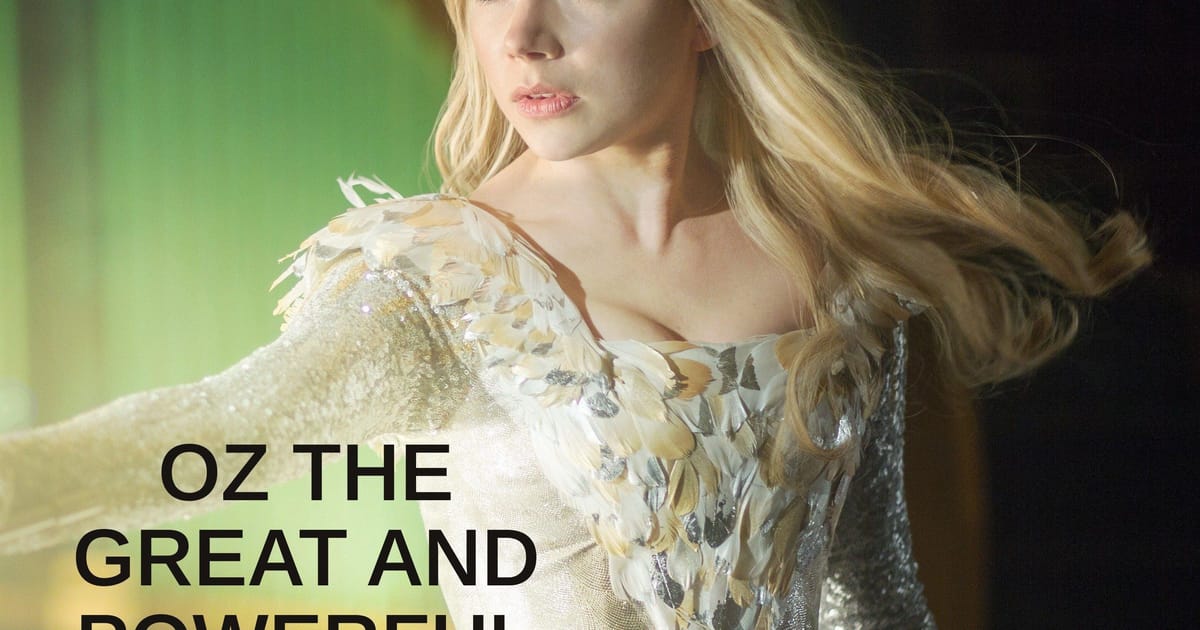
Oz the Great and Powerful is one of those Disney fantasy movies that walked into theaters wearing a sparkling coat, carrying a bag of visual tricks, and quietly hoping nobody would ask too many questions about the script. Released in 2013 and directed by Sam Raimi, the film imagines the origin story of Oscar Diggs, the carnival magician who eventually becomes the famous Wizard of Oz. It stars James Franco as Oscar, Michelle Williams as Glinda, Rachel Weisz as Evanora, Mila Kunis as Theodora, Zach Braff as Finley, and Joey King as China Girl.
As a fantasy adventure, the movie has plenty to rank: the witches, the visuals, the performances, the emotional beats, the jokes, the scares, and the big question hovering over the yellow brick road: does this prequel actually deserve a place beside one of the most beloved movie worlds in American pop culture? The answer is complicated, colorful, and occasionally as wobbly as a hot-air balloon in a tornado.
This Oz the Great and Powerful rankings and opinions article takes a balanced look at the film’s strongest and weakest elements. The movie was a commercial success, earning nearly half a billion dollars worldwide, but critical reaction was mixed. Some viewers praised its dazzling fantasy design and playful Sam Raimi energy. Others felt the story was thin, the tone inconsistent, and the casting of the Wizard less magical than intended. So let’s pull back the curtain and rank what works, what almost works, and what still feels like it was glued together by a nervous Munchkin intern.
Quick Overview: What Is Oz the Great and Powerful About?
The film begins in dusty Kansas, where Oscar “Oz” Diggs is a small-time circus magician with big dreams and flexible morals. He wants applause, money, admiration, and probably a mirror with better lighting. After a chaotic escape in a hot-air balloon, he is swept into a tornado and dropped into the Land of Oz. There, he meets three witches: Theodora, Evanora, and Glinda. The people of Oz believe Oscar may be the prophesied wizard who can defeat evil and restore peace.
The irony, of course, is that Oscar is not a real wizard. He is a showman. He has tricks, stagecraft, charm, and a talent for talking himself into trouble. The story follows his transformation from self-serving illusionist into a more courageous leader. In theory, that is a strong emotional hook. In practice, the film often shines brightest when focusing on the world around him rather than Oscar himself.
Overall Ranking: Is Oz the Great and Powerful Good?
On a simple ranking scale, Oz the Great and Powerful lands somewhere around 6.5 out of 10. It is not a disaster. It is not a classic. It is a glittery, uneven, visually rich fantasy movie with enough charm to entertain families and enough flaws to keep film fans debating it years later.
Final Verdict Ranking
Visuals: 8.5/10
World-building: 8/10
Performances: 6.5/10
Story: 6/10
Emotional impact: 6.5/10
Rewatch value: 7/10
Overall: 6.5/10
The best way to describe the movie is this: it is a beautiful postcard from Oz, but the message written on the back is sometimes smudged. You enjoy looking at it, but you occasionally wonder who exactly wrote it and why they used so many exclamation points.
Ranking the Best Parts of Oz the Great and Powerful
1. The Visual World of Oz
The strongest part of the film is easily its visual design. The movie begins in a narrow black-and-white Kansas frame before expanding into a bright widescreen fantasy world. This is an obvious tribute to the classic Oz tradition, but it still works. When Oscar enters Oz, the screen opens up like the movie just took a deep breath and remembered it had a massive effects budget.
The flowers, waterfalls, floating bubbles, Emerald City architecture, and lush digital landscapes give the film a storybook quality. Some effects have aged better than others, but the overall look remains imaginative. The world feels theatrical in a way that fits Sam Raimi’s style. It is not trying to look completely realistic. It is trying to look like a magician’s dream after eating too much candy corn.
2. China Girl as the Emotional Standout
China Girl, voiced by Joey King, is one of the movie’s most effective creations. She could have been a gimmick: a tiny porcelain child designed mainly to sell toys. Instead, she brings real tenderness to the story. Her broken legs and devastated village give Oscar a reason to care about something beyond treasure and applause.
The scene where Oscar repairs her with glue is small compared with the film’s giant battles and flying creatures, but it carries more emotional weight than many of the bigger moments. It shows that Oscar’s “magic” may be fake, but his ability to comfort someone can still be real. That is exactly the kind of idea the movie needs more often.
3. Michelle Williams as Glinda
Michelle Williams gives the film one of its calmest and most graceful performances. Her Glinda is gentle without being dull, wise without acting like she just swallowed a fortune cookie, and strong without needing to announce it every five minutes. She brings warmth to scenes that might otherwise become too artificial.
Her version of Glinda is less distant than the classic image of the Good Witch. She feels younger, more vulnerable, and more involved in the political and emotional problems of Oz. In a movie full of visual fireworks, Williams often succeeds by doing less. That restraint is valuable, especially when the rest of the film is busy waving CGI flags in your face.
4. Sam Raimi’s Playful Direction
Sam Raimi is known for kinetic camera movement, comic-book energy, spooky flourishes, and a love of practical theatricality. Those instincts help Oz the Great and Powerful feel more lively than a standard fantasy blockbuster. Raimi gives the movie jump scares, exaggerated villains, weird little creatures, slapstick moments, and a sense that anything might pop out from behind a tree.
The film is safest when it follows the Disney fantasy formula, but it is most interesting when Raimi’s personality peeks through. The flying baboons, the witch transformations, and the climactic illusion plan all benefit from his taste for showmanship and suspense.
5. The Final Illusion Plan
The climax is clever because it allows Oscar to win using the skills he actually has. He does not suddenly become a real sorcerer. He uses projection, smoke, sound, misdirection, teamwork, and theatrical timing. In other words, he defeats magical enemies by becoming the best stage magician Oz has ever seen.
This is a satisfying idea because it connects directly to his character arc. Oscar learns that being great is not the same as being powerful in the traditional sense. His power comes from imagination, presentation, and inspiring belief. That is a smart way to build the origin of the Wizard.
Ranking the Weakest Parts of Oz the Great and Powerful
1. Oscar Diggs Is Not Always Easy to Root For
James Franco’s Oscar is meant to be flawed. That is not the problem. The problem is that the movie sometimes mistakes smugness for charm. Oscar begins as a womanizing con man who manipulates people and dodges responsibility. A redemption arc can absolutely work with that kind of character, but the film does not always make his growth feel deep enough.
Franco has moments of humor and sincerity, especially with China Girl and Finley, but his performance is divisive. Some viewers find him likable enough; others feel he lacks the wonder, vulnerability, or comic sparkle needed for the role. For a movie built around the making of the Wizard, the Wizard himself can feel oddly underpowered.
2. Theodora’s Transformation Feels Rushed
Mila Kunis plays Theodora, who begins as innocent, hopeful, and emotionally open. Her eventual transformation into the Wicked Witch of the West is one of the film’s biggest plot points. The concept is strong: heartbreak, manipulation, and jealousy twist a once-good figure into a villain. Unfortunately, the execution moves too quickly.
Theodora’s emotional collapse depends heavily on romantic betrayal, which makes her arc feel smaller than it should. A future Wicked Witch deserves a more layered tragedy. Instead, the movie sometimes reduces her transformation to “man disappoints woman; woman becomes green.” That is not a spellbook. That is a group chat disaster.
3. The Script Can Be Thin
The screenplay has a strong premise but uneven development. Some scenes sparkle, while others simply move pieces around the board. The plot often feels predictable: Oscar arrives, lies, learns, chooses courage, and becomes the legend. That structure is not bad, but it rarely surprises.
The best fantasy stories make their worlds feel emotionally necessary. In Oz the Great and Powerful, the world is visually impressive, but the story sometimes feels like it is walking through attractions rather than discovering a living society. Munchkinland, the Dark Forest, the China Town village, and the Emerald City all look interesting, yet the film could have spent more time making them feel culturally and emotionally rich.
4. The Tone Wobbles
The film tries to be funny, scary, romantic, nostalgic, family-friendly, dramatic, and epic. That is a lot of hats for one wizard. Sometimes the blend works. Other times, the movie swings from goofy banter to intense witch horror so quickly that younger viewers may clutch their popcorn like a security blanket.
The darker moments are not necessarily a mistake. Oz has always had eerie undertones. But the film does not always balance its scares with enough wonder. At times, it feels less enchanted than noisy.
Character Rankings: Who Steals the Movie?
1. Glinda
Glinda ranks first because she gives the movie its moral center. Michelle Williams plays her with sincerity, elegance, and quiet strength. She makes goodness feel active rather than boring, which is harder than it sounds.
2. China Girl
China Girl is the emotional surprise of the film. Her vulnerability and courage help reveal Oscar’s better nature. She is small, breakable, and somehow tougher than half the adults in Oz.
3. Evanora
Rachel Weisz clearly enjoys playing Evanora. She brings elegance, menace, and a deliciously polished villain energy. Evanora is manipulative and cold, but Weisz gives her enough theatrical flair to make her memorable.
4. Finley
Finley, voiced by Zach Braff, is the loyal flying monkey companion. He provides comic relief and heart, even if some jokes are more cute than hilarious. He works best as Oscar’s conscience with wings.
5. Theodora
Theodora has one of the most important arcs, but the writing lets her down. Mila Kunis gives the role emotion, yet the transformation needed more time and complexity.
6. Oscar Diggs
Oscar is the main character, but he is not always the strongest presence. His arc is meaningful on paper, but the performance and writing do not consistently make him as magnetic as the movie needs him to be.
Best Scene Rankings
1. Oscar Arrives in Oz
The transition from black-and-white Kansas to the colorful Land of Oz is the film’s most magical moment. It honors the classic visual language of Oz while giving modern audiences a widescreen fantasy reveal.
2. Oscar Repairs China Girl
This quiet scene has more heart than many of the louder sequences. It shows that compassion, not fake wizardry, is Oscar’s first real step toward becoming better.
3. The Final Projection Trick
The climax succeeds because Oscar uses illusion instead of suddenly gaining supernatural powers. It is clever, character-based, and visually theatrical.
4. Theodora Becomes the Wicked Witch
Even though the transformation is narratively rushed, the visual and makeup work make the scene memorable. It is dramatic, creepy, and very Raimi.
5. The Flying Baboon Attacks
The flying baboons are scarier than expected for a PG fantasy movie. They add danger, though some younger viewers may prefer to meet them from a very safe distance, such as another state.
How Does It Compare to The Wizard of Oz?
Any Oz movie lives under the giant shadow of the 1939 classic. That is both unfair and unavoidable. The Wizard of Oz has songs, iconic performances, emotional simplicity, and images that became part of American culture. Oz the Great and Powerful is not trying to remake that film, but it borrows enough visual language that comparisons are inevitable.
As a prequel, the 2013 film is more interested in spectacle and mythology than musical innocence. It explains how the Wizard became the Wizard and how certain witches came into conflict. However, explanation is not always enchantment. Sometimes mystery is more powerful than backstory. The classic Wizard worked partly because he was strange, funny, and disappointing in a profound way. Giving him an origin story is interesting, but it also removes some of that mystery.
Still, the film deserves credit for not simply copying Dorothy’s journey. There is no Toto replacement doing all the emotional labor. There is no attempt to recreate the exact rhythm of the original. Instead, the movie builds a companion fantasy about illusion, ego, and moral responsibility. It may not reach classic status, but it is more ambitious than a lazy nostalgia machine.
Audience Opinions: Why Some Viewers Still Like It
Many fans enjoy Oz the Great and Powerful because it is colorful, accessible, and full of fantasy adventure. For viewers who love magical lands, witches, enchanted forests, and big-screen spectacle, the movie offers a generous serving. It also works as a family movie for older children who can handle some scary images and darker scenes.
The movie also benefits from its “flawed hero learns humility” structure. Oscar is not noble at first, but his journey has a clear direction. He learns to use his gifts for others rather than only for applause. That theme is simple but effective, especially for a story about a fake wizard who becomes meaningful through courage and creativity.
Critic Opinions: Why the Movie Divided Reviewers
Critical opinion was mixed because the film’s strengths and weaknesses are both obvious. Reviewers often praised the visual dazzle, fantasy design, and moments of wit. At the same time, many criticized the script, tonal inconsistency, and lack of emotional wonder. That split makes sense. This is a movie where the background sometimes has more personality than the lead character.
The film’s commercial performance proved that audiences were curious about returning to Oz, especially through a big-budget Disney lens. But box office success does not automatically equal long-term love. Over time, the movie has settled into a middle space: not forgotten, not adored, but frequently reconsidered by fantasy fans, Disney viewers, and people curious about unusual prequels.
Personal Experience and Viewing Opinions
Watching Oz the Great and Powerful feels a bit like entering a theme park ride that occasionally stops to give a lecture about morality. The first impression is visual delight. The colors pop, the flowers practically wave at you, and the Emerald City gleams like someone polished it with liquid money. If you enjoy fantasy worlds that look handcrafted even when they are heavily digital, the movie provides a fun escape.
The experience is especially enjoyable when viewed as a family fantasy rather than a direct competitor to the 1939 classic. Expecting another masterpiece is a fast road to disappointment. Expecting a strange, glossy, occasionally spooky Disney adventure is much healthier. Bring popcorn, lower the sacred-cow shield, and the movie becomes easier to appreciate.
One of the most interesting experiences while rewatching the film is noticing how much better the supporting characters work than expected. China Girl still lands emotionally. Finley is more charming than a sidekick monkey has any legal obligation to be. Glinda remains graceful, and Evanora remains fun to distrust. The movie becomes more entertaining when you stop waiting for Oscar to carry every scene and start enjoying the ensemble around him.
At the same time, the weak points become clearer with age. Theodora’s arc feels too rushed, and Oscar’s charm does not always justify the number of people willing to believe in him. The film wants him to be a lovable rogue, but sometimes he comes across as a man who should be asked to fill out several apology forms. His redemption works best in moments of action and kindness, not in romantic or comedic scenes.
For viewers who love rankings, the movie is surprisingly fun to debate. Is Glinda the best character? Absolutely. Is China Girl the emotional MVP? Very possibly. Is Evanora underrated? Yes, and she knows it. Is Oscar himself the weakest major ingredient? That depends on how much patience you have for a hero whose main superpower is confidence wearing a waistcoat.
The biggest reason the film remains watchable is that it understands the power of performance as magic. Oscar is not powerful because he can cast spells. He becomes powerful because he learns how stories, symbols, courage, and teamwork can move people. That idea is genuinely fitting for Oz. After all, the Wizard has always been about the tension between illusion and truth. The 2013 film may stumble, but when it focuses on that theme, it finds real meaning behind the curtain.
In the end, Oz the Great and Powerful rankings and opinions will always vary depending on what viewers want from Oz. If you want timeless songs and emotional perfection, this is not the yellow brick road you are looking for. If you want a visually extravagant prequel with witches, flying creatures, moral lessons, and a few wonderfully weird Sam Raimi touches, the movie still has enough sparkle to justify the trip.
Conclusion
Oz the Great and Powerful is a flawed but fascinating Disney fantasy. Its visuals, world-building, supporting characters, and final illusion concept rank among its best qualities. Its weaker areas include a thin script, uneven tone, rushed villain transformation, and a lead character who is not always as charming as the movie thinks he is. Still, the film remains an entertaining return to Oz for viewers who enjoy magical spectacle and origin-story debates.
It may not be great in the legendary sense, but it is often powerful in the visual sense. And sometimes, in a land full of witches, porcelain girls, flying monkeys, and one very ambitious magician, that is enough to keep the curtain open.
Note: This article is based on real publicly available film information, including official movie details, box-office records, review summaries, audience reception, and production background. No source links are included in the article body to keep the HTML clean for publishing.