There is a tiny travel agency hidden inside your phone, laptop, tablet, smartwatch, and wireless earbuds. Not the one that books beach vacations, sadly. This one quietly moves minerals across continents before your device ever reaches a store shelf. One of its busiest passengers is cobalt, a bluish-gray metal that helps many rechargeable batteries stay compact, powerful, and reliable.
Cobalt is not the only material inside modern electronics, but it has become one of the most debated. It helps make lithium-ion batteries work well in devices that need high energy density, meaning more power packed into less space. That is why cobalt has long been linked to smartphones, laptops, digital cameras, power tools, electric vehicles, and energy storage systems. The problem is that cobalt’s journey is complicated. It often begins in mines far from the glossy product ads, travels through refiners and battery makers, and finally lands in the sleek gadgets we casually plug in at night.
So, where does the cobalt for our electronics come from? The short answer: mostly from the Democratic Republic of the Congo, then through a global processing chain heavily shaped by China, battery manufacturers, electronics brands, and recycling networks. The longer answer is more human, more industrial, and much more important than a charging cable.
What Is Cobalt, and Why Do Electronics Need It?
Cobalt is a metallic element used in batteries, superalloys, magnets, pigments, ceramics, and industrial tools. In consumer electronics, its most famous role is inside lithium-ion batteries. These batteries power devices because lithium ions move between the battery’s electrodes as it charges and discharges. Cobalt-containing cathodes can help improve battery stability, energy density, and performance.
Many phones and laptops historically used lithium cobalt oxide battery chemistry because it can store a lot of energy in a small, lightweight package. That matters when a manufacturer wants a phone thin enough to slide into a pocket but strong enough to survive video calls, map directions, music streaming, and the occasional doom-scroll marathon.
Not every battery uses the same recipe. Some electric vehicles use nickel-manganese-cobalt batteries, while others now use cobalt-free lithium iron phosphate batteries. But cobalt remains valuable because it can improve battery safety and performance in certain chemistries. In small consumer devices, where space is precious, high energy density is still a big deal.
The Main Source: The Democratic Republic of the Congo
Most of the world’s mined cobalt comes from the Democratic Republic of the Congo, often called the DRC. The DRC sits in central Africa and has some of the richest cobalt deposits on Earth. Its southern Copperbelt region, especially around Kolwezi and neighboring mining areas, is central to global cobalt supply.
Cobalt is often mined as a byproduct of copper or nickel. In the DRC, it is commonly tied to copper mining. That means companies are not always digging only for cobalt; they may primarily be extracting copper ore that also contains cobalt. After mining, the ore is crushed, processed, and converted into cobalt-containing intermediate materials such as cobalt hydroxide. Those materials are then shipped for further refining.
This is where the supply chain becomes less like a straight road and more like a plate of spaghetti wearing a hard hat. A phone sold in the United States may contain cobalt that was mined in the DRC, processed into intermediate material, refined in China, turned into battery chemicals elsewhere, assembled into a battery cell by another supplier, and finally installed in a device by a global electronics brand.
Industrial Mining vs. Artisanal Mining
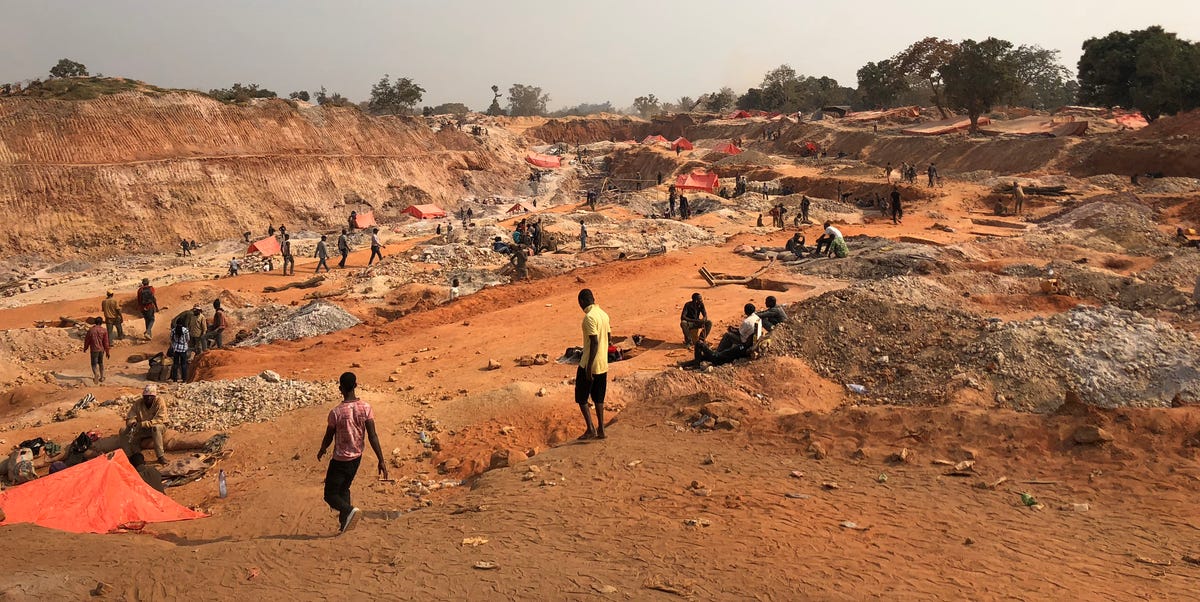
There are two broad ways cobalt is mined in the DRC: large-scale industrial mining and artisanal mining. Industrial mining involves major companies, heavy equipment, formal concessions, and large processing systems. Artisanal and small-scale mining, often shortened to ASM, involves individuals or small groups digging by hand or with basic tools.
Industrial Mining
Industrial mines produce the majority of Congo’s cobalt. These operations are large, capital-intensive, and often connected to multinational mining companies or joint ventures. They can be more traceable than informal mining, but they are not automatically problem-free. Industrial mining may raise concerns about land rights, pollution, worker safety, local compensation, and whether communities benefit fairly from the minerals beneath their feet.
Artisanal Mining
Artisanal mining produces a smaller but still significant share of cobalt and supports many livelihoods. People may dig tunnels, collect ore, wash minerals, and sell material to local traders. In some cases, artisanal mining fills an economic gap where formal jobs are scarce. However, this sector has also been associated with dangerous working conditions, child labor risks, tunnel collapses, injuries, and weak oversight.
This is the uncomfortable truth behind a very comfortable device experience. A phone may feel frictionless in your hand, but parts of its mineral supply chain can involve real friction: poverty, weak regulation, unsafe labor, and local communities carrying environmental costs.
Why China Matters in the Cobalt Supply Chain
Mining is only chapter one. After cobalt is extracted, it must be refined into forms that battery manufacturers can use. China plays a dominant role in cobalt refining and battery material production. Much of the cobalt mined in the DRC is exported as an intermediate product and processed by Chinese refiners before entering the battery supply chain.
This matters because “where cobalt comes from” is not only a mining question. It is also a processing question. If the DRC is the world’s cobalt mine, China is one of the world’s main cobalt kitchens, turning raw or semi-processed material into battery-ready ingredients. From there, cathode makers, cell manufacturers, electronics assemblers, and consumer brands build the final product.
For electronics companies, this creates both efficiency and risk. Concentrated refining capacity can lower costs and streamline production, but it can also make supply chains vulnerable to trade restrictions, export controls, price shocks, political tensions, and disruptions in one country or region.
How Cobalt Travels from Mine to Smartphone
The journey from rock to rechargeable device is long, and each step adds complexity. Here is the simplified version:
1. Ore Is Mined
Cobalt-bearing ore is extracted, often from copper-cobalt deposits in the DRC. Large mining companies may use open-pit operations, while artisanal miners may dig manually in informal sites.
2. Ore Is Processed Locally
The ore is crushed, concentrated, and treated to produce cobalt intermediates such as cobalt hydroxide. This makes the material easier to transport and refine.
3. Material Is Exported
Cobalt intermediates are shipped to refining hubs, especially in China. Other countries, including Finland, Canada, Japan, and some emerging refining locations, also play roles, but China remains central.
4. Cobalt Becomes Battery Material
Refiners turn cobalt into chemicals used in cathode materials. Battery makers combine those materials with lithium, nickel, manganese, aluminum, iron, phosphate, graphite, copper, and other components depending on battery chemistry.
5. Batteries Become Electronics
Battery cells are assembled into packs, tested, shipped to electronics manufacturers, and installed in phones, laptops, tablets, earbuds, cameras, and other devices. By the time the product reaches your desk, the cobalt has crossed a supply chain longer than most family group chats.
The Ethical Problem: Child Labor and Unsafe Conditions
Cobalt has become controversial because of human rights concerns in parts of the DRC mining sector. Reports from governments, labor organizations, journalists, and advocacy groups have documented risks of child labor, forced labor, unsafe mining, hazardous tunnel digging, and exploitation in artisanal cobalt supply chains.
This does not mean every gram of cobalt is mined by children or that every mine operates the same way. That kind of oversimplification helps no one. The reality is more complex: formal industrial mines, informal artisanal pits, traders, processors, and exporters can overlap in ways that make traceability difficult. Material from different sources may be mixed, mislabeled, or moved through trading networks before it reaches a refiner.
Responsible sourcing programs try to address these problems through mine audits, refiner due diligence, supplier codes of conduct, child labor monitoring, third-party assessments, and traceability systems. Some companies require suppliers to identify cobalt refiners and follow standards aligned with OECD due diligence guidance. These efforts are important, but they are not magic wands. A policy document cannot hold up a collapsing tunnel, and a supplier questionnaire cannot replace meaningful enforcement on the ground.
Environmental Costs Near the Mine
Cobalt mining can affect land, water, and air quality. In mining regions, communities may worry about dust, chemical runoff, heavy metals, water contamination, and the expansion of industrial sites. Processing ore can involve acids and other chemicals that must be managed carefully. Poorly controlled operations can damage soil and waterways, creating health concerns for people living nearby.
Environmental impacts also extend beyond the DRC. Refining is energy-intensive. Shipping materials around the world adds emissions. Manufacturing batteries requires clean facilities, strict quality control, and complex chemical processing. The clean-energy and electronics industries often promote a greener future, but the path to that future still depends on mining, chemistry, transportation, and industrial accountability.
Are Companies Moving Away from Cobalt?
Yes, but not completely. Battery makers and electronics companies have several reasons to reduce cobalt use: cost, supply risk, ethics, and geopolitics. Cobalt can be expensive and price-sensitive. Its supply is geographically concentrated. Its association with labor concerns creates reputational risk. For these reasons, manufacturers have invested in lower-cobalt and cobalt-free battery chemistries.
Lithium iron phosphate batteries, known as LFP batteries, contain no cobalt and have become popular in many electric vehicles and energy storage systems. Some battery chemistries reduce cobalt by using more nickel or manganese. Researchers are also working on next-generation batteries, including sodium-ion, solid-state, and other designs that could change future material demand.
However, cobalt is not disappearing overnight. Many compact electronics still benefit from cobalt-rich chemistries because they need high energy density. A smartwatch, for example, has no room for a battery the size of a sandwich. Unless consumers suddenly decide they want laptops shaped like shoeboxes, energy density will continue to matter.
The Rise of Recycled Cobalt
Recycling is one of the most promising ways to reduce pressure on newly mined cobalt. Lithium-ion batteries contain valuable materials, including cobalt, nickel, lithium, copper, aluminum, and graphite. When old electronics and vehicle batteries are collected properly, recyclers can recover some of these materials and feed them back into battery production.
Major electronics brands have announced goals to use more recycled cobalt in batteries. Recycling companies are also building systems to process old batteries at scale. This matters because today’s dead phone battery can become part of tomorrow’s battery supply, assuming it does not spend eternity in a kitchen drawer next to expired coupons and one mysterious key.
Still, recycling cannot solve everything immediately. The number of batteries reaching end-of-life is growing, but demand for new batteries is also rising fast. Recycling depends on collection systems, consumer behavior, processing capacity, and battery design. It is a crucial solution, but mining will still be needed for years.
What Consumers Can Actually Do
Consumers cannot personally audit a cobalt refinery from the couch, and nobody should pretend otherwise. But buyers do have influence. You can keep devices longer, repair them when practical, choose refurbished electronics, recycle old gadgets through reputable programs, and support companies that publish detailed supply chain reports.
Keeping a phone for four years instead of two reduces demand for new materials. Buying refurbished gives an existing device a second life. Recycling prevents valuable battery metals from being wasted. Asking brands about responsible sourcing signals that customers care about more than megapixels and shiny product launches.
The most ethical device is not always the newest one. Sometimes it is the one already in your hand, still working perfectly well after you delete 4,000 screenshots and finally update the operating system.
Why Cobalt Is a Bigger Story Than Electronics
Cobalt connects personal technology to global inequality, energy transition, industrial policy, and international trade. It is used in electronics, but it is also part of the electric vehicle revolution and renewable energy storage. As the world tries to reduce fossil fuel use, demand for battery materials has grown. That creates an awkward but necessary question: How do we build cleaner technologies without creating new forms of harm?
The answer is not to abandon batteries or ignore mining communities. It is to demand better systems. That means safer mines, stronger labor inspection, transparent trading, community investment, responsible refining, recycling infrastructure, and product designs that use fewer scarce materials. It also means recognizing that people in mining regions deserve more than a footnote in a sustainability report.
Experience-Based Reflection: What This Topic Feels Like in Everyday Life
Most people first encounter cobalt without knowing it. It is not labeled on the phone box. It does not appear as a friendly sticker that says, “Hello, I traveled through a global mineral supply chain before helping you watch cooking videos at midnight.” Instead, cobalt hides behind battery life, fast charging, slim design, and the quiet convenience of modern electronics.
Think about the ordinary experience of buying a new phone. You compare camera quality, storage, screen size, battery life, and price. Maybe you ask whether the color is too boring or whether your old charger still works. What you probably do not see is the mine, the truck, the trader, the refinery, the battery cell plant, the assembly line, and the recycling facility waiting years later at the end of the device’s life.
That gap between user experience and supply-chain reality is the heart of the cobalt story. Electronics feel personal because we use them constantly. But their materials are global. Your phone may wake you up in New York, stream music in Chicago, navigate traffic in Dallas, or handle emails in Seattle, while its cobalt story may begin near Kolwezi, pass through a Chinese refinery, and move through several suppliers before becoming part of a battery cell.
Once you know that, everyday habits start to look different. The old laptop in the closet is no longer just clutter. It is a small warehouse of metals. The phone with a cracked screen is not merely “junk”; it is a device that required mining, labor, shipping, manufacturing, packaging, and energy. Even the decision to replace a battery instead of replacing a whole device becomes more meaningful.
Many consumers also experience a kind of ethical fatigue. It can feel overwhelming to learn that coffee, clothing, chocolate, seafood, electronics, and furniture all have supply-chain concerns. At some point, a person just wants to buy headphones without accidentally becoming a global trade analyst. That feeling is understandable. The goal is not to make every consumer feel guilty for owning a smartphone. Modern life practically requires electronics. The goal is to make invisible systems visible enough that better choices become possible.
A practical experience many people can relate to is the “drawer of retired devices.” Nearly every household has one. There is an old phone that still turns on, a tablet that forgot its password, a Bluetooth speaker that charges only when the cable is angled like a yoga pose, and earbuds from three product generations ago. Those devices contain materials that took enormous effort to extract. Recycling them through certified programs is not glamorous, but it is one small way to respect the resources already mined.
Another real-world experience is noticing how brands now talk about recycled materials, responsible sourcing, carbon neutrality, and supplier audits. Some of that messaging reflects genuine progress. Some of it deserves careful skepticism. Consumers should look for details, not vague promises. A company that names its standards, publishes supplier lists, reports recycled content, and explains risk management is offering more than a feel-good slogan.
The cobalt story also changes how we think about “cheap” electronics. A low price can be wonderful for accessibility, but it may not reflect the full cost of extraction, labor, environmental risk, and waste. When a device is treated as disposable, the supply chain keeps spinning faster. When it is repaired, reused, resold, or recycled, the pressure eases a little.
In the end, cobalt teaches a surprisingly simple lesson: convenience has a geography. The power inside our electronics comes from real places, real workers, real communities, and real environmental trade-offs. Knowing where cobalt comes from does not mean giving up technology. It means using technology with sharper eyes, asking better questions, and refusing to let the shine of a screen hide the story beneath it.
Conclusion
The cobalt in our electronics mainly comes from the Democratic Republic of the Congo, then moves through a complex global chain of processors, refiners, battery makers, and device manufacturers. China plays a major role in refining, while electronics brands depend on suppliers to turn cobalt into battery-ready materials. Along the way, cobalt raises urgent questions about child labor, worker safety, environmental harm, transparency, recycling, and the future of battery technology.
There is no single easy fix. Lower-cobalt batteries help. Cobalt-free chemistries help. Recycling helps. Better audits, stronger local enforcement, safer artisanal mining systems, and fairer community benefits help too. Consumers can also make a difference by keeping devices longer, recycling old electronics, buying refurbished products, and paying attention to company sourcing practices.
Cobalt is small enough to hide inside a pocket-sized device, but its story is enormous. It begins in the ground, passes through global industry, and ends in the gadgets that shape daily life. The next time your phone battery hits 100%, remember: that little green icon has a very long backstory.
Note: This article is written for web publication and is based on current public information from mineral statistics, battery supply-chain research, labor reports, responsible sourcing standards, company sustainability disclosures, and recent reporting on cobalt mining, refining, recycling, and electronics manufacturing.