Note: Body-only HTML in English. SEO tags are placed at the end in JSON format for easy copying.
There was a time when open shelving strutted into the kitchen like it owned the place. Suddenly, upper cabinets were “too heavy,” matching dish sets became a personality trait, and everyone was supposed to display their prettiest bowls like they were auditioning for a home tour. In photos, open shelving still looks charming. In real life? It often looks like a cereal box support group.
According to today’s designers, open shelving has become one of the most overrated kitchen features you can install. Not because it is always bad, but because it is too often sold as a universal upgrade when it is really a niche design move. It photographs beautifully, feels airy at first glance, and promises easy access. But in everyday kitchens, it can create more work, less storage, and a whole lot more visual chaos than homeowners bargained for.
If you are planning a kitchen remodel, refreshing a dated cook space, or just trying to avoid expensive regret with a side of dust, here is why designers are cooling on open shelving, when it actually works, and what to choose instead.
The most overrated kitchen feature is open shelving
Let’s call it plainly: open shelving is the kitchen equivalent of buying white sneakers right before a muddy festival. It looks fantastic in the beginning, then reality clocks in.
Designers increasingly say that open shelving is overrated because it asks too much from a room that already works hard. Kitchens are not quiet little galleries. They are high-traffic, high-splatter, high-clutter zones where people cook, snack, unload groceries, search for coffee, and somehow lose the good scissors every other day. In that kind of environment, exposed storage can quickly become exposed mess.
That does not mean open shelving is automatically outdated or ugly. It means the feature is often over-promised and under-explained. Homeowners are sold the airy look, but not always the maintenance, styling pressure, and reduced storage that come with it.
Why designers think open shelving is so overhyped
1. It looks low effort, but it is actually high maintenance
Open shelves collect dust. They collect grease. They collect the fine kitchen grime that seems to float through the air the moment you toast bread, sear chicken, or boil pasta. And unlike closed cabinets, they do not give you the courtesy of hiding the evidence.
That means your plates, glassware, mugs, serving bowls, and shelves themselves need regular cleaning. Not “spring cleaning” regular. More like “again?” regular. The very feature that is supposed to make your kitchen feel light and breezy can become one more chore on an already crowded list.
2. It reduces practical storage
Traditional upper cabinets are not glamorous, but they are loyal. They hold mismatched cups, bulky appliances, half-used bags of tortilla chips, and the random serving platter you swear you need twice a year. Open shelving does not offer the same forgiveness.
With shelves, everything is visible. So you either own fewer items, store the unattractive ones elsewhere, or live with a kitchen that always looks slightly mid-unpacking. For families, avid cooks, or anyone who buys groceries in actual quantities, that is not always a fun trade.
3. It creates visual clutter fast
One of the biggest reasons designers are souring on open shelving is simple: most people do not live like a styling shoot. Real kitchens contain protein powder tubs, kid cups with cartoon lids, takeout containers, vitamin bottles, chipped mugs you cannot quite throw away, and that one giant popcorn bowl that fits nowhere gracefully. Put all of that on display and suddenly your “clean aesthetic” becomes “busy break room.”
Even beautiful objects can become overwhelming when too many are in view. Kitchens already include appliances, hardware, lighting, countertops, backsplash materials, stools, and plenty of daily activity. Open shelving adds another layer of visual information, and sometimes the room just taps out.
4. It can date a kitchen faster than people expect
Open shelving had a huge moment for years, especially in farmhouse, modern rustic, and minimalist kitchens. That popularity is exactly why some designers now view it as overdone. When a trend becomes the default shortcut for “stylish kitchen,” it can start to feel predictable.
The issue is not that shelves themselves are old news. It is that entire walls stripped of upper cabinets can make a new kitchen feel tied to one design era instead of timeless. Many designers now favor concealed storage, glass-front cabinetry, reeded cabinet fronts, or a balanced mix of open and closed elements because they age more gracefully.
5. It makes everyday life performative
Perhaps the strangest thing about open shelving is that it quietly asks you to live on stage. Your dishes must coordinate. Your pantry goods should decant attractively. Your favorite mug collection must look “curated,” not “I have emotional attachments to promotional ceramics.”
In other words, the feature can turn daily storage into a styling exercise. Some people love that. Many do not. And designers increasingly recognize that a kitchen should support your life, not demand a costume change.
Why homeowners still fall for it
To be fair, open shelving became popular for real reasons. It can make a compact kitchen feel more open. It can break up long runs of cabinetry. It can showcase beautiful dishware, handmade ceramics, or collected vintage pieces. And for homeowners who keep a tight edit on what they own, it can feel relaxed, personal, and inviting.
It also tends to look great online. Social media loves features that read instantly in a photo, and open shelving is a star in that world. A styled shelf sends an immediate message: this kitchen has taste, texture, and perhaps a suspiciously photogenic olive oil bottle.
But designers say the gap between “looks wonderful in a reveal photo” and “functions well on a Tuesday night” is exactly what makes open shelving overrated. It wins the mood board, then loses the weeknight test.
When open shelving actually works
Now for the part where nobody throws shelves directly into the sea. Open shelving can work beautifully in the right kitchen.
In a lightly used kitchen
If the space is more for coffee, casual breakfast, and entertaining than full-throttle cooking, shelves can be easier to maintain. Less cooking usually means less grease, less mess, and less shelf drama.
In a large kitchen with plenty of closed storage elsewhere
Designers are far more open to shelves when the kitchen already includes generous base cabinets, a pantry, a scullery, or nearby concealed storage. In that setup, the shelves act as accent storage, not the main event.
For a very edited collection
Open shelving works best when it holds items that are both useful and attractive: everyday plates, matching bowls, glassware, cookbooks you actually use, and a few sculptural pieces. The goal is not to turn the shelf into a gift shop. It is to keep it restrained and functional.
In specific design styles
Farmhouse, rustic, unfitted, and some minimalist kitchens can still carry open shelving well. In these spaces, shelves feel intentional rather than forced. Even then, most designers recommend using them sparingly.
What designers prefer instead
Closed cabinetry
This is not the flashy answer, but it is the smart one. Closed cabinetry gives you flexibility, cleaner sight lines, and the ability to store real-life objects without apology. It also helps a kitchen feel calmer, especially in open-concept homes where the kitchen is visible from living and dining spaces.
Glass-front cabinets
If you want openness without full exposure, glass-front cabinets are a strong middle ground. They lighten the visual weight of upper cabinets while still protecting contents from grease and dust. Reeded or textured glass is especially appealing because it softens what is inside.
A selective mix of shelves and cabinets
Many designers now recommend using one or two open shelves rather than replacing all upper cabinets. That gives you a place for display and personality while preserving the storage capacity most households need. Think of it as giving the trend a smaller role instead of letting it run the whole show.
Better lower storage
Deep drawers, pantry pull-outs, vertical dividers, appliance garages, tray storage, and thoughtful cabinet inserts are all gaining favor. These solutions make kitchens more functional without relying on exposed storage to create visual interest.
Backsplashes, lighting, and hardware for personality
One reason homeowners choose open shelving is to avoid a wall of plain cabinetry. But designers say you can add interest in smarter ways: a beautiful backsplash, warmer paint, statement sconces, custom hood details, mixed materials, or elegant hardware. In short, your kitchen can still have character without putting every mug on public display.
Other kitchen features designers also think are overrated
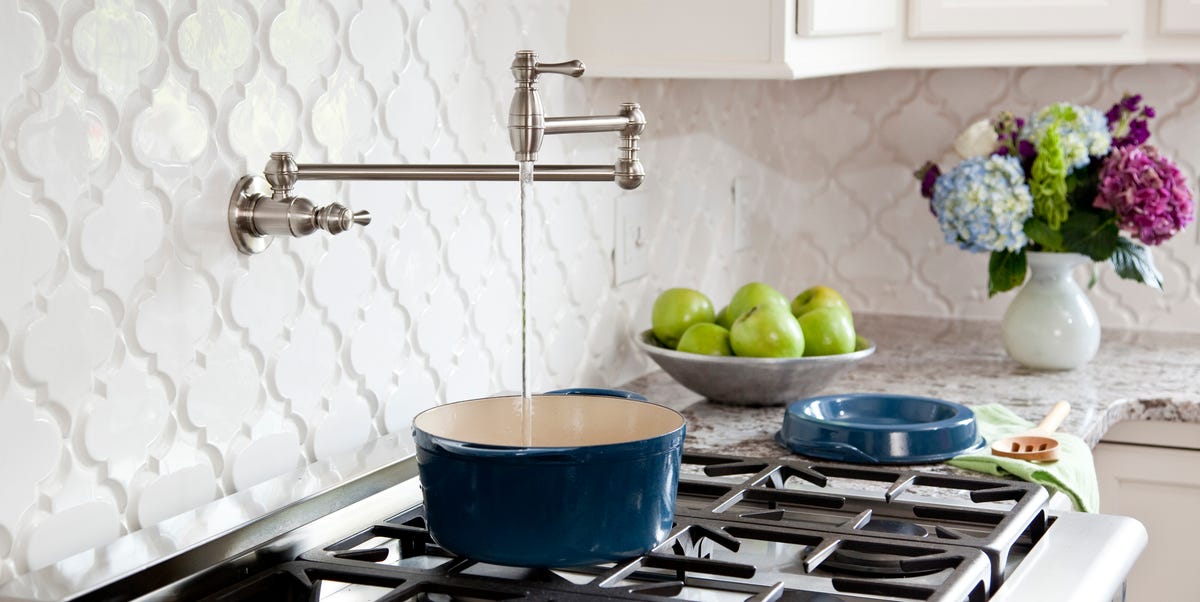
Open shelving may take the crown, but it has company. Designers also increasingly question pot fillers, double islands, oversized islands, sinks in islands, and other features that sound luxurious but do not always pay off in daily life.
Pot fillers, for example, can look impressive but are often underused. Double islands are glamorous in giant homes, but in many kitchens they interrupt flow more than they improve it. Even trendy statement elements can become overrated when they prioritize image over function.
That is the larger lesson behind the shelf debate: the most successful kitchens are not the ones with the most buzzworthy features. They are the ones designed around how people actually cook, clean, gather, and move through the space.
How to know if open shelving is wrong for your kitchen
Designers say you should pause before adding open shelving if any of the following sound familiar:
- You have a lot of kitchen stuff and use most of it.
- You cook frequently and your kitchen gets messy fast.
- You dislike dusting even in principle.
- You want a kitchen that hides visual noise.
- You are remodeling for long-term function, resale appeal, or family life.
- You love the look in photos, but feel stressed trying to style surfaces in your own home.
If you nodded along to more than two of those, open shelving may not be your soulmate. It may just be your photogenic ex.
A smarter approach to kitchen design in 2026 and beyond
Kitchen design is moving toward something more grounded: hidden storage, tailored cabinetry, warmer finishes, hardworking pantries, better organization, and features that feel personal without becoming exhausting. Designers are not anti-beauty. They are anti-regret.
That is why the backlash against open shelving matters. It signals a bigger shift away from performative design and toward livable design. Homeowners want kitchens that can handle daily chaos while still looking polished. They want less styling pressure, more function, and fewer trendy decisions that age badly or require constant upkeep.
In that context, open shelving is not evil. It is just overrated. For the right home, it can still be lovely. But for most households, the dream is better in moderation than in wall-to-wall reality.
Conclusion
If designers had to name the most overrated kitchen feature right now, open shelving would be a strong frontrunner. It can be charming, airy, and expressive, but it is rarely as effortless as it appears. More often, it asks homeowners to sacrifice storage, clean more often, and keep everyday items looking camera-ready at all times.
The better move is not to chase what looks coolest in a photo. It is to build a kitchen around your real habits. If you want easy cleanup, flexible storage, and a space that still feels calm when life gets chaotic, closed cabinetry or a carefully balanced mix of storage options will usually serve you better. In modern kitchen design, practicality is not boring. It is the new luxury.
Real-Life Experiences: Why This Kitchen Feature So Often Disappoints
Talk to enough homeowners and the same story pops up again and again. In the renovation phase, open shelving feels like the bold, stylish choice. People imagine neatly stacked stoneware, a few artful glasses, maybe a cookbook leaning casually in the corner like it just wandered there with perfect posture. Then real life arrives carrying school forms, protein shake cups, three different coffee tumblers, and a family-size box of crackers.
One common experience is the “I did not realize how much stuff I actually had” moment. Upper cabinets may not be glamorous, but they are incredibly good at swallowing the awkward inventory of normal life. The second those doors disappear, homeowners often discover that their kitchen contains dozens of objects they do not want to showcase but still need close by. Suddenly, the beautiful shelf space is reserved for the pretty dishes, while the unattractive essentials are relocated to already crowded lower cabinets, the pantry, or worse, the countertop.
Another familiar complaint is the maintenance surprise. Plenty of people assume that if they keep the shelves tidy, the job is done. Then the dust shows up. Then the sticky film from cooking shows up. Then the glasses that looked sparkling from a distance start needing a rinse before guests come over. That is when the shelf fantasy starts to feel less like design freedom and more like unpaid retail merchandising.
Families often find the feature especially frustrating. Parents may begin with a beautifully organized setup, only to watch it unravel as cereal bowls migrate, plastic cups multiply, and everyone in the house develops a unique interpretation of “put it back where it belongs.” In homes with kids, open shelving can become a daily visual report on the state of household chaos.
Even design-loving homeowners sometimes admit that the feature changes how they feel in the room. Instead of making the kitchen feel open, it can make the space feel like there is no place to rest the eye. Some people love that collected, layered look. Others feel subtly stressed by it, especially in open-concept homes where the kitchen is visible all day long.
The people who seem happiest with open shelving usually use it in moderation. They keep one small section for everyday dishes, a favorite pottery collection, or glassware they genuinely use. They have plenty of hidden storage elsewhere. Most importantly, they understand that shelves are not a storage miracle. They are a styling-and-function compromise that only works when the rest of the kitchen is doing the heavy lifting.
That real-life gap between dream and maintenance is exactly why so many designers now call open shelving overrated. It is not that the look can never succeed. It is that success takes discipline, editing, and upkeep that many homeowners are not warned about until after the brackets are on the wall.