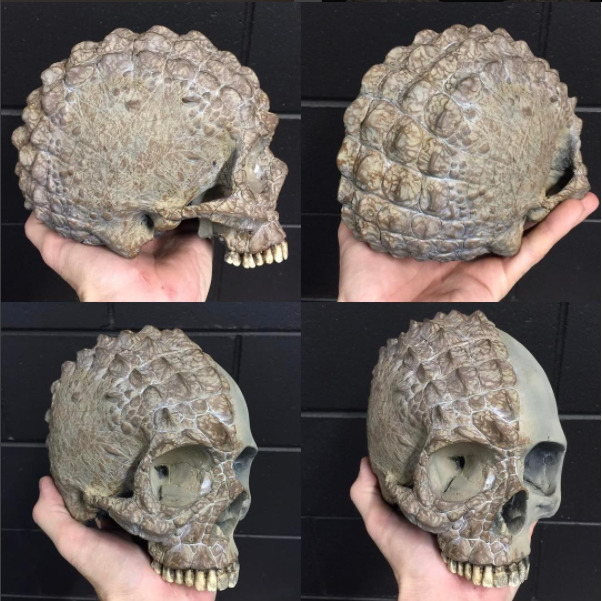
There is a special kind of creative optimism that makes a person look at a half-finished crocodile skull and say, “Yes, this is going well,” while the object on the table currently resembles a prehistoric canoe with dental ambition. But that is the magic of sculptural work: halfway is not a boring middle point. Halfway is where the piece starts talking back.
A crocodile skull project is not just another craft-room experiment. It is a strange, fascinating mix of wildlife anatomy, fantasy art, patience, texture work, and the quiet emotional sport known as “sanding the same ridge for forty-five minutes.” Whether the croc skull is made from clay, papier-mâché, foam, resin, plaster, wire armature, or a heroic combination of all the above, the halfway stage is where the big decisions become visible. The snout has length. The eye sockets have mood. The teeth are either terrifying, elegant, or leaning slightly like they just survived a reptile bar fight.
This article explores the process behind building a crocodile skull sculpture, what makes crocodilian skulls visually powerful, how artists can push accuracy without killing creativity, and why the halfway point deserves a tiny parade. Not a full parade, obviously. The lower jaw may still be drying.
Why a Croc Skull Makes Such a Powerful Art Subject
A crocodile skull is instantly recognizable because it combines clean structure with ancient drama. The long snout, repeated teeth, heavy jawline, and deep openings around the eyes create a shape that feels both scientific and mythological. It looks like something from a natural history museum, a fantasy game, and a swamp warning sign all at once.
Real crocodilians, including crocodiles, alligators, caimans, and gharials, belong to an ancient reptile lineage with skulls built for strength, sensory awareness, and efficient hunting. For artists, that means the skull has strong visual rhythm. The teeth repeat like white piano keys with bad intentions. The upper cranium has planes, pits, ridges, and holes that catch shadows beautifully. Even before paint, a good croc skull sculpture has character.
Unlike a smooth animal form, a skull invites detail. It gives the artist permission to obsess over cracks, asymmetry, bone texture, sockets, and weathered edges. In other words, it rewards the kind of person who owns three different sandpapers and still thinks, “Maybe I need one more.”
The Halfway Stage: Where the Sculpture Finds Its Personality
Being halfway done on a croc skull usually means the major structure is already established. The armature or base form is likely built. The snout has its length. The eye sockets are blocked in. The jaw proportions are readable. Maybe the teeth are started, or maybe they are sitting in a tray nearby, looking like tiny angry grains of rice.
This is the stage where the sculpture changes from “interesting lump” to “recognizable creature.” It is also the stage where mistakes become easier to spot. A snout that is too short can make the skull feel more like an alligator. A jaw that is too thin may lose that heavy prehistoric strength. Eye sockets placed too evenly can look cartoonish, while subtle irregularity gives the piece a more organic, fossil-like presence.
Halfway Does Not Mean Half the Work Is Done
Here is the cruel little joke of sculpture: halfway in appearance may mean only one-third finished in labor. The bulk form can come together quickly, but refinement takes time. Surface texture, teeth, smoothing, drying, priming, painting, sealing, and fixing the one tiny part that keeps bothering you can easily double the project timeline.
Still, the halfway point is worth celebrating because it proves the concept works. The croc skull is no longer just an idea in your head. It is physically occupying space, probably hogging half your table, and silently judging your lighting setup.
Getting the Anatomy Right Without Becoming a Museum Intern
A realistic crocodile skull does not require copying every bone landmark with medical precision, but it does benefit from understanding the big anatomical signals. Crocodiles tend to have longer, narrower, more V-shaped snouts than alligators, while alligators are usually associated with broader, U-shaped snouts. Crocodiles also often show visible lower teeth when the mouth is closed, especially the fourth tooth on each side of the lower jaw.
That difference matters in sculpture. If the project is called a “croc skull,” the silhouette should feel sharp, stretched, and slightly predatory. A wider skull can still look amazing, but it may drift into alligator territory. The solution is not to panic. The solution is to compare the top view, side view, and front view before adding final detail.
The Snout Is the Star
The snout is the first thing viewers notice. It needs taper, length, and a strong central line. A good sculpting approach is to block the snout as a simple wedge first, then carve or build the nostril area, tooth sockets, and surface planes later. Artists often get into trouble by adding tiny details too early. That is like frosting a cake before checking whether it is actually a cake or a confident pancake.
Eye Sockets Bring the Drama
The eye sockets in a croc skull are not just holes. They are mood machines. Deep, shadowed sockets make the skull feel old, alert, and a little dangerous. When sculpting them, pay attention to the brow ridge and the surrounding bone thickness. If the rim is too thin, the skull can look fragile. If it is too thick, it can look like it is wearing reptile goggles.
Teeth Need Rhythm, Not Perfection
Crocodilian teeth vary in size and placement, which is excellent news for artists who do not want to measure every tooth with the energy of a tax accountant. The teeth should feel irregular but intentional. Larger teeth near the front and prominent lower teeth can help create that crocodile expression. Smaller teeth along the sides add rhythm and scale.
The trick is spacing. Teeth that are too evenly placed can look artificial. Teeth that are too random can look messy. Aim for natural variation: some teeth angled slightly, some shorter, some more worn. Think “ancient predator,” not “discount zipper.”
Materials That Work Well for a Croc Skull Sculpture
The best material depends on the final goal. A lightweight wall piece may work well with foam, paper clay, or papier-mâché. A detailed tabletop sculpture may benefit from polymer clay, epoxy clay, or air-dry clay. A castable piece might begin as clay or wax before moving into mold-making and resin. Each material has its own personality, and some of them are dramatic enough to deserve their own agent.
Wire, Foil, and Armature Support
For a long skull form, support is everything. A basic armature made from wire, foil, cardboard, or foam can prevent sagging and reduce material weight. The skull’s snout is especially vulnerable because it extends outward. Without internal support, gravity will begin negotiating with your artwork, and gravity is famously difficult to bargain with.
An armature also helps preserve symmetry. It gives the artist a stable foundation for building the upper jaw, lower jaw, cheek areas, and back of the skull. Even if the final piece is meant to look rough or ancient, the underlying structure should be planned.
Paper Clay and Papier-Mâché
Paper-based materials are great for large forms because they are lightweight, affordable, and easy to layer. Paper clay can hold texture well, especially for bone grain, cracks, and subtle pits. Papier-mâché can create impressive volume without turning the sculpture into a gym workout.
The downside is drying time. Thick layers may feel dry on the outside while staying damp inside. Rushing the process can lead to warping or cracking. Patience is not glamorous, but neither is discovering that your crocodile skull has developed a surprise banana curve overnight.
Epoxy Clay and Polymer Clay
Epoxy clay is excellent for teeth, ridges, and durable details. It cures hard and can be sanded or painted. Polymer clay can work well for smaller skulls or separate tooth elements, though baking requirements must be considered carefully if other materials are involved.
Many artists mix materials: foam for the core, paper clay for the main surface, epoxy clay for teeth, acrylic primer for preparation, and acrylic paint for finishing. Mixed media is not cheating. It is diplomacy.
Surface Texture: The Secret Sauce of Bone Art
A croc skull becomes convincing when the surface stops looking like craft material and starts looking like aged bone. Real bone is not perfectly smooth. It has small pores, ridges, color shifts, worn edges, and natural imperfections. That texture can be created with stippling brushes, crumpled foil, rough sponges, carving tools, sandpaper, or even a toothbrush reserved strictly for art. Please do not return it to the bathroom. Some mysteries should remain unsolved.
Layer Texture Slowly
The best texture usually comes from layering. Start with broad forms, then add medium detail, then finish with small marks. If every inch is equally textured, the eye gets tired. Instead, create focal areas: heavier texture around the snout, worn edges on the jaw, deeper pits around the sockets, and smoother planes on the top of the skull.
Use Damage Strategically
Cracks, chips, and missing tooth marks can add story. But damage should feel structural, not random. A chipped tooth near the front suggests age and conflict. A cracked ridge near the eye socket creates drama. Too many cracks everywhere can make the skull look like it lost an argument with a driveway.
Painting the Croc Skull: From Craft Project to Ancient Relic
Paint is where the sculpture gets its final voice. A realistic croc skull usually benefits from a bone-colored base, but pure white can look too clean. Natural bone tones often include ivory, beige, gray, tan, ochre, and subtle brown shadows. The goal is not to paint the skull one flat color. The goal is to make it look like it has history.
Start with Primer
Primer helps unify different materials and gives paint a better surface to grip. This is especially useful for mixed media sculptures. A primed croc skull also reveals surface problems. Under primer, lumps, seams, and rough patches become easier to see. This can be emotionally inconvenient, but very helpful.
Build Shadows with Washes
Acrylic washes are perfect for skull work. Thin brown, gray, or sepia paint can settle into cracks and sockets, making details pop. Wipe the raised surfaces while leaving darker pigment in recesses. Suddenly the sculpture goes from “freshly made” to “found in a forgotten swamp temple,” which is generally the desired direction.
Dry Brushing Adds Bone Highlights
Dry brushing with lighter ivory or off-white paint brings out raised texture. Use a nearly dry brush and skim the surface lightly. This catches edges, ridges, and tooth tips. The effect is simple but powerful. It is also addictive. Many artists discover dry brushing and then must be physically stopped before they highlight the furniture.
Common Problems at the Halfway Point
The halfway stage is also where problems introduce themselves, usually without knocking. The good news is that most issues are fixable before final paint.
The Skull Looks Too Flat
If the skull looks flat from the side, build up the brow ridge, back of the cranium, and upper jaw. Crocodilian skulls have strong planes and depth. A flat sculpture may need more volume around the sockets and rear skull.
The Snout Looks Crooked
Check symmetry from above. Mark a centerline down the snout and compare both sides. Small asymmetry can look natural, but a drifting snout may distract the viewer. Add material to the thinner side or sand the heavier side gradually.
The Teeth Look Too Cute
This is a real issue. Tiny rounded teeth can make a croc skull look like it is politely asking for snacks. Sharpen the tooth shapes, vary their length, and angle a few slightly forward or outward. Keep the gumline or socket area strong so the teeth feel embedded, not glued on as an afterthought.
The Texture Looks Like Frosting
Heavy texture can accidentally look edible, which is not ideal for a skull unless your theme is “haunted bakery.” Let thick texture dry, then sand or carve it back. Bone texture should be interesting but not blobby.
Why Ethical Inspiration Matters
Animal-inspired art can be powerful without using questionable wildlife parts. A sculpted croc skull gives artists the chance to study anatomy, celebrate natural forms, and create dramatic decor while avoiding the legal and ethical complications of real animal remains. Many crocodilian species are protected, and wildlife products can be regulated depending on species, origin, and trade rules.
For web-friendly art, educational displays, Halloween decor, fantasy sculpture, or museum-inspired home pieces, a handmade skull is often the better choice. It can be customized, scaled, painted, repaired, and proudly described as cruelty-free. Plus, nobody has to explain to a guest why there is a suspiciously real reptile skull beside the coffee table.
Creative Direction: Realistic, Fantasy, or Fossilized?
Once the skull is halfway formed, the artist can decide where the final style should go. A realistic croc skull may focus on anatomical accuracy, natural bone color, and clean tooth placement. A fantasy skull may exaggerate the eye sockets, lengthen the teeth, add horns, carve symbols, or use dramatic weathering. A fossilized version may include darker mineral stains, broken edges, and rock-like textures.
There is no single correct direction. The best choice depends on the story of the piece. Is this a natural history study? A swamp monster relic? A gothic wall sculpture? A conversation starter for people who think “normal decor” means beige pillows and emotionally unavailable vases?
Adding a Display Base
A base can turn the skull from a craft object into a finished artwork. Wood, faux stone, black plinths, shadow boxes, and wall mounts all work well. A base also helps control how viewers see the piece. A slightly tilted skull can show off the teeth and eye sockets better than a flat tabletop position.
Using Lighting to Show Texture
Side lighting makes sculpted bone texture more dramatic. A small lamp or display shelf light can cast shadows into the sockets and tooth rows. This is especially helpful for photography. The halfway update photo may already look good, but final lighting can make it look like it belongs in a museum exhibit titled “Do Not Touch, Seriously.”
of Experience: What Working on a Croc Skull Teaches You
Working on a croc skull teaches patience in a very specific way. It is not the gentle patience of waiting for tea to steep. It is the gritty patience of building one side of the jaw, realizing the other side now looks underfed, adding material there, then discovering the first side has become too thick. A skull project is a conversation between ambition and correction. You do not simply make it once. You make it, adjust it, argue with it, forgive it, and then sand it.
The biggest lesson is that references matter. Memory will lie to you. It will say, “Yes, I know what a crocodile skull looks like,” and then your hands will create something halfway between a dragon, a lizard, and a suspicious baguette. Looking at real skull references, museum scans, and crocodilian anatomy photos keeps the project grounded. Even if the final piece is stylized, the real structure gives it authority.
The second lesson is to build bigger shapes before tiny details. This sounds obvious until you spend an hour sculpting perfect teeth on a jaw that later needs to be shortened. Details are fun because they feel productive. Big shapes are less glamorous, but they decide whether the final skull looks believable. The best workflow is boring in the beginning and exciting at the end, which is unfortunately how many good things work.
Another experience worth mentioning is how much personality comes from imperfection. A perfectly symmetrical skull can look manufactured. A slightly chipped tooth, uneven surface, worn ridge, or darker stain in one socket can make the piece feel discovered rather than assembled. The key is controlled imperfection. Random mess looks accidental. Thoughtful damage looks like history.
Drying time is also part of the craft. Every artist learns this the annoying way. Touching, sanding, or painting too soon can ruin a surface that was almost ready. A croc skull has long forms and layered details, so moisture can hide inside thicker areas. Letting each stage fully cure saves future heartbreak. It may feel slow, but waiting is easier than repairing cracks shaped like lightning bolts across the snout.
Finally, a croc skull project teaches you to enjoy the middle. The halfway point is not a failure to be finished. It is proof that the sculpture has survived the blank-page stage. You can see what it wants to become. You can still change the jaw, sharpen the sockets, deepen the texture, or decide the whole thing needs a fossil finish. Halfway is creative freedom with enough structure to guide you. It is messy, promising, and slightly ridiculous in the best way.
So if you are halfway there on your croc skull, congratulations. You have already done the hardest emotional part: convincing a pile of material to become something recognizable. Now comes the refinement, the teeth, the paint, the weathering, and the moment when someone walks in and says, “Whoa, did you make that?” That is when every dusty sanding session becomes worth it.
Conclusion: Halfway to a Croc Skull, Fully Into the Adventure
A handmade croc skull is more than a spooky object or a cool art piece. It is a study in form, texture, anatomy, and storytelling. The halfway stage is where the sculpture begins to prove itself. The silhouette starts working. The eye sockets gain attitude. The teeth begin lining up for their dramatic entrance. Mistakes are still fixable, ideas are still flexible, and the final finish is close enough to imagine.
The best croc skull sculptures balance accuracy with personality. They borrow from real crocodilian anatomy but leave room for artistic style. They use material wisely, build strong forms first, and add surface detail with restraint. Whether the final result becomes realistic bone art, a fantasy relic, or a fossil-inspired display piece, the process itself is part of the reward.
Note: This article was written as original, publish-ready content and informed by real crocodilian anatomy, museum-based skull references, sculpture material practices, and ethical wildlife-art considerations. No source links or citation placeholders are included in the body so the HTML can be copied cleanly for web publishing.