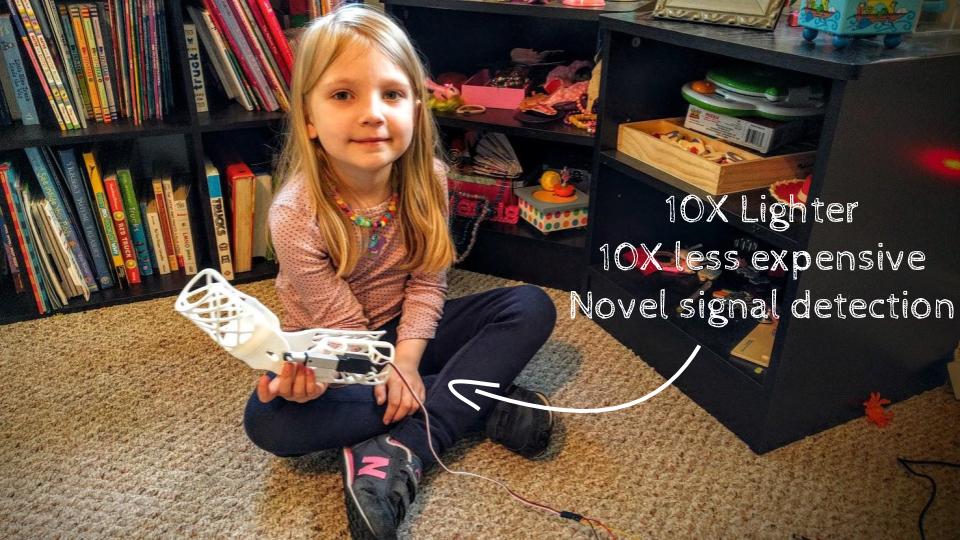
Sometimes innovation does not arrive wearing a lab coat. Sometimes it shows up at the kitchen table with a 3D printer humming in the corner, a worried parent reading medical papers at midnight, and a child who deserves morh, deeply human device designed to help a weakened limb move again.
The phrase “DIY wearable assist” may sound like something from a garage-built superhero movie, but the idea is surprisingly practical. It refers to a wearable assistive device that supports movement, senses the user’s intention, and helps the body practice functional motion. Instead of replacing therapy, it can extend therapy into everyday life. It can turn a boring repetition into a meaningful action. It can make rehabilitation feel less like homework and more like a tiny victory you can strap onto your arm.
The story behind this concept gained attention when a father built an assistive wearable for his daughter after a rare neurological condition left her with severe upper-arm weakness. The project used electromyography, or EMG, to detect faint muscle signals from the biceps and triceps. Those signals helped control an actuator that assisted elbow movement. Add 3D scanning, lightweight printed materials, machine-learning help, and a lot of determined problem-solving, and suddenly “traditional therapy” had a new teammate.
What Is a DIY Wearable Assist?
A DIY wearable assist is a custom-built device worn on the body to support, guide, or amplify movement. It can be simple, like a 3D-printed brace that helps a hand grip a spoon, or more advanced, like an EMG-controlled arm support that responds to tiny electrical signals from muscles. The best versions are not just gadgets. They are bridges between intention and action.
Traditional therapy often happens in scheduled sessions with physical therapists, occupational therapists, or rehabilitation specialists. That structure is essential. But recovery does not politely limit itself to a 45-minute appointment. A wearable assist can help bring therapeutic movement into the rest of the day: reaching for a cup, practicing elbow flexion, opening a hand, or playing a game that quietly trains the nervous system while the user is having fun.
Why This Kind of Device Matters
Movement recovery is not only about muscles. It is also about communication between the brain, nerves, muscles, joints, and environment. When a person has a neurological injury, stroke, spinal cord condition, acute flaccid myelitis, or another cause of weakness, the body may still have faint signals that are hard to see from the outside. EMG sensors can sometimes detect those signals even when visible movement is limited.
That matters because rehabilitation often depends on repetition, feedback, motivation, and active participation. A passive device that simply moves someone’s arm may help with range of motion, but a smarter assistive wearable can invite the user to try. It says, in effect, “Give me the smallest signal, and I will help you finish the movement.” That partnership is powerful. It respects effort, even when effort is barely visible.
The Technology Behind the Assist
EMG: Listening to Muscles Whisper
Electromyography measures electrical activity produced by muscles. In a wearable assist, small sensors placed on the skin can pick up muscle activation. If the user tries to bend an elbow, the sensor may detect activity in the biceps. If the user tries to straighten the arm, it may detect the triceps. The device can then use that information to trigger assistance.
In real life, EMG is not magic. It is messy. Signals can be weak, noisy, and affected by sensor placement, sweat, movement, fatigue, and the user’s condition. That is why some projects use multiple sensors and machine-learning algorithms to recognize patterns. Think of it as teaching the device to understand a very quiet language spoken by recovering muscles.
Actuators: The Helping Hand Behind the Movement
An actuator is the part of the system that creates motion. In a wearable arm assist, it may help bend or extend the elbow. In a soft robotic glove, it may gently curl and straighten the fingers. In a lower-limb exosuit, it may support ankle or hip motion during walking. The challenge is to provide enough help without making the device heavy, uncomfortable, or bossy.
Weight is a serious issue. A child or adult with weakness cannot simply wear a bulky robot and call it progress. If the device pulls on the shoulder, rubs the skin, overheats, or feels embarrassing, it will end up in a drawer next to the mystery cables and that one charger nobody can identify. Good assistive design must be light, safe, attractive, adjustable, and easy enough to use repeatedly.
3D Printing and Custom Fit
One reason DIY wearable assistive technology is so exciting is the rise of affordable 3D scanning and 3D printing. A brace, cuff, lattice, or structural support can be shaped around a specific arm rather than forced into a one-size-fits-most design. For users with unusual anatomy, changing strength, or pediatric needs, customization is not a luxury. It is often the difference between “I can wear this” and “absolutely not.”
3D printing also makes iteration faster. A designer can test a prototype, notice pressure points, change the geometry, and print a better version. That does not mean every printed device is safe for medical use. Materials, skin contact, mechanical strength, cleaning, and failure risks all matter. But when guided responsibly, rapid prototyping can bring personalization to assistive technology in a way traditional manufacturing often struggles to match.
Beyond Traditional Therapy: The Real Breakthrough
The most important part of a DIY wearable assist is not the motor, sensor, battery, or printed shell. It is the shift in mindset. Traditional therapy typically asks the patient to perform exercises in a clinic or at home. A wearable assist can make those exercises more interactive, measurable, and emotionally rewarding.
For example, imagine a child who cannot fully lift her arm. A therapist may ask for repeated attempts, but fatigue and frustration arrive quickly. Now imagine that the child sees an on-screen arm move when she activates the correct muscle. The device gives feedback. The movement becomes a game. The child is not just “doing rehab.” She is controlling something, learning something, and maybe even beating yesterday’s score. That little psychological upgrade can be enormous.
Gamified rehabilitation is not about turning serious recovery into a toy. It is about motivation. Humans are wonderfully stubborn creatures, but we are also easily bored by repetitive tasks. When therapy includes goals, visuals, scores, sounds, or story-based challenges, users may practice longer and with more attention. The brain likes feedback. The body likes repetition. The user likes not feeling trapped in a dull routine. Everybody wins, including the therapist who no longer has to say, “Just ten more,” with the enthusiasm of a dentist holding a drill.
How DIY Assistive Devices Can Support Occupational Therapy
Occupational therapy focuses on helping people do meaningful daily activities. That may include dressing, eating, writing, bathing, playing, working, or participating in school. A DIY wearable assist fits naturally into this world because its value is measured not only in degrees of elbow motion, but in real-life function.
Can the user bring a fork closer to the mouth? Can they practice reaching toward a shelf? Can they stabilize an arm while brushing teeth? Can they play a simple game with less compensation from the trunk and shoulder? These details matter because independence is built from ordinary moments. Therapy is not only about moving better in a clinic. It is about living better outside of one.
The Safety Question: Inspiration Is Not a Medical License
DIY healthcare technology needs a large, blinking caution sign. Building a wearable assist for rehabilitation is not the same as building a desk lamp, even if both projects somehow involve wires, screws, and mild panic. A device that moves a limb can create risks: joint strain, skin breakdown, nerve compression, overheating, incorrect movement patterns, falls, or overuse injuries.
That is why DIY assistive devices should be developed with medical guidance whenever they are used for actual rehabilitation. Physical therapists, occupational therapists, physicians, orthotists, biomedical engineers, and caregivers each see different risks. A parent or maker may notice comfort and motivation. A clinician may notice shoulder subluxation risk, abnormal tone, fatigue patterns, or unsafe compensation. The best results come when compassion and expertise share the same workbench.
What Makes a Wearable Assist Truly Useful?
1. It Must Be Comfortable Enough to Wear
A device can be brilliant on paper and useless on skin. Comfort includes weight, pressure distribution, breathability, texture, temperature, and ease of putting it on. Children especially are honest reviewers. If it pinches, scratches, or looks uncool, they will file a formal complaint using facial expressions.
2. It Must Encourage Active Effort
The strongest concept behind EMG-controlled assistance is that the user initiates movement. The device should help, not hijack. Assistance should meet the user where they are, then encourage progress. Too much help can reduce effort. Too little help can crush motivation. The sweet spot is adaptive support.
3. It Must Fit Real Life
A wearable assist should work beyond a perfect lab setting. Real homes have pets, furniture, crumbs, siblings, low batteries, and people asking, “Where did we put the charger?” The device should be durable, easy to clean, safe to store, and simple enough that using it does not require a 47-step launch sequence.
4. It Must Respect the User’s Identity
Assistive devices are visible. For many users, especially children and teens, appearance matters. A device that looks friendly, stylish, or personalized is more likely to be worn. This is not vanity. It is dignity. A wearable assist should support the person, not turn them into a walking science exhibit unless they specifically enjoy that vibe.
DIY Wearable Assist vs. Commercial Rehabilitation Robotics
Commercial rehabilitation robots and exoskeletons can be impressive. Many are designed with rigorous engineering, clinical testing, and safety systems. Some help stroke survivors practice walking. Others assist hand opening, grip, or arm movement. These devices may offer repeatable training, data tracking, and therapist-controlled settings.
But commercial systems can be expensive, clinic-based, and difficult to customize quickly. DIY projects can move faster and respond to one person’s specific needs. The tradeoff is that DIY devices usually lack formal testing, regulatory clearance, and standardized safety validation. The future is not DIY versus clinical technology. The future is collaboration: makers learning from clinicians, clinicians learning from makers, and users shaping the devices they are expected to wear.
Examples of Where This Technology Could Help
A DIY wearable assist may be useful in several scenarios when designed safely and supervised appropriately. A child recovering from nerve-related arm weakness might use it to practice elbow motion. A stroke survivor may use a soft glove to rehearse grasping objects. A person with limited hand function may use sensor-based assistance to open and close fingers during task practice. A user with fatigue may benefit from lightweight support that reduces effort during daily activities.
It can also help with data. A wearable device can record attempts, signal strength, repetitions, usage time, and movement patterns. That information may help therapists adjust goals. Instead of guessing whether home exercises happened, the team can review actual practice. Of course, data should be handled carefully and privately. Rehabilitation progress is personal, not a leaderboard for relatives at Thanksgiving.
The Human Side of Building Assistive Technology
The emotional power of a DIY wearable assist comes from its origin: someone cares enough to build. That does not make the engineering easy. In fact, the first prototype is usually awkward. The second one may be less awkward. The third may finally stop looking like it escaped from a toolbox. Progress comes from testing, feedback, failure, redesign, and patience.
For families, the process can also transform helplessness into action. When a diagnosis changes everything, building a device can create a sense of agency. It says, “We may not control the condition, but we can still experiment, adapt, and fight for function.” That mindset can be just as valuable as the hardware.
Challenges That Still Need Better Answers
DIY wearable assists face real barriers. Battery life must be long enough for useful sessions. Sensors must stay accurate despite movement and sweat. Actuators must be strong but not heavy. Materials must be skin-safe and durable. Software must fail safely. The device must avoid reinforcing poor movement patterns. And the entire system must be affordable enough that it does not become another miracle reserved for people with miracle-sized budgets.
There is also the question of evidence. A great story can inspire, but rehabilitation decisions need careful evaluation. Does the device improve strength, range of motion, function, confidence, or participation? Does it work better than standard home exercises? Which users benefit most? How often should it be used? These are research questions, not marketing slogans.
Why the Maker Movement Belongs in Assistive Technology
The maker movement has already changed how people think about prosthetics, adaptive tools, and accessible design. Open-source communities have shown that volunteers, engineers, clinicians, students, and families can collaborate on low-cost solutions. A DIY wearable assist takes that spirit into active rehabilitation. It is not just about replacing a missing function. It is about helping the body practice a function that may still be recoverable.
That is a beautiful distinction. A brace supports. A prosthetic replaces. A therapy tool trains. A wearable assist can do a little of all three. It supports the limb, responds to intention, and creates opportunities for repeated practice. It is a reminder that assistive technology should not only compensate for limitations; it can also invite possibility.
Experience Notes: What Using a DIY Wearable Assist Can Feel Like
For someone using a DIY wearable assist for the first time, the experience can be a strange mix of hope, nerves, curiosity, and “please do not let this thing beep loudly in front of everyone.” The device may feel unfamiliar on the body. Straps need adjusting. Sensors need placement. The first movement may be tiny. Sometimes the device responds beautifully. Sometimes it misunderstands the signal and moves at the wrong moment, like an overenthusiastic dance partner at a wedding.
The early sessions are often less about dramatic progress and more about trust. The user needs to trust that the device will not hurt. The caregiver needs to trust that the system is safe. The therapist needs to see whether the movement pattern is useful. The maker needs to accept feedback without defending every screw like it is a family heirloom. When everyone works together, the device becomes less intimidating and more like a training companion.
A meaningful experience might begin with a simple goal: bend the elbow enough to bring a hand closer to the chest. At first, the user may only produce a faint muscle signal. The EMG sensor detects it, the software recognizes the pattern, and the actuator provides a gentle assist. The arm moves. Maybe not perfectly. Maybe not far. But it moves in response to effort. That moment can feel huge because it reconnects intention with visible action.
Over time, the experience may become more playful. A child might control an on-screen character by activating the correct muscle. An adult might track repetitions and notice that fatigue arrives later than it used to. A caregiver might celebrate a smoother reach or a slightly stronger signal. These small wins are not small to the people living them. In rehabilitation, progress often arrives wearing sneakers, not fireworks.
There can also be frustrating days. Sensors slip. Batteries die. Muscles fatigue. The user may feel discouraged when yesterday’s progress does not repeat today. That is normal. Recovery is rarely a straight line. A good wearable assist should make room for bad days by allowing easier settings, shorter sessions, and comfortable stopping points. The goal is not to turn the user into a machine. The goal is to help a human practice movement with dignity, safety, and motivation.
For families, the experience of building or using such a device can change the atmosphere around therapy. Instead of therapy being something that only happens in a clinic, it becomes part of family problem-solving. A parent may learn about sensors. A child may learn about engineering. A therapist may discover new ways to motivate practice. The project becomes a shared language: part science, part care, part stubborn optimism.
The most powerful experience is not simply watching a limb move. It is watching a person become involved in their own recovery. A DIY wearable assist can make the user an active participant rather than a passive recipient. It can turn “I can’t” into “let’s test this.” That is why this technology goes beyond traditional therapy. It does not replace professional care. It expands the space where effort, feedback, and hope can happen.
Conclusion: The Future of Therapy May Be Wearable, Personal, and Built Together
This DIY wearable assist goes beyond traditional therapy because it combines engineering with empathy. It uses sensors to hear weak muscle signals, actuators to assist movement, 3D printing to create a custom fit, and gamified feedback to make practice more engaging. More importantly, it shows what happens when families, clinicians, makers, and researchers refuse to accept a one-size-fits-all recovery path.
The future of rehabilitation will not be defined by robots alone. It will be defined by thoughtful tools that help people participate more fully in their own lives. A wearable assist is not a cure, a shortcut, or a guaranteed miracle. But when designed safely and used with professional guidance, it can become something deeply valuable: a practical extension of therapy, a source of motivation, and a reminder that innovation often begins with love, curiosity, and a very determined refusal to give up.
Note: This article is for educational and informational purposes only. DIY wearable assistive devices used for rehabilitation should be designed, tested, and used with guidance from qualified healthcare and rehabilitation professionals.