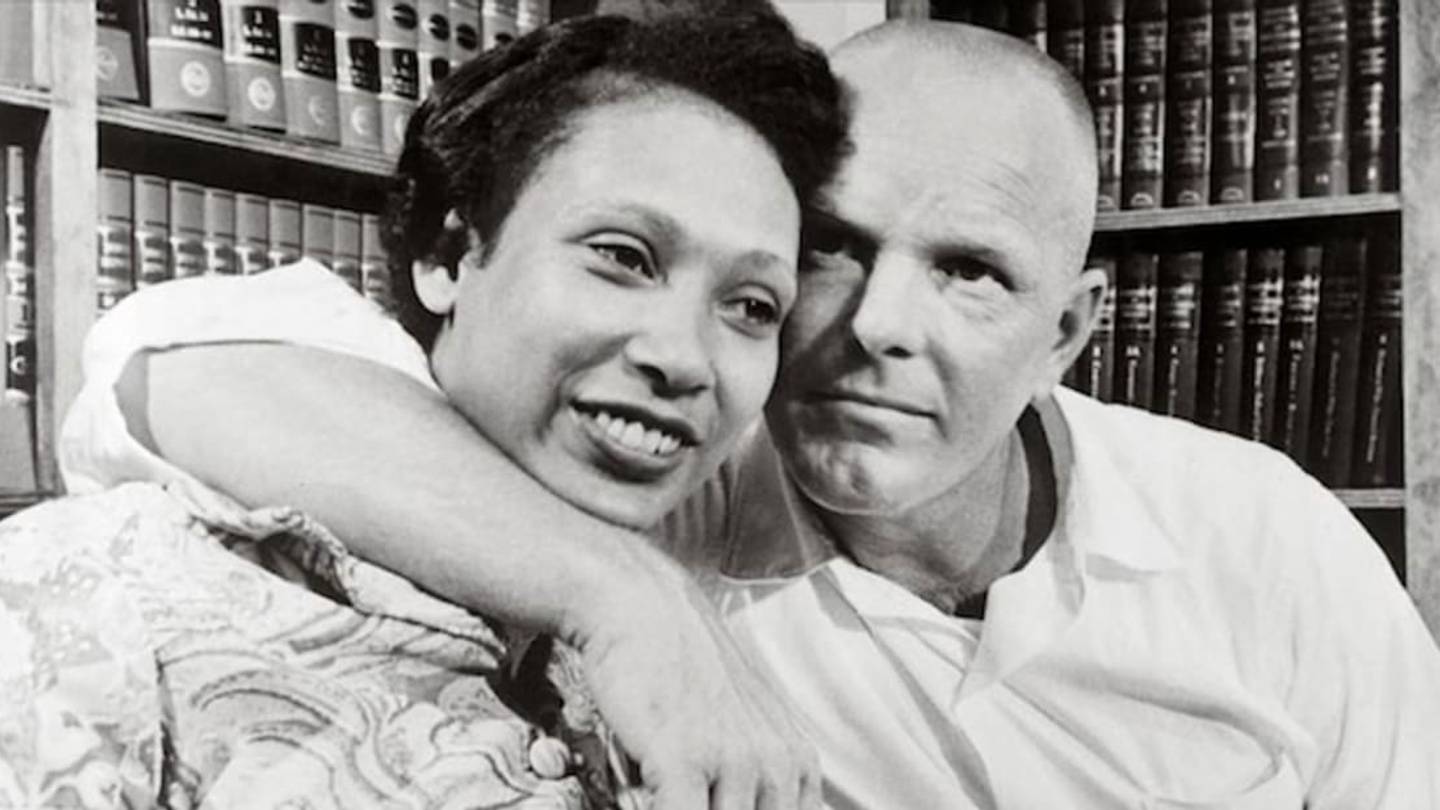
Note: This article is based on real historical and legal information synthesized from reputable U.S. sources, including public archives, legal case summaries, civil rights organizations, historical encyclopedias, and constitutional education resources.
Some love stories begin with roses, candlelight, and a playlist that someone definitely spent too long curating. The story of Richard and Mildred Loving began much more quietly: two young people from Caroline County, Virginia, fell in love, got married, and wanted to build a home together. That should have been the simple part. Instead, their marriage became a crime.
Richard Loving was white. Mildred Jeter Loving was a woman of Black and Native American ancestry. In 1958 Virginia, that combination was not just socially controversial; it was illegal under the state’s anti-miscegenation laws. The Lovings did not set out to become civil rights icons. They were not chasing fame, microphones, or courtroom drama. They wanted ordinary things: family, safety, privacy, and the right to wake up in their own home without the government barging in to police their marriage.
Their fight led to Loving v. Virginia, the landmark 1967 U.S. Supreme Court decision that struck down bans on interracial marriage across the United States. The case became one of the most important civil rights rulings in American history, not because the Lovings were loud, but because their quiet courage exposed how deeply unjust the law could be when prejudice wore a judge’s robe.
Who Were Richard and Mildred Loving?
Richard Perry Loving was born in Virginia in 1933. He worked as a construction laborer and was known as a reserved, practical man. Mildred Delores Jeter was born in 1939 and grew up in the same rural region. Their hometown community of Central Point, Virginia, was more racially mixed than many other Southern communities at the time, and the two knew each other before their relationship turned romantic.
They were not celebrities. They were not polished political speakers. Richard was often described as shy, and Mildred was thoughtful, composed, and determined. That makes their story even more powerful. History sometimes arrives wearing a suit and carrying a speech. Other times, it arrives in work boots, a simple dress, and a marriage license.
In June 1958, Richard and Mildred traveled to Washington, D.C., where interracial marriage was legal. They married there and returned to Virginia, believing their marriage certificate gave them the right to live as husband and wife. Legally, that piece of paper was valid in Washington, D.C. In Virginia, however, it became evidence.
When Marriage Was Treated Like a Crime
Virginia’s laws against interracial marriage were part of a long history of racial control. These laws were designed to preserve white supremacy by controlling intimate relationships, family formation, inheritance, and social status. The legal term often used was “miscegenation,” an ugly word with an uglier purpose: to make interracial marriage sound like a threat instead of what it was, a personal commitment between two adults.
Virginia’s Racial Integrity Act of 1924 strengthened the state’s racial classification system and prohibited marriages between white people and people classified as nonwhite, with very narrow exceptions rooted in the state’s obsession with racial categories. The law did not simply reflect prejudice; it organized prejudice into official paperwork.
Just weeks after their wedding, the Lovings were asleep in their home when local law enforcement entered their bedroom in the early morning hours. Mildred reportedly pointed to their marriage certificate on the wall, thinking it would prove they had done nothing wrong. Instead, the certificate helped prove the state’s case against them.
The couple was arrested and charged with violating Virginia’s ban on interracial marriage. Imagine needing a legal defense for loving your spouse. Imagine being told that the person you promised to care for was acceptable in one jurisdiction but criminal in another. It sounds absurd because it was absurd. But absurd laws can still ruin real lives.
The Sentence That Forced Them Away From Home
In January 1959, Richard and Mildred Loving pleaded guilty. They were sentenced to one year in jail, but the judge suspended the sentence on the condition that they leave Virginia and not return together for 25 years. In plain English, the court told them: you may stay married, but not here.
That punishment was not just legal pressure; it was emotional exile. The Lovings were forced to live in Washington, D.C., away from the rural community they loved. City life did not suit them. Mildred missed family. Richard missed Virginia. Their children were growing up away from the place their parents considered home. The law had turned a married couple into outsiders simply because the state disapproved of their racial identities.
The judge’s reasoning reflected the racist logic of the era. Supporters of anti-miscegenation laws argued that the statutes treated both partners “equally” because both could be punished. But equal punishment for an unequal law is not justice. If two people are punished for crossing a racial boundary that should not exist, the problem is not the symmetry of the punishment. The problem is the boundary itself.
How the Lovings Took Their Case to Court
For several years, the Lovings lived under the weight of exile. Mildred eventually wrote to U.S. Attorney General Robert F. Kennedy asking for help. Kennedy referred her to the American Civil Liberties Union. Attorneys Bernard Cohen and Philip Hirschkop took the case and began challenging the convictions.
The Lovings were not trying to launch a national movement. Mildred later made it clear that they simply wanted to come home. Their legal team, however, understood that the case raised a major constitutional question: could a state deny people the right to marry solely because of race?
The case moved through Virginia courts before reaching the U.S. Supreme Court. Virginia defended its law by claiming the state had authority to regulate marriage and preserve racial integrity. That phrase, “racial integrity,” deserves to be handled with gloves and placed in the museum of terrible ideas. It was the polite legal packaging for an openly discriminatory system.
The Supreme Court Decision in Loving v. Virginia
On June 12, 1967, the U.S. Supreme Court issued a unanimous decision in Loving v. Virginia. Chief Justice Earl Warren wrote the opinion for the Court. The justices ruled that Virginia’s anti-miscegenation laws violated both the Equal Protection Clause and the Due Process Clause of the Fourteenth Amendment.
The Equal Protection Clause mattered because the law classified people by race and restricted marriage based on those classifications. The Due Process Clause mattered because marriage was recognized as a fundamental freedom. Put simply, the government could not use race as a reason to deny people the right to marry the person they loved.
The Court rejected Virginia’s argument that the law was constitutional because it punished both racial groups equally. The justices saw through that logic. A law created to maintain racial separation does not become fair just because it hands out punishment in pairs.
The decision invalidated remaining state bans on interracial marriage and became a defining victory for civil rights. It also strengthened the constitutional understanding that marriage is a deeply personal liberty protected from unjust government interference.
Why Loving v. Virginia Still Matters
Loving v. Virginia matters because it reminds us that civil rights are not abstract decorations in a textbook. They shape where people can live, whom they can marry, how families are recognized, and whether private life is truly private.
The ruling also matters because it shows how ordinary people can transform constitutional law. Richard and Mildred Loving were not trained activists. They did not speak in dramatic slogans. Their message was almost startlingly simple: they loved each other, they were married, and they wanted to live together in their home state.
That simplicity made the injustice impossible to ignore. The law was not blocking a theory. It was blocking a family. It was telling children where their parents could live. It was telling a husband and wife that their marriage was legally offensive. The Lovings’ case turned a constitutional issue into a human story, and human stories have a way of walking through doors that legal jargon cannot open.
The Human Side of the Loving Story
One of the most moving parts of the Loving story is how little the couple seemed to crave the spotlight. Richard did not attend the Supreme Court arguments. He reportedly told his lawyer to tell the Court that he loved his wife. That statement was not elaborate, but it carried the emotional weight of the entire case.
Mildred was also modest about her role. She did not present herself as a grand historical figure. Yet her decision to seek help was an act of remarkable courage. She challenged a system that had already arrested her, displaced her family, and declared her marriage illegal. Courage does not always roar. Sometimes it writes a letter.
The Lovings’ story also helps us understand that racism is not only found in insults or violence. It can appear in forms, statutes, court orders, housing rules, school policies, and marriage licenses. It can hide behind official language. That is why legal victories matter. Changing hearts is important, but changing laws can protect people while hearts are still catching up.
Loving Day and the Legacy of June 12
Today, June 12 is often celebrated as Loving Day, a day honoring the Supreme Court decision and the broader struggle for marriage equality. For many interracial couples and multiracial families, Loving Day is both a celebration and a reminder. It celebrates progress, but it also remembers that the right to marry across racial lines had to be fought for in court within living memory.
The Lovings’ legacy reaches beyond interracial marriage. Their case has been cited in broader conversations about marriage rights, personal liberty, equal protection, and the limits of government power. It helped build the legal foundation for later arguments that marriage is a fundamental right belonging to individuals, not a privilege handed out according to majority approval.
That is the enduring force of their story. Richard and Mildred Loving did not ask the country to admire them. They asked the country to leave them alone. In doing so, they helped millions of people live more freely.
What We Can Learn From Richard and Mildred Loving
1. Ordinary People Can Change History
The Lovings were not powerful, wealthy, or politically connected. Their story proves that history is not only made by presidents, generals, and people who enjoy standing behind podiums. Sometimes history is made by a couple who wants to go home.
2. Unjust Laws Often Pretend to Be Normal
Virginia’s anti-miscegenation law was once defended as tradition, public policy, and social order. That is a warning. The fact that a law exists does not make it moral. The fact that a policy is old does not make it wise. Some traditions deserve preservation; others deserve a very firm goodbye.
3. Love Is Personal, But Rights Are Public
Richard and Mildred’s marriage was private, but the attack on it was public. Their case shows that personal freedom often depends on public protections. A society that respects liberty must protect people not only when their choices are popular, but especially when their choices challenge prejudice.
4. Quiet Courage Is Still Courage
Not everyone fights injustice with speeches, marches, or television interviews. Some people fight by refusing to disappear. The Lovings’ persistence was quiet, but it was not passive. They endured exile, legal pressure, and public attention because they believed their family belonged together.
Experiences and Reflections Related to the Loving Story
Reading about Richard and Mildred Loving today can feel strange because the central issue seems so obvious to many modern readers. Of course two adults should be allowed to marry regardless of race. Of course a state should not invade a couple’s bedroom and treat a marriage license like contraband. Of course love should not require a constitutional lawsuit. And yet, not very long ago, all of that had to be argued before the highest court in the country.
One experience many readers have when learning this story is a sense of disbelief followed by discomfort. The disbelief comes first: how could a marriage be illegal? Then the discomfort arrives: how many people accepted that system as normal? That second question is the one that lingers. It asks us not only to judge the past, but to examine the present. Every era has its blind spots. The Loving story encourages us to ask which rules, habits, or assumptions today may look cruel or ridiculous to future generations.
Another powerful lesson is that dignity often lives in small domestic details. The Lovings were not asking for a parade. They wanted to raise their children, visit relatives, sleep in their own home, and live in the place they belonged. That is what makes the state’s interference feel so invasive. The law did not merely debate them; it followed them into their bedroom, their family life, and their future plans.
For interracial couples today, the Loving story may feel both inspiring and heavy. It is inspiring because the case helped protect their right to marry openly. It is heavy because the social attitudes behind those old laws did not vanish overnight. Some couples still deal with stares, rude comments, family resistance, or awkward questions from strangers who apparently skipped the lesson on minding their own business. The law changed, but culture often changes more slowly.
For families, teachers, and students, the Lovings’ case offers a meaningful way to discuss civil rights without turning history into a list of dates. Dates matter, of course: 1958 for the marriage and arrest, 1959 for the sentence, 1967 for the Supreme Court victory. But the emotional truth matters too. This was a family separated from home by a racist law. When students understand that, the Fourteenth Amendment becomes more than a paragraph in a civics book. It becomes a shield that real people needed.
The story also offers a practical reminder about allyship. Mildred reached out for help, and lawyers, civil rights advocates, and constitutional experts helped carry the case forward. Social change often requires both personal courage and professional support. One person may light the match, but many hands protect the flame.
Finally, the Loving story teaches patience without romanticizing suffering. The Lovings should never have had to endure arrest, exile, or years of uncertainty. Their courage was admirable, but the injustice was unnecessary. That distinction matters. We can honor their strength while also saying clearly: they deserved better from the beginning.
Conclusion: A Love Story That Changed American Law
Richard and Mildred Loving changed American history by insisting on something beautifully ordinary: the right to be married and live as a family. Their case struck down interracial marriage bans, expanded constitutional protections, and reminded the nation that love does not become dangerous because prejudice calls it illegal.
Their legacy is not only legal. It is human. It lives in every couple who can marry without racial barriers, every multiracial family recognized with dignity, and every reminder that the Constitution is most powerful when it protects real people in real life.
The Lovings did not ask to become symbols. They became symbols because their love revealed the cruelty of the law. And in the end, love wonnot as a greeting-card slogan, but as a constitutional principle.