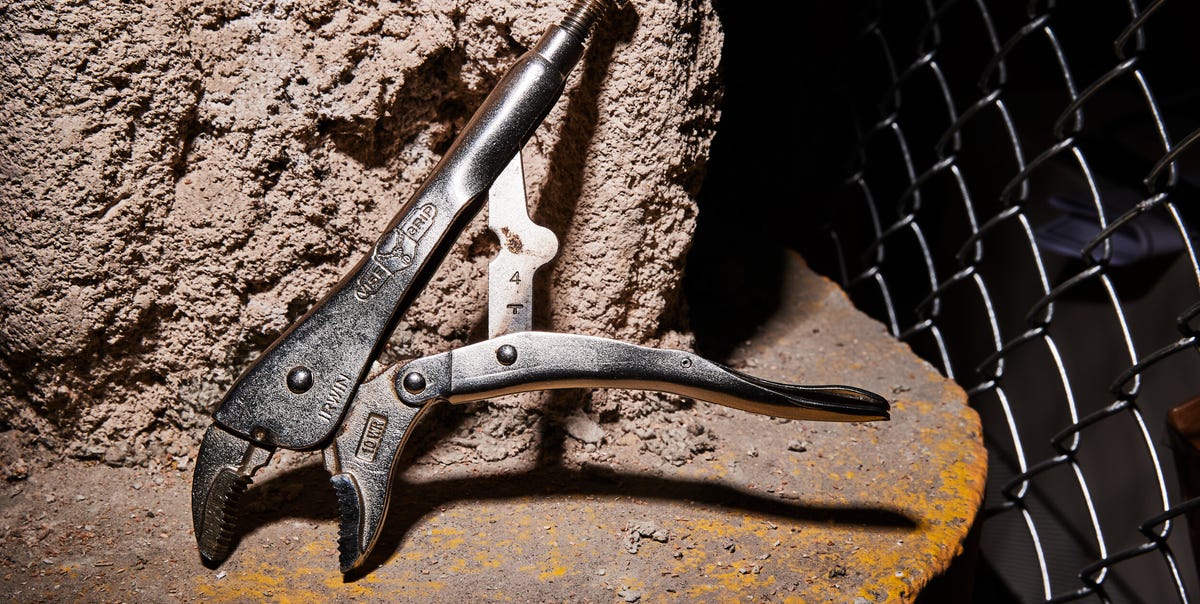
Some tools walk into a toolbox wearing a superhero cape. Others just sit there quietly, looking like they were designed during a lunch break by someone with a stubborn bolt and a grudge. Locking pliers belong to the second group. They are not flashy. They do not buzz, beep, glow, sync to Bluetooth, or require a firmware update. Yet when a stripped nut refuses to move, a hot piece of metal needs holding, or a project suddenly demands a third hand, locking pliers become the calm, steel-jawed genius in the room.
Often called Vise-Grips, vice grips, locking clamps, or mole grips, locking pliers are one of the most useful hand tools ever invented. Their brilliance is not just that they grip. Ordinary pliers grip. Your anxious hand during a plumbing leak grips. The genius is that locking pliers grip, stay locked, and free your hand to do something else. That one feature turns them from “pliers with attitude” into a portable clamp, emergency wrench, temporary handle, mini vise, metalworking helper, and all-purpose problem solver.
This guide explores how locking pliers work, why their design is so clever, which types matter most, how to use them safely, and why experienced mechanics, welders, DIYers, plumbers, woodworkers, and home repair warriors keep reaching for them. By the end, you may look at that rusty pair in your garage drawer with new respect. Or at least apologize for using it as a hammer.
What Are Locking Pliers?
Locking pliers are adjustable hand tools designed to clamp onto an object and lock in place. Unlike regular pliers, which require constant hand pressure, locking pliers use a mechanical linkage and adjustment screw to hold their grip until you release them. That makes them extremely useful for gripping rounded fasteners, holding parts together, clamping metal, pulling nails, bending small pieces of hardware, and stabilizing awkward workpieces.
The classic design includes serrated jaws, two handles, an adjustment screw at the end of one handle, and a release lever. You set the jaw opening with the screw, squeeze the handles until the tool snaps into its locked position, and then release it by pressing the lever. It feels simple because the tool does the clever part for you.
A Brief History: The Tool Born From a Real Problem
The locking pliers story begins with William S. Petersen, a Danish immigrant and blacksmith working in Nebraska. Like many great tool inventions, this one came from irritation rather than theory. Petersen needed a better way to hold workpieces securely while he worked. In the early 1920s, he developed a plier-like tool with a vise-like grip. The VISE-GRIP locking pliers patent followed in 1924, and the Petersen Manufacturing Company later helped turn the tool into a workshop staple.
That origin matters because locking pliers were not designed as a luxury gadget. They were created to solve a practical problem: how do you hold something firmly without dedicating one hand to the job forever? The answer was a compact, adjustable clamp you could carry in a pocket or toss into a toolbox. A century later, the design is still everywhere because the problem never went away. Projects still shift. Bolts still round off. Metal still gets too hot to touch. And humans still stubbornly refuse to grow a third hand.
The Mechanical Genius: Why Locking Pliers Work So Well
The Over-Center Mechanism
The secret inside locking pliers is the over-center mechanism, sometimes described as a toggle linkage. When you squeeze the handles, the internal linkage moves past a pivot point. Once it crosses that point, the tool locks shut and resists opening until the release lever breaks the lock. It is a small mechanical trick with huge practical value.
This is why locking pliers can clamp harder than your hand alone and keep clamping after you let go. The tool converts hand pressure into concentrated jaw force, then uses geometry to hold that force. You do not need to keep squeezing. The linkage does the boring job while you do the important one.
The Adjustment Screw
The adjustment screw at the end of the handle is another piece of quiet genius. It controls how wide the jaws open and how much pressure they apply when locked. Turn the screw clockwise, and the jaws close tighter. Turn it counterclockwise, and they open wider. This makes one pair of locking pliers useful across many shapes and sizes.
The trick is to set the jaws slightly smaller than the object you want to grip. When you squeeze the handles, the jaws bite firmly and lock. If closing the handles feels impossible, loosen the screw slightly. If the tool snaps shut too easily and wiggles on the object, tighten the screw. The goal is a firm lock, not a heroic hand-crushing contest.
The Release Lever
Older locking pliers sometimes required a little more muscle to open, but many modern versions include a quick-release lever. Press it, and the locked mechanism pops open. It is satisfying in the same way a good stapler is satisfying: small, mechanical, and oddly dramatic.
Why Locking Pliers Are More Than “Just Pliers”
Calling locking pliers “just pliers” is like calling a pickup truck “just a chair with wheels.” Technically, there is overlap, but the description misses the point. Regular pliers are excellent for gripping, twisting, pulling, and cutting, depending on the style. Locking pliers add one key advantage: they maintain pressure without your hand.
That changes everything. In practice, locking pliers can act as a clamp, wrench, handle, vise, extractor, holder, and temporary fixture. You can lock them onto a rounded bolt, clamp two metal pieces for welding, hold a small bracket while drilling, pull a stubborn nail, or keep a hose pinched temporarily during a repair. Their usefulness comes from adaptability.
Common Types of Locking Pliers
Curved Jaw Locking Pliers
Curved jaw locking pliers are the classic all-purpose version. The curved jaws wrap around round objects such as pipes, rods, nuts, and bolts. Many include a wire cutter near the pivot. If you only own one pair, a 10-inch curved jaw model is often the best starting point because it handles a wide range of household, automotive, and workshop tasks.
Straight Jaw Locking Pliers
Straight jaw locking pliers are better for flat surfaces, square stock, and sheet material. They distribute pressure more evenly across flat workpieces than curved jaws do. They are handy for bending small metal tabs, holding brackets, or gripping flat hardware without as much rocking.
Long Nose Locking Pliers
Long nose locking pliers combine the reach of needle-nose pliers with the holding power of a locking mechanism. They are useful in tight spaces, electrical work, small engine repairs, automotive interiors, and anywhere your fingers cannot reach without inventing new swear words.
C-Clamp Locking Pliers
C-clamp locking pliers look like a clamp and behave like a clamp with a locking handle. Some have regular tips, while others have swivel pads that sit more gently on angled or delicate surfaces. They are especially useful in welding, metal fabrication, woodworking setups, and holding bulky parts together while glue, screws, or tack welds do their work.
Sheet Metal Locking Pliers
Sheet metal locking pliers have wide, flat jaws designed to hold thin material without concentrating pressure in one tiny spot. They are useful for bending, seaming, and aligning sheet metal. If curved jaw pliers are a bulldog, sheet metal locking pliers are more like a firm handshake with excellent posture.
Specialty Locking Pliers
There are also locking chain clamps, welding clamps, pinch-off pliers, smooth-jaw versions, and compact mini locking pliers. Specialty designs are worth considering when you repeat the same task often. For general home use, however, curved jaw, straight jaw, long nose, and C-clamp styles cover most needs.
Best Uses for Locking Pliers Around the House and Shop
Removing Rounded or Stripped Fasteners
Few things test a person’s character like a rounded bolt. A wrench slips. A socket spins. Your patience leaves the building. Locking pliers can bite into the remaining shape of the fastener and provide enough grip to turn it. This does not mean they are always the first tool to use; the correct wrench or socket should come first. But when the fastener is already damaged, locking pliers may save the day.
Clamping Workpieces
Locking pliers make excellent temporary clamps. They can hold two pieces of metal together while you mark, drill, weld, or fasten them. C-clamp locking pliers are especially useful here because their shape reaches around edges and holds material more like a traditional clamp.
Pulling Nails, Staples, and Small Hardware
Locking pliers can clamp onto a nail shaft or stubborn staple so you can pull with control. When paired with a scrap block of wood as a fulcrum, they can provide leverage without damaging the surrounding surface as badly as a wild pry-bar attack. Your trim boards will appreciate the civilized approach.
Holding Hot or Sharp Materials
In metalworking, welding, or grinding, locking pliers can hold material that is too hot or sharp to handle directly. This is one reason they are beloved in fabrication shops. Of course, the tool itself can also become hot, so gloves, eye protection, and common sense still matter.
Creating a Temporary Handle
Missing knob? Broken lever? Small shaft that needs turning? Locking pliers can become a temporary handle. This is not always elegant, but it is often effective. Many machines, valves, and small mechanisms have been coaxed back into usefulness by a pair of locking pliers standing in for a missing handle.
Pinching, Bending, and Forming
Locking pliers are useful for controlled bending of tabs, wire, thin brackets, and small metal parts. The jaws hold firmly, allowing you to apply pressure with more confidence. Use the right size tool, though. Tiny long-nose locking pliers are not meant to bend thick steel rod, just as a butter knife is not meant to chop firewood.
How to Use Locking Pliers Correctly
Using locking pliers is simple, but using them well takes a little feel. First, open the jaws and place them around the workpiece. Turn the adjustment screw until the jaws are slightly narrower than the object. Squeeze the handles. The tool should close with firm resistance and snap into a locked position. If it closes too easily, tighten the screw. If you need two hands, a dramatic grunt, and a motivational speech to close it, loosen the screw.
Once locked, check the grip before applying major force. The jaws should be seated securely, not barely hanging onto a corner. When finished, press the release lever to open the tool. Keep your other hand clear of the jaws because the release can be sudden. Locking pliers are helpful, but they are not sentimental. They will pinch whatever is in the way.
Safety Tips: How Not to Turn Genius Into Chaos
Locking pliers are tough, but they are not magic. Use the correct tool for the job whenever possible. Do not use pliers as a hammer. Do not hammer on pliers to force a cut or break a fastener loose. Do not use damaged tools with cracked handles, loose pivots, or badly worn jaws. Keep the tool clean and lightly lubricate the pivot when needed.
Wear eye protection when pulling, cutting, grinding, or working with metal. Small chips, snapped wires, and flying rust do not care how quick your reflexes are. Use gloves when handling sharp or hot material, but avoid bulky gloves if they reduce your control. Keep your fingers away from pinch points near the jaws and handles.
Also remember that locking pliers can damage surfaces. Serrated jaws are great for grip but can chew up soft metal, chrome, brass, plastic, and painted finishes. For delicate work, use smooth-jaw pliers, padded jaws, tape, scrap leather, or a better-suited tool. Locking pliers are strong. Sometimes too strong is exactly the problem.
Locking Pliers vs. Regular Pliers vs. Wrenches
Regular pliers are better when you need quick hand-controlled grip, delicate positioning, cutting, twisting, or repeated open-close movements. Wrenches are better for properly sized nuts and bolts because they apply force more evenly and are less likely to damage fasteners. Locking pliers shine when holding pressure matters, when the fastener is already compromised, or when you need a temporary clamp.
Think of locking pliers as the rescue tool, the setup tool, and the “hold this right there” tool. They are not a replacement for every wrench, clamp, or vise, but they can impersonate all three long enough to get you out of trouble.
What to Look for When Buying Locking Pliers
Jaw Quality
Good jaws should line up cleanly and have sharp, durable teeth. Worn or poorly machined teeth slip more easily. If the jaws are crooked before the tool ever touches a workpiece, that is not character; that is bad manufacturing.
Smooth Adjustment
The adjustment screw should turn smoothly without wobbling. A knurled screw head gives better grip, especially with oily hands. Some modern designs include larger screw heads or loops for faster setup.
Reliable Release
A good release lever should open the tool cleanly without feeling flimsy. Fast-release designs can be easier on the hands, especially for frequent use.
Comfort and Size
A 10-inch pair is versatile, but smaller 5-inch or 6-inch versions are great for tight spaces. Larger models provide more leverage. Comfort grips can help during repetitive work, though many professionals still prefer classic bare-metal handles because they are durable and easy to clean.
Purpose-Built Sets
If you do general DIY, start with a curved jaw and a long nose pair. Add straight jaw pliers for flat stock and C-clamp locking pliers for clamping. A small set often costs less than buying one tool at a time and gives you more options when a project gets weird, which projects enjoy doing.
Mistakes People Make With Locking Pliers
The first mistake is overtightening. Crushing the handles until your knuckles turn white does not make you a craftsperson; it makes the tool harder to release and increases the chance of damaging the workpiece. Adjust for a firm lock, not a medieval torture device.
The second mistake is using locking pliers on good fasteners when the proper wrench is available. Serrated jaws can round off nuts and bolts. If the fastener is still healthy, treat it kindly. Save the locking pliers for when things get ugly.
The third mistake is using the wrong jaw style. Curved jaws are great on round objects but less stable on flat pieces. Long nose versions reach tight spaces but are not built for maximum torque. C-clamp versions hold material well but are bulky for small fasteners. Matching the jaw to the job makes the tool safer and more effective.
The fourth mistake is forgetting stored force. When locking pliers release, they can pop open suddenly. Keep your face, fingers, and fragile project parts out of the way. The tool may be small, but it has the personality of a mousetrap with a gym membership.
Why Professionals Love Locking Pliers
Professionals appreciate tools that save motion, time, and frustration. Locking pliers do all three. Mechanics use them to grab damaged fasteners, hold brackets, pinch lines temporarily, and reach awkward spaces. Welders use them to position and clamp hot metal. Plumbers use them to grip fittings and stabilize parts during repair. Woodworkers use them as quick clamps for jigs, fixtures, and odd little setups where a full-size clamp is too clumsy.
The value is not just strength. It is repeatability. Once set, locking pliers can apply the same grip over and over. That consistency matters when aligning parts, holding a stop block, or repeating a shop task. They also work in places where a bench vise cannot go. A vise is stronger, but it is attached to a bench. Locking pliers are portable stubbornness.
The “Secret Genius” in Plain Sight
The secret genius of locking pliers is that they combine three ideas into one tool: adjustable sizing, high mechanical advantage, and hands-free locking. None of those ideas is complicated by itself. Together, they create a tool that feels almost unfairly useful.
They also teach a larger lesson about good design. A great tool does not need to be complicated. It needs to solve a real problem with as few moving parts as possible. Locking pliers are compact, durable, understandable, repairable in spirit, and useful across trades. That is why they remain relevant after a century of power tools, cordless gadgets, and laser-guided everything.
Real-World Experiences With Locking Pliers
Anyone who spends enough time fixing things eventually develops a locking pliers story. Mine begins with a lawn mower, because small engines love drama. The mower had a control cable with a broken plastic knob, and the remaining metal tab was too small to pull by hand. The grass was tall, the weekend was short, and the mower was giving off the smug silence of a machine that knew it was winning. A small pair of locking pliers clamped onto the tab and instantly became a temporary handle. Was it elegant? No. Did the mower start? Yes. Did I feel like a genius? Also yes, though the pliers deserved most of the credit.
Another classic experience is the stripped screw or rounded bolt. You begin with optimism. You choose the right screwdriver or wrench. The fastener laughs. You try again with more pressure. The fastener becomes smoother, shinier, and somehow more personally insulting. Then the locking pliers come out. You adjust the jaws, clamp down hard, and suddenly there is enough bite to turn the problem loose. That moment is why people keep old locking pliers even when the handles are scarred and the finish is mostly a memory.
Locking pliers are also surprisingly good teachers. They teach patience because adjustment matters. Beginners often crank the screw too tight and then fight the handles. After a few tries, you learn to sneak up on the right setting: tighten, test, loosen a touch, clamp again. The tool rewards feel over force. That is a valuable workshop lesson. Many repairs go better when you stop trying to overpower the material and start listening to what the tool is telling you.
In woodworking, locking pliers often become temporary problem solvers. Maybe a small jig needs a stop. Maybe a threaded insert is spinning. Maybe a bent nail has to be pulled from the back of a board. Locking pliers can clamp onto the issue and hold it still while you make the next move. They are not as gentle as purpose-built woodworking clamps, so padding the jaws with scrap leather, cardboard, or painter’s tape is smart when appearance matters. But for rough work, shop fixtures, and hidden surfaces, they are wonderfully direct.
In automotive work, they feel almost essential. Cars are full of tight spaces, awkward brackets, springy clips, rusty hardware, and parts that seem designed by someone who had never met a human hand. Long nose locking pliers can reach into a narrow gap and hold a cable, clip, or small hose clamp. Curved jaw versions can persuade a damaged fastener to cooperate. C-clamp locking pliers can hold a panel or bracket while you line up holes. Used carefully, they reduce frustration. Used carelessly, they scratch, crush, and bite. Like many good tools, they magnify judgment.
One underrated use is as a “cooling handle” for small metal parts. If you have ever drilled, filed, or ground a small piece of metal, you know how quickly it can heat up. Locking pliers let you hold the part at a safe distance while maintaining control. The important word is “safer,” not “invincible.” Heat travels through metal, and the pliers can warm up too. Eye protection, gloves when appropriate, and breaks between cuts still matter.
The funniest thing about locking pliers is how often they are used for tasks nobody would put in an official manual. Holding a garden gate latch while you mark holes. Keeping a zipper pull alive for one more camping trip. Clamping a broken trash-can handle until replacement day. Holding a nut behind an appliance bracket where no wrench fits. These are not glamorous jobs, but they are the jobs that make a tool beloved. Locking pliers live in the gap between “proper repair” and “I need this to work right now.”
That said, experience also teaches restraint. Locking pliers are not a universal solution. They can mar finishes, deform soft materials, and ruin fasteners if used when a proper wrench would be better. The best users do not reach for them first every time. They reach for them when the locking function adds real value: holding, clamping, extracting, stabilizing, or improvising. The tool is brilliant, but it is still happiest when used with judgment.
Over time, a good pair of locking pliers becomes personal. The adjustment screw develops a familiar feel. The release lever has a certain snap. The jaws wear in a pattern that tells stories about old repairs. You may buy newer, shinier versions, but the old pair often stays in the drawer because it has earned trust. That is the quiet genius of the tool. It does not just help with projects; it becomes part of how you think through problems.
Conclusion
Locking pliers are one of the rare tools that deserve their legendary status. They are simple enough for beginners, tough enough for professionals, and versatile enough to solve problems no one planned for. Their over-center mechanism, adjustable screw, and locking jaws create a combination of grip, control, and convenience that few hand tools can match.
Whether you are removing a rounded bolt, clamping metal, pulling a stubborn nail, holding a hot part, or creating a temporary handle, locking pliers bring order to chaos. They are not always the perfect tool, and they should not replace proper wrenches, clamps, or safety habits. But when a job gets awkward, they often become the tool that makes progress possible.
The secret genius of locking pliers is not really secret at all. It is sitting in toolboxes everywhere, waiting for the next stuck bolt, broken handle, or project that needs one more hand. And when that moment comes, this humble clamp-with-teeth will once again prove that great design does not have to be fancy. It just has to work.