Space telescopes have already unfolded mirrors, deployed sunshields, and performed the sort of mechanical origami that would make a paper crane feel underqualified. Now, researchers working with the low-frequency radio telescope on the Moon using ultralight, potentially inflatable structures.
The idea sounds like someone accidentally mixed an astronomy conference with a camping catalog. Yet the engineering logic is serious. A large radio observatory needs a lot of collecting area, while launching hardware to the lunar surface rewards anything that can be packed small, kept light, and deployed without an army of astronauts holding instruction manuals.
The proposed ESA inflatable telescope is connected to work on an Astrophysical Lunar Observatory, or ALO, for the Moon’s far side. Rather than resembling a giant optical telescope with one enormous mirror, the observatory would consist of many low-frequency radio antennas operating together as an interferometric array. Some concepts have examined antennas printed on extremely light polymer films and structures that could be folded for launch, inflated after landing, and spread across the lunar surface.
The scientific prize is enormous: a chance to investigate parts of cosmic history that conventional observatories on Earth cannot easily reach.
What Is the ESA Inflatable Telescope Concept?
First, a useful clarification: ESA has not simply placed an order for a giant Moon balloon and circled a launch date on the calendar. The Astrophysical Lunar Observatory remains a developing concept supported by feasibility studies, scientific teams, technology investigations, and work on possible antenna and deployment systems.
The broad goal is to create a low-frequency radio telescope on the lunar far side. Instead of sending a large collection of conventional, relatively heavy antennas, engineers are investigating ways to make individual antenna elements extremely compact and lightweight.
A Telescope That Packs Like a Space Blanket
One widely discussed approach involves conductive antenna elements integrated with thin polymer material such as Kapton, a polyimide film commonly associated with spacecraft because it can tolerate demanding thermal conditions while remaining lightweight. The antenna system could be folded into a relatively small volume during launch.
After landing, gas could expand parts of the structure and help establish the required geometry. The result would be less like inflating a backyard swimming pool and more like deploying a precisely engineered radio instrument whose shape, electrical characteristics, and position all matter.
Researchers have publicly discussed large arrays containing hundreds of elements, and earlier concept presentations used architectures such as a 32-by-32 arrangement as an illustration of how dramatically the number of antennas might grow if lightweight deployment methods succeed. The final configuration, however, is not fixed.
That distinction matters. The phrase inflatable telescope makes a fantastic headline, but the actual project is about solving a broader problem: how do you transport and deploy a scientifically useful radio array on another world without making the launch vehicle cry?
Why Put a Radio Telescope on the Far Side of the Moon?
For low-frequency radio astronomers, Earth is both home and an extremely noisy neighbor.
Our planet is surrounded by television transmissions, communications networks, radar, satellites, navigation systems, and countless other sources of radio-frequency interference. Even when astronomers build observatories in remote deserts, they cannot completely escape the electromagnetic activity of modern civilization.
Earth’s ionosphere creates another obstacle. At very low frequencies, it distorts incoming radio waves and eventually becomes effectively opaque to some of the longest wavelengths astronomers would like to study.
The Moon offers an extraordinary alternative.
The Moon Can Act as a Giant Radio Shield
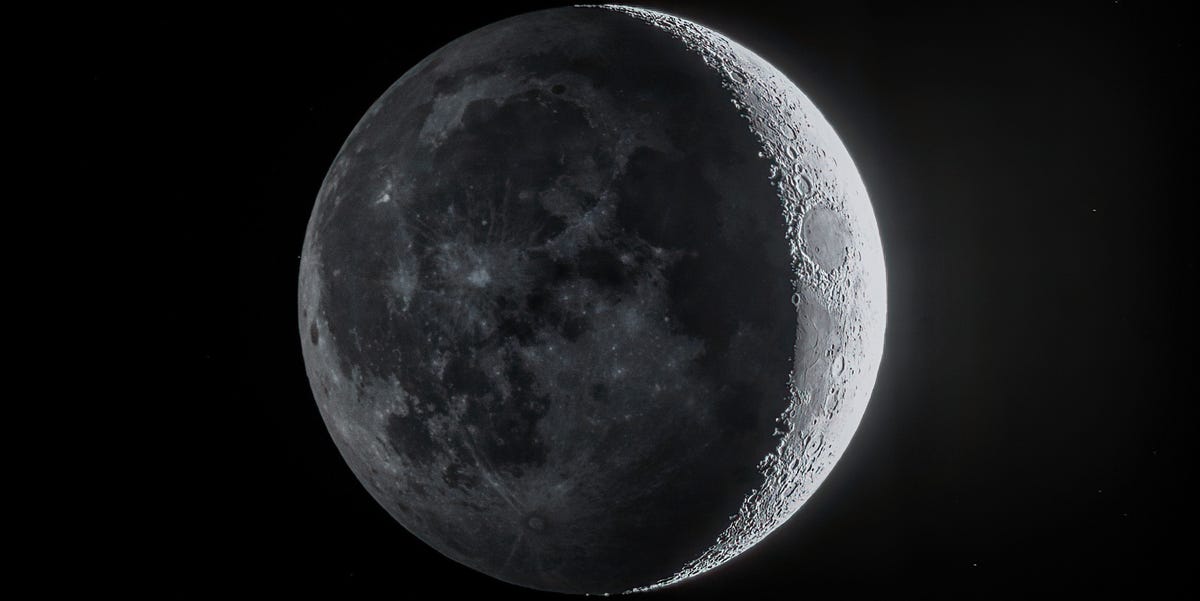
The lunar far side permanently faces away from Earth because the Moon is tidally locked to our planet. It is not permanently dark, despite the popular phrase “dark side of the Moon.” It receives sunlight just as the near side does.
What makes the far side special is radio isolation. When an observatory sits in a suitable far-side location, the Moon’s enormous rocky body stands between the antennas and Earth’s electromagnetic chatter.
There is no substantial lunar atmosphere to create an Earth-like ionospheric barrier, either. During the long lunar night, when the Sun is below the local horizon, solar radio interference can also be reduced. Put those advantages together, and the lunar far side becomes one of the most attractive locations in the solar system for extremely low-frequency radio astronomy.
Of course, there is one delightfully inconvenient consequence: if Earth cannot easily shout radio noise at your telescope, your telescope also cannot simply call Earth directly.
Communications would therefore require relay infrastructure, orbital spacecraft, or another carefully designed link. Apparently even on the Moon, a quiet neighborhood can have terrible cellular service.
The Real Target: The Universe’s Cosmic Dark Ages
The most exciting scientific objective is the study of the cosmic Dark Ages and the transition toward Cosmic Dawn.
After the early universe cooled enough for electrons and nuclei to combine into neutral atoms, there was a long period before the first generations of stars and galaxies transformed the cosmos. There were no familiar shining galaxies illuminating the darkness, but the universe was certainly not empty. Vast quantities of neutral hydrogen filled space.
That hydrogen may provide a way to reconstruct this poorly observed chapter of cosmic history.
Why the 21-Centimeter Hydrogen Signal Matters
Neutral hydrogen produces a characteristic spectral feature known as the 21-centimeter line, with a rest frequency of about 1,420 megahertz. As the universe expands, radiation traveling across enormous cosmic distances becomes redshifted. Signals produced in the distant past can therefore arrive at much lower frequencies and much longer wavelengths than they originally had.
By measuring this ancient hydrogen signal across different frequencies, scientists hope to build something resembling a timeline of the early universe. Different observed frequencies correspond to different cosmic epochs.
A sufficiently capable lunar radio array could help researchers investigate questions such as:
- How did the earliest large-scale structures in the universe develop?
- When did the first stars begin changing the surrounding hydrogen?
- How did the transition from the Dark Ages to Cosmic Dawn unfold?
- Could unexpected features in the signal reveal new information about dark matter or fundamental physics?
James Webb Space Telescope is extraordinarily powerful, but it observes primarily in infrared wavelengths and studies luminous objects such as stars and galaxies. A low-frequency lunar observatory would pursue a different kind of evidence, potentially reaching into an era before conventional galaxies had fully emerged.
It would not be “a better Webb.” It would be a fundamentally different instrument opening a region of the electromagnetic spectrum that is exceptionally difficult to explore from Earth.
Why an Inflatable Radio Array Could Change the Engineering
Astronomers generally enjoy large instruments. Rocket engineers generally enjoy payloads that are small and light. These two communities somehow continue speaking to each other.
A useful lunar interferometer may require a substantial number of antenna elements. A conventional design can quickly become expensive in mass, volume, deployment hardware, cabling, power systems, and mechanical complexity.
An inflatable or printed system attacks several of those problems at once.
More Antennas for the Same Launch Mass
Thin-film structures can potentially offer an excellent area-to-mass ratio. Instead of launching every antenna as a rigid tower, engineers could pack flexible components into a smaller volume and deploy them after arrival.
The number of antennas is important because radio interferometry combines signals from separated elements to act like a much larger instrument. More elements and longer baselines can improve sensitivity, imaging capability, and scientific flexibility, although the exact performance depends on the array design and signal-processing system.
The concept also opens intriguing possibilities for integrating multiple functions into lightweight materials. Researchers have discussed printed electronics and even the possibility of incorporating power-generating components into otherwise unused areas of a deployable structure.
That does not mean the telescope will simply roll off a printer fully ready for lunar astronomy. Connections, receivers, calibration hardware, processing electronics, power, thermal control, and communications still have to work together under brutal conditions.
Argonaut Could Become the Delivery Truck
ESA’s Argonaut lunar lander program is an important part of the long-term picture. Argonaut is being developed to provide Europe with an autonomous capability to deliver substantial cargo to the lunar surface.
Current ESA planning describes Argonaut as capable of delivering up to roughly 1,500 kilograms of cargo, with the first mission targeted for the end of 2030. The lander is intended to fly on a four-booster Ariane 6 configuration and support a range of future payloads, from scientific instruments to infrastructure and robotic systems.
Earlier studies of the lunar radio observatory explored how a future Argonaut-class lander could support antenna deployment. Conventional antennas can consume payload mass surprisingly quickly. Lightweight concepts potentially allow a single delivery to carry far more observing elements.
Still, readers should resist turning a technology concept into a guaranteed mission schedule. ESA continues to investigate the observatory and enabling technologies. The exact antenna design, final array scale, deployment architecture, landing location, funding path, and mission date remain subject to future decisions.
The Moon Is Quiet, but It Is Definitely Not Friendly
The phrase “just deploy it on the Moon” deserves to be placed in the same category as “just fix the software.” It hides a spectacular amount of difficulty.
Lunar Dust Is an Engineering Menace
Lunar regolith is fine, abrasive, and capable of interacting with equipment in troublesome ways. Flexible structures, electrical connections, moving deployment mechanisms, and exposed surfaces must all survive an environment that has no convenient maintenance crew nearby.
For a low-frequency antenna, the electrical properties of the ground also matter. An antenna lying on or near lunar regolith does not behave exactly like an identical antenna installed at a terrestrial observatory. Scientists must understand how the surface affects antenna patterns and calibration.
Temperature Swings Can Punish Materials
The lunar day-night cycle lasts about a month, producing roughly two-week periods of daylight and darkness at many locations. Temperatures can swing dramatically. Materials expand and contract, batteries must survive long nights, and electronics require carefully designed thermal control.
An inflatable structure introduces additional questions. Can it maintain the required geometry through repeated thermal cycles? How does the inflation system behave in vacuum? What happens after micrometeoroid damage? Can the antenna remain scientifically useful if part of the structure deforms?
Engineers love questions like these because apparently sleeping peacefully is overrated.
Deployment Must Work the First Time
On Earth, technicians can untangle a cable, replace a failed connector, or politely threaten a stubborn piece of hardware with a wrench. A robotic far-side deployment has far fewer options.
That is why current research is not limited to one dramatic inflatable solution. ESA-related work has examined several approaches to compact lunar antennas and their deployment, including printed systems, inflatable structures, and deployable booms.
Testing prototypes on Earth and potentially on less demanding lunar demonstration missions could help determine which design deserves to grow into a full observatory.
The Inflatable Telescope Is Part of a Bigger Lunar Astronomy Race
ESA is not alone in recognizing the scientific value of the Moon’s radio-quiet far side.
NASA-supported researchers have studied the Lunar Crater Radio Telescope, a concept in which robots could suspend a large wire-mesh reflector inside a natural far-side crater. The FARSIDE study examined a distributed array of low-frequency antennas across the lunar surface. The United States has also developed the LuSEE-Night experiment to investigate low-frequency radio measurements from the far side.
Other international concepts have explored orbital arrays, surface antennas, and pathfinder experiments. These projects differ greatly in design and maturity, but they share a common conclusion: wavelengths that are extremely difficult to observe from Earth may justify moving radio astronomy beyond Earth.
The Moon could eventually become more than a destination for flags, footprints, mining studies, and astronaut habitats. It could become scientific infrastructure.
A New Problem: Protecting the Moon From Our Own Noise
There is an irony hiding inside plans for lunar development.
The far side is valuable for radio astronomy largely because human technology has not yet filled it with electromagnetic interference. But future lunar communications systems, navigation networks, orbiters, landers, power electronics, and surface vehicles could gradually contaminate that environment.
In other words, humanity might finally build the infrastructure needed to create a magnificent lunar radio observatory while simultaneously making the location less radio quiet.
Researchers and international organizations have therefore emphasized the importance of preserving radio-quiet regions around the Moon. Technical standards, frequency coordination, spacecraft design, and international agreements may become almost as important as the telescope hardware itself.
A future observatory must not only survive the lunar environment. It may need protection from the expanding neighborhood around it.
What Success Would Mean for Astronomy
The greatest value of an ESA lunar radio telescope may be that nobody can completely predict what it will find.
Every time astronomy has opened a major new observing window, surprises have followed. A lunar array capable of exploring the lowest radio frequencies could contribute to cosmology, solar physics, planetary science, studies of radio transients, investigations of the interstellar medium, and perhaps searches for radio emissions associated with planets beyond our solar system.
The headline science is the early universe, but the history of astronomy suggests that the strangest discoveries often arrive without an appointment.
The inflatable approach is therefore interesting for more than novelty. If lightweight deployable structures make it practical to place hundreds of sensors on another world, the same engineering philosophy could influence future antennas, solar arrays, habitats, reflectors, and scientific instruments.
The Moon telescope could become both an observatory and a demonstration of how enormous structures are built when enormous rockets are still not enormous enough.
Experience Perspective: Imagining the First Deployment of an Inflatable Telescope on the Moon
Because this observatory has not yet been deployed, there is no honest first-person story about standing beside it on the lunar far side and watching it inflate. The most useful “experience” is therefore a realistic thought experiment based on the engineering challenges such a mission would face.
Imagine the lander completing its descent. There is no audience waiting outside and no sound of engines spreading through an atmosphere. The vehicle settles onto dusty terrain, surrounded by a silence that is physically different from any silence on Earth.
Then the deployment begins.
From an operations team’s perspective, this would probably be less like watching a dramatic science-fiction transformation and more like following an extremely tense checklist. Release restraints. Confirm temperatures. Verify power. Check communications through the relay system. Activate deployment hardware. Monitor pressure. Compare sensor readings against models.
Every small movement would matter.
A folded antenna package that behaved perfectly in a clean laboratory could meet a surface containing rocks, slopes, dust, and thermal conditions that were impossible to reproduce completely on Earth. A flexible section might unfold slightly differently than expected. One antenna could settle closer to the regolith than another. Engineers would have to decide whether the differences were harmless, correctable through calibration, or signs of a larger problem.
The experience would also transform the meaning of “first light.” Optical telescopes often celebrate their first image. A lunar radio array might begin with streams of voltages, spectra, interference tests, and calibration data that look spectacular only to people who have spent years dreaming about exactly those numbers.
The first scientific victory might not be a beautiful picture suitable for a wall poster. It might be proof that an antenna can survive a lunar night, retain its electrical performance, and detect the low-frequency sky with less terrestrial interference than any comparable instrument on Earth.
That would be a profound moment.
From there, the experience could become iterative. A small pathfinder teaches engineers how dust affects deployment. A second mission improves the antenna material. Another lander carries more elements. Baselines grow. Processing improves. What began as a few experimental sensors gradually becomes a genuine observatory.
This incremental path may be more realistic than imagining a thousand-element telescope appearing in one heroic mission.
There is also a human lesson in the concept. Space exploration often looks glamorous from the outside because the final images are spectacular. The actual experience of creating a project like the ESA inflatable telescope is likely to consist of years of simulations, material tests, failed prototypes, design reviews, funding decisions, and arguments over details measured in millimeters or milliwatts.
Then, eventually, a fragile package could travel hundreds of thousands of miles and unfold on a world with no repair shop.
That contrast is what makes the concept so compelling. The scientific goal concerns events near the beginning of cosmic history, but success depends on exquisitely practical questions: how to fold a film, route a cable, survive dust, conserve power, and make a structure inflate correctly.
The universe may be unimaginably vast. Sometimes exploring it still comes down to whether the space-age air mattress behaves itself.
Conclusion: A Strange Idea With Serious Scientific Potential
The idea that the ESA wants to send an inflatable telescope to the Moon sounds delightfully eccentric until the engineering and science are considered together.
The lunar far side offers something increasingly rare: natural protection from Earth’s radio noise and access to low-frequency observations that are extraordinarily difficult from the ground. A lightweight, deployable antenna array could help make a large lunar observatory practical within the severe mass and volume limits of space transportation.
Major challenges remain. The antennas must survive dust, radiation, temperature extremes, deployment uncertainty, and years of operation without conventional servicing. The observatory would need reliable power, communications, calibration, and protection from future radio interference around the Moon. Most importantly, the inflatable architecture remains a developing technological option rather than a finalized mission design.
Yet the motivation is powerful. By listening for ancient signals from neutral hydrogen, a future lunar radio telescope could help scientists reconstruct an era before the first familiar stars and galaxies transformed the universe.
For centuries, humans looked up at the Moon to study the cosmos. The next step may be to land there, unroll an enormous radio observatory, inflate parts of it, and use the Moon itself as a shield while listening to whispers from cosmic history.
Note: This article reflects publicly available project information and development plans available through July 2026. The Astrophysical Lunar Observatory remains a developing concept, and its final design, funding, payload configuration, deployment method, and mission schedule may change.