Dean Koontz has written enough suspense, horror, science fiction, mystery, and supernatural thrillers to keep a small town awake for roughly 300 years. Yet when it comes to film adaptations, fans know the truth: Hollywood has not always treated Koontz like the bestselling suspense wizard he is. Some adaptations capture his strange magic. Some wander into the fog and never come back. And a few are so oddly charming that fans keep defending them like beloved rescue dogs with questionable table manners.
The best Dean Koontz film adaptations by fans are not always the ones critics praised most. In fact, Koontz adaptations often live in that wonderfully weird zone where reader loyalty, VHS nostalgia, late-night cable memories, and cult-horror affection matter more than polished studio perfection. Fans tend to reward adaptations that preserve Koontz’s core ingredients: ordinary people facing extraordinary evil, fast pacing, emotional sincerity, moral courage, eerie atmosphere, and at least one moment where someone should absolutely not open that door but does anyway.
This ranking looks at the Dean Koontz movies and TV adaptations that continue to earn discussion among longtime readers, horror fans, and cult-film watchers. It focuses on fan appeal, faithfulness to the spirit of the books, rewatch value, performances, atmosphere, and whether the adaptation feels like Koontz rather than a generic thriller wearing a suspiciously familiar trench coat.
Why Dean Koontz Is So Hard to Adapt
Before ranking the best adaptations, it helps to understand the challenge. Dean Koontz does not write one simple kind of story. His books can move from serial-killer suspense to supernatural mystery, from science-fiction horror to heartfelt romance, and from bleak terror to warm humor in the span of a few chapters. That genre-blending is exactly what readers love. It is also what can make studio executives clutch their coffee cups in fear.
Koontz’s best novels often work because the reader lives inside the characters’ fears, memories, hopes, and moral choices. A movie has less room for that interior life. When an adaptation removes the emotional engine, all that remains may be a killer, a monster, a psychic vision, or a sinister lab experiment. That can still be entertaining, but it is not the full Koontz experience. Fans usually notice the difference immediately, sometimes before the opening credits have finished stretching their legs.
Fan Criteria: What Makes a Great Dean Koontz Adaptation?
Fans usually judge Koontz adaptations by a few practical questions. Does the film respect the source material? Does it keep the suspense moving? Are the characters more than monster bait? Does it balance darkness with humanity? And perhaps most importantly, does it understand that Koontz is rarely cynical? Even when his stories are terrifying, they often believe in loyalty, courage, kindness, and the stubborn human habit of fighting back.
That is why some technically imperfect adaptations remain favorites. A low-budget TV movie can still win fans if it understands the heartbeat of the novel. Meanwhile, a glossier theatrical release can disappoint if it treats a deeply emotional story like just another spooky hallway.
The Best Dean Koontz Film Adaptations by Fans
1. Intensity (1997)
If there is one Dean Koontz adaptation that fans most often place near the top, it is Intensity. Originally released as a two-part television miniseries, it adapts Koontz’s 1995 novel about Chyna Shepherd, a young woman whose visit to a friend’s family home turns into a nightmare after a killer named Edgler Vess invades the house. From there, the story becomes a relentless chase, a psychological duel, and a survival thriller that earns its title with interest.
What makes Intensity work is that it does not treat suspense as decoration. The adaptation understands that the terror comes from Chyna’s choices. She is not simply running away; she is deciding, again and again, to move toward danger because someone else may still be saved. That moral courage is pure Koontz. Molly Parker gives Chyna a quiet, focused strength, while John C. McGinley turns Vess into a villain who is theatrical, terrifying, and disturbingly memorable.
Fans also appreciate that Intensity preserves the novel’s forward momentum. It feels like a thriller with no safe place to rest. Every stop becomes a trap. Every decision costs something. For viewers who want the best example of Koontz’s tension translated to screen, this is the strongest candidate. It may not have blockbuster polish, but it has the one thing that matters more: it understands the book’s pulse.
2. Odd Thomas (2013)
Odd Thomas is one of the most beloved Dean Koontz adaptations among fans because it captures something many others miss: the tenderness. Based on the first novel in Koontz’s popular series, the film follows Odd, a short-order cook who can see the dead and sense dark supernatural creatures called bodachs. That premise could have become gloomy, but Koontz’s Odd is funny, sincere, brave, and deeply human.
Anton Yelchin’s performance is the soul of the movie. He brings warmth, humor, and vulnerability to Odd, making the character feel less like a gimmick and more like a young man carrying an impossible burden with a crooked smile. Willem Dafoe adds welcome support as Chief Wyatt Porter, and Addison Timlin gives Stormy Llewellyn the romantic brightness that fans of the book expected.
The film has tonal bumps. It races through plot points, and some visual effects age like milk left in a haunted diner. Still, fan affection remains strong because Odd Thomas gets the emotional center right. It has horror, action, romance, comedy, grief, and a supernatural mystery. That mix is risky, but it is also very Koontz. For many readers, this adaptation feels like a missed franchise opportunity. With more support, it might have become the long-running screen series fans wanted.
3. Phantoms (1998)
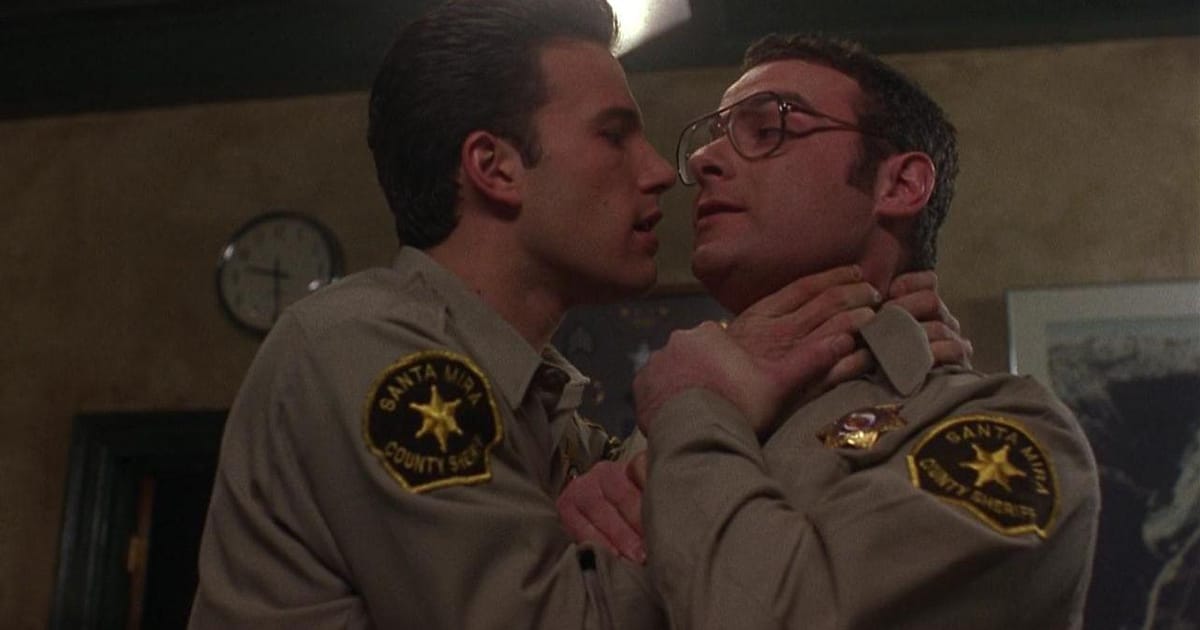
Phantoms is the kind of adaptation that inspires debate, jokes, nostalgia, and passionate defense. Based on Koontz’s 1983 novel, the movie begins with a fantastic hook: people in the town of Snowfield, Colorado, have vanished or died under mysterious circumstances. A small group of survivors must uncover what happened before the same ancient evil comes for them.
On paper, this is one of Koontz’s most cinematic stories. It has a deserted town, gruesome discoveries, a mysterious historical pattern, and a cosmic-horror explanation big enough to make a flashlight feel emotionally inadequate. The movie stars Ben Affleck, Rose McGowan, Joanna Going, Liev Schreiber, and Peter O’Toole, which is a cast list that still makes horror fans raise an eyebrow and say, “Wait, Peter O’Toole was in this?”
Critics were not especially kind to Phantoms, but fans have kept it alive as a late-1990s cult curiosity. Its atmosphere is the main appeal. The empty-town opening remains creepy, and the premise is strong enough to carry viewers through the messier parts. Some fans love it because it is genuinely eerie; others love it because it is an artifact of a very specific era of horror filmmaking, when studios would put big names, gooey effects, and ambitious monster mythology into one nervous blender.
Is Phantoms perfect? Absolutely not. Is it fun to revisit with popcorn and realistic expectations? Very much yes. It may be uneven, but it is one of the most recognizable Dean Koontz film adaptations, and for many fans, recognition counts for a lot.
4. The Face of Fear (1990)
The Face of Fear is a hidden gem for fans who enjoy compact, suspense-driven TV thrillers. Based on Koontz’s novel of the same name, the film follows a former mountain climber with psychic abilities who becomes trapped in a skyscraper with a killer. That setup is wonderfully simple: a dangerous height, a relentless threat, and characters who must use nerve and skill to survive.
The movie benefits from a tight premise. Instead of trying to adapt one of Koontz’s sprawling genre hybrids, it turns a lean thriller into a lean screen experience. Lee Horsley and Pam Dawber give the story an old-school television-movie charm, while Kevin Conroy delivers menace in a role far removed from the heroic voice work many fans know him for.
Among Koontz fans, The Face of Fear earns points for suspense and faithfulness to the basic concept. It may not be as widely available or as frequently discussed as Odd Thomas or Phantoms, but those who have seen it often remember the skyscraper tension. Sometimes a thriller does not need cosmic evil, psychic armies, or laboratory monsters. Sometimes it just needs a killer, a storm, a tall building, and characters having the worst weekend imaginable.
5. Servants of Twilight (1991)
Servants of Twilight adapts Koontz’s novel originally published under the Leigh Nichols name. The story centers on a mother and her young son who become targets of a fanatical cult convinced the boy is the Antichrist. That premise is pure paranoid suspense, and the film understands the appeal: ordinary people suddenly pursued by believers whose certainty makes them dangerous.
Fans often appreciate this adaptation because it keeps the chase moving. It does not have the budget to become a grand thriller, but it has urgency, a strong central danger, and a protective-parent emotional hook that fits Koontz’s recurring themes. The movie also carries the slightly gritty energy of early-1990s direct-to-video suspense, which can be either a drawback or a feature depending on your tolerance for era-specific hair, lighting, and dramatic phone calls.
What helps Servants of Twilight remain a fan pick is its clarity. It knows what kind of story it is telling. A mother wants to protect her child. A cult wants to destroy him. A private investigator gets pulled into the chaos. That is enough. In the world of Koontz adaptations, simply staying focused deserves a small trophy, preferably one shaped like a suspiciously glowing paperback.
6. Watchers II (1990)
The Watchers adaptations are complicated. Koontz’s novel is one of his most cherished books, especially because of Einstein, the super-intelligent golden retriever. The original story mixes science-fiction suspense, emotional bonding, government experimentation, and a terrifying creature known as the Outsider. It is exactly the kind of book that makes readers say, “This would make a great movie,” shortly before Hollywood proves that sentence is dangerous.
While the 1988 Watchers has nostalgic value, many fans and adaptation watchers point to Watchers II as a more satisfying attempt in spirit. It still cannot fully capture the richness of the novel, but it leans more clearly into the relationship between human characters, the intelligent dog, and the monstrous threat. The budget limitations are visible, especially when the creature appears and everyone politely pretends the effects are not doing their best.
Even so, Watchers II earns a place because the source material is so beloved. Fans want this story to work on screen. They want Einstein to shine. They want the Outsider to terrify. They want the adaptation to understand that the dog is not a cute accessory but the emotional miracle at the center of the story. Watchers II does not fully deliver the definitive version, but it remains one of the more watchable stops on the long road toward the adaptation fans still dream about.
7. Demon Seed (1977)
Demon Seed is one of the earliest and strangest films connected to Dean Koontz’s work. Based on his novel, the movie stars Julie Christie and explores a terrifying artificial intelligence that takes control of a home. It is not the warmest or most emotionally Koontz-like adaptation, but it has become fascinating with age because its fears about smart homes, surveillance, automation, and machine control feel less like science fiction every year.
Fans who enjoy vintage science-fiction horror often rank Demon Seed higher than casual viewers might expect. Its tone is cold, unsettling, and sometimes bizarre. That makes it different from later Koontz adaptations, which more often emphasize suspense, action, and survival. Still, the film’s technological paranoia gives it a lasting hook.
It is also a reminder that Dean Koontz’s stories have been wrestling with modern anxieties for decades. Evil in his books can be supernatural, human, scientific, institutional, or technological. Demon Seed takes the technological route and drives it straight into the wall of 1970s nightmare fuel. It is not cozy viewing, but it is memorable.
8. Hideaway (1995)
Hideaway is one of the more controversial Dean Koontz adaptations. Starring Jeff Goldblum, Alicia Silverstone, Jeremy Sisto, and Christine Lahti, it follows a man who survives a near-death experience and develops a psychic connection to a killer. That is a strong premise, and Goldblum’s presence gives the movie a watchable center.
However, this is also an adaptation many fans treat with caution. Koontz himself was famously unhappy with how the film handled his work, and viewers often point to the movie’s uneven tone and visual choices as problems. Still, Hideaway has defenders, especially among fans of 1990s supernatural thrillers. It has atmosphere, a memorable cast, and enough strange imagery to lodge itself in the brain like a dream you probably should not describe at breakfast.
For fan ranking purposes, Hideaway is not near the top because it is the best adaptation. It earns a spot because it remains one of the most discussed. Sometimes a flawed movie stays alive because it shows glimpses of what might have been. Hideaway is that kind of film: frustrating, moody, sometimes messy, but never boring enough to disappear completely.
Honorable Mentions for Koontz Completionists
Several other Dean Koontz adaptations deserve mention, even if they do not always make fan-favorite lists. Whispers has a compelling premise involving a woman stalked by a man who seems impossible to kill. Mr. Murder brings clone-thriller energy to the screen. Sole Survivor adapts one of Koontz’s grief-driven suspense stories, while Black River explores a sinister town with secrets beneath its polished surface.
These titles are worth seeking out for viewers who want the full Koontz screen experience. They also show the recurring problem: adaptation after adaptation has interesting pieces, but only a few assemble them into something fans can wholeheartedly recommend. Koontz’s ideas are rarely the issue. The challenge is execution.
Why Fans Still Want More Dean Koontz Adaptations
The fascinating thing about Dean Koontz on screen is that his adaptation history feels unfinished. Fans still talk about what could be done with Watchers, Lightning, Strangers, Velocity, Life Expectancy, From the Corner of His Eye, and the Jane Hawk series. Modern streaming platforms have more room for genre-blending than old theatrical models did. A limited series could preserve the interior character work, pacing, emotional stakes, and strange tonal shifts that make Koontz novels sing.
In many ways, Koontz may be better suited to prestige streaming than to two-hour movies. His stories need room to breathe, but not so much room that suspense leaks out like air from a punctured tire. A six-episode Intensity-style thriller, an eight-episode Watchers adaptation, or a serialized Odd Thomas revival could work beautifully if handled by creators who respect both the darkness and the hope in his fiction.
Personal Viewing Experiences: Watching Dean Koontz Adaptations Like a Fan
Watching Dean Koontz adaptations is a unique experience because fans usually come in with two minds. One mind belongs to the movie watcher who wants suspense, atmosphere, and good pacing. The other belongs to the reader who remembers exactly how the book felt at 1:17 a.m. when the house was quiet and every little noise suddenly sounded like a plot development. Those two minds do not always agree. The movie watcher may say, “That was entertaining.” The reader may respond, “Yes, but where is the soul of chapter twelve?”
The best way to enjoy these adaptations is to treat them as companion pieces rather than replacements. Intensity works because it gets close to the experience of reading the novel: breathless, nervous, and morally engaged. You feel Chyna calculating danger in real time. You are not just waiting for the villain to appear; you are watching a survivor decide what kind of person she will be under pressure. That is the kind of adaptation experience fans remember.
Odd Thomas creates a different feeling. It is less terrifying and more bittersweet. Watching it as a fan, you may notice missing layers from the book, but Anton Yelchin’s charm keeps pulling the story back into place. He makes Odd feel kind without making him bland, funny without making him silly, and heroic without making him arrogant. By the ending, many viewers feel the same emotional tug that made the novel so memorable. The movie may be imperfect, but it has a heart, and in Koontz country, heart matters.
Phantoms is best experienced with the lights low and expectations adjusted. It is not the ideal version of the novel, but it has that late-night horror energy fans secretly enjoy. The deserted town, the strange deaths, the gathering mystery, and the big cosmic explanation all make it feel like a paperback nightmare that wandered onto cable television. Some effects and choices may inspire laughter, but affectionate laughter is part of cult fandom. Not every favorite has to be flawless. Sometimes a movie just has to be memorable enough that people keep quoting, defending, and rediscovering it years later.
The older TV movies offer another kind of pleasure. They feel like artifacts from a time when suspense films could be smaller, stranger, and more direct. The Face of Fear and Servants of Twilight may not have the shine of modern thrillers, but they remind viewers that a strong premise can do a lot of heavy lifting. A killer in a skyscraper. A mother hunted by a cult. A psychic warning. A child in danger. These are clean hooks, and Koontz knew how to sharpen them.
For fans, the experience is also a little bittersweet because the dream adaptation still feels ahead. Readers know the books contain richer characters, deeper emotion, and wilder imagination than many of the films captured. Yet that gap keeps the conversation alive. Every time someone watches Intensity and says, “Why were there not more like this?” or finishes Odd Thomas and says, “That should have been a series,” the fan community renews the case for Dean Koontz on screen. The adaptations we have are uneven, but the potential remains enormous. Somewhere out there, a future filmmaker may finally give Koontz the adaptation run his readers have been waiting for. Preferably with a good dog, a terrifying villain, and absolutely no one trusting the creepy laboratory.
Conclusion: The Fan Favorite Winner
Among the best Dean Koontz film adaptations by fans, Intensity stands as the strongest overall achievement. It captures the suspense, courage, and relentless pacing that define Koontz at his best. Odd Thomas follows closely because of its emotional sincerity and Anton Yelchin’s deeply likable performance. Phantoms, The Face of Fear, Servants of Twilight, Watchers II, Demon Seed, and Hideaway each offer different pleasures for curious viewers and longtime readers.
The truth is that Dean Koontz adaptations are not a neat shelf of masterpieces. They are a haunted attic of cult favorites, near-misses, hidden gems, and strange experiments. But for fans, that is part of the appeal. The best ones remind us why Koontz’s stories endure: they are scary, fast, heartfelt, weird, and stubbornly hopeful. In other words, they are human, even when the monster is very much not.