Note: This article is for general education and web publishing. Knee pain can come from arthritis, tendon irritation, ligament injury, meniscus problems, patellofemoral pain, overuse, or a very dramatic attempt to prove you still “have hops.” If pain is sharp, worsening, swollen, warm, unstable, caused by a fall, or stopping you from bearing weight, check with a doctor or licensed physical therapist before exercising.
Knee pain has a way of turning ordinary activities into suspicious athletic events. Stairs become mountains. Getting out of a chair feels like a contract negotiation. And kneeling to find the missing TV remote? Suddenly, the remote can live under the couch forever.
The good news: many common types of knee pain improve when the muscles around the knee, hip, and lower leg become stronger and more coordinated. A physical therapist rarely looks at the knee as a lonely hinge floating in space. Instead, they assess the whole lower-body “team”: quadriceps, hamstrings, glutes, calves, hips, ankles, balance, walking pattern, and how your knee behaves during everyday movement.
This guide covers 18 physical therapist–approved exercises for knee pain, including gentle mobility drills, strengthening movements, stretches, and balance exercises. The goal is not to bully your knee into submission. The goal is to build support, improve motion, reduce strain, and help your knee stop acting like it has a personal grudge against stairs.
Why Exercise Helps Knee Pain
For many people, knee pain is not only a joint problem; it is a load-management problem. When the muscles that support the knee are weak or tight, the joint may absorb more stress than it wants. Stronger quadriceps help control knee extension. Hamstrings support bending and deceleration. Glutes help keep the thigh from collapsing inward. Calves and ankles help absorb impact. Balance training improves control during walking, climbing, and turning.
Physical therapists often combine four categories of exercise: range-of-motion work, strengthening, flexibility, and neuromuscular control. For knee osteoarthritis, patellofemoral pain, and general mechanical knee discomfort, this combination can help improve function and reduce symptoms when performed consistently and progressed gradually.
Before You Start: The Physical Therapist Safety Rules
Use the “acceptable discomfort” rule. Mild muscle effort or gentle stretching is fine. Sharp pain, catching, locking, swelling, buckling, or pain that gets worse after the workout is not a badge of honor; it is your knee filing a complaint.
Start with 5 to 10 minutes of easy walking, stationary cycling, or gentle marching in place. Keep movements slow and controlled. Most beginners can start with 1 to 2 sets of 8 to 12 repetitions, two or three days per week. If an exercise feels easy and symptoms stay calm for 24 hours, you can gradually add repetitions, resistance, or range of motion.
The 18 Best Exercises for Knee Pain
1. Heel Slides
Best for: stiffness, early knee rehab, limited bending.
Lie on your back with your legs straight. Slowly slide one heel toward your buttocks, bending the knee as far as comfortable. Pause, then slide the heel back out. Keep the movement smooth, not jerky. Think of polishing the floor with your heel, not winning a speed-skating race in your living room.
Try: 10 to 15 reps per side.
2. Quad Sets
Best for: waking up the quadriceps without moving the knee much.
Sit or lie with your leg straight. Tighten the muscle on the front of your thigh by gently pressing the back of your knee toward the floor or bed. Hold for 5 seconds, then relax. This exercise looks like almost nothing is happening, but your quadriceps know the truth.
Try: 10 reps per side, holding each rep for 5 seconds.
3. Short Arc Quads
Best for: gentle quadriceps strengthening.
Lie on your back and place a rolled towel or foam roller under your knee. Straighten your knee by lifting your foot until the leg is straight, while the knee stays supported on the towel. Pause, then lower slowly.
Try: 2 sets of 10 reps.
4. Straight Leg Raises
Best for: quadriceps strength with low knee joint motion.
Lie on your back. Bend one knee so the foot is flat on the floor. Keep the other leg straight, tighten the thigh muscle, and lift the straight leg to the height of the bent knee. Pause briefly, then lower with control. Do not swing the leg like you are auditioning for a marching band.
Try: 8 to 12 reps per side.
5. Seated Knee Extensions
Best for: improving knee extension and quad endurance.
Sit tall in a chair with both feet on the floor. Slowly straighten one knee until your leg is nearly parallel to the floor. Squeeze the thigh, pause, and lower slowly. Keep your hips level and avoid leaning backward.
Try: 10 to 12 reps per leg.
6. Standing Hamstring Curls
Best for: strengthening the back of the thigh.
Stand behind a chair or countertop for balance. Bend one knee and bring your heel toward your buttocks as far as comfortable. Keep your knees close together and your torso tall. Lower slowly. If your heel only travels a few inches at first, congratulations: that still counts.
Try: 10 reps per side.
7. Glute Bridges
Best for: glute strength, hip control, and knee support.
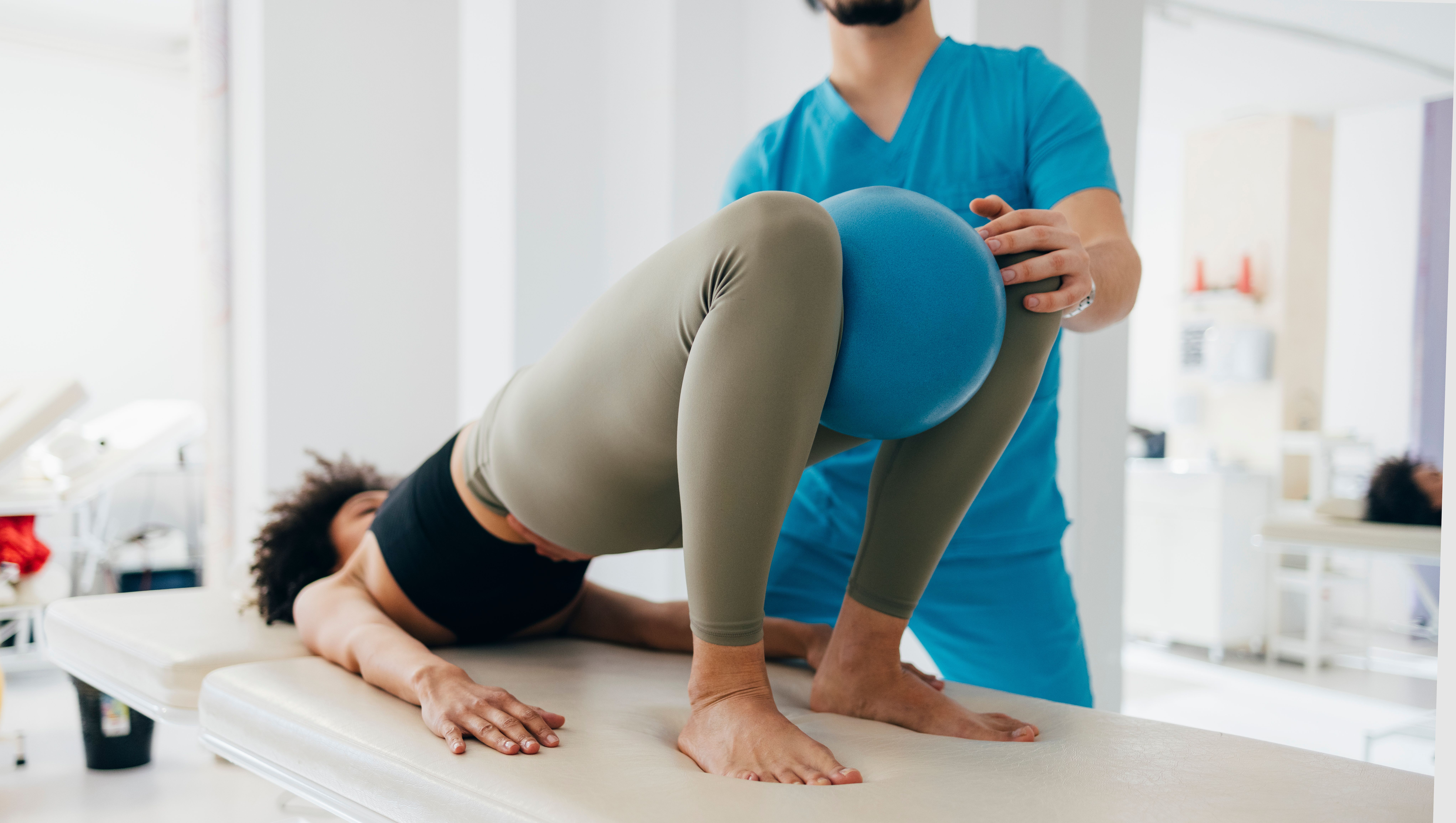
Lie on your back with knees bent and feet flat, hip-width apart. Tighten your glutes and lift your hips until your body forms a straight line from shoulders to knees. Pause, then lower slowly. Avoid arching your low back.
Try: 2 sets of 8 to 12 reps.
8. Clamshells
Best for: hip strength and kneecap tracking support.
Lie on your side with knees bent and feet stacked. Keep your feet together while lifting the top knee. Do not roll your pelvis backward. The motion should come from the hip, not from your whole body flopping open like a sleepy book.
Try: 10 to 15 reps per side.
9. Side-Lying Hip Abduction
Best for: gluteus medius strength and knee alignment.
Lie on your side with the bottom knee bent for support and the top leg straight. Lift the top leg slightly behind your body, keeping the toes facing forward or slightly downward. Lower slowly. You should feel the side of the hip working.
Try: 8 to 12 reps per side.
10. Calf Raises
Best for: ankle strength, walking support, and shock absorption.
Stand with hands on a wall or chair. Rise onto the balls of your feet, pause, then lower slowly. Keep weight even through both feet. Strong calves help your lower leg share the workload instead of letting the knee handle every tiny bump in the road.
Try: 2 sets of 10 to 15 reps.
11. Calf Stretch
Best for: tight calves and limited ankle motion.
Stand facing a wall. Step one foot back, keeping the heel down and the back knee straight. Lean forward until you feel a stretch in the calf. Keep the toes pointing forward. Switch sides.
Try: Hold 20 to 30 seconds per side.
12. Hamstring Stretch
Best for: back-of-thigh tightness that can affect knee mechanics.
Lie on your back and loop a towel behind one thigh or foot. Gently raise the leg until you feel a stretch in the back of the thigh. Keep the knee slightly bent if needed. Stretching should feel like a polite suggestion, not a courtroom cross-examination.
Try: Hold 20 to 30 seconds per side.
13. Quadriceps Stretch
Best for: tight front thighs and kneecap stress.
Stand near a wall for balance. Bend one knee and bring your heel toward your buttocks, holding the ankle or pant leg. Keep your knees close together and your torso upright. If this bothers the knee, try lying on your side instead.
Try: Hold 15 to 30 seconds per side.
14. Mini Squats
Best for: functional strength for sitting, standing, and stairs.
Stand with feet hip-width apart. Push your hips back and bend your knees slightly, as if you are about to sit but changed your mind. Keep knees tracking over the middle toes. Do not let them collapse inward. Return to standing by pressing through your heels and midfoot.
Try: 8 to 10 reps.
15. Wall Sits
Best for: quadriceps endurance and knee stability.
Stand with your back against a wall and feet slightly forward. Slide down into a shallow squat, keeping the knees comfortable. Hold the position while breathing normally. Start high on the wall; you do not need to descend into a heroic movie scene.
Try: Hold 10 to 20 seconds, 3 to 5 times.
16. Step-Ups
Best for: stair confidence and single-leg strength.
Use a low step. Place one foot on the step, press through the whole foot, and step up. Slowly step back down. Keep your knee aligned over your toes and your pelvis level. Begin with a small height before graduating to bigger steps.
Try: 8 to 10 reps per side.
17. Lateral Band Walks
Best for: hip stability and reducing inward knee collapse.
Place a light resistance band above your knees or around your ankles. Bend slightly at the hips and knees. Step sideways with control, then bring the other foot in without snapping the band. Keep your feet parallel and your knees gently pushed outward.
Try: 8 to 12 steps each direction.
18. Single-Leg Balance
Best for: coordination, joint control, and fall prevention.
Stand near a wall or chair. Lift one foot slightly off the floor and balance on the other leg. Keep your hips level and knee softly bent. Once easy, try turning your head slowly or standing on a folded towel. Do not close your eyes unless a professional has told you it is safe.
Try: 10 to 30 seconds per side.
How to Build a Knee-Friendly Weekly Routine
You do not need to perform all 18 exercises every day. In fact, please do not turn your living room into a knee boot camp unless your physical therapist specifically enjoys chaos. A smart routine rotates exercises based on your current symptoms and goals.
Beginner Routine
Start with heel slides, quad sets, straight leg raises, bridges, calf stretches, and single-leg balance. Perform the routine two or three times per week. Add easy walking or stationary cycling on separate days if it feels good.
Intermediate Routine
Combine seated knee extensions, hamstring curls, clamshells, side-lying hip abduction, mini squats, step-ups, and calf raises. Use slow tempo and controlled form. Add lateral band walks when your hips are ready for more work.
For Knee Arthritis
Focus on low-impact strengthening and motion. Heel slides, quad sets, straight leg raises, bridges, mini squats, wall sits, and step-ups can be helpful when the depth and intensity are adjusted. Cycling, swimming, water exercise, and walking are often friendlier than jumping or running during painful periods.
For Runner’s Knee or Front-of-Knee Pain
Hip and knee strengthening are especially important. Clamshells, side-lying hip abduction, bridges, lateral band walks, mini squats, and step-ups help train the muscles that influence kneecap tracking. Keep running volume modest while symptoms calm down, and avoid increasing speed, hills, and distance all at once.
Exercises to Avoid When Your Knee Is Angry
Not every exercise is evil, but timing matters. Deep squats, jump lunges, box jumps, high-impact running, heavy leg extensions, aggressive kneeling, and twisting sports may irritate the knee during a flare-up. That does not mean you can never do them again. It means your knee may need a graded comeback plan instead of a surprise party.
A good rule: if an exercise causes sharp pain during the movement, increases swelling, changes your walking, or makes the next day worse, scale it back. Reduce range of motion, remove resistance, slow down, or swap in a gentler option.
When to See a Physical Therapist
See a licensed physical therapist if knee pain lasts more than two weeks, keeps returning, affects stairs or walking, or makes you nervous about movement. A therapist can test strength, flexibility, balance, joint motion, and movement patterns. They can also help identify whether your knee pain is more likely coming from osteoarthritis, tendon irritation, patellofemoral pain, meniscus involvement, hip weakness, ankle stiffness, or training overload.
Get medical care sooner if you have major swelling, fever, redness, severe pain, a recent traumatic injury, inability to bear weight, locking, giving way, or calf swelling. Those are not “stretch it out” situations.
Common Mistakes People Make With Knee Pain Exercises
Doing Too Much Too Soon
Knees appreciate consistency, not ambushes. The first week should feel almost too easy. Progress comes from repeating manageable work, not from making your knee question your life choices.
Only Training the Knee
The hip and ankle strongly influence knee position. If the hip is weak or the ankle is stiff, the knee may compensate. That is why this list includes glute, calf, and balance exercisesnot just thigh work.
Ignoring Pain Signals
Muscle fatigue is normal. Sharp joint pain is information. Listen early, adjust quickly, and you are more likely to keep exercising long enough to see results.
Skipping Low-Impact Cardio
Strength matters, but joints also like regular movement. Walking, cycling, swimming, water exercise, and tai chi can help maintain mobility, circulation, endurance, and confidence.
Conclusion
The best exercises for knee pain are not flashy. They are steady, targeted, and surprisingly humble. Heel slides restore motion. Quad sets and straight leg raises rebuild thigh control. Bridges, clamshells, and lateral band walks strengthen the hips. Step-ups, squats, wall sits, and balance drills prepare the knee for real lifethe place where chairs, stairs, sidewalks, and grocery bags all conspire to test your joints.
If you are consistent, patient, and willing to progress gradually, these physical therapist–style knee pain exercises can help you move with more confidence. Your knee may not send you a thank-you card, but one day you may climb the stairs without thinking about it. That is basically a standing ovation from your joints.
Experience-Based Notes: What Knee Pain Exercise Feels Like in Real Life
One of the most useful lessons from knee rehab is that progress usually arrives quietly. People often expect a dramatic breakthrough: one perfect stretch, one magical exercise, one morning when the knee suddenly feels twenty years younger and starts asking to go salsa dancing. In reality, improvement is more like watching a plant grow. Nothing seems to happen for a few days, then suddenly you realize stairs are less annoying, the chair is easier to stand from, and your knee is no longer the loudest personality in the room.
A common experience is fear of movement. After knee pain starts, many people become cautious. They avoid bending, squatting, walking far, or putting weight on the sore side. That reaction is understandable, especially if the pain came from an injury. But too much avoidance can make the leg weaker, stiffer, and less confident. Gentle exercises such as heel slides, quad sets, and straight leg raises are often helpful because they rebuild trust. They say, “Look, knee, we can move without drama.”
Another real-world lesson: hip exercises may feel oddly unrelated until they work. Many people with knee pain are surprised when a physical therapist gives them clamshells, bridges, or side-lying leg lifts. They came in for a knee problem, not a glute awakening. But when the hip muscles become stronger, the thigh often tracks better, the knee feels more controlled, and activities like stairs or walking downhill may become easier. The knee is a team player, even when it acts like a solo artist.
People also learn that “easy” exercises are not always easy when done correctly. A slow step-up with perfect knee alignment can feel more challenging than a sloppy set of heavy squats. A 20-second wall sit can make the thighs burn like they have discovered taxes. A single-leg balance drill can reveal that your ankle, hip, and core have been running separate departments with no group chat. This is why form matters more than intensity at the beginning.
Consistency beats intensity almost every time. Three short sessions per week usually outperform one heroic workout followed by six days of limping and regret. The best knee routine is one you can repeat. Keep a simple log: exercises completed, pain during the session, and symptoms the next day. If pain stays mild and returns to baseline within 24 hours, you are probably in a reasonable training zone. If the knee swells or complains louder the next day, reduce the load.
Footwear, surfaces, and daily habits matter too. A supportive pair of shoes may make walking more comfortable. Softer surfaces can reduce irritation during flare-ups. Breaking up long sitting periods with gentle movement can help stiffness. And yes, body mechanics count: when standing from a chair, leaning forward slightly and pressing through the whole foot can make the movement smoother.
The most encouraging experience is realizing that knee pain does not always mean you are fragile. It often means your body needs better support, smarter loading, and a little patience. With the right exercises, gradual progression, and professional guidance when needed, many people can return to the activities they enjoywalking, gardening, hiking, cycling, playing with kids, or simply getting up from the couch without making sound effects.