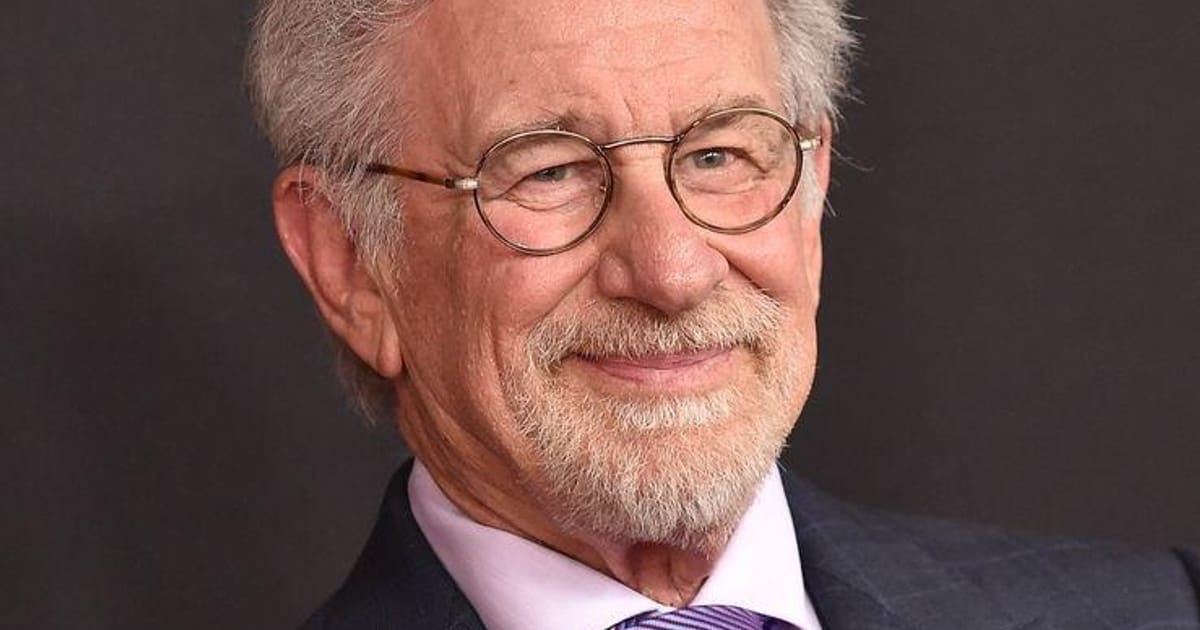
Ranking Steven Spielberg movies is a little like choosing the best slice of pizza at a party where every box came from a different legendary pizzeria. One slice has dinosaurs. Another has a shark. One has a homesick alien who made an entire generation point at the moon and cry. Another has one of the most devastating historical dramas ever filmed. Spielberg’s career is not just a filmography; it is a map of modern American cinema.
This Steven Spielberg rankings and opinions guide looks at his most important films, not simply by popularity or box office, but by craft, influence, emotional power, rewatch value, cultural impact, and the mysterious Spielberg ingredient that makes ordinary scenes feel as if the camera has discovered wonder hiding under the kitchen table. The result is a thoughtful, opinion-driven ranking that respects the classics while still leaving room for debate, because no Spielberg list is complete until someone yells, “How is Jurassic Park not number one?”
Why Ranking Steven Spielberg Is So Difficult
Steven Spielberg is one of the rare directors whose movies can be discussed in several completely different categories. He helped define the summer blockbuster with Jaws. He turned adventure cinema into pure kinetic joy with Raiders of the Lost Ark. He gave science fiction a heartbeat in E.T. the Extra-Terrestrial and Close Encounters of the Third Kind. Then, when critics tried to box him in as a master entertainer, he delivered Schindler’s List and Saving Private Ryan, two towering historical dramas that proved spectacle and seriousness could live in the same artistic universe.
The challenge is that Spielberg’s “best” movie depends on what the viewer values. If the question is cultural influence, Jaws and Jurassic Park roar loudly. If it is emotional storytelling, E.T. floats above the competition like a bicycle in moonlight. If the issue is moral weight, Schindler’s List stands almost alone. A fair Spielberg ranking must admit that several films have a legitimate claim to the throne.
Steven Spielberg Movies Ranked: The Top 12
12. Bridge of Spies
Bridge of Spies may not be the flashiest Spielberg movie, but it is one of his most elegant late-career achievements. Tom Hanks plays James B. Donovan with quiet decency, and Mark Rylance gives a beautifully restrained performance as Rudolf Abel. The film works because Spielberg understands that suspense does not always require explosions. Sometimes it only needs a man in a gray suit trying to do the right thing while everyone else would rather take the shortcut.
Opinion: This is Spielberg in “classical craftsman” mode. It is not the movie you put on to impress a room full of teenagers, but it is the one that makes adults nod slowly and say, “They really do not make them like this anymore.”
11. The Fabelmans
The Fabelmans is Spielberg turning the camera inward. Inspired by his own childhood, the film explores family, art, memory, ambition, and the strange cost of seeing life cinematically before you fully understand it emotionally. It is not his biggest movie, but it may be one of his most revealing.
The film shows how a young person can discover filmmaking not just as a hobby, but as a way of processing pain. Its best moments are intimate: a boy editing family footage, a mother dancing in headlights, a final meeting with John Ford that becomes both hilarious and holy. Opinion: It is not as instantly rewatchable as Raiders, but it adds a key chapter to how we understand Spielberg’s imagination.
10. Minority Report
Minority Report is one of Spielberg’s sharpest science-fiction thrillers. Starring Tom Cruise, the film imagines a future where crimes are stopped before they happen, which sounds great until someone remembers that human beings are terrible at handling power responsibly. The movie is sleek, paranoid, visually inventive, and still surprisingly relevant in conversations about surveillance, prediction, privacy, and technology.
Opinion: This is Spielberg at his most muscular and cerebral. It has chase scenes, moral puzzles, creepy eye surgery, and enough futuristic user-interface hand-waving to make every tech conference look underdressed.
9. Catch Me If You Can
Catch Me If You Can is one of Spielberg’s breeziest films, but “breezy” should not be mistaken for lightweight. Leonardo DiCaprio plays Frank Abagnale Jr. with charm and sadness, while Tom Hanks brings dry comic patience to the role of FBI agent Carl Hanratty. The movie dances through cons, costumes, fake identities, and airports, yet underneath the fun is a story about loneliness and broken homes.
Opinion: This is Spielberg’s great comfort-food movie for adults. It moves like a jazz standard, looks gorgeous, and proves that a film can be stylish without begging the audience to admire the wallpaper.
8. Close Encounters of the Third Kind
Before aliens became cuddly in E.T., Spielberg made them mysterious, overwhelming, and almost spiritual in Close Encounters of the Third Kind. The film is about obsession as much as contact. Richard Dreyfuss plays Roy Neary, an ordinary man who becomes consumed by a vision he cannot explain. Mashed potatoes have never carried such cosmic importance.
The final sequence remains one of Spielberg’s purest expressions of awe. Light, music, scale, and silence come together in a way that makes the audience feel tiny but invited. Opinion: It is not always tidy as drama, but its sense of wonder is enormous. Few directors have ever made curiosity feel this grand.
7. Lincoln
Lincoln is not a cradle-to-grave biopic, and that is one of its smartest choices. Spielberg focuses on the political struggle to pass the Thirteenth Amendment, turning legislative procedure into gripping drama. Daniel Day-Lewis gives a performance so lived-in that the movie sometimes feels less like acting and more like historical possession.
Opinion: This is Spielberg’s great film about democracy as messy labor. It has arguments, compromises, jokes, pressure, and moral urgency. It reminds us that history is not made by marble statues; it is made by tired people in rooms, counting votes and swallowing pride.
6. Saving Private Ryan
Saving Private Ryan begins with one of the most famous battle sequences in film history: the D-Day landing at Omaha Beach. Spielberg’s approach is chaotic, terrifying, and brutally immersive. The sequence changed how modern war films depicted combat, but the movie is more than its opening. At its heart is a moral question: what is one life worth when so many have already been lost?
Tom Hanks anchors the film with weary humanity. The supporting cast gives the story texture, humor, fear, and grief. Opinion: The framing device can be debated, but the central journey remains powerful. It is a war film that understands both heroism and exhaustion.
5. Jurassic Park
Jurassic Park is blockbuster filmmaking with a PhD in suspense. The dinosaurs are the headline, obviously, but Spielberg’s real genius is pacing. He delays, teases, and reveals with astonishing control. The vibrating water glass. The goat leg. The T. rex emerging in the rain. The kitchen raptors. Every set piece is built with the precision of a theme-park ride designed by a mad scientist with excellent taste.
The film also understands that wonder and terror are siblings. Seeing dinosaurs alive is miraculous until one of them decides your vehicle is a snack container. Opinion: Jurassic Park may be the most purely entertaining Spielberg movie after Raiders. It has aged beautifully because its magic comes from storytelling, not just effects.
4. Raiders of the Lost Ark
Raiders of the Lost Ark is close to perfect adventure cinema. Harrison Ford’s Indiana Jones is brave, funny, battered, and frequently making things up as he goes along. The film moves from one iconic sequence to another: the rolling boulder, the bar in Nepal, the truck chase, the Well of Souls, and the supernatural finale that reminds everyone not to open mysterious ancient objects without reading the room.
Opinion: If cinema were measured only by momentum, wit, and popcorn satisfaction, Raiders might be number one. It is a masterpiece of movement. Every scene knows exactly what it is doing, and every punch sounds like it was recorded by a very enthusiastic thundercloud.
3. E.T. the Extra-Terrestrial
E.T. the Extra-Terrestrial is Spielberg’s most emotionally direct film. It is a story about a lost alien, yes, but it is also about childhood, divorce, friendship, fear, and the ache of saying goodbye before you are ready. Henry Thomas gives one of the great child performances, and the film’s suburban setting turns ordinary houses, bikes, closets, and backyards into sacred territory.
The reason E.T. endures is that it respects children’s emotions. It does not treat loneliness as cute or imagination as silly. Opinion: This is Spielberg’s softest masterpiece, and “soft” is not an insult. It is tender, funny, strange, and devastating in the way only a glowing finger and a broken little voice can be.
2. Jaws
Jaws is the movie that turned Spielberg into a major Hollywood force and helped reshape the blockbuster era. What makes it remarkable is how much of its terror comes from absence. The shark is often unseen, which means the audience’s imagination does half the work and charges no overtime. John Williams’s score became a cultural alarm bell, but Spielberg’s direction is just as crucial: he understands where to place the camera, when to hold back, and when to let panic explode.
The film also works because of character. Roy Scheider, Robert Shaw, and Richard Dreyfuss create a trio that is funny, tense, and deeply human. Opinion: Jaws is almost impossibly efficient. It is scary, witty, beautifully structured, and still capable of making a swimming pool feel suspicious.
1. Schindler’s List
Schindler’s List is Spielberg’s greatest film because it combines formal mastery with profound moral seriousness. Shot largely in black and white, the film tells the story of Oskar Schindler, a German industrialist who saved more than a thousand Jewish people during the Holocaust. It is difficult to watch, as it should be. Spielberg avoids turning suffering into empty spectacle, instead using his command of image, rhythm, and performance to confront history with clarity and grief.
Liam Neeson, Ben Kingsley, and Ralph Fiennes give unforgettable performances, and the film’s emotional impact is immense. Opinion: Schindler’s List stands at number one not because it is the easiest Spielberg film to revisit, but because it is the hardest to dismiss. It is the work of a director using every tool he had spent decades developing in service of memory, witness, and moral responsibility.
Best Spielberg Films by Category
Best Blockbuster: Jurassic Park
For pure blockbuster energy, Jurassic Park wins. It has spectacle, humor, suspense, memorable characters, and dinosaurs that still look more convincing than many modern digital creatures. The film is the perfect example of Spielberg’s ability to make technical innovation feel emotionally immediate.
Best Adventure Film: Raiders of the Lost Ark
Raiders of the Lost Ark is the gold standard for action-adventure storytelling. It is fast without being frantic, funny without becoming parody, and stylish without losing clarity. Many films have tried to copy it. Most ended up looking like they forgot the homework and only borrowed the hat.
Best Emotional Film: E.T. the Extra-Terrestrial
No Spielberg movie understands childhood quite like E.T.. Its emotional power comes from simplicity: a child meets a lost creature, loves him, protects him, and must let him go. That is the whole movie, and somehow it contains the universe.
Best Historical Drama: Schindler’s List
Schindler’s List remains Spielberg’s defining dramatic achievement. It is not just well-made; it feels necessary. The film’s craft never distracts from its subject, and its emotional force has not faded.
Most Underrated Spielberg Movie: A.I. Artificial Intelligence
A.I. Artificial Intelligence has grown in reputation over time, and for good reason. It is strange, cold, heartbreaking, and more unsettling than many viewers expected from Spielberg. Its fusion of Stanley Kubrick’s conceptual distance and Spielberg’s emotional intensity makes it one of the director’s most fascinating works.
What Makes Spielberg’s Style So Powerful?
Spielberg’s style is often described as “wonder,” but that word only tells part of the story. His real gift is emotional geography. He knows where people stand in a room, what they see, what they do not see, and when the audience should know more than the characters. That is why his suspense scenes work so well. In Jaws, the ocean is terrifying because Spielberg turns open space into a hiding place. In Jurassic Park, a kitchen becomes a battlefield because the camera stays close to the children’s fear.
He is also a master of faces. Spielberg often builds scenes around people looking at something extraordinary before the audience sees it. The reaction becomes the invitation. We believe in the dinosaur, the alien ship, or the impossible event because the characters believe first. This technique is sometimes called the “Spielberg face,” and while it has been imitated endlessly, few filmmakers use it with the same sincerity.
Another key element is movement. Spielberg’s camera rarely feels lazy. It glides, tracks, reveals, and reframes with purpose. In his best films, camera movement is not decoration; it is storytelling. The viewer is guided through space as if the film itself knows where our curiosity wants to go next.
Common Opinions About Steven Spielberg: Fair or Not?
Opinion 1: Spielberg Is Too Sentimental
This criticism appears often, and sometimes it has a point. Spielberg can lean into swelling music, tearful goodbyes, and emotional release with absolute confidence. But sentimentality is not automatically a flaw. The question is whether the emotion is earned. In E.T., it is. In Schindler’s List, the emotion is inseparable from the film’s moral purpose. In weaker moments, the feeling can become a bit glossy, but dismissing Spielberg as merely sentimental ignores how often his emotion is built on precise craft.
Opinion 2: Spielberg Changed Hollywood for Better and Worse
This is a more complicated argument. Jaws and later blockbuster hits helped shape the modern event movie. That influence gave audiences unforgettable cinematic experiences, but it also encouraged studios to chase massive commercial formulas. Blaming Spielberg for every noisy franchise sequel is unfair, though. That is like blaming the inventor of the sandwich for every sad airport wrap.
Opinion 3: Spielberg Is at His Best When Mixing Fear and Wonder
This opinion feels right. Spielberg’s greatest entertainments often combine amazement with danger. Jurassic Park is beautiful and terrifying. Close Encounters is inspiring and unsettling. Jaws turns the beach into both paradise and nightmare. Spielberg understands that wonder becomes more powerful when it has teeth.
Final Verdict: The Spielberg Ranking That Feels Right
The best Steven Spielberg movies are not just famous; they changed how audiences experience cinema. Schindler’s List is his most important work, Jaws is his tightest thriller, E.T. is his emotional signature, Raiders of the Lost Ark is his great adventure machine, and Jurassic Park is his blockbuster laboratory operating at full power.
A different ranking could easily put Jaws first, or Raiders, or even E.T.. That is the fun of Spielberg debates: the argument is not whether he has enough masterpieces, but which masterpiece gets the biggest chair at the table. Few directors have made so many films that feel permanently installed in popular memory.
Personal Viewing Experiences Related to Steven Spielberg Rankings And Opinions
The most interesting thing about revisiting Spielberg’s movies is how they change depending on when you watch them. As a child, Jurassic Park may feel like the ultimate dinosaur adventure, a movie where the main lesson is simple: never trust a billionaire with mosquito amber and a theme-park budget. As an adult, the film becomes even funnier and sharper because you notice how much of the disaster comes from arrogance, poor planning, and the belief that a lunch meeting can solve an ethical crisis involving prehistoric predators.
E.T. the Extra-Terrestrial also shifts with age. Younger viewers often connect with Elliott’s friendship and the thrill of hiding an alien from adults, which, frankly, is a more exciting childhood project than cleaning your room. Older viewers may notice the sadness around the family, the absence of the father, and the way the alien becomes a mirror for children trying to survive emotional confusion. That is why ranking E.T. is difficult. It is not only a science-fiction film; it is a memory machine.
Watching Jaws today is another special experience because it proves how little a great thriller needs. Modern movies often show the monster early, loudly, and repeatedly, as if the audience might forget what danger looks like. Spielberg does the opposite. He withholds. He suggests. He lets the water become suspicious. The result is that viewers start scanning every frame like amateur marine detectives. That kind of suspense is not old-fashioned; it is timeless.
Then there is Schindler’s List, which belongs in a different emotional category. It is not a casual rewatch. You do not put it on while folding laundry unless your laundry routine is unusually intense. The film asks for attention and respect. Its power comes from the fact that Spielberg, often associated with wonder and entertainment, chooses restraint and moral seriousness. Seeing it after watching his adventure films deepens appreciation for his range.
The best Spielberg viewing experience may be watching several of his films close together. You begin to see patterns: broken families, ordinary people facing extraordinary events, children who understand more than adults think, and characters staring toward something larger than themselves. His films can be thrilling, sentimental, frightening, funny, or devastating, but they usually return to the same central idea: cinema is a way of making people feel the size of life.
That is why any Steven Spielberg rankings and opinions article should leave room for disagreement. A viewer who grew up with Indiana Jones may rank Raiders first. Someone who saw Jurassic Park in a packed theater may never be convinced that anything tops the T. rex attack. A history lover may choose Lincoln, while a science-fiction fan may defend Minority Report with courtroom intensity. The “correct” Spielberg ranking is partly critical judgment and partly personal biography. His movies do not just sit on a shelf; they attach themselves to birthdays, family nights, school assignments, first theater memories, and rainy weekends.
In the end, Spielberg’s greatness is not only that he made classics. It is that so many people have different Spielberg classics. That is rare. That is legacy. And yes, that is also why ranking him can feel like trying to organize lightning in alphabetical order.
Conclusion
Steven Spielberg’s rankings will always inspire debate because his career contains several different kinds of greatness. He is the architect of modern blockbuster suspense, the poet of childhood wonder, the craftsman of historical drama, and the entertainer who made audiences believe that sharks, aliens, dinosaurs, soldiers, spies, and archaeologists could all belong to the same cinematic imagination.
In this ranking, Schindler’s List takes the top spot because of its artistic seriousness and historical weight, followed closely by Jaws, E.T., Raiders of the Lost Ark, and Jurassic Park. Still, the beauty of Spielberg’s filmography is that a passionate fan could rearrange the top five and still make a strong case. That is not a problem with the ranking. That is proof of the director’s extraordinary impact.