In the celebrity internet ecosystem, a single Instagram follow can carry the emotional weight of a Shakespearean betrayal, a Wall Street market crash, and a group chat emergency all at once. That is exactly what happened when fans noticed that Justin Bieber’s Instagram account appeared to unfollow his wife, Hailey Bieber. Within hours, the internet had put on its detective hat, zoomed in on every post, and started asking the question nobody can resist: was this a glitch, a hack, a marriage clue, or simply another case of social media doing what social media does bestturning a tiny tap into a tornado?
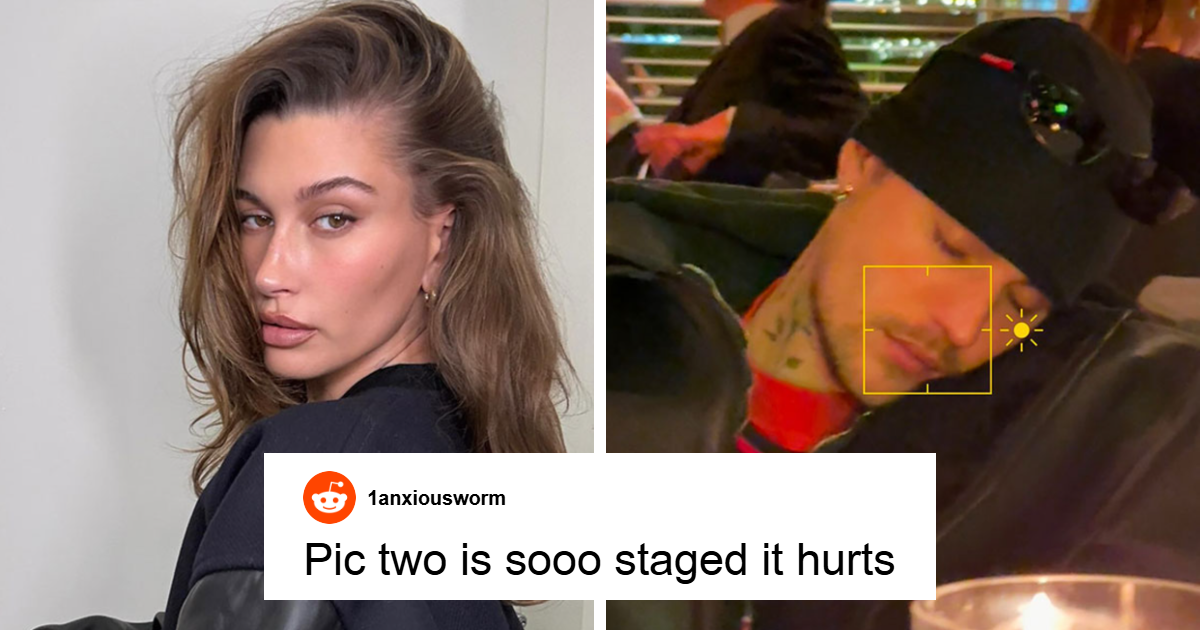
The phrase “so staged it hurts” began circulating after Hailey and Justin Bieber shared couple-related photos following the unfollow drama. Some fans saw the posts as sweet reassurance. Others viewed them as suspiciously timed damage control. In other words, the internet split into two familiar camps: Team “Leave Them Alone” and Team “Enhance the Image, I Saw Something in the Reflection.”
To be fair, Justin and Hailey Bieber have lived under a microscope for years. They married young, became one of pop culture’s most watched couples, welcomed their son Jack Blues Bieber in 2024, and have repeatedly faced online speculation about their relationship. So when an unfollow appeared, even briefly, people reacted as if Instagram itself had issued a divorce filing. The truth, however, is more complicated, less dramatic, and probably less useful to anyone hoping for a reality-show-level plot twist.
What Actually Happened With the Hailey and Justin Bieber Unfollow Drama?
The controversy began when fans noticed that Justin Bieber’s Instagram account no longer appeared to be following Hailey Bieber. For a celebrity couple already surrounded by breakup rumors, that small digital change was enough to send social media into full-speed analysis mode. Shortly afterward, Justin addressed the situation in an Instagram Story, saying that someone had gone on his account and unfollowed his wife. The account later appeared to follow Hailey again, but by then, the screenshots had already escaped the internet barn.
That explanation did not stop speculation. In fact, it gave fans more material. Some believed Justin’s comment was straightforward and should have ended the conversation. Others questioned why such a visible account issue happened at all. Celebrity social media has become a strange public scoreboard, where follows, likes, captions, emojis, and timing are treated like official press releases. If a star posts a heart, it is romance. If they delete a heart, it is chaos. If they post nothing, naturally, it is also chaos.
Hailey later shared a photo of Justin, including a casual image of him sleeping, which many outlets described as a subtle response to the chatter. Rather than issuing a long statement, she let the photo do the talking. Some fans found it charming. Others thought the timing looked too perfect. That is where the “so staged it hurts” reaction came in: not because the photo proved anything, but because audiences are now trained to view every celebrity post as a chess move.
Why Fans Called the Couple Photos “Staged”
Calling a celebrity photo “staged” is not always about the photo itself. Sometimes it is about timing. When a couple posts affectionate content right after rumors explode, fans often assume the post is meant to calm the crowd. In the Bieber case, the couple-related images arrived after a very public Instagram wobble, so the internet treated them like Exhibit A in the trial of “Are They Trying Too Hard?”
Some observers argued that the posts felt like reputation repair: a quick visual reminder that Hailey and Justin were still together, still present, and still not inviting strangers into their living room to hold a relationship audit. Others felt the criticism was unfair. After all, married people can post photos of each other without operating a crisis communications department. Sometimes a sleeping husband is just a sleeping husband. Sometimes a photo dump is just a photo dump. The internet, tragically, does not always accept “normal behavior” as a valid explanation.
There is also the broader celebrity-brand factor. Hailey is not only Justin’s wife; she is a model, entrepreneur, and founder of Rhode. Justin is not only a husband; he is a global pop star whose career has been publicly followed since his teenage years. Together, they are not just a couple in the public eyethey are a constantly interpreted cultural product. That does not make every photo fake, but it does mean every image lands in a context where fans, critics, and gossip accounts are ready to decode it.
The Internet’s Obsession With Celebrity Couple Clues
The Hailey and Justin Bieber unfollow drama is part of a bigger trend: the rise of social media relationship forensics. Fans no longer wait for official statements. They inspect follow lists, compare old captions, check who liked what, and analyze whether a birthday tribute had enough adjectives. A celebrity can be happily married, mildly annoyed, or simply busy eating cereal, and the internet may still decide the relationship is in Act Three of a tragedy.
This habit is especially intense with couples like Hailey and Justin because their relationship has a long public timeline. They first met years before marriage, dated on and off, reunited in 2018, married that same year, held a larger wedding celebration in 2019, renewed their vows in 2024, and became parents later that year. Their story includes romance, faith, fame, health challenges, business moves, and constant commentary. That is more than enough material for fans to build theories, even when the couple says very little.
The problem is that social media clues are often weak evidence. A follow can disappear because of a technical issue. A post can be deleted because someone did not like the lighting. A caption can be short because the person was tired. But online audiences tend to treat these small details as emotional X-rays. The result is a cycle where celebrities post, fans react, celebrities respond, fans analyze the response, and everyone somehow ends up more confused than before.
Hailey Bieber’s Approach: Quiet, Polished, and Sometimes Funny
Hailey Bieber has often responded to rumors with a mix of restraint and dry humor. When speculation about her marriage grows loud, she does not always deliver a traditional statement. Sometimes she posts a photo. Sometimes she shares a pointed message. Sometimes she lets the rumor collapse under its own dramatic weight. In a celebrity culture that rewards over-explaining, her approach can feel almost minimalist.
That strategy has benefits. A short response avoids feeding a rumor with more paragraphs. It also keeps the couple from appearing to beg for approval. But it has risks too. When fans are already suspicious, a subtle post can look calculated. A casual image becomes “proof.” A quiet correction becomes “too quiet.” A joke becomes “deflection.” The public wants authenticity, but it also wants constant access, and those two demands do not always make sense together.
Hailey’s later comment about another alleged unfollow, where she described it as a glitch and said she did not unfollow Justin, showed how quickly these situations can repeat. A digital hiccup becomes a headline. A headline becomes a TikTok theory. A TikTok theory becomes a comment section courtroom. By the time the person involved says, “Nothing happened,” the internet has already produced a three-part documentary in its imagination.
Justin Bieber’s Role in the Rumor Machine
Justin Bieber’s fame makes every action louder. He has spent much of his life under public observation, from teenage stardom to adulthood, marriage, health struggles, fatherhood, and artistic reinvention. His social media activity is watched closely because fans see it as a direct window into his mood, priorities, and relationships. That is a lot of pressure for an app originally designed to share square pictures of lunch.
When Justin praised Hailey shortly before the unfollow drama, calling her an important woman in his life, many fans saw it as evidence that the couple was fine. When the unfollow happened soon afterward, others saw contradiction. But real relationships do not always move in neat public patterns. A loving post and a confusing account issue can exist in the same week without forming a secret code.
Justin’s explanation that someone accessed his account was also very internet-age celebrity behavior: brief, informal, and designed to shut down a story fast. Whether fans accepted it depended largely on what they already believed. Those who supported the couple saw it as a simple clarification. Those who doubted the couple saw it as suspicious. That is the tricky thing about celebrity narrativespeople often read the evidence through the ending they have already chosen.
Why the “Staged” Accusation Says More About Us Than Them
When people call Hailey and Justin Bieber’s couple photos staged, they may be reacting less to the couple and more to the modern celebrity machine. Audiences know that famous people manage their images. They know publicists exist. They know a single photo can soften a scandal, promote a brand, or redirect attention. That awareness makes fans sharper, but it can also make them cynical enough to distrust everything.
There is a real tension here. On one hand, celebrities do use social media strategically. On the other hand, celebrities are also human beings who take random photos, miss their partners, share family moments, and occasionally post because they feel like it. The same image can be both personal and public. A photo of Justin sleeping might be a sweet glimpse into married life, a subtle rumor response, or both. Life is messy. Instagram is messier. Comment sections are basically soup with Wi-Fi.
The “so staged it hurts” reaction also reflects how audiences now expect celebrity couples to perform authenticity. If they post too much, it looks fake. If they post too little, it looks suspicious. If they look happy, it might be staged. If they look serious, it might be trouble. The couple is trapped in a no-win game where every move can be interpreted as evidence for whatever theory is trending that day.
The Bieber Marriage Under Public Pressure
Hailey and Justin Bieber’s marriage has faced constant commentary since the beginning. They married in 2018 after a fast rekindling of their relationship, and many people immediately questioned whether they were too young, too famous, or moving too quickly. Years later, they are still married, now raising their son, and still being analyzed by strangers who treat Instagram as a relationship dashboard.
The birth of Jack Blues Bieber added another layer. Parenthood often changes how couples use social media. Some become more private. Some share fewer personal details. Some post family moments while hiding a child’s face. Hailey and Justin have shown glimpses of their son while keeping much of his life private, which is understandable given the size of their audience. Still, even privacy becomes a topic for speculation when the public expects constant updates.
It is also worth remembering that celebrity couples do not owe the public a full emotional inventory. Marriage is not a livestream. A confusing Instagram moment does not automatically reveal the health of a relationship. The most honest parts of a marriage usually happen off-camera: the boring errands, the tired conversations, the parenting shifts, the apologies, the shared snacks, and the “Did you move my charger?” negotiations that truly define long-term love.
How Media Coverage Amplified the Story
The unfollow drama spread quickly because it had all the ingredients entertainment media loves: a famous couple, a mysterious social media action, a short explanation, new photos, and divided fan reactions. It was easy to summarize, easy to debate, and easy to package into headlines. That does not mean the story was meaningless, but it does show how small celebrity moments become big digital events.
Entertainment coverage often walks a delicate line. On one side, fans are genuinely interested in celebrities they follow. On the other, constant speculation can turn ordinary relationship behavior into public property. In this case, reports generally focused on what was visible: the unfollow, Justin’s explanation, Hailey’s posts, and fan reactions. The harder part is avoiding the leap from “this happened online” to “this proves something private.”
That distinction matters for readers too. It is fun to follow celebrity news. It is less healthy to treat every post as a confession. The smartest approach is to enjoy the spectacle while keeping one foot firmly planted in reality. Yes, the timing of the photos raised eyebrows. No, a photo dump is not a marriage diagnosis. Both things can be true, and neither requires a whiteboard covered in red string.
What This Says About Social Media, Love, and Public Performance
The Hailey and Justin Bieber situation is interesting because it captures how love looks when filtered through fame. Most couples have awkward moments, misunderstandings, and private weirdness. Famous couples have those things too, except theirs are observed by millions of people who may turn them into content before breakfast.
Social media has blurred the line between genuine expression and public performance. A couple photo can be a memory, a message, a brand asset, a rumor response, or all of those at once. That complexity is why fans debate whether photos are staged. They are not necessarily wrong to notice timing. But they may be wrong to assume timing tells the whole truth.
For Hailey and Justin, the best response may be the least satisfying one for the internet: keep living. Post when they want. Stay quiet when they want. Protect their child. Ignore the wildest theories. And occasionally let the comment section tire itself out like a toddler after too much birthday cake.
Final Thoughts: Was It Staged, Sweet, or Just Social Media Being Social Media?
So, were the Hailey and Justin Bieber couple photos staged after the unfollow drama? The honest answer is that nobody outside their circle knows. The timing made people suspicious, and some fans understandably viewed the posts as a soft public-relations reset. But there is also a simpler possibility: Hailey posted her husband because he is her husband, and Justin’s account issue was exactly what he said it wasan account issue.
The bigger story is not whether one photo was staged. It is how quickly online culture turns relationship crumbs into full-course meals. A follow list changes, a celebrity posts a picture, and suddenly thousands of people are debating tone, timing, intent, and emotional subtext. It is entertaining, yes. It is also a reminder that public people still have private lives, even when their Instagram grids look like open books.
Hailey and Justin Bieber may never convince every critic. That is the celebrity bargain: attention brings admiration, but it also invites suspicion. Still, if a marriage has survived years of headlines, fan theories, public pressure, and the occasional app-based mystery, it probably cannot be fully explained by one unfollow button. Sometimes the internet sees smoke. Sometimes it sees a fog machine it built itself.
Extra Experience Section: What This Kind of Celebrity Drama Feels Like From the Audience Side
Anyone who has followed celebrity news for more than five minutes knows the feeling: you open your phone for one innocent scroll, and suddenly you are learning that a famous husband may or may not have unfollowed his famous wife. You did not ask to become an Instagram investigator. You had errands. You had laundry. You had one banana left and no plan for dinner. Yet there you are, reading comments like “look at the timing” and thinking, “Wait, should I be looking at the timing?”
The Hailey and Justin Bieber situation is a perfect example of how celebrity stories become oddly personal for audiences. Fans often project their own relationship experiences onto famous couples. If someone has been through a breakup that began with small digital changes, an unfollow can feel meaningful. If someone has seen couples overcompensate online, affectionate posts after drama can look suspicious. If someone values privacy, the entire conversation may feel invasive. People are not only reacting to the Biebers; they are reacting through their own emotional history.
There is also the group-chat effect. Celebrity drama is rarely consumed alone anymore. People send screenshots, add dramatic captions, and ask friends to weigh in as if the couple has personally requested a jury. This makes the story more entertaining, but it also makes speculation spread faster. A single comment like “this feels staged” can become the dominant mood of the conversation, even if there is no solid evidence behind it.
From a reader’s perspective, the healthiest way to enjoy this kind of story is with curiosity, not certainty. It is fine to notice that the posts arrived after an awkward moment. It is fine to think the timing was convenient. It is also fine to admit that we do not know what happened in their home, on their phones, or inside their marriage. That little phrase“we do not know”is not as exciting as a conspiracy theory, but it is much more honest.
The same lesson applies to regular relationships too. Social media rarely tells the whole story. A couple that posts constantly may be happy, struggling, or simply good at taking pictures. A couple that posts rarely may be private, busy, or perfectly content. A missed like does not equal heartbreak. A romantic caption does not guarantee perfection. And an unfollow, while dramatic in the digital age, is still just a button unless the people involved confirm otherwise.
That is why the “so staged it hurts” reaction is both funny and revealing. It shows how media-savvy audiences have become, but also how exhausted people are by polished celebrity narratives. Fans want realness, but when realness appears, they question whether it has been arranged. They want reassurance, but when reassurance comes, they suspect strategy. Modern celebrity couples are expected to be open, private, authentic, glamorous, spontaneous, stable, entertaining, and emotionally transparentall while looking good in bad lighting. Good luck to anyone attempting that without a nap.
In the end, the best experience a reader can take from the Hailey and Justin Bieber unfollow drama is a balanced one: enjoy the pop culture moment, laugh at the internet’s detective energy, but avoid turning speculation into fact. The couple photos may have been carefully timed. They may have been completely ordinary. They may have been both. That uncertainty is not a flaw in the storyit is the story. Online life has made everyone visible, but visibility is not the same as truth.