Slow design is not furniture taking a nap. It is a thoughtful approach to objects, materials, makers, and timeand few contemporary designers explain that idea better than Piet Hein Eek. Known for turning scrap wood, imperfect surfaces, and overlooked materials into collectible furniture, the Dutch designer has built a career on proving that “waste” is often just beauty with bad public relations. His collaboration with Fair Trade Original adds another layer to that story: ethical production, artisan skill, and design that respects both the hand and the material.
What Is Slow Design?
Slow design is the opposite of fast, disposable decorating. Instead of buying objects because they are cheap, trendy, and conveniently available at 2 a.m. while you are “just browsing,” slow design asks better questions. Who made this? What is it made from? Will it last? Can it be repaired? Does it support people fairly? Does it make a room feel more human?
The slow design movement draws from the same spirit as slow food and slow fashion. It values local knowledge, quality materials, transparent production, and long-term use. In home interiors, that often means choosing fewer pieces but choosing them better. A slow design object does not need to shout. It simply needs to carry a story worth hearing.
Slow Design Is Not Anti-Modern
Slow design is sometimes misunderstood as rustic, old-fashioned, or allergic to clean lines. That is not true. A slow design piece can be sleek, minimal, experimental, or even industrial. What matters is not whether it looks handmade in the obvious sense, but whether it has been designed with intention. Piet Hein Eek’s work often looks raw and refined at the same time. That tension is exactly the point.
Who Is Piet Hein Eek?
Piet Hein Eek is a Dutch designer best known for his scrapwood furniture, a body of work that began with his graduation project at Design Academy Eindhoven around 1990. At a time when polished, flawless, mass-produced furniture dominated much of the market, Eek chose discarded wood and visible imperfections. Instead of hiding nail holes, stains, old paint, dents, scratches, and mismatched tones, he organized them into a new visual language.
His classic scrapwood cupboards, tables, chairs, and cabinets are often built like three-dimensional patchworks. Every plank has a previous life. Every surface looks slightly rebellious. Nothing says, “I came from a showroom and have never experienced weather.” And yet, the final result is not messy. It is carefully composed, highly functional, and unmistakably designed.
Eek’s approach is frequently described as material-first. Rather than forcing raw material to obey a predetermined idea, he allows the material to influence the design. A stack of reclaimed wood becomes a cabinet. Metal pipes can become a table. Leftovers become structure. Imperfection becomes identity. It is a design philosophy with a useful lesson for the rest of us: sometimes the thing you were about to throw away is waiting for better management.
Fair Trade Original and the Ethics of Making
Fair Trade Original is a Dutch fair-trade organization with a long history of developing products through more equitable trade relationships. While the brand is now especially known for food products, its history includes craft, home goods, and partnerships designed to create better opportunities for producers. The idea is simple but powerful: trade should not squeeze the people who do the actual work.
Fair trade principles typically emphasize fair payment, safer working conditions, respect for producer communities, and more responsible supply chains. In design, those principles matter deeply. A beautiful bowl is less beautiful if the person who made it was underpaid, invisible, or treated as a disposable part of production. Slow design and fair trade meet at this exact point: objects should be good for the buyer, but they should also be good for the maker.
The Piet Hein Eek Collaboration
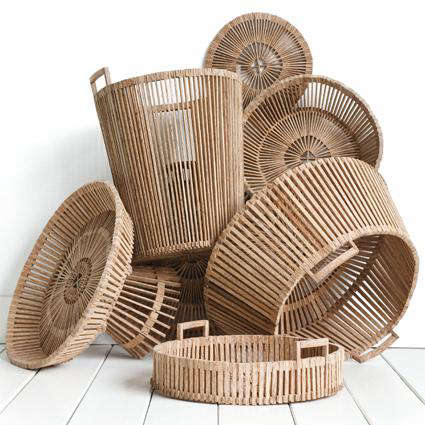
For a Fair Trade Original anniversary project, Piet Hein Eek worked with craftspeople in Vietnam to develop a collection that included wooden baskets, bowls, trays, and ceramic pieces. The wooden objects were associated with palmwood and recycled or rejected material, including pieces described in design coverage as repurposed breadboard material. The result was not a luxury object pretending to be rustic. It was a practical home accessory that made its process visible.
The collection’s strength came from combining Eek’s design instincts with local craft skills. Vietnamese artisans brought knowledge of making, shaping, and finishing. Eek brought his sharp eye for proportion, irregularity, and construction. Fair Trade Original provided the ethical production framework. In a less thoughtful project, “global craft” can become a shallow marketing phrase. Here, the more interesting story is collaboration: designer, material, maker, and market all had to meet in the same roomfiguratively and, in Eek’s case, after travel to Vietnam, quite literally.
Why the Collection Matters
The Fair Trade Original pieces matter because they translate Eek’s scrapwood philosophy into everyday objects. Not everyone can buy a collectible scrapwood cabinet. Not everyone has room for a statement table with enough personality to start its own podcast. But a basket, bowl, or tray is approachable. It can sit on a kitchen island, hold fruit, organize blankets, or quietly upgrade a corner that previously looked like a charging-cable crime scene.
These pieces also challenge the way many people think about value. In fast consumer culture, value is often measured by smoothness, sameness, and speed. If every bowl looks identical, production is efficient. If every surface is flawless, the object feels “new.” Slow design offers a different standard. A visible seam can be beautiful. A variation in tone can be desirable. A maker’s hand can be part of the appeal rather than a manufacturing error.
Imperfection as a Design Feature
One of Piet Hein Eek’s most important contributions to contemporary sustainable design is his treatment of imperfection. He does not use reclaimed materials as a quiet environmental footnote. He makes their history visible. That visibility changes the emotional relationship between object and owner. A scarred plank does not simply function as wood; it acts like evidence. It tells you that the world existed before your coffee table arrived.
This is why his Fair Trade Original pieces fit so naturally into the slow design conversation. They are not only about recycled material. They are about slowing down enough to notice the intelligence of material, the labor of craft, and the dignity of use.
Slow Design in the Home: How to Apply the Idea
You do not need a gallery budget to live with slow design. The philosophy begins with attention, not money. A slow design home is not filled overnight. It develops over time through better choices, repairs, meaningful purchases, and patience. Yes, patiencethe interior design equivalent of eating vegetables.
1. Buy Fewer, Better Objects
Instead of filling every empty surface immediately, choose objects that can stay with you. A handmade basket, a well-built chair, a reclaimed wood table, or a ceramic vase from a fair-trade producer can carry more value than five trendy pieces that lose their charm by next season.
2. Let Materials Be Honest
Slow design loves honest materials. Wood can show grain. Metal can develop patina. Ceramic can reveal slight variation. Fabric can soften with time. When we stop demanding that everything look machine-perfect forever, our homes become warmer and more forgiving.
3. Support Transparent Production
Look for brands and makers that explain where materials come from and how products are made. Fair trade, artisan cooperatives, local workshops, and independent studios often provide more context than anonymous mass-market goods. That context helps buyers make choices that match their values.
4. Use Objects Instead of Displaying Them Like Museum Hostages
Slow design is not about turning your home into a silent temple where no one may touch the bowl. Use the bowl. Put oranges in it. Drop your keys in the tray. Let the basket hold magazines, towels, toys, or firewood. Good design is not fragile decoration; it is daily life made better.
Piet Hein Eek, Sustainability, and the Beauty of the Leftover
Many designers now talk about sustainability, and that is a good thing. But Piet Hein Eek was working with reclaimed material long before “eco-conscious design” became a friendly phrase for product descriptions. His work shows that sustainability is not only about reducing harm. It can also create a powerful aesthetic.
The leftover has character. Scrapwood offers color variation, texture, and memory. Recycled material forces the designer to solve problems creatively. Instead of ordering perfect boards in perfect dimensions, the maker must negotiate with what already exists. That negotiation can produce objects that feel more alive than factory-perfect alternatives.
This is also where slow design becomes emotionally persuasive. People often keep objects longer when they feel connected to them. A handmade Fair Trade Original basket designed by Piet Hein Eek is not merely storage. It is a small argument against disposable living. It says: choose carefully, use fully, and do not underestimate the quiet charisma of a good basket.
Specific Examples: What Makes the Fair Trade Original Pieces Work?
The best examples from the collaboration include palmwood baskets and bowls with visible construction, warm natural tones, and practical shapes. They are useful enough for everyday living but distinctive enough to feel designed. A tall basket can hold blankets or logs. A shallow bowl can display fruit. A tray can organize objects on a table without making the table look like it lost a fight with random clutter.
These forms are simple, but their simplicity is not boring. The interest comes from material rhythm, handwork, and proportion. Eek understands that an object does not need decorative shouting when the material already has something to say. The design gives structure to that voice.
The ceramic pieces from the project also reveal the difficulty of translating a design idea across production contexts. Eek himself noted challenges with early ceramic samples and production complexity. That detail is important because slow design is not romantic fantasy. Collaboration across cultures, materials, workshops, and expectations can be difficult. The value lies not in pretending the process is effortless, but in respecting the process enough to work through it.
Why Slow Design Feels So Relevant Now
Modern homes are full of fast decisions. We can buy a lamp in three clicks, replace a table because a corner chipped, and redecorate a room because an algorithm whispered, “beige mushroom minimalism.” But all that speed can make interiors feel strangely temporary. Slow design gives people permission to resist the treadmill.
Fair Trade Originals from Piet Hein Eek remind us that interiors can be beautiful without being wasteful, ethical without being preachy, and handcrafted without looking like a school craft table after a glue-stick emergency. They show that sustainability can be sophisticated. They also prove that fair trade does not have to mean charity design; it can mean excellent design made through better relationships.
For homeowners, decorators, collectors, and design lovers, the takeaway is refreshingly practical. Choose pieces with substance. Notice materials. Learn who made the object. Give preference to quality, longevity, and fairness. Let your home become a collection of decisions you still respect years later.
Experiences Related to Slow Design and Piet Hein Eek’s Fair Trade Originals
Living with slow design changes the way a person moves through a home. The first experience is usually visual. A handmade basket or reclaimed wood object simply refuses to disappear into the background. It does not scream for attention, but it keeps offering small details: a darker strip of wood, a slight curve in the edge, a join that reminds you someone actually made it. Over time, that object becomes familiar in a way mass-produced décor often does not. You stop seeing it as “the basket” and start seeing it as part of the room’s personality.
There is also a practical experience. A fair-trade basket designed with real use in mind can become a daily tool. It might hold laundry, firewood, magazines, children’s toys, craft supplies, or the mysterious collection of remote controls that multiplies in every living room after sunset. The object earns its place. That matters because slow design is not only about buying ethical things; it is about forming a lasting relationship with useful things.
Another experience is emotional. When you know an object was made by artisans in a fair-trade context, it becomes harder to treat it as disposable. You become more careful, but not in a nervous way. More like respect. You might wipe it down instead of replacing it. You might move it from room to room as your needs change. You might repair a small issue rather than throwing the whole thing away. Slow design gently retrains the habits that fast consumption has made normal.
There is also the experience of conversation. Piet Hein Eek’s work tends to invite questions. Guests notice the material first. “Is that reclaimed wood?” “Where did you find that?” “Why does it look different from every angle?” These questions open the door to talking about fair trade, Vietnam’s craft traditions, recycled palmwood, and the broader idea that design can support people instead of merely decorating surfaces. A good object becomes a tiny ambassador for better choices. Not bad for something that may also be holding apples.
Perhaps the most meaningful experience is patience. Slow design teaches that a home does not need to be finished immediately. In fact, the best rooms rarely are. They evolve. A Piet Hein Eek-inspired approach encourages you to wait for the right piece, to appreciate useful imperfection, and to stop treating every empty corner as an emergency. The room becomes calmer because the buying process becomes calmer. Instead of chasing trends, you build a space with memory, texture, and purpose.
That is the quiet power of Fair Trade Originals from Piet Hein Eek. They are not just attractive objects. They are reminders that design can be slower, fairer, more resourceful, and more human. And frankly, in a world full of furniture that looks like it was born yesterday and may not survive next Tuesday, that is a very welcome idea.
Conclusion
Slow design is not a style you copy; it is a standard you practice. Piet Hein Eek’s Fair Trade Original collaboration shows how reclaimed materials, artisan skill, ethical trade, and strong design can work together without becoming stiff or sentimental. The collection’s palmwood baskets, bowls, trays, and related objects demonstrate that sustainability does not have to look dull, and fair trade does not have to feel like a compromise.
Eek’s larger career makes the lesson even clearer. By turning scrapwood into desirable furniture, he helped shift the design conversation away from perfection and toward character. His Fair Trade Original pieces extend that conversation into accessible, everyday objects. They ask us to slow down, look closer, buy better, and respect the people and materials behind the things we use.
Editorial note: This article is written for publication and synthesizes real information from design museums, official brand materials, fair-trade resources, and sustainable design publications. It has been rewritten in original language for SEO-friendly web use.